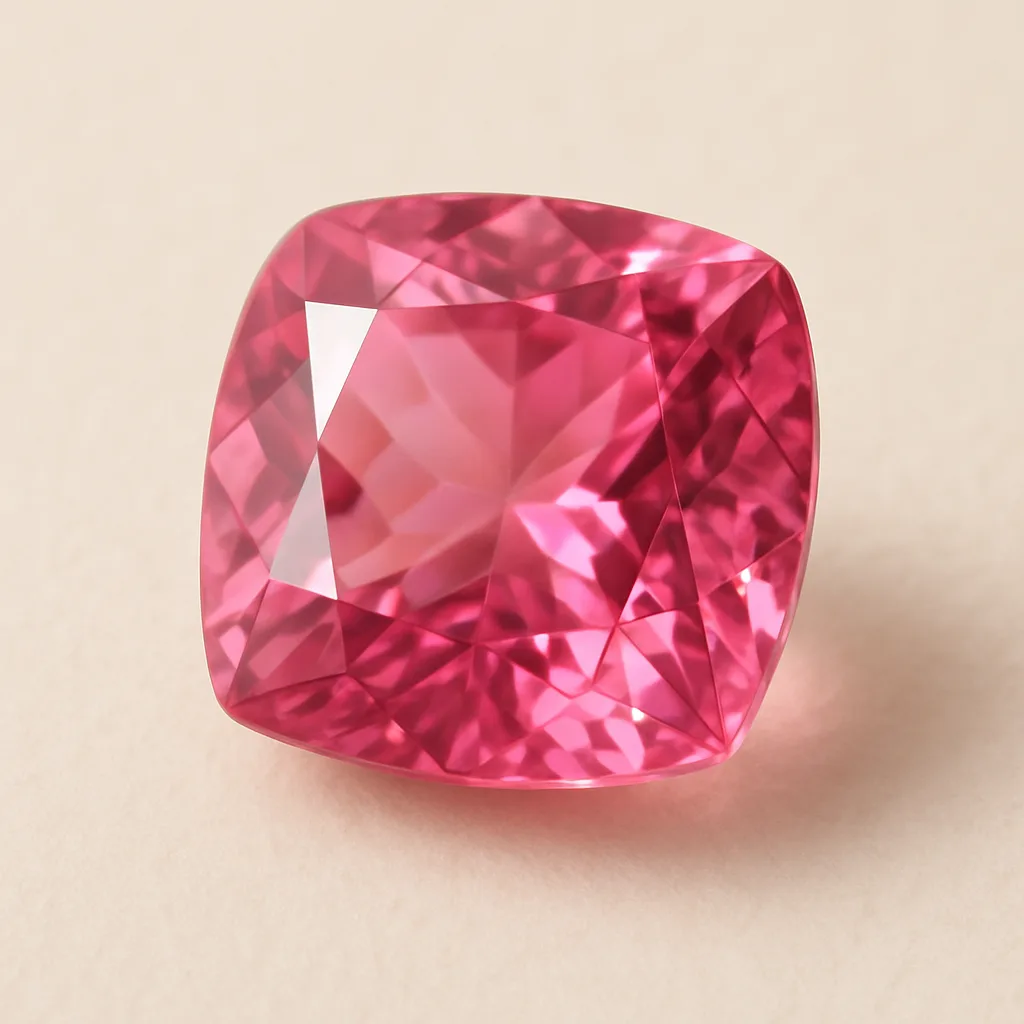
identified this stone yet
Pink Tourmaline
| Hardness | 7-7.5 |
| Specific gravity | 3.06 |
| Refractive index | 1.620-1.640 |
| Crystal system | 六方晶系(三方晶系) |
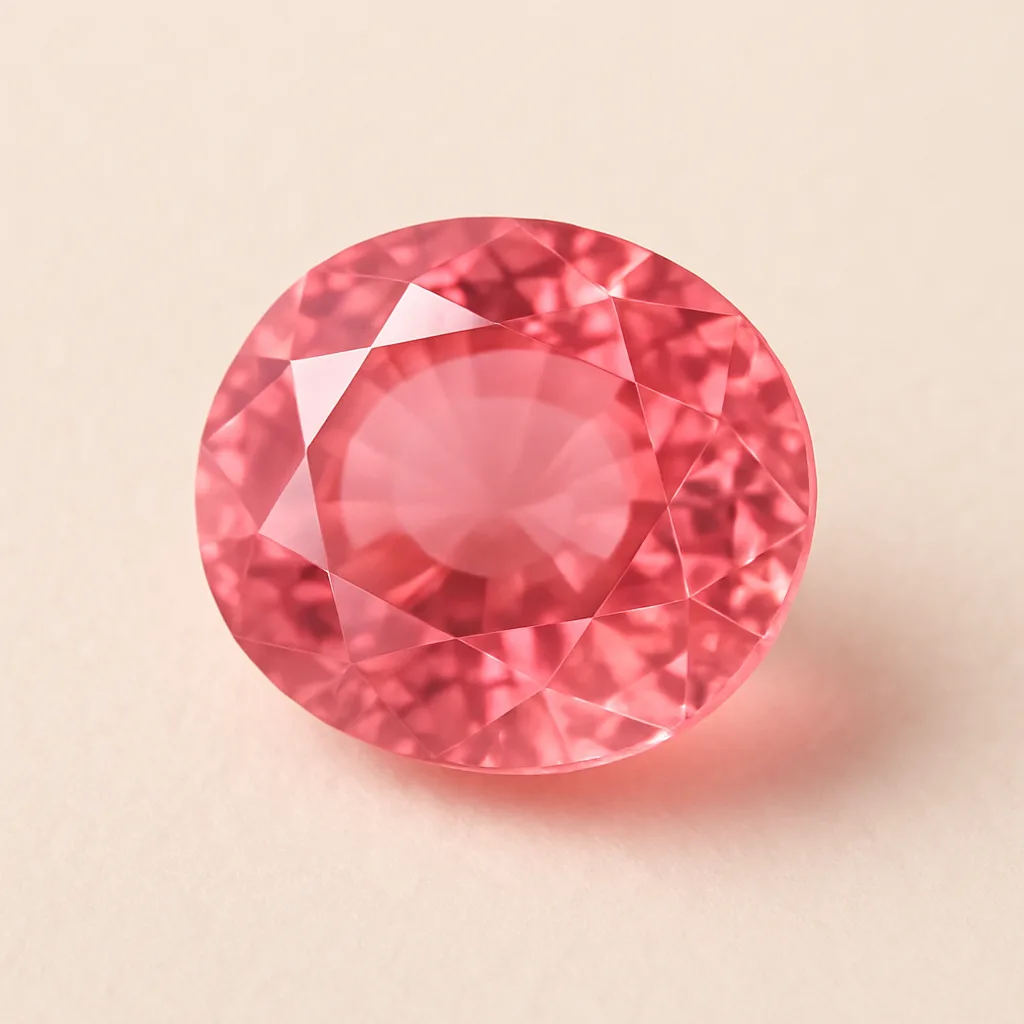
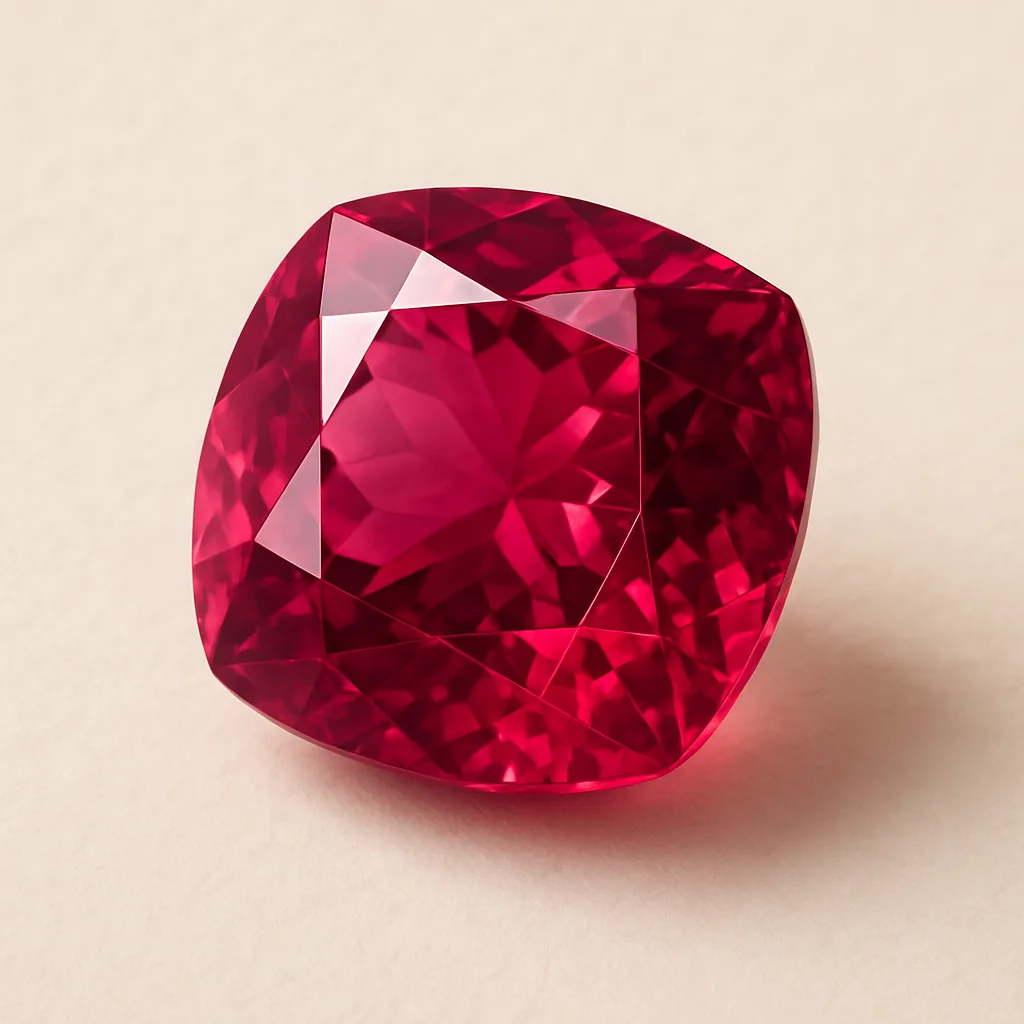
Pale petal pink through cherry-blossom, vivid bubblegum, raspberry, and slightly violet pinks. Saturated, slightly bluish-pink stones are the most desirable.
- nclusions)
- nclusions
- Stress fractures along the c-axis
- Doubly refractive with clearly visible at 10×
- Strong dichroism: pink and pale pink
- 01Visible at 10× plus capillary tubes is the tourmaline signature
- 02No UV rules out pink sapphire
- 03Crack-prone interior is normal for the species
- Avoid thermal shock — internal fractures can propagate
- Skip ultrasonic and steam; use lukewarm soapy water
- Cosmetics, perfume and perspiration can dull the surface over time
Roughly $50–$300 per carat for commercial pale material, $500–$2,000 per carat for vivid clean pinks, and rubellite-class reds reaching $3,000+ per carat.
Note: Heat treatment is common and accepted; irradiation is also used to deepen pale stones. Both are stable. Clean, crack-free stones over 3 carats are increasingly scarce. The line between 'pink tourmaline' and 'rubellite' is set by saturation and is judged by eye — the same stone may be called either by different dealers.
Pink tourmaline is elbaite (Na(Li,Al)₃Al₆(BO₃)₃Si₆O₁₈(OH)₄) tinted pink to red by manganese. The color continuum runs from pale baby pink through cherry, raspberry and into the darker reds called rubellite. Brazil's Minas Gerais has been the historical heartland; Nigeria, Mozambique, Madagascar, Afghanistan and California (USA) all produce commercial quantities today.
Origins
Brazil's Minas Gerais state — particularly the Cruzeiro, Jonas and Itatiaia mines — has been the historical heart of pink tourmaline supply. California's Himalaya Mine (San Diego County) drove a 19th-century boom when Empress Cixi of China imported large quantities. Nigeria, Mozambique, Madagascar (Ambatofinandrahana) and Afghanistan (Nuristan) round out today's market.
History
Empress Cixi of the late Qing dynasty fell in love with California Himalaya Mine tourmaline in the 1890s and bought it by the ton — California's first export market in colored stones. Her death in 1908 and the fall of the Qing in 1912 collapsed the market overnight; the Himalaya Mine closed. Pink tourmaline only returned to popular jewelry in the late 20th century, this time as a birthstone and engagement stone.
Lore & symbolism
October's birthstone alongside opal. Pink tourmaline has come to symbolise compassion, self-love, and emotional healing — themes that fit well into modern gift-giving and Valentine's collections.
Tools to confirm this stone
Tools that help confirm Pink Tourmaline. Tap any item to jump to the matching section on the gem tools page.
- 10× loupeDETAILS →
Essential 10× tool to read inclusions, polish marks, and color zoning
- DichroscopeDETAILS →
Strong pleochroism — confirm both axes through twin windows
- Chelsea filterDETAILS →
Quick chrome-content screen — chromium-bearing stones glow red through the filter
- Handheld spectroscopeDETAILS →
Absorption-line pattern identifies the chromophore (Cr, Fe, or Co)
- RefractometerDETAILS →
Refractive index (1.624–1.644) narrows the species
- Last reviewed
- April 28, 2026
- Bibliography
- Gem Encyclopedia / GIA (Gemological Institute of America)
- Gem Identification Standards / Central Gem Laboratory (CGL), Tokyo
- Mineral & Gem Database / Mindat.org / Gemdat.org
- Introduction to Gemology / Gemmological Association of All Japan (GAAJ)
The gemological data on this page (refractive index, specific gravity, hardness, crystal system, etc.) is cross-checked against the authoritative primary sources listed above. Values may be revised as gemological research advances.