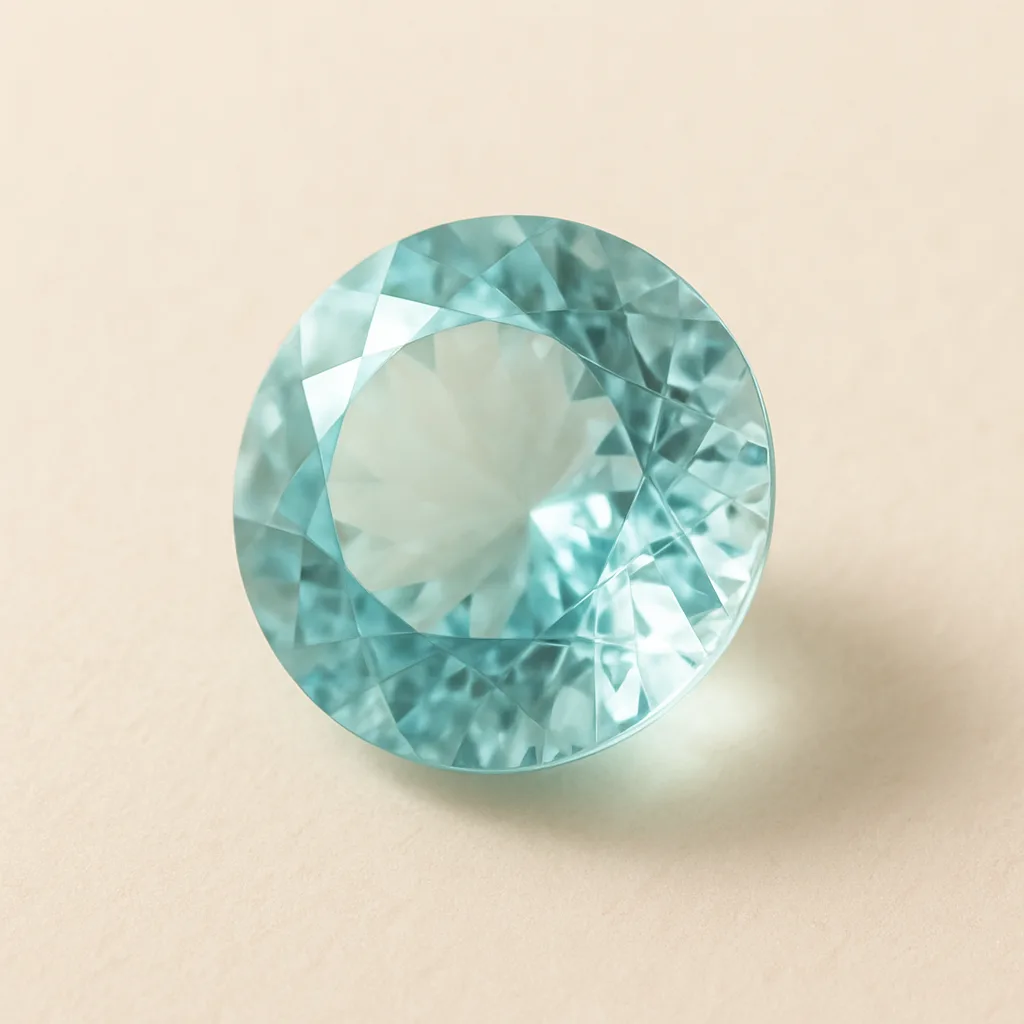
identified this stone yet
Phosphophyllite
| Hardness | 3-3.5 |
| Specific gravity | 3.08-3.13 |
| Refractive index | 1.595-1.621 |
| Crystal system | 単斜晶系 |
Pale blue-green ('aquamarine-like') is the standard and only gem-grade color; some material trends toward more saturated bluish-green or paler greenish-blue. The defining color is delicate and reads slightly differently in daylight and incandescent illumination.
- egative crystals
- planes visible as internal reflections — almost always present in larger stones
- nclusions from the host vein assemblage
- Growth zoning visible under immersion in higher-RI fluids
- Doubly refractive, biaxial positive
- Refractive index 1.595–1.621
- 0.021–0.033
- Specific gravity 3.07–3.13
- Perfect {100} — the defining mechanical property and the principal lapidary challenge
- Weak dichroism: bluish-green and greenish-blue
- 01Refractive index 1.595–1.621 — distinguishes phosphophyllite from aquamarine (1.57–1.58, lower) and from blue topaz (1.62–1.64, higher)
- 02Specific gravity 3.07–3.13 — heavier than aquamarine (2.68–2.72), lighter than blue topaz (3.49–3.57)
- 03Mohs 3–3.5 — distinctively soft; scratched easily with a steel knife, unlike aquamarine (Mohs 7.5–8) or topaz (Mohs 8)
- 04Perfect on {100} — visible as internal mirror-like reflections, often present in any stone above a few carats
- 05Provenance — virtually all gem-grade material is Bolivian; any verifiable Bolivian provenance significantly supports identification
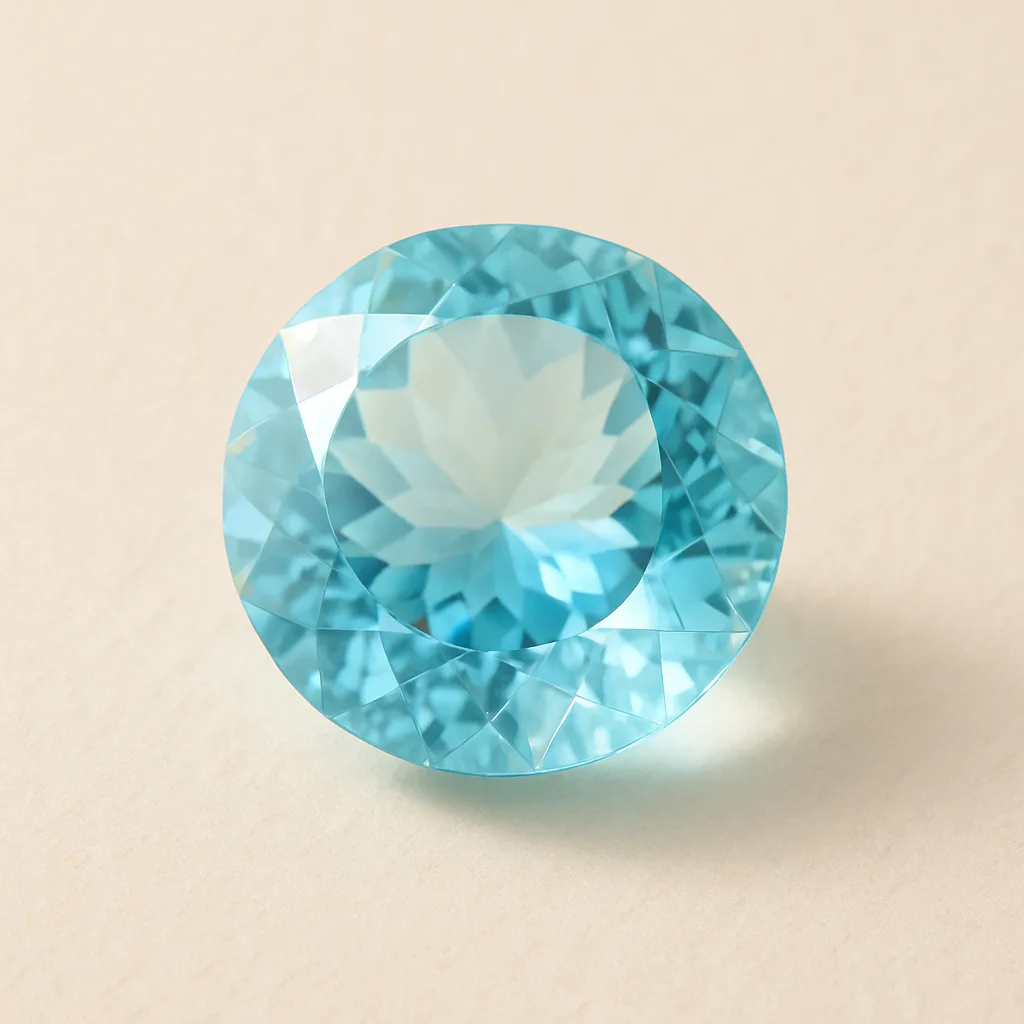
- aceted phosphophyllite is essentially a display gem, unsuitable for any setting that risks impact
- Perfect on {100} — even small knocks can produce breaks; bezel mountings with high collar protection are mandatory if set at all
- Never ultrasonic, steam, or thermal cleaning — clean only with a soft dry brush or briefly with cool water on cotton
- Avoid prolonged exposure to direct sunlight and to dry heat — the hydrate structure (·4H₂O) is potentially vulnerable to dehydration
- Store individually in padded gem cases away from harder stones
- Avoid acids — the phosphate chemistry is vulnerable, particularly to strong mineral acids
From approximately $5,000/ct for small cloudy or fractured stones, up to $50,000–100,000+/ct for fine clean Bolivian material above 3 ct. The handful of known stones above 20 ct are essentially unpriced — they trade by private negotiation rather than by quoted carat rates.
Note: There is effectively no large-scale market for phosphophyllite — supply is so limited that pricing is set by individual transactions between specialist dealers and serious collectors rather than by general gem-market mechanisms. Cut stones above 1 ct surface at major auctions only a few times per decade. The principal market concerns are (1) authentication of provenance, given the small number of cutters who have ever worked Bolivian rough; (2) condition, since the perfect cleavage means even small chips or cleavage parting significantly affects value; (3) saturation, with the most prized stones showing the cleaner, more saturated blue-green tone. No treatments are known or applied — the material is too fragile and too rare to treat.
Phosphophyllite is Zn₂(Fe,Mn)(PO₄)₂·4H₂O, a hydrated zinc-iron-manganese phosphate, monoclinic, named from phosphate plus Greek phyllon ('leaf') for its perfect basal {100} . Mohs 3–3.5 (extremely soft — softer than a copper coin), SG 3.07–3.13, RI 1.595–1.621, doubly refractive (biaxial positive), with a delicate pale blue-green color often compared to a soft aquamarine. The perfect aceted stones falling in the 20–50 carat range.
Origins
acetable gem-grade rough. Smaller secondary localities (Mauldin Mountain Quarry in North Carolina, the Linópolis pegmatites in Brazil's Minas Gerais, and the South Australian Reaphook Hill deposit) yield collector specimens but not gem material.
History
aceted phosphophyllite has appeared occasionally in Heritage Auctions, Bonhams, and Christie's gem sales since the 1990s, with per-carat prices for fine clean material above 3 ct generally falling in the $20,000–80,000 range and occasionally higher for exceptional pieces.
Lore & symbolism
Phosphophyllite carries no traditional lore — the species was identified only in 1920 and gem-grade material only entered the trade after 1960, far too recently for any folkloric or symbolic tradition to have accreted. Modern crystal-healing and collector literature treats it as the 'Cinderella stone' or the 'collector's pinnacle,' tied to themes of rarity, transformation, and the technical mastery required to cut it, but these framings are entirely contemporary marketing and connoisseurship narratives rather than lore proper.
Tools to confirm this stone
Tools that help confirm Phosphophyllite. Tap any item to jump to the matching section on the gem tools page.
- 10× loupeDETAILS →
Essential 10× tool to read inclusions, polish marks, and color zoning
- DichroscopeDETAILS →
Strong pleochroism — confirm both axes through twin windows
- RefractometerDETAILS →
Refractive index (1.595–1.621) narrows the species
- PolariscopeDETAILS →
Polariscope confirms double refraction (optical anisotropy)
- Last reviewed
- April 28, 2026
- Bibliography
- Gem Encyclopedia / GIA (Gemological Institute of America)
- Gem Identification Standards / Central Gem Laboratory (CGL), Tokyo
- Mineral & Gem Database / Mindat.org / Gemdat.org
- Introduction to Gemology / Gemmological Association of All Japan (GAAJ)
The gemological data on this page (refractive index, specific gravity, hardness, crystal system, etc.) is cross-checked against the authoritative primary sources listed above. Values may be revised as gemological research advances.