COMPARE GUIDE
Mahogany ObsidianVSTiger's Eye
Side-by-side comparison of physical properties, fluorescence, and crystal system — to identify by observation.
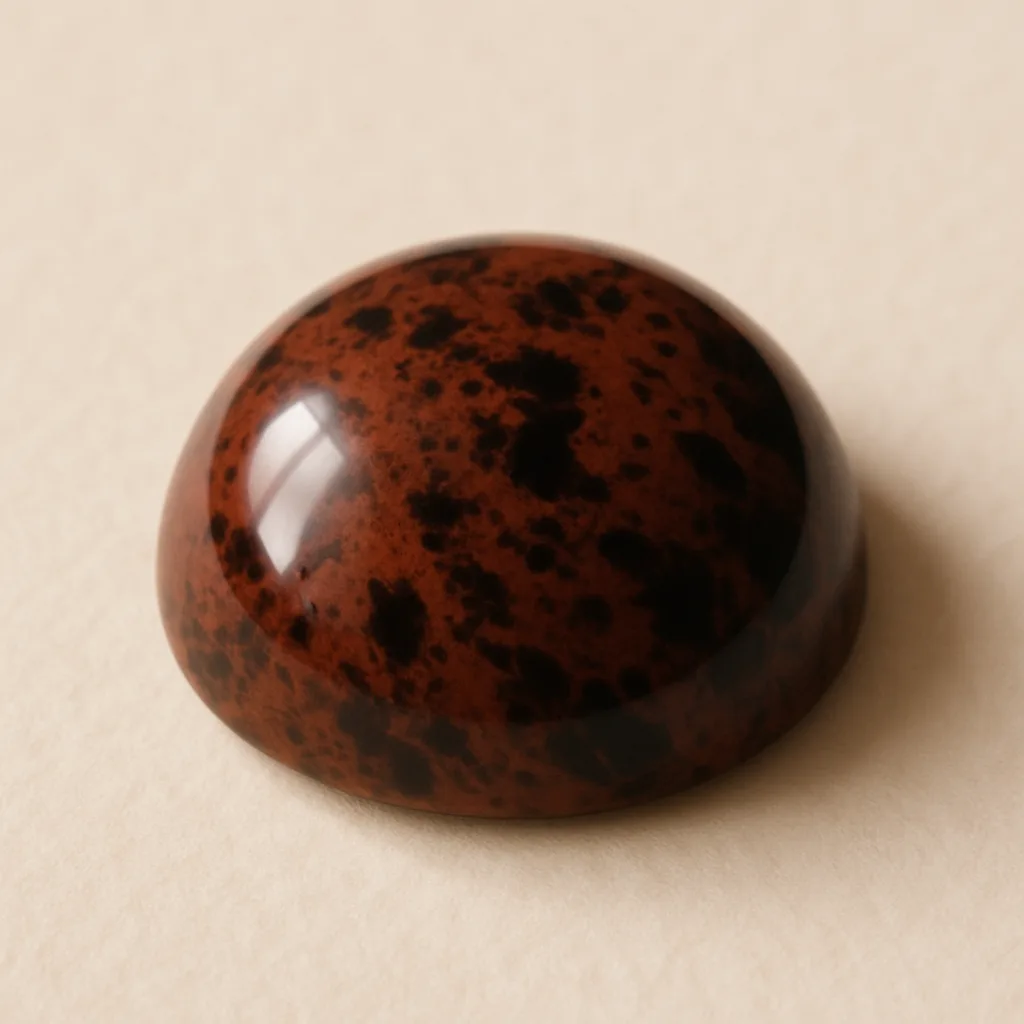
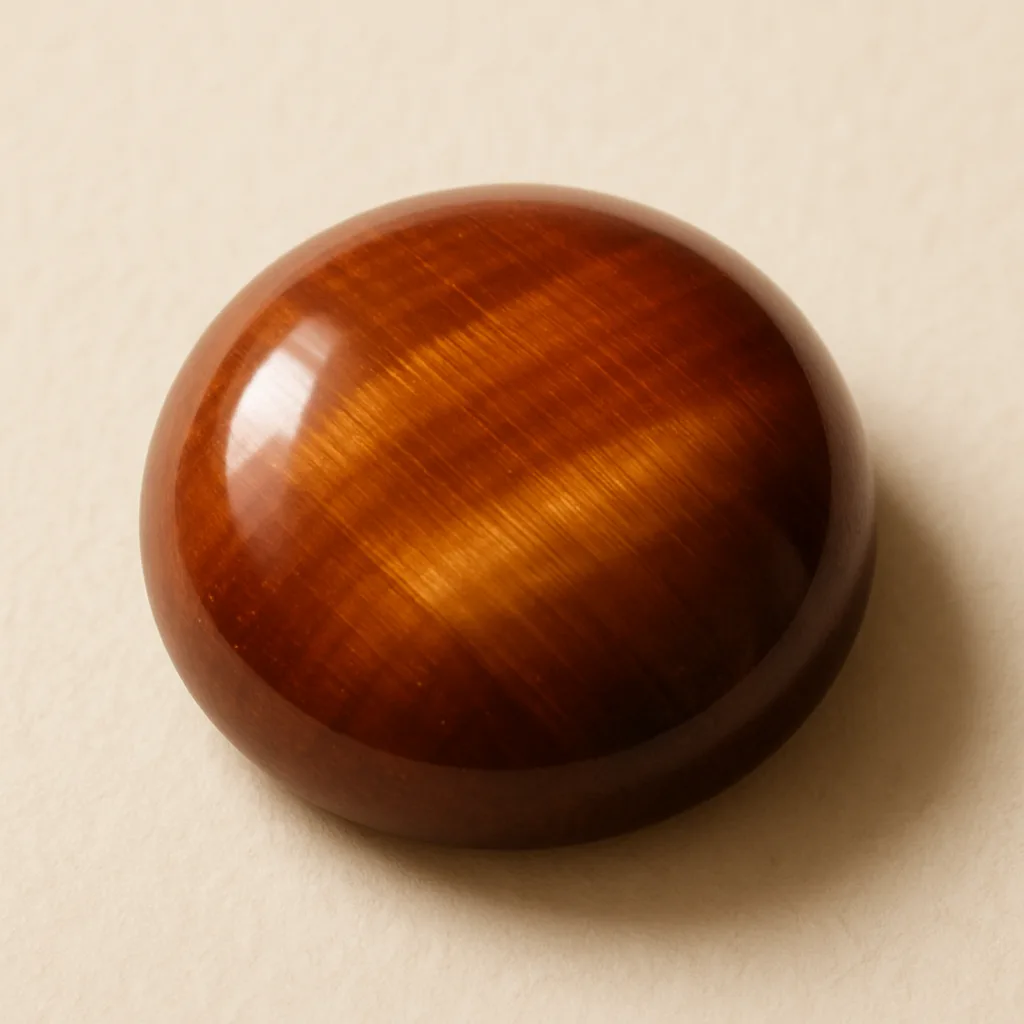
- ◎ is higher in Tiger's Eye, giving a numerical distinguishing point.
- ◎ is higher in Tiger's Eye, giving a numerical distinguishing point.
Note: properties whose numeric ranges do not overlap are auto-extracted. Both are measurable with a refractometer or heavy-liquid bath.
| Property | A: Mahogany Obsidian | B: Tiger's Eye | Verdict |
|---|---|---|---|
| Refractive index (RI) | 1.480–1.510 | 1.534–1.553 | B higher |
| Specific gravity (SG) | 2.30–2.60 | 2.58–2.71 | Overlap |
| Mohs hardness | 5.0–5.5 | 7.0 | B higher |
| Birefringence | — | 0.009 | — |
| Dispersion | — | — | — |
| Property | A: Mahogany Obsidian | B: Tiger's Eye |
|---|---|---|
| Crystal system | 非晶質(火山ガラス) | 三方晶系(多結晶) |
| Pleochroism | — | — |
| Chelsea filter | — | — |
| UV (long-wave) | — | — |
| UV (short-wave) | inert | inert |
◆Tiger eye is silicified crocidolite asbestos with diagnostic chatoyant silky bands of pseudomorphic fibrous structure — the optical effect is chatoyance, not flow banding. SG 2.64–2.71 is similar to mahogany obsidian (2.30–2.55) but the band structure is fundamentally different: tiger eye's bands are parallel fiber pseudomorphs producing the cat's-eye sheen; mahogany obsidian's bands are flow-induced hematite oxidation patterns producing a static color contrast. Tiger eye also shows higher Mohs (6.5–7) and conchoidal fracture only on broken edges, never as primary surface texture.
Distinguishing tools
Tools that decide between Mahogany Obsidian and Tiger's Eye in practice.
Note: this page is auto-generated from published GIA / CGL reference values. Individual stones, treatments, and synthetics may fall outside these ranges. For a definitive identification, consult an accredited gem laboratory.