COMPARE GUIDE
Natural EmeraldVSGreen Glass
Side-by-side comparison of physical properties, fluorescence, and crystal system — to identify by observation.
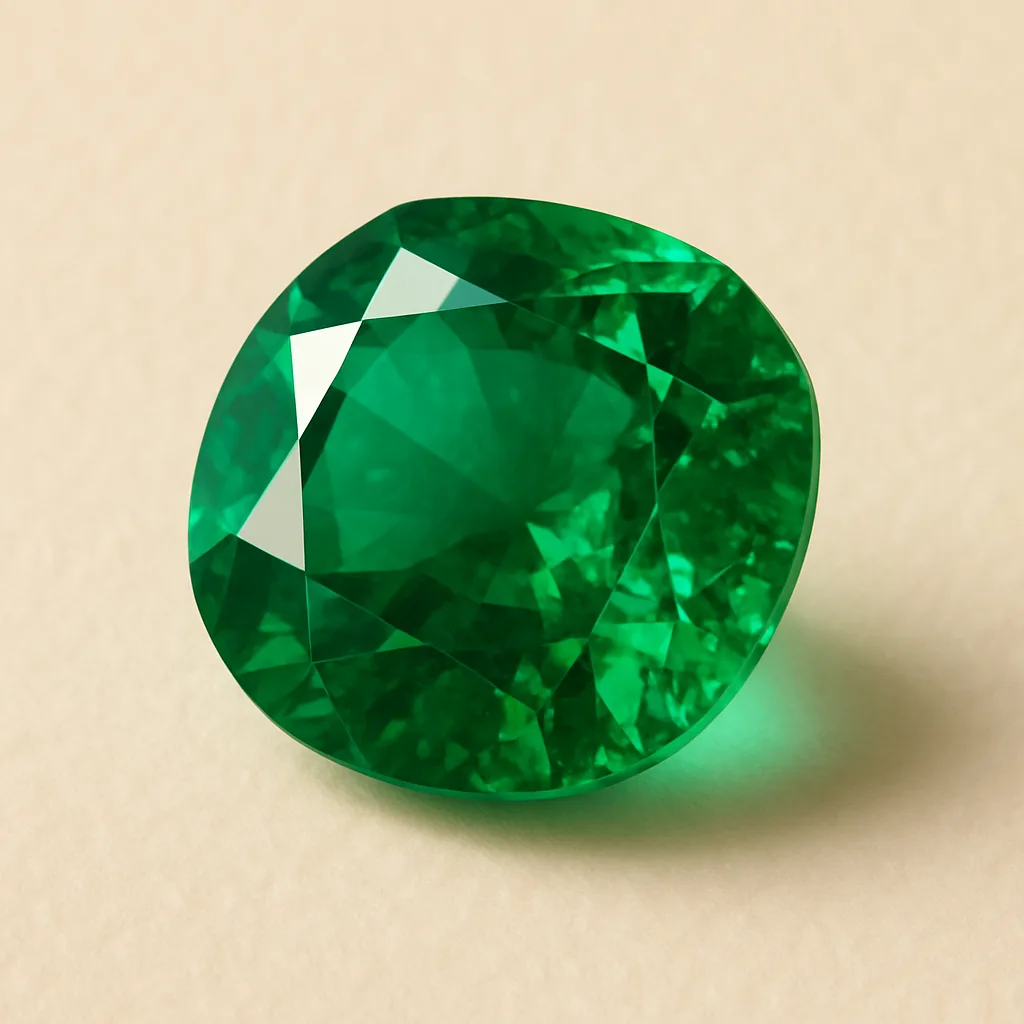
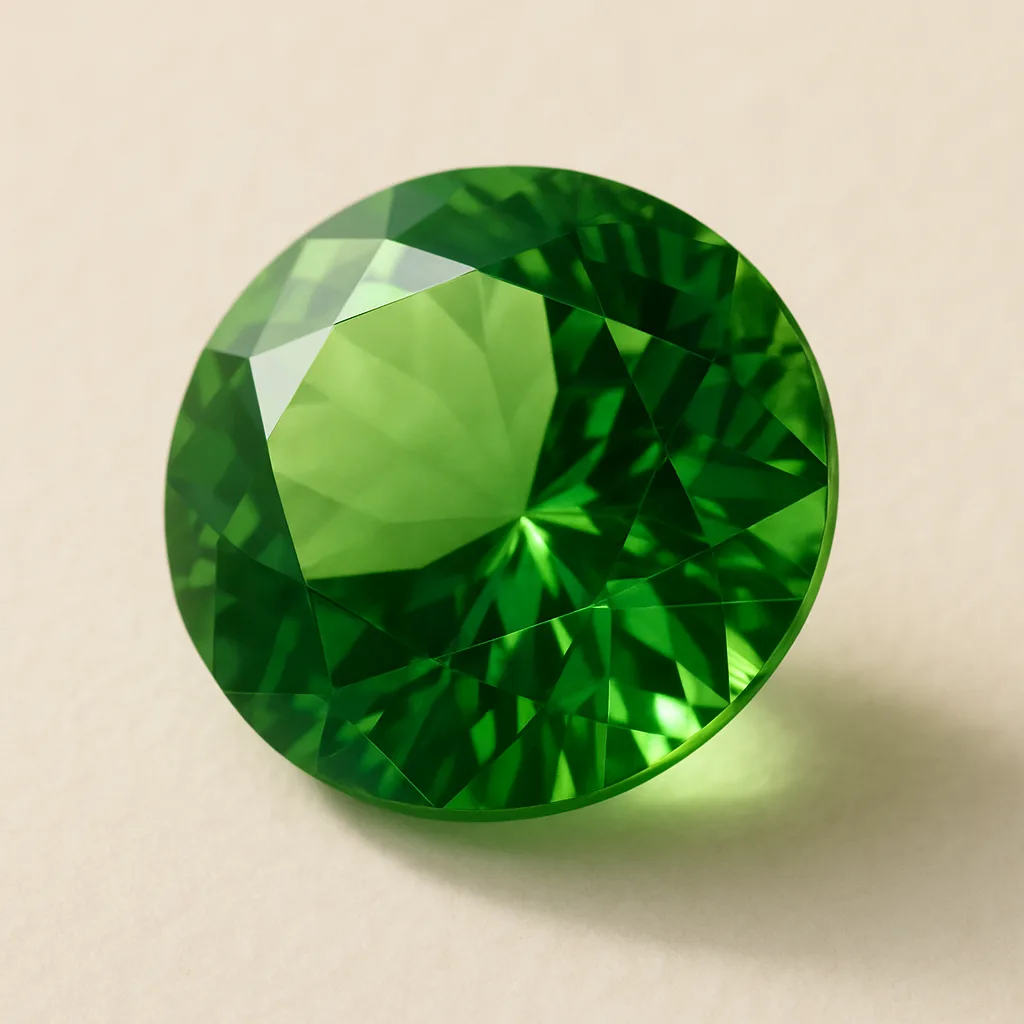
- ◎ is higher in Natural Emerald, giving a numerical distinguishing point.
Note: properties whose numeric ranges do not overlap are auto-extracted. Both are measurable with a refractometer or heavy-liquid bath.
| Property | A: Natural Emerald | B: Green Glass | Verdict |
|---|---|---|---|
| Refractive index (RI) | 1.577–1.583 | 1.480–1.700 | Overlap |
| Specific gravity (SG) | 2.67–2.78 | 2.30–4.50 | Overlap |
| Mohs hardness | 7.5–8.0 | 5.0–6.0 | A higher |
| Birefringence | 0.005 | — | — |
| Dispersion | — | — | — |
| Property | A: Natural Emerald | B: Green Glass |
|---|---|---|
| Crystal system | 六方晶系 | 非晶質 |
| Pleochroism | 強(緑・青緑) | — |
| Chelsea filter | red / pink | inert |
| UV (long-wave) | weak (red) | inert |
| UV (short-wave) | inert | inert |
◆Natural emerald (Be₃Al₂(SiO₃)₆ beryl, Mohs 7.5–8, SG 2.67–2.78, RI 1.577–1.583, doubly refractive, 0.014) differs from green glass by every measurable parameter. Refractometer reads 1.577–1.583 for emerald versus 1.50–1.70 for glass — clean diagnostic separation. Polariscope: emerald is doubly refractive (showing the characteristic interference pattern), glass is singly refractive. nclusions, color zoning, and growth tubes — while glass shows only regular round gas bubbles and pressing-die seams. Chelsea filter response is non-diagnostic: both chromium-doped paste and natural chromium-bearing emerald turn pink-red under the standard cobalt-chrome filter. Mohs 7.5–8 emerald is unaffected by a steel-knife scratch that easily marks Mohs 5–6 glass. Disclosure as 'glass' or 'imitation emerald' is required under FTC Jewelry Guides §23.25; lab-created emerald (Chatham, Gilson, Russian hydrothermal) is a separate category requiring 'synthetic emerald' disclosure rather than 'imitation.'
Distinguishing tools
Tools that decide between Natural Emerald and Green Glass in practice.
Note: this page is auto-generated from published GIA / CGL reference values. Individual stones, treatments, and synthetics may fall outside these ranges. For a definitive identification, consult an accredited gem laboratory.