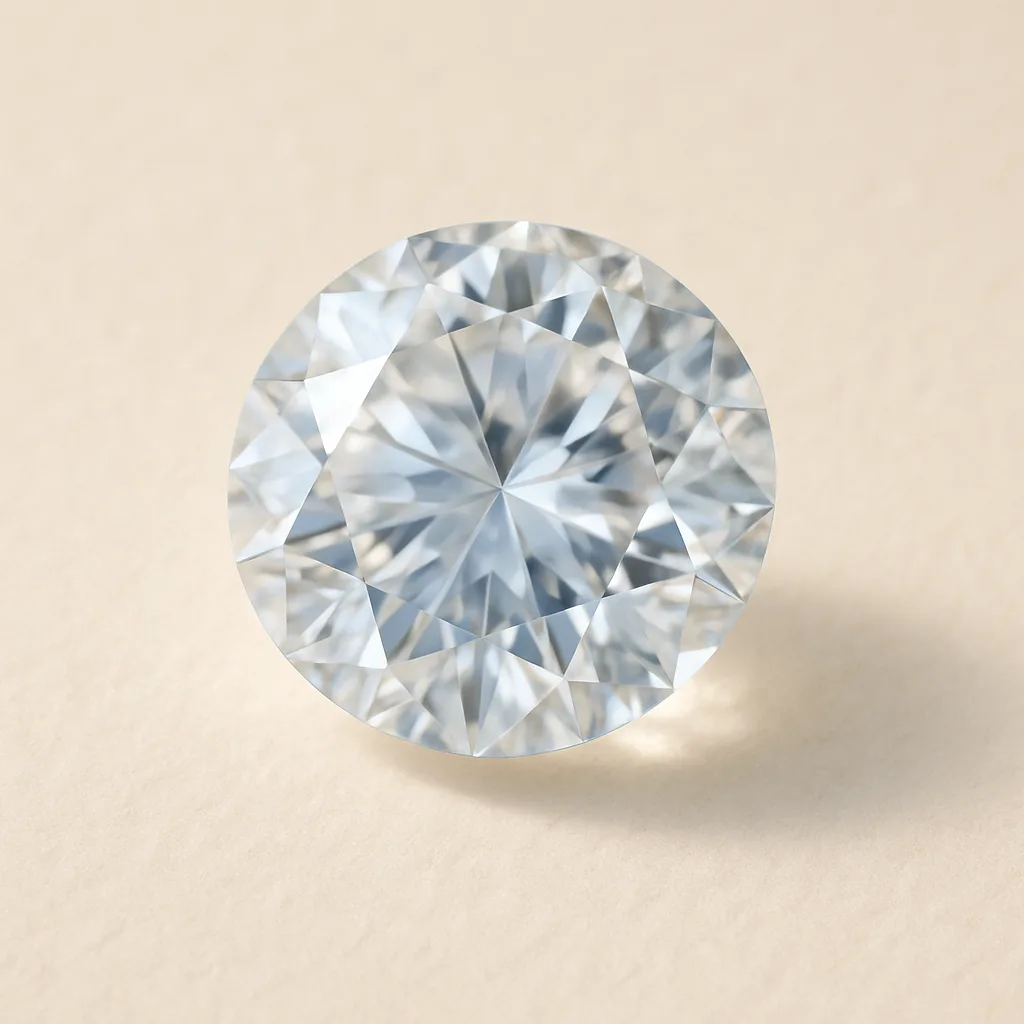
identified this stone yet
Colorless Zircon (High Type)
| Hardness | 7.5 |
| Specific gravity | 4.60-4.80 |
| Refractive index | 1.925-1.984 |
| Crystal system | 正方晶系 |
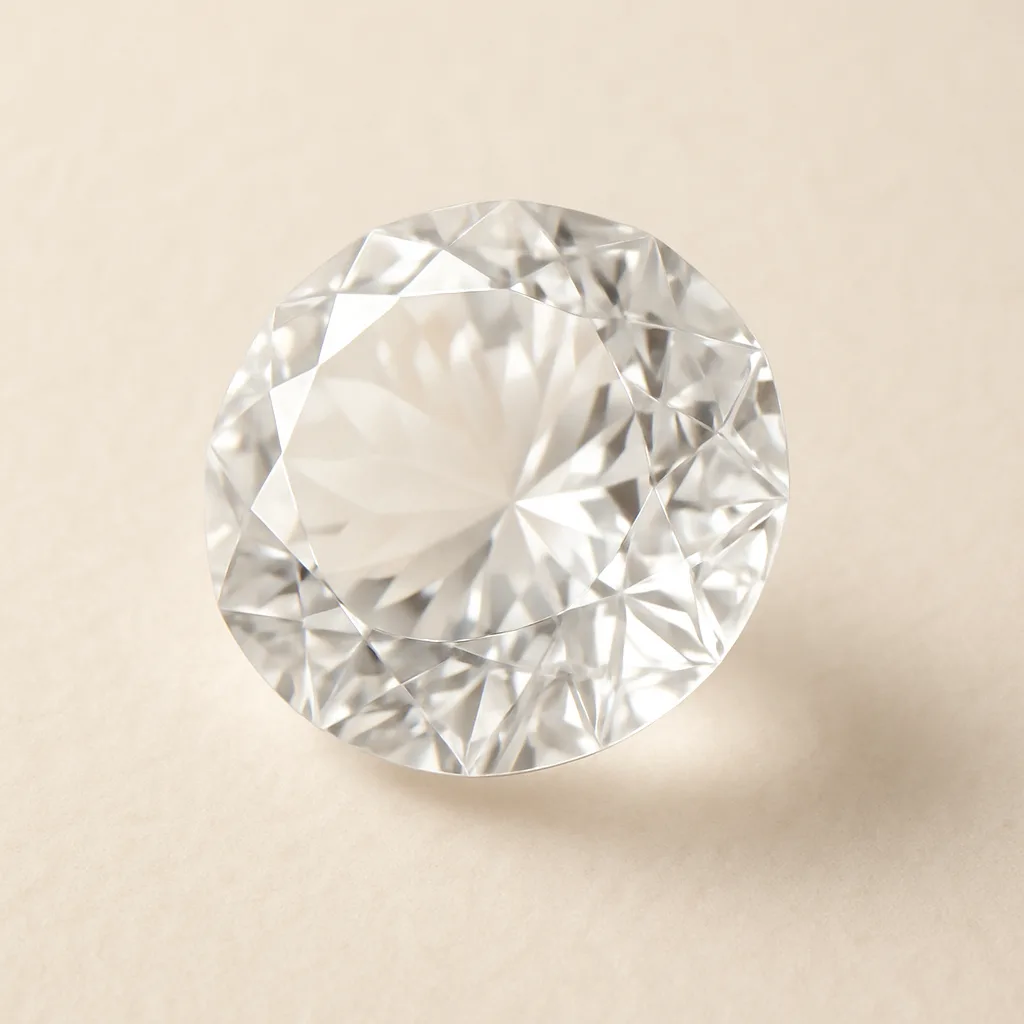
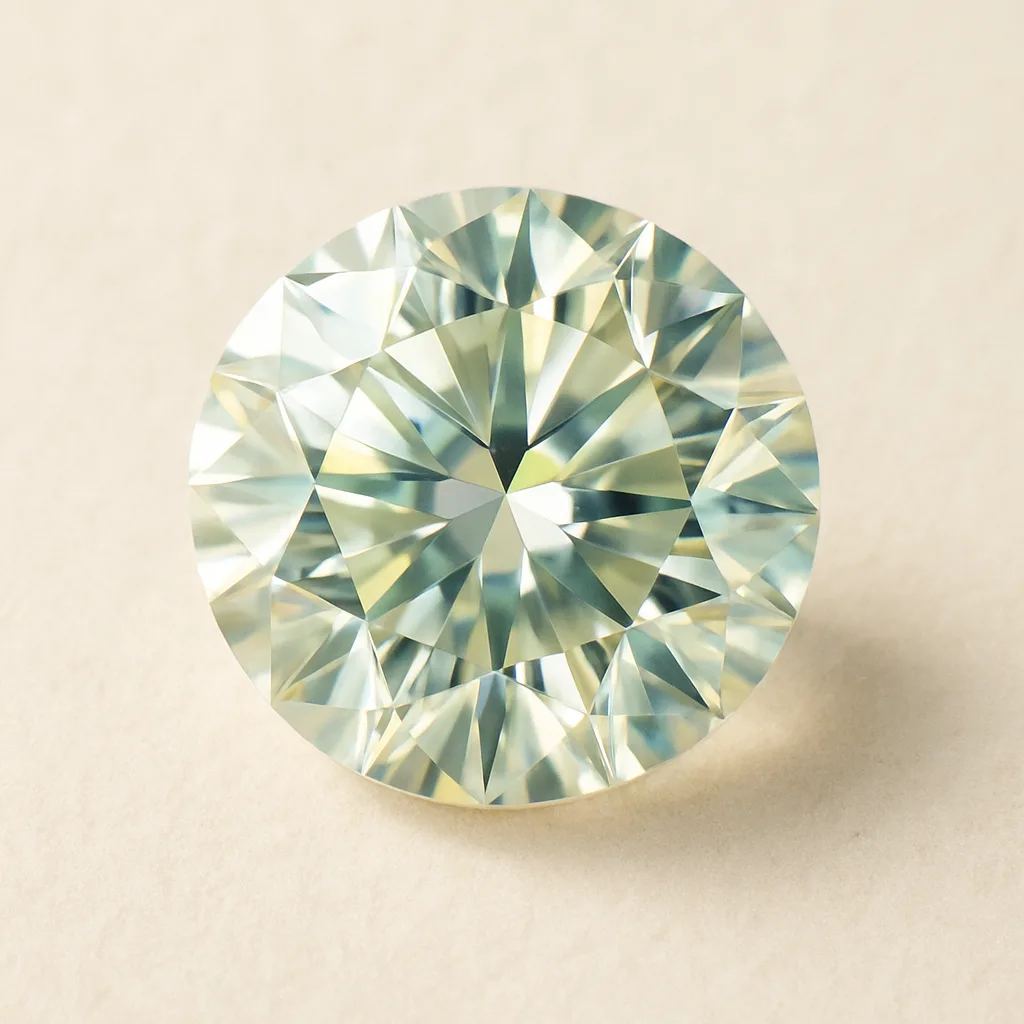
Water-clear colorless to a faint blue-white tint; the very highest grades from Bo Kheo material approach D-color diamond appearance under standard lighting. A subtle bluish tint occasionally develops as a heat-treatment artifact and is preferred in some markets (the 'icy' look). Faint yellow or honey undertones indicate either incomplete decolorization or partial reversion — well-cut material from skilled Bangkok and Chanthaburi houses is consistently colorless.
- Heat-treatment fingerprints: minute discoid stress fractures and partially-healed feathers introduced during annealing
- nclusions inherited from the original brown rough
- nclusions of U/Th-rich phases
- Reportedly cleaner overall than untreated brown zircon — the heat process partially heals fractures
- Tetragonal (uniaxial positive) — exceptionally strong 0.059, the textbook example of the phenomenon
- Refractive index 1.92–1.98 — among the highest of common gemstones
- Specific gravity 4.6–4.8 — far heavier than diamond (3.52), white sapphire (4.00), or quartz (2.65)
- 0.039 — close to diamond's 0.044, producing comparable colored fire
- Adamantine to vitreous luster
- Imperfect ; brittle with conchoidal fracture
- 01acet at 10× through the table is the textbook gemological signature — diamond, sapphire, spinel, and CZ are all singly refractive and never double
- 02High SG (4.6–4.8) gives diagnostic hand-heft — a one-carat zircon weighs noticeably more than the same-size diamond, sapphire, or CZ
- 03Strong produces diamond-like colored fire that distinguishes from quartz, topaz, and lab-grown white sapphire
- 04 fingerprints (discoid stress fractures) visible at 30× immersion in most commercial material
- Imperfect and brittle nature — edges and culet chip readily; protective settings preferred over four-prong
- Heat-treated stones are sensitive to subsequent thermal shock — reversion toward yellow or brown color is documented after prolonged heat or torch exposure during repair
- Avoid ultrasonic and steam cleaning
- Stable to light; standard mild detergent and soft-brush cleaning recommended
Faceted colorless high zircon trades at roughly $30–$200 per carat for clean, well-cut material under 3 ct; clean stones in the 3–5 ct range run $150–$500/ct; exceptional 5+ ct material with strong dispersion and clean clarity reaches $400–$1,200/ct. Estate Art Deco Starlite jewelry commands significant premium for period and provenance. The overall price level remains a fraction of comparable diamond, sapphire, or even modern lab-grown diamond — a market-historical anomaly driven by the persistent CZ name confusion.
Note: Heat treatment is universal and disclosure is mandatory under CIBJO Blue Book and FTC Jewelry Guides — though the practice is so longstanding (post-Tiffany 1920s) that 'colorless zircon' implies heated material in standard trade language. Critical retail education point: natural zircon (ZrSiO₄, the silicate) is a completely different species from synthetic cubic zirconia (ZrO₂, the oxide) — the name collision is the single most damaging retail confusion in the entire colored stone trade and undervalues genuine natural material. AGL, GIA, and Gübelin lab reports are useful for high-end Cambodian Bo Kheo material to confirm natural origin. Bulk parcels are commonly traded ungraded by total weight in Bangkok and Chanthaburi.
High-type colorless zircon (ZrSiO₄) is fully-crystalline tetragonal nesosilicate that has retained its lattice integrity (Brøgger 'high zircon' in Anderson's 1947 classification): RI 1.92–1.98, 0.059, SG 4.6–4.8, 0.039, Mohs 7.5. The colorless variety is almost universally produced by oxygen-poor of brown Cambodian (Ratanakiri / Bo Kheo) or Sri Lankan rough at 900–1000 °C, a process that drives off the chromophoric centers responsible for the original yellow-brown color while preserving the high-zircon crystal structure. Distinguishing characteristics include the famously strong acet is the gemological textbook example of the phenomenon and is conspicuously visible at 10× immersion — and the high specific gravity, which gives a one-carat colorless zircon noticeably more hand-heft than a one-carat diamond (3.52) or sapphire (4.00). The name conflict with synthetic cubic zirconia is a persistent retail confusion: high zircon is the natural mineral; cubic zirconia is the 1976 Soviet skull-melt synthetic ZrO₂.
Origins
Cambodia (Ratanakiri Province, Bo Kheo district) is the dominant commercial source — the alluvial gravels of the Sesan and Srepok river systems yield large brown rough that anneals exceptionally cleanly to colorless. Sri Lanka (Matara / Matura on the south coast, the historical 'Matura diamond' source from Dutch East India Company days) and Tanzania (Morogoro) are secondary sources. Myanmar (Mogok) and Thailand (Chanthaburi) also yield smaller quantities. Heat-treatment houses are concentrated in Bangkok and Chanthaburi: the rough is annealed in covered crucibles with charcoal or in inert-atmosphere furnaces at 900–1000 °C for several hours, then graded by color outcome (colorless, blue 'Starlite,' golden 'champagne'). The Klaproth 1789 isolation of zirconium itself was performed on Sri Lankan brown zircon, making this material the historical type locality for the entire element.
History
Sri Lankan colorless and bluish zircon entered European trade through Dutch East India Company channels in the seventeenth century as 'Matura diamond,' the Sinhalese port of Matara serving as the export hub. The naming reflected genuine confusion among European jewellers about the species — the high refractive index, , and adamantine luster of well-cut zircon convincingly mimicked diamond before nineteenth-century gemological instrumentation could reliably separate them. Martin Heinrich Klaproth in 1789 isolated zirconium oxide from Sri Lankan brown zircon, naming the new element zirconium and providing modern science with the species type locality. The Art Deco era of the 1920s and 1930s saw the heat-treated blue 'Starlite' variety promoted by George Frederick Kunz at Tiffany & Co. as a fashionable alternative to aquamarine, and colorless heat-treated material reached its commercial peak in the same period as 'Siam diamond' through French Indochina trade channels. The 1952 American National Jewelers Association addition of zircon to the December birthstone list (alongside turquoise) was substantially driven by the Starlite-era market presence. Cubic zirconia's 1976 commercial debut and the post-2000 lab-grown diamond explosion eclipsed the diamond-substitute market that natural high zircon had once dominated, but the natural-mineral renaissance of the 2010s has restored a connoisseur audience for genuinely natural high zircon — a position GIA, Gem-A, and the Cambodian Ministry of Mines actively support through certification and origin-determination programs.
Lore & symbolism
December birthstone (American National Jewelers Association 1952 addition alongside turquoise; tanzanite added 2002). Vedic jyotish positions colorless zircon as Rahu's gemstone — the north lunar node — under the Sanskrit name jargoon (etymologically the source of the English 'jargoon' and 'zircon' both, via Persian zar-gun, 'gold-colored'). The Pliny / Theophrastus hyacinthus and the Revelation 21:20 jacinth (the eleventh foundation stone of the New Jerusalem) historically include the colorless variety alongside the yellow and red. Modern crystal-writing positions colorless zircon as a stone of clarity, integrity, and freedom from illusion — fittingly, given the historical trade history of confusion with diamond.
Tools to confirm this stone
Tools that help confirm Colorless Zircon (High Type). Tap any item to jump to the matching section on the gem tools page.
- 最終確認日
- 2026年4月28日
- 参 考 文 献
- Gem Encyclopedia/ GIA (Gemological Institute of America)
- 宝石鑑別基準/ 中央宝石研究所 (CGL)
- Mineral & Gem Database/ Mindat.org / Gemdat.org
- 宝石学入門/ 全国宝石学協会
本ページの物性値(屈折率・比重・硬度・結晶系等)は、上記の権威ある一次資料を相互参照して編集しています。最新の鑑別研究の進展により値が更新される場合があります。