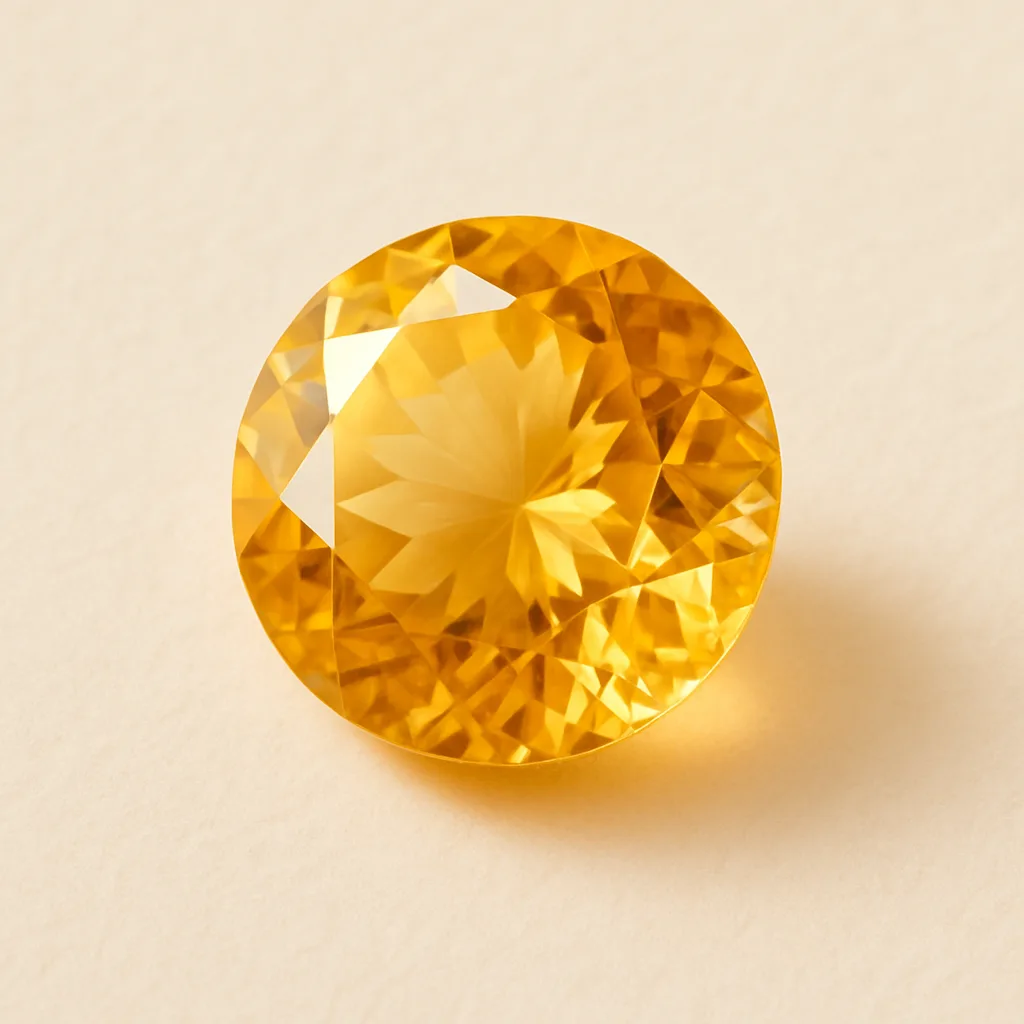
identified this stone yet
Yellow Zircon
| Hardness | 7-7.5 |
| Specific gravity | 4.60-4.70 |
| Refractive index | 1.925-1.984 |
| Crystal system | 正方晶系 |
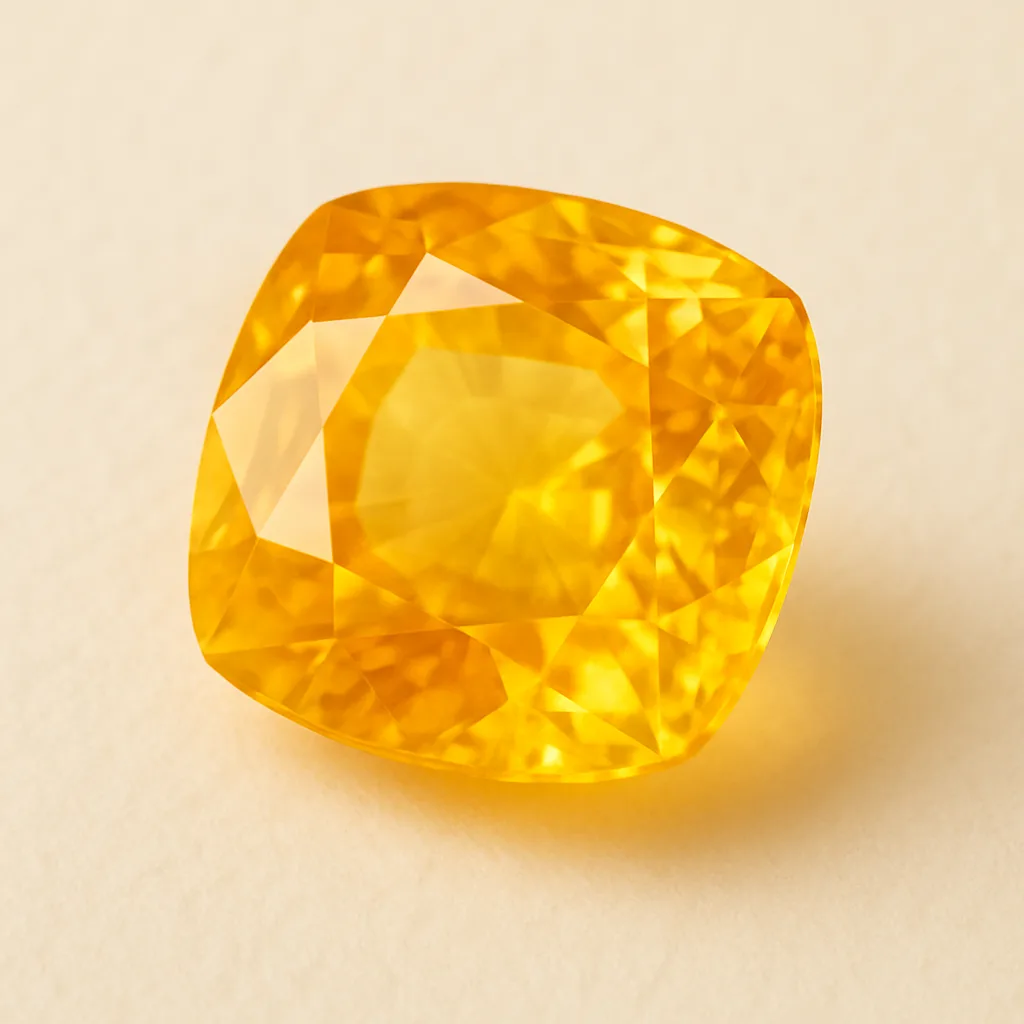
Pale lemon yellow through canary, golden honey, and warm amber tones. The most prized color is a bright canary yellow with strong fire visible in fancy cuts.
- Strain features and 'gnarled' fractures from radiation damage in older crystals (metamictization)
- nclusions in less metamict material
- nclusions of zirconolite, monazite, or apatite
- Color zoning along growth planes
- Doubly refractive, uniaxial positive
- Refractive index 1.92–2.01 (decreases with metamictization)
- 0.04–0.06 — strong visible at 10×
- Specific gravity 4.6–4.7 (lower in metamict material)
- 0.039 — strong fire approaching that of diamond
- 01Strong visible at 10× — the diagnostic feature separating zircon from singly refractive imitations (CZ, glass, YAG)
- 02Refractive index 1.92–2.01 — far above synthetic cubic zirconia (RI 2.15) and well above sapphire (1.76–1.77) and topaz (1.61–1.63)
- 03Specific gravity 4.6–4.7 — heavier in the hand than topaz (3.5) or sapphire (4.0)
- 04Characteristic absorption spectrum at 653.5 nm (uranium-related) confirmable with a hand spectroscope
- Mohs 6–7.5 — durable enough for daily wear, but soft edges and junctions can chip; avoid impact and stone-on-stone storage
- Heat-treated material may revert to brown under prolonged direct sunlight or UV exposure
- nclusions and metamict fractures can be damaged by vibration and thermal shock
¥3,000–10,000/ct for commercial heat-treated Cambodian material, up to ¥30,000/ct for fine large Sri Lankan stones with strong canary color and no heat treatment.
Note: Heat treatment of brown rough to yellow is standard and accepted, with disclosure required for fine stones. The chief market concern is persistent consumer confusion between zircon (a natural mineral) and cubic zirconia (a 1976 Soviet synthetic of zirconium dioxide). Genuine zircon should always be sold with explicit clarification of mineral identity — 'zirconium silicate, natural mineral, not CZ.'
Yellow zircon is zirconium silicate (ZrSiO₄, tetragonal), naturally tinted by trace uranium and thorium that may also produce metamictization — radiation damage that lowers the refractive index, specific gravity, and over geological time. Most commercial yellow zircon is heat-treated from brown rough — typically Cambodian Ratanakiri or Vietnamese material — in oxidizing conditions to produce a stable canary-to-honey color. Genuinely natural untreated yellow stones are less common but reach the connoisseur market. Mohs 6–7.5 depending on metamict damage, RI 1.92–2.01, SG 4.6–4.7, 0.039 — only slightly below diamond's 0.044.
Origins
Cambodia's Ratanakiri Province is the dominant modern source, producing the rough that is heat-treated into most of the world's commercial yellow zircon (and the blue 'Starlite' zircon traded under the same origin). Thailand (Chanthaburi), Myanmar (Mogok), Sri Lanka (Ratnapura), Tanzania, Madagascar, and Vietnam contribute additional production. Sri Lankan stones in pale natural yellow without are the most coveted by collectors.
History
Sanskrit gem texts including the Ratnapariksha c. 6th century CE describe 'jargoon' as a yellow gem alongside topaz and quartz, and the etymology of 'zircon' descends through Arabic zarqun ('gold-colored') from Persian zar ('gold') + gun ('color'). Medieval European lapidaries called yellow zircon 'jacinth' alongside its red cousin and used it in ecclesiastical jewelry as a substitute for yellow sapphire and amber. The 1789 isolation of zirconium as an element by Martin Heinrich Klaproth from Sri Lankan zircon gave the mineral both its commercial name and its scientific identity.
Lore & symbolism
Sanskrit tradition associates yellow zircon with Brihaspati (Jupiter) — the same planetary patronage as yellow sapphire — and Vedic jyotish recognizes both stones as sources of wisdom, prosperity, and protection. Medieval European tradition associated 'jacinth' with truth-telling and the dispelling of nightmares; the lapidary of Marbod of Rennes (11th century) prescribes the stone for travelers seeking safe passage.
Tools to confirm this stone
Tools that help confirm Yellow Zircon. Tap any item to jump to the matching section on the gem tools page.
- 最終確認日
- 2026年4月28日
- 参 考 文 献
- Gem Encyclopedia/ GIA (Gemological Institute of America)
- 宝石鑑別基準/ 中央宝石研究所 (CGL)
- Mineral & Gem Database/ Mindat.org / Gemdat.org
- 宝石学入門/ 全国宝石学協会
本ページの物性値(屈折率・比重・硬度・結晶系等)は、上記の権威ある一次資料を相互参照して編集しています。最新の鑑別研究の進展により値が更新される場合があります。