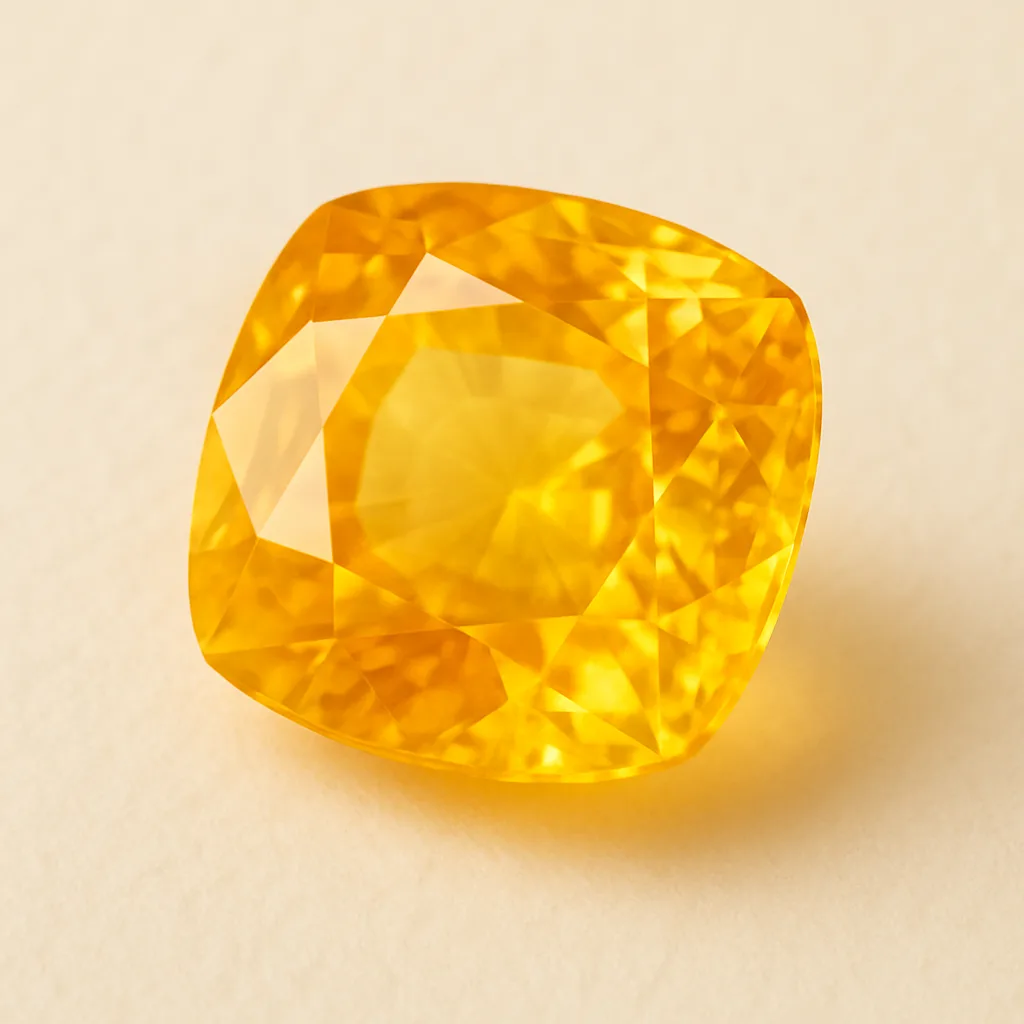
identified this stone yet
Natural Yellow Sapphire
| Hardness | 9 |
| Specific gravity | 4.00 |
| Refractive index | 1.762-1.770 |
| Crystal system | 六方晶系(三方晶系) |
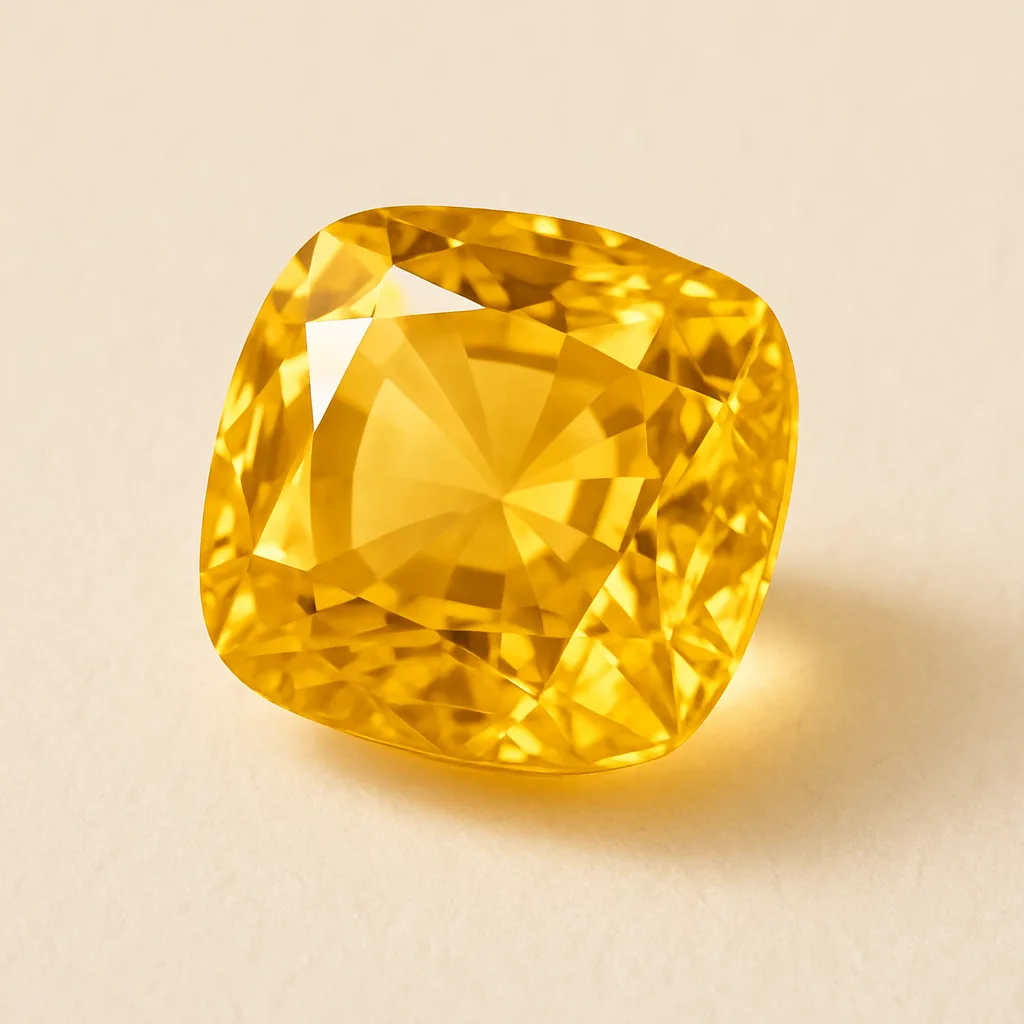
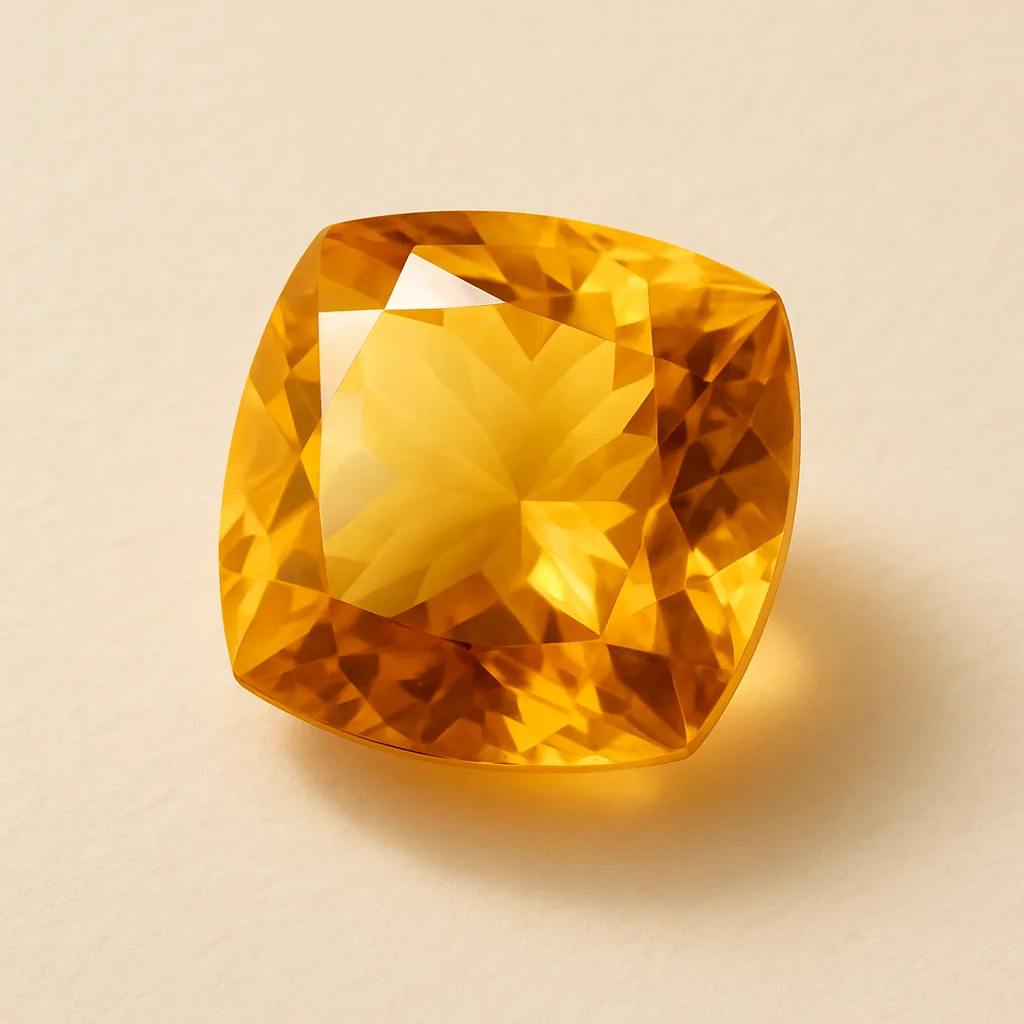
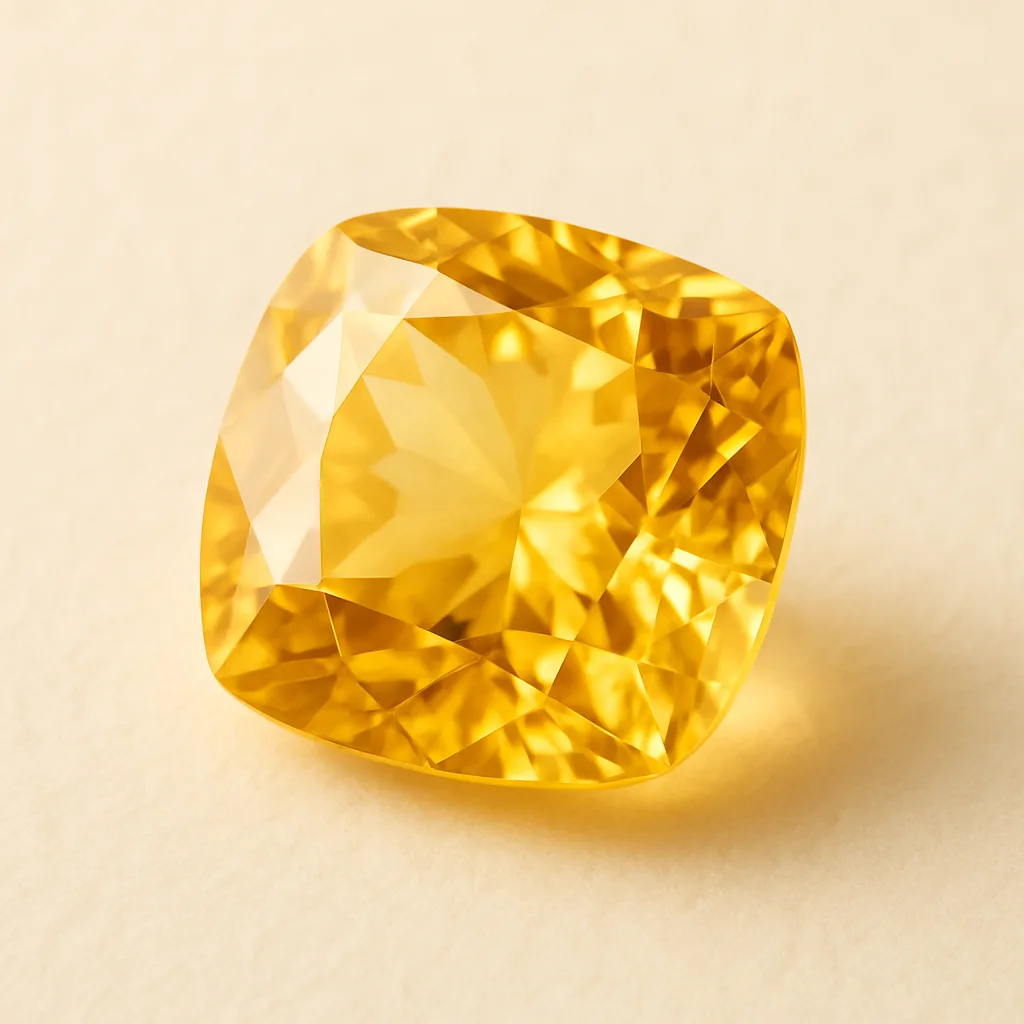
Pale lemon yellow, saturated canary yellow, golden yellow, and warm honey-amber. The most prized tone for jyotish purposes and for connoisseur collectors is a pure vivid yellow without orange or brown modifiers — sometimes called 'mid-tone golden' or 'pukhraj yellow' in the Indian trade.
- Silk: short rutile needles in three crystallographic directions, often partially dissolved in heat-treated material
- nclusions following healed fractures
- Color zoning in straight bands or hexagonal patterns
- egative crystals with hexagonal outlines
- Zircon halos with stress fractures around tiny zircon crystals
- Doubly refractive (uniaxial negative)
- 0.008–0.009 — subtle at 10×
- Weak to moderate dichroism — yellow and pale yellow along different optical directions
- Vitreous to sub-adamantine luster
- 01nclusions strongly support a natural origin
- 02 visible under 10× indicate Verneuil (flame-fusion) synthetic
- 03Round gas bubbles indicate flame-fusion or glass simulant
- 04Beryllium diffusion: a thin yellow surface layer with paler interior visible in immersion or with a desktop spectrometer
- 05SG ~4.0 and RI 1.762–1.770 separate sapphire from yellow topaz (SG 3.5) and citrine (SG 2.65)
- Mohs 9 with no — extremely durable for everyday wear
- Ultrasonic and steam cleaning are generally safe for untreated and heat-treated stones
- Avoid for beryllium-diffused stones with visible surface zoning, as aggressive cleaning may eventually wear through the thin treated layer
- Stable to light and normal cleaning chemicals
Roughly $100–$500/ct for commercial heat-treated yellow sapphire under 2 ct, $800–$3,000/ct for clean Sri Lankan or Madagascar stones in the 3–5 ct range with strong pure yellow saturation, and $5,000–$25,000+/ct for exceptional untreated Sri Lankan or Burmese stones above 5 ct with vivid pukhraj yellow. Origin and treatment are the two largest price drivers.
Note: Treatment disclosure is critical. The 2002 beryllium diffusion crisis taught the trade that even sophisticated buyers can be deceived by surface-layer color treatments. Heat-only treatment is widely accepted and increases yield from pale rough; beryllium diffusion is a separate category requiring explicit disclosure. Untreated Sri Lankan stones in jyotish-grade saturation command significant premiums over treated Madagascar material, and lab reports from GIA, GRS, or AGL are standard above $1,000/ct. The Indian jyotish market specifically values stones with clean clarity and no visible color zoning.
Yellow sapphire is corundum (Al₂O₃) where trace iron (Fe³⁺) in the corundum lattice produces yellow body color, sometimes enhanced by color-center mechanisms whose stability is the focus of significant gemological research. Unlike blue sapphire, where Fe-Ti charge transfer drives the color, yellow sapphire color is dominantly iron-only — which is part of why yellow sapphire is sometimes susceptible to fading or color change under heating. Major commercial sources include Sri Lanka (Ratnapura district), Madagascar (Ilakaka), Tanzania, Australia (Queensland), and historically Burma (Myanmar). Treatments — particularly heat and the controversial beryllium lattice diffusion — are widespread and disclosure is essential.
Origins
Sri Lanka's Ratnapura district ('City of Gems') is the historical and current benchmark source for fine yellow sapphire, producing material that often runs cleaner and more transparent than competing origins. Madagascar's Ilakaka deposit, opened in 1998, now supplies a large share of commercial yellow sapphire and contributed dramatically to the global supply of jyotish-grade material. Tanzania's Songea and Tunduru fields produce smaller but high-quality yellow stones. Australia's Queensland deposits yield darker, more iron-rich yellow material that responds well to . Montana's Yogo Gulch produces small but fine pale-yellow sapphires alongside its more famous cornflower blue stones.
History
Yellow sapphire occupies a uniquely structured cultural position in South Asia: the Sanskrit name pukhraj appears in Vedic astrological texts that classify gemstones by their planetary correspondence, with yellow sapphire assigned to Jupiter (Brihaspati). Traditional jyotish prescriptions specify wearing pukhraj set in gold on the index finger of the right hand, typically on a Thursday after appropriate consecration rituals. The Sri Lankan trade in yellow sapphire predates written records, with archaeological evidence of gem trading along the Indian Ocean routes to Rome and Persia from the first century CE. In 2002, the gemological world was disrupted by the discovery that some heat-treated Songea yellow sapphires were actually beryllium-diffused — a previously unknown treatment in which a thin yellow surface layer was created by Be²⁺ ion diffusion at high temperatures. GIA and other major labs developed LA-ICP-MS protocols to detect the treatment, and current disclosure standards require explicit treatment notation.
Lore & symbolism
September's birthstone (shared with blue sapphire). The 45th wedding anniversary gem. In jyotish, pukhraj is prescribed for those with weak Jupiter placements in their birth chart, believed to bring wisdom, prosperity, marital harmony, and success in education and law. The wearer must follow purification rituals before adopting the stone, and some jyotish practitioners recommend a 'trial period' to confirm compatibility. European lapidary writing assigns yellow sapphire less specific symbolism but associates it generally with intellectual clarity and divine favor.
Tools to confirm this stone
Tools that help confirm Natural Yellow Sapphire. Tap any item to jump to the matching section on the gem tools page.
- 最終確認日
- 2026年4月28日
- 参 考 文 献
- Gem Encyclopedia/ GIA (Gemological Institute of America)
- 宝石鑑別基準/ 中央宝石研究所 (CGL)
- Mineral & Gem Database/ Mindat.org / Gemdat.org
- 宝石学入門/ 全国宝石学協会
本ページの物性値(屈折率・比重・硬度・結晶系等)は、上記の権威ある一次資料を相互参照して編集しています。最新の鑑別研究の進展により値が更新される場合があります。