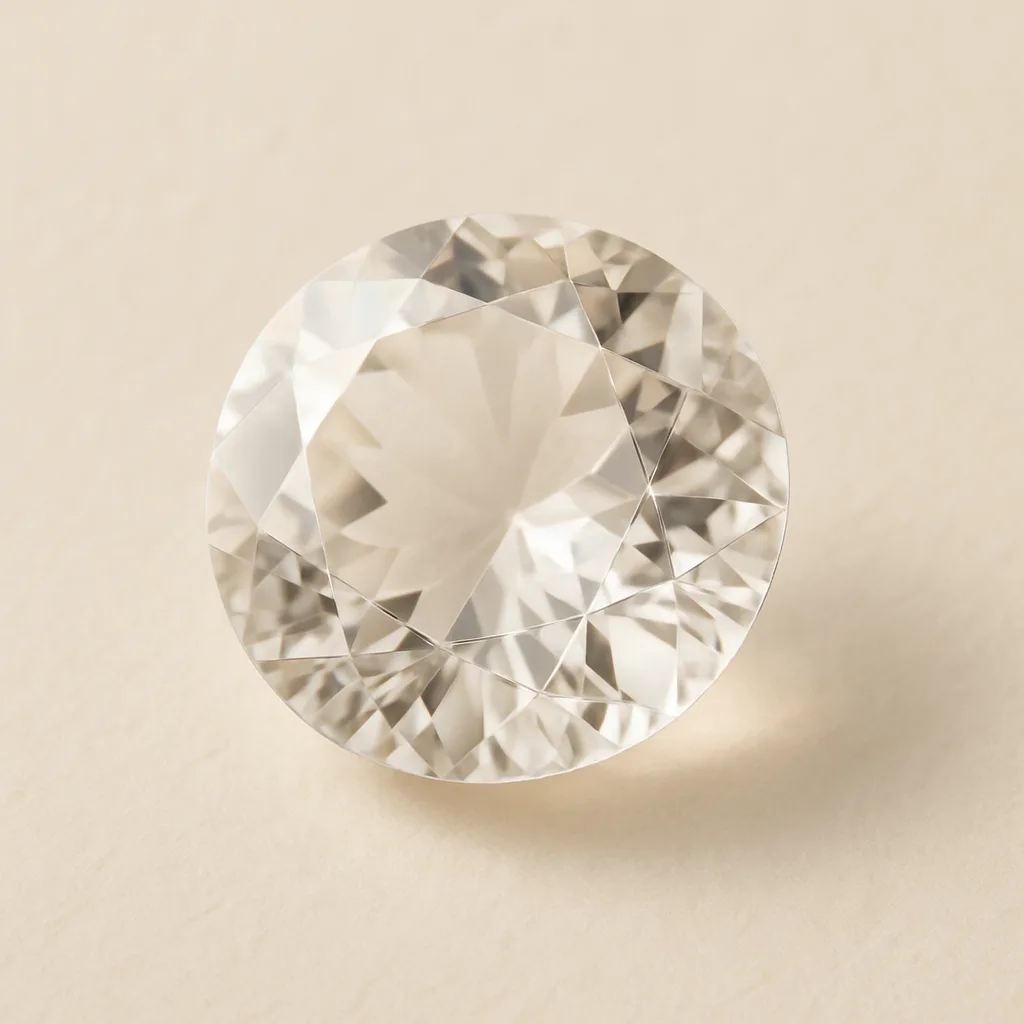
identified this stone yet
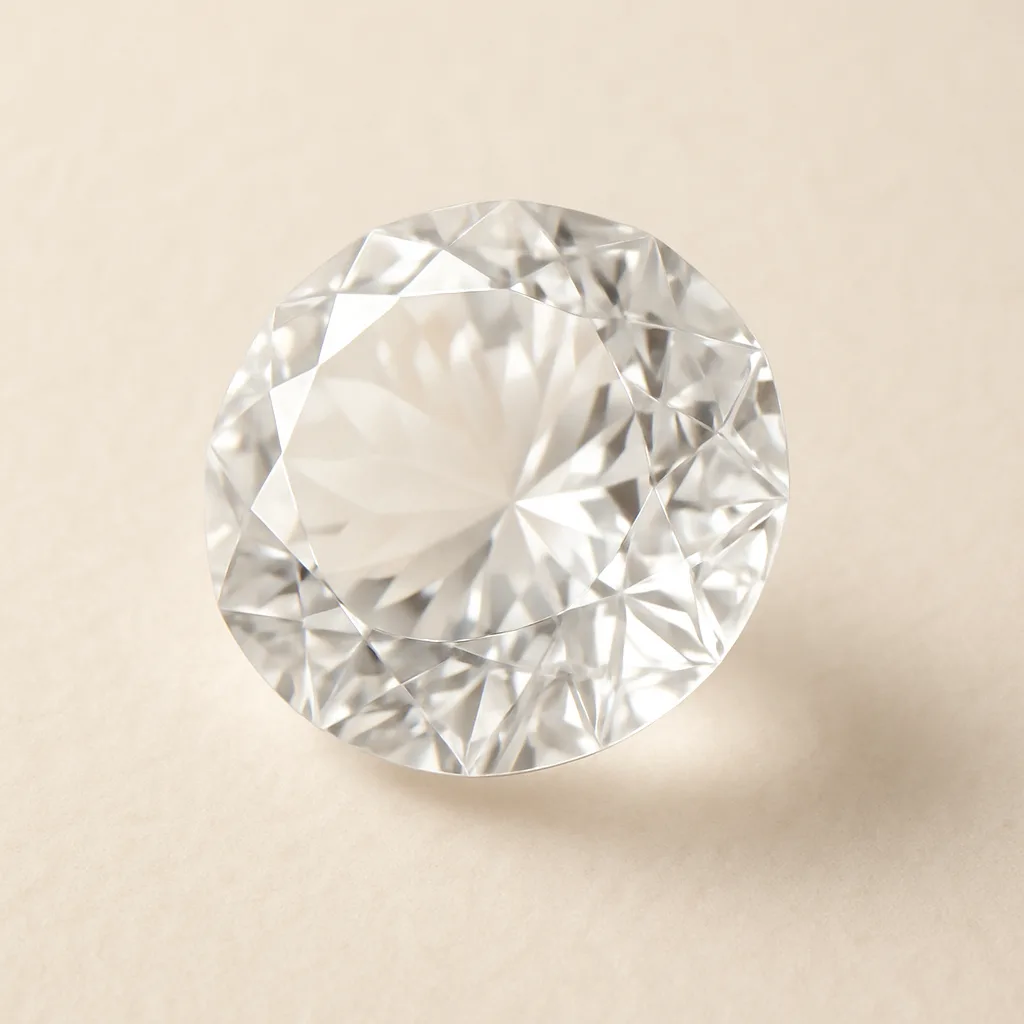
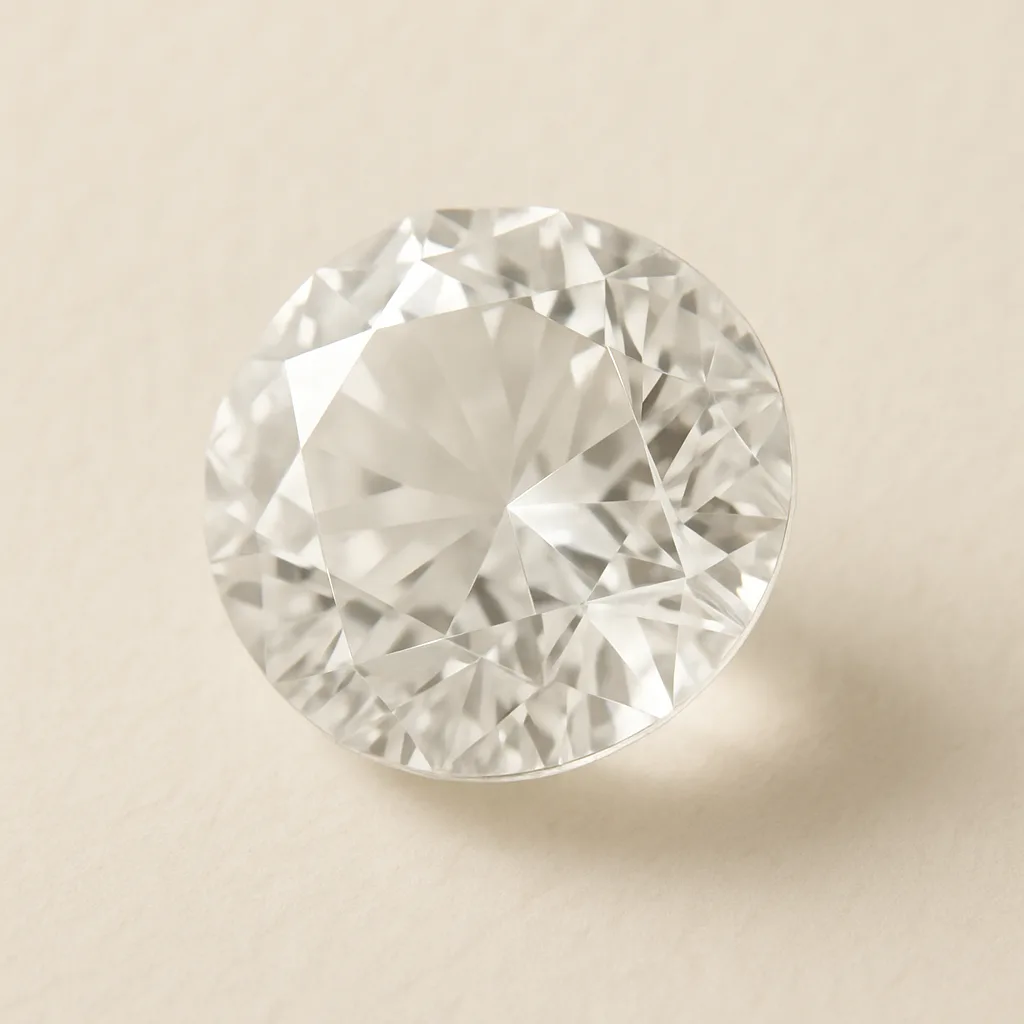
White Topaz
| Hardness | 8 |
| Specific gravity | 3.49-3.57 |
| Refractive index | 1.610-1.638 |
| Crystal system | 斜方晶系 |
nclusions, often graded by the diamond-style D–F scale by commercial cutters.
- nclusions, often elongated parallel to the c-axis
- Healed fractures with fluid-filled tubes
- egative crystals with prismatic outlines
- Pre-existing planes — diagnostic of topaz when present
- Doubly refractive (biaxial positive)
- 0.008–0.010 — moderate visible at 10×
- No in colorless stones
- Perfect basal — diagnostic and a handling hazard
- 01SG 3.49–3.57 — feels noticeably heavy in hand compared with rock crystal (2.65) or goshenite (2.7) at equal size
- 02RI 1.610–1.638 (clearly higher than quartz at 1.544)
- 03Perfect basal visible as a flat reflective plane perpendicular to the c-axis
- 04Diamond simulant context: lacks the high RI (2.42) and of diamond, easily distinguished by thermal conductivity probe
- Mohs 8 but with perfect basal — avoid sharp impacts along the c-axis direction
- Never use ultrasonic or steam cleaning — vibration can propagate fractures
- Avoid sudden thermal shock; the perfect and moderate thermal expansion combine to make topaz crack-prone
- Stable to light and normal cleaning chemicals
Roughly $2–$15/ct for commercial faceted white topaz under 5 ct, $20–$60/ct for clean stones above 10 ct with high transparency, and $80–$200/ct for exceptional large stones (20+ ct) cut to diamond-style proportions. Most white topaz on the market is sold as a budget diamond simulant rather than as a connoisseur gem.
Note: White topaz is one of the most affordable faceted gemstones on the market — clean stones up to 5 carats trade for a few dollars per carat. The main commercial complication is treatment disclosure: a 'topaz' offered as Swiss blue or London blue is almost certainly irradiated, and reputable dealers disclose this routinely. Coating treatments (titanium PVD coatings producing 'mystic topaz' rainbow effects) are widespread but wear off with normal use and should always be disclosed.
White topaz is essentially feedstock topaz that has not been irradiated or otherwise color-treated. The vast majority of the world's swimming-pool-blue 'sky blue,' 'Swiss blue,' and 'London blue' topaz on the market began as cheap colorless Brazilian rough that was electron-beam or gamma-irradiated and then heated. Cut white topaz is a budget-friendly diamond simulant — clean, bright, and durable enough for everyday jewelry — though its perfect basal means it should never be set where a sharp impact along the c-axis is possible.
Origins
Brazil's Minas Gerais (especially the Ouro Preto and Teófilo Otoni districts) is the dominant commercial source — vast quantities of clean colorless rough are mined as a byproduct of imperial and sherry topaz workings and shipped to irradiation facilities in China, Thailand, and the United States. Pakistan's Gilgit-Baltistan, Russia's Ural Mountains, Sri Lanka's Ratnapura district, Nigeria's Jos Plateau, Mexico, and Utah's Topaz Mountain all contribute additional material, with the Utah deposits producing the well-known sherry-to-colorless naturally faded crystals collected by mineral specimens hobbyists.
History
Colorless topaz from Brazil's Minas Gerais reached European jewelry markets in the 18th century, where it was marketed under the trade names 'Slave's Diamonds' and 'Minas Novas' — diamond simulants sold to clients who could not afford genuine stones. The Portuguese crown's interest in Brazilian gem deposits, dating to the early 1700s, made Ouro Preto ('Black Gold') one of the colonial era's wealthiest mining towns. Modern industrial use of colorless topaz as the starting point for irradiated blue topaz began in the late 1960s, and by the 1980s the irradiated-blue pipeline had become the dominant economic destination for most clean colorless Brazilian rough.
Lore & symbolism
November's traditional birthstone (shared with citrine), associated in modern lapidary writing with clarity of intention, truthful communication, and emotional cooling. The 23rd wedding anniversary gem under the 'Imperial Topaz' tradition. Older European folk medicine credited topaz with the ability to cool boiling water and break enchantments — properties Pliny ascribed to the original 'topazos' of his Naturalis Historia, though Pliny's stone was almost certainly peridot from Zabargad Island in the Red Sea, not modern topaz.
Tools to confirm this stone
Tools that help confirm White Topaz. Tap any item to jump to the matching section on the gem tools page.
- Last reviewed
- April 28, 2026
- Bibliography
- Gem Encyclopedia / GIA (Gemological Institute of America)
- Gem Identification Standards / Central Gem Laboratory (CGL), Tokyo
- Mineral & Gem Database / Mindat.org / Gemdat.org
- Introduction to Gemology / Gemmological Association of All Japan (GAAJ)
The gemological data on this page (refractive index, specific gravity, hardness, crystal system, etc.) is cross-checked against the authoritative primary sources listed above. Values may be revised as gemological research advances.