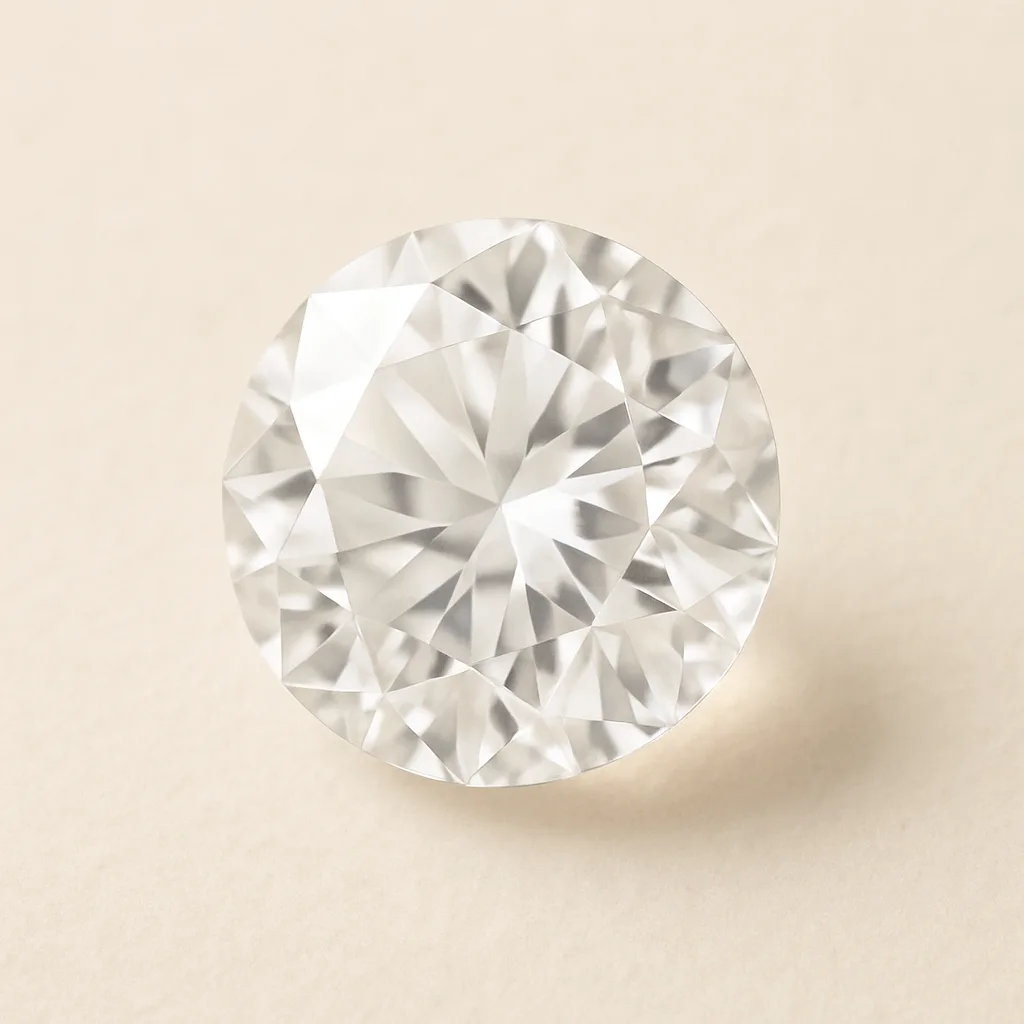
identified this stone yet
White Spinel
| Hardness | 8 |
| Specific gravity | 3.58-3.61 |
| Refractive index | 1.712-1.717 |
| Crystal system | 立方晶系 |
Pure colorless to faint white-blue tint; highest-quality natural Sri Lankan and Burmese material is essentially water-clear. Synthetic Verneuil material is consistently colorless. Faint pink or yellow undertones in some natural material can be heat-treated to colorless if desired, though the practice is uncommon for material that already commands premium pricing in the trade.
- nclusions ('octahedrons in the host') diagnostic of natural growth
- nclusions from the original alluvial environment
- Synthetic: and round gas bubbles from Verneuil flame-fusion process — diagnostic at 10× immersion
- Synthetic: typically much cleaner overall than natural material
- Singly refractive (cubic spinel structure) — no at any orientation
- Refractive index 1.712–1.717 (natural) / 1.728 (synthetic) — the SG/RI elevation in synthetic material reflects the MgO:Al₂O₃ stoichiometric excess required for Verneuil growth
- Specific gravity 3.58–3.61 (natural) / 3.63–3.65 (synthetic)
- 0.020 — modest, less than diamond (0.044) or CZ (0.058)
- Mohs 8.0 — durable for daily wear, close to corundum's 9
- 01Strong bluish-white short-wave UV is the diagnostic signature of synthetic Verneuil spinel — natural spinel is generally inert under SW-UV
- 02Refractive index 1.728 (synthetic) vs 1.712–1.717 (natural) — measurable on standard refractometer in seconds
- 03Singly refractive (no ) separates spinel from corundum (white sapphire), which doubles strongly at 30× immersion through the table
- 04 and gas bubbles diagnostic of Verneuil flame-fusion at 10× immersion
- 05nclusions diagnostic of natural growth
- Mohs 8.0 — durable for everyday wear including ring use
- Ultrasonic and steam cleaning are safe
- Stable to light and standard cleaning chemicals
- Stable to jeweller's torch repair work
Natural colorless spinel from Sri Lanka and Myanmar trades at $200–$1,500 per carat for clean, well-cut faceted material under 2 ct; clean stones in the 2–5 ct range run $400–$2,500/ct; exceptional 5+ ct material reaches $1,000–$5,000/ct. Synthetic Verneuil colorless spinel trades at $5–$50/ct at the wholesale level — a price differential of one-to-three orders of magnitude that drives the importance of accurate natural-vs-synthetic identification.
Note: Disclosure as 'natural' or 'synthetic' is mandatory under FTC Jewelry Guides, CIBJO Blue Book, and JIS Z 9529 — the visual differences between natural and Verneuil-grown synthetic colorless spinel are subtle, and bench testing for SG, RI, and SW-UV fluorescence is essential for accurate trade identification. Critical: synthetic spinel reads strong bluish-white SW-UV fluorescence; natural spinel is generally inert or shows only weak fluorescence — this single test resolves natural-vs-synthetic in seconds for an experienced gemologist. The connoisseur premium for natural colorless Sri Lankan and Burmese material has grown substantially since 2015 in line with broader market interest in unheated, untreated colored stones. Beware of glass imitations marketed as 'colorless spinel' — RI under 1.55 and conchoidal fracture distinguish glass immediately.
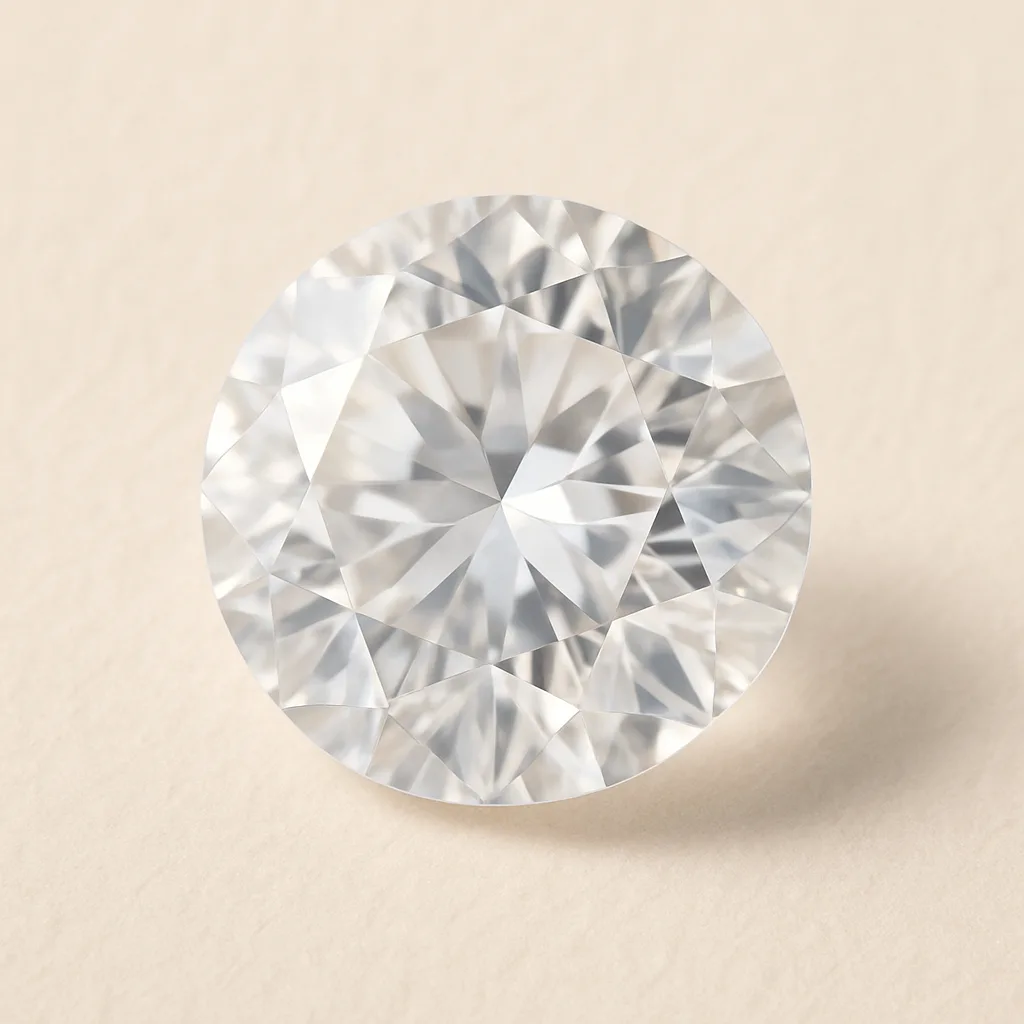
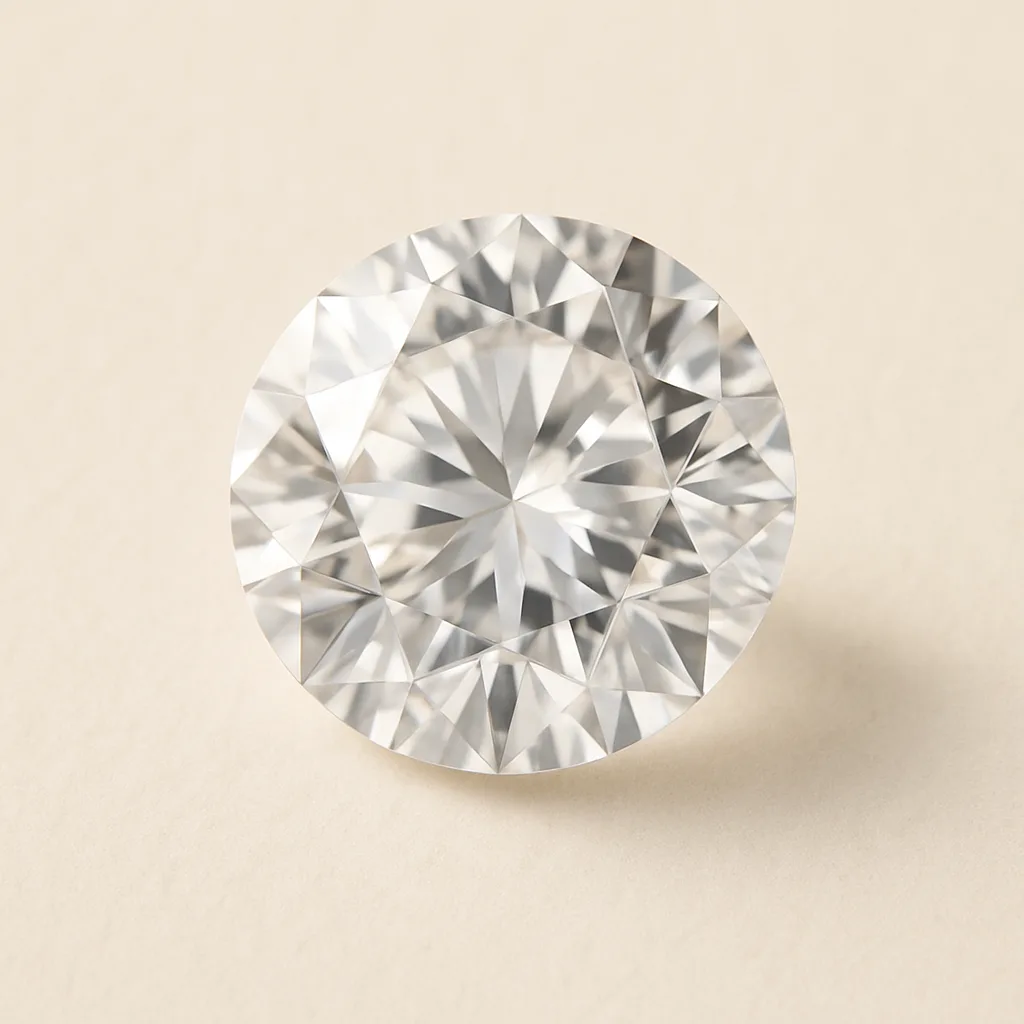
White spinel is colorless MgAl₂O₄ — magnesium aluminum spinel in the magnesium-end-member composition of the spinel group, crystallizing in the cubic system (space group Fd-3m) with magnesium on tetrahedral A sites and aluminum on octahedral B sites. Mohs 8.0, SG 3.58–3.61 (natural) / 3.63–3.65 (synthetic, due to MgO:Al₂O₃ stoichiometric excess required by Verneuil flame-fusion process), RI 1.712–1.717 (natural) / 1.728 (synthetic), singly refractive (cubic), 0.020. Natural colorless spinel is a notable minor product of the Sri Lankan Ratnapura district and Burmese Mogok region, generally produced in association with the better-known red and pink spinel; truly colorless natural material is rare and commands a premium as a connoisseur stone. Synthetic white spinel — the dominant commercial variety — is manufactured by the Verneuil flame-fusion process modified by L. Paris in 1908 to handle the magnesium-aluminate composition; the synthetic is recognized by its diagnostic strong bluish-white short-wave UV (from trace iron and chromium impurities) and by elevated SG and RI compared to natural material. The synthetic was a workhorse low-cost substitute for both diamond and white sapphire throughout the twentieth century.
Origins
Sri Lanka (Ratnapura district, the celebrated 'Gem City' alluvial deposits in continuous production since classical antiquity) is the principal natural source for colorless spinel, typically recovered as a minor product alongside the more famous red and pink material. Myanmar (Mogok Stone Tract — the same Mogok valley in northern Shan state that supplies pigeon-blood ruby and Mahenge spinel) also yields natural colorless material in small quantities. Tajikistan (Kuh-i-Lal in the Pamir Mountains, the historical 'Balas Ruby' source from Marco Polo's thirteenth-century Travels), Vietnam (Luc Yen and Quy Chau in northern Vietnam, mined since the 1980s), Tanzania (Mahenge and Morogoro), and Madagascar yield secondary supply. Synthetic Verneuil production is concentrated in France (Djevahirdjian SA, Monthey, Switzerland), Russia (Verneuil-process facilities in Moscow region), Thailand (Bangkok), and China (Wuzhou and Guangzhou cutting hubs).
History
Spinel has been continuously known but persistently confused with corundum throughout most of recorded history. The Sanskrit Ratnapariksha (c. 6th century CE) lists various spinel colors among precious stones; the Persian 'Balas Ruby' tradition recorded by Marco Polo (1271–1295) refers to the red spinel from Kuh-i-Lal in the Badakhshan region of Tajikistan. The Black Prince's Ruby in the British Imperial State Crown — added to the crown jewels in 1367 by Edward of Woodstock from the Battle of Nájera — was definitively identified as red spinel rather than ruby by Edwin Streeter in 1879, ending five centuries of misidentification. Colorless spinel remained a minor specialty within the larger spinel trade throughout this period. L. Paris in France developed the Verneuil flame-fusion synthesis for magnesium aluminate spinel in 1908, six years after Verneuil's original 1902 corundum demonstration to the French Academy of Sciences; the modified process required addition of excess MgO to the alumina feedstock to compensate for differential evaporation rates of magnesium and aluminum oxides during flame-fusion. Synthetic spinel rapidly became the standard low-cost diamond and white-sapphire substitute throughout the twentieth century, especially for August birthstone jewelry (peridot was the official August birthstone but synthetic spinel served as a cheap colorless alternative for class rings, charm bracelets, and budget engagement-promise rings). The 2010s connoisseur revival of natural spinel — driven by the Tanzanian Mahenge red spinel discoveries (2007) and broader collector interest in 'unheated, untreated' colored stones — extended to natural colorless spinel as a niche premium product, though synthetic spinel continues to dominate commercial volume by a wide margin.
Lore & symbolism
August birthstone in some lists (the modern American National Jewelers Association list assigns peridot and spinel jointly as August birthstones since 2016, though the 'spinel' designation typically implies red spinel rather than colorless). Vedic jyotish does not assign a specific stone-of-day to colorless spinel; some traditional systems treat colorless spinel as a substitute for diamond in navagraha settings where authentic diamond is unaffordable. Modern crystal-writing positions white spinel as a stone of clarity, new beginnings, and spiritual purification — attributes broadly consistent with the colorless-stone tradition across most lapidary cultures. The Black Prince's Ruby identification as spinel rather than corundum (Streeter 1879) gives all spinel a documented place in British coronation history.
Tools to confirm this stone
Tools that help confirm White Spinel. Tap any item to jump to the matching section on the gem tools page.
- 最終確認日
- 2026年4月28日
- 参 考 文 献
- Gem Encyclopedia/ GIA (Gemological Institute of America)
- 宝石鑑別基準/ 中央宝石研究所 (CGL)
- Mineral & Gem Database/ Mindat.org / Gemdat.org
- 宝石学入門/ 全国宝石学協会
本ページの物性値(屈折率・比重・硬度・結晶系等)は、上記の権威ある一次資料を相互参照して編集しています。最新の鑑別研究の進展により値が更新される場合があります。