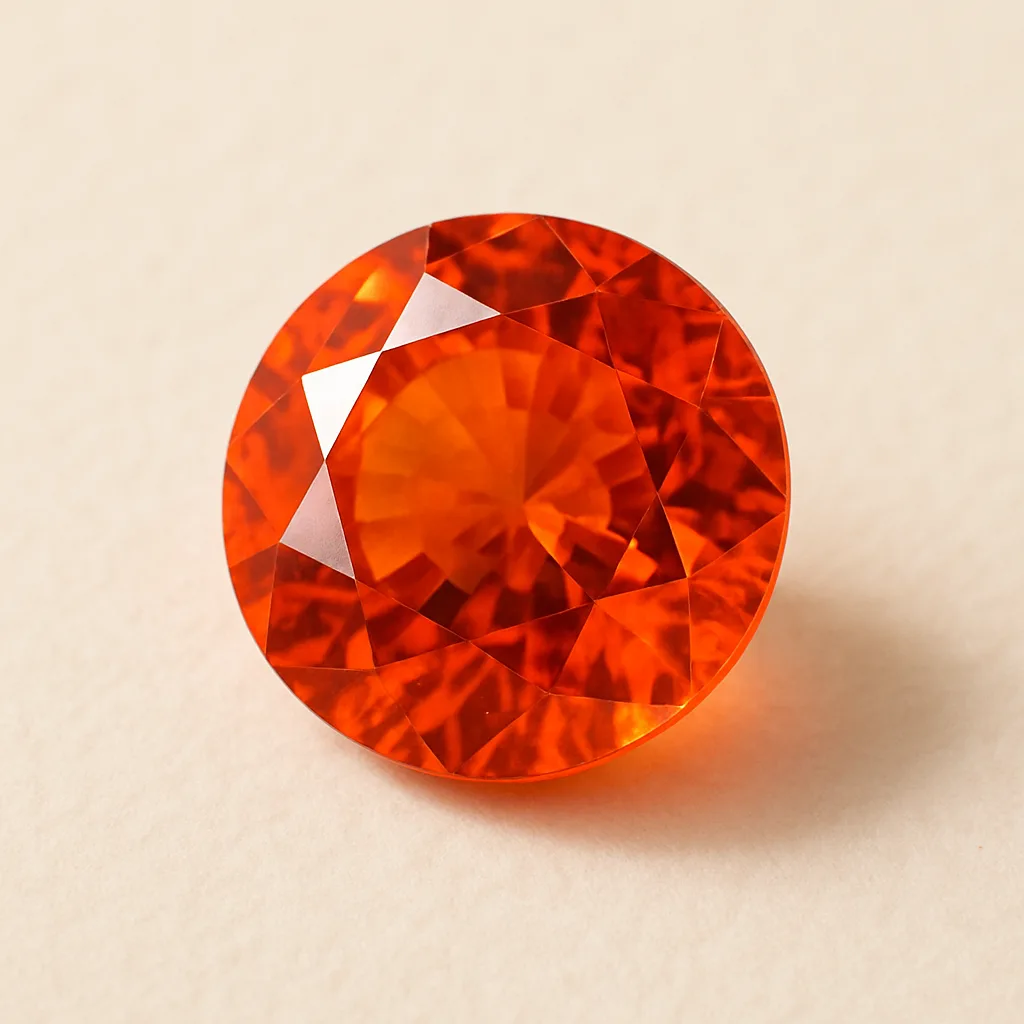
identified this stone yet
Spessartite Garnet
| Hardness | 7-7.5 |
| Specific gravity | 4.12-4.20 |
| Refractive index | 1.790-1.810 |
| Crystal system | 等軸晶系 |
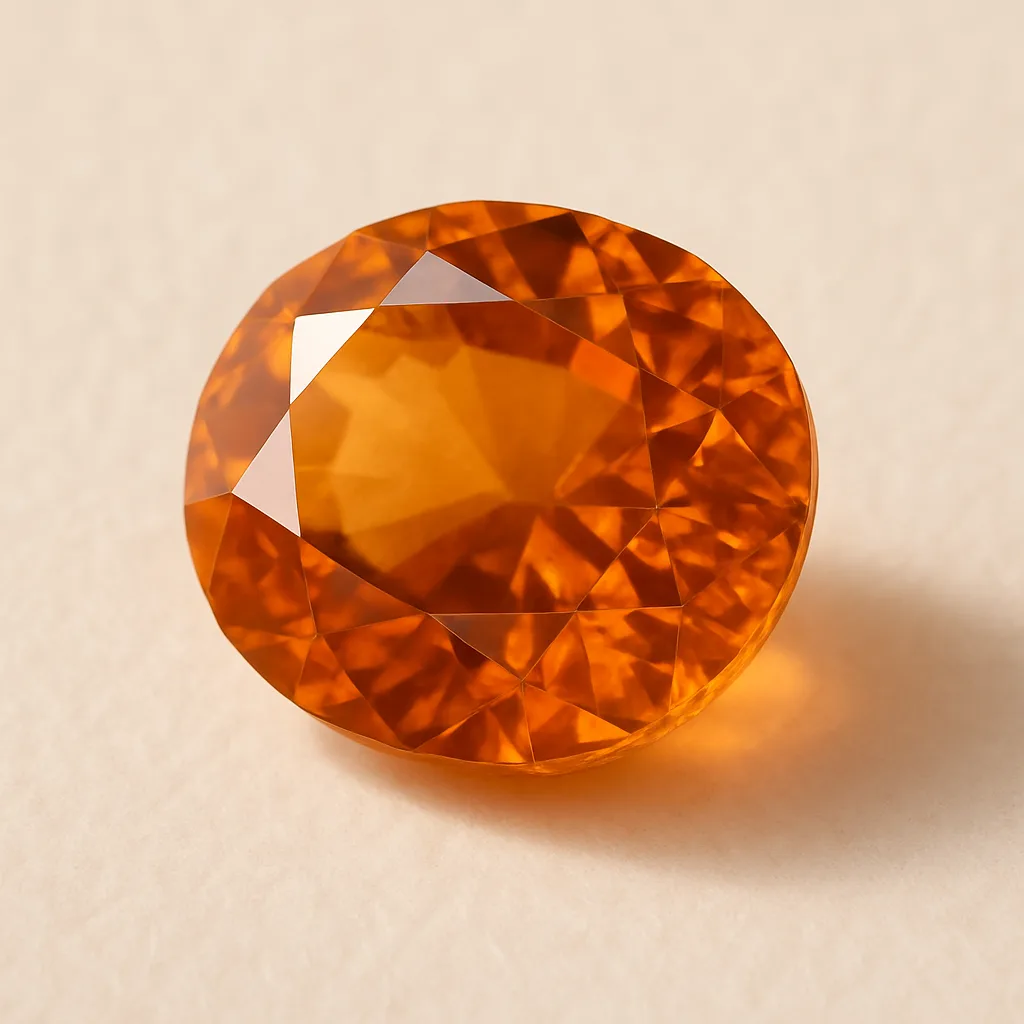
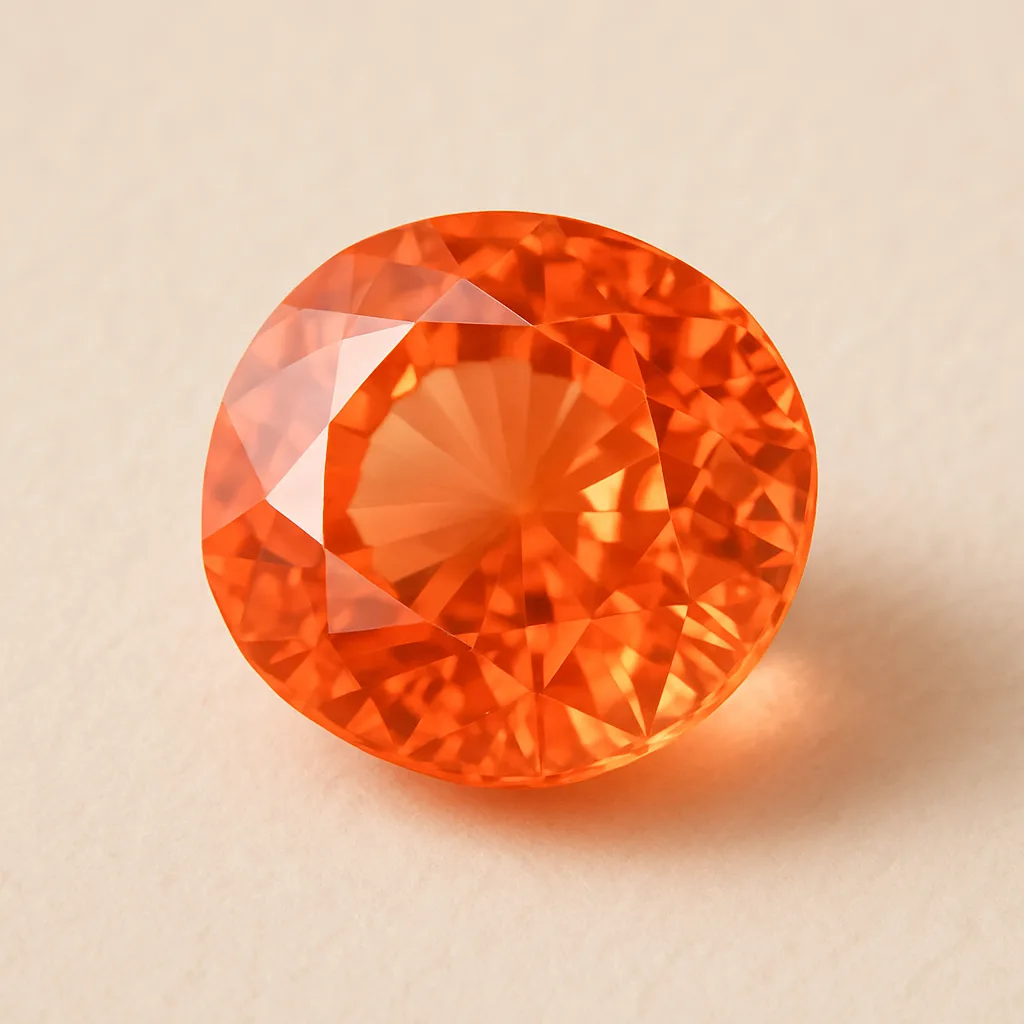
Bright pumpkin orange, fanta-style pure orange, slightly reddish orange, and yellowish orange tones. The 'mandarin' grade is pure vivid orange without brown.
- nclusions
- nclusions and partially healed fingerprints
- nclusions in Nigerian material
- Singly refractive — no
- No dichroism
- 01Inert UV plus pure orange in a singly refractive stone is the spessartite signature
- 02SG above 4.1 separates it from most other orange stones
- 03nclusions distinguish it from rutile-included orange sapphire
- Mohs 7–7.5 — durable for daily wear
- Ultrasonic and steam are safe for clean stones
- Avoid hard impacts
Roughly $200–$1,000 per carat for commercial yellowish-orange material, $1,500–$4,000 per carat for fine 1–3 ct mandarin grade, and $5,000–$10,000+ per carat for top pure-orange stones over 5 carats.
Note: No standard treatments — spessartite is sold as-mined. Color saturation drives most of the price spread: pure pumpkin-orange 'mandarin' material commands several multiples over yellowish or brownish stones. Clean stones over 3 carats are scarce.
Spessartite (also written spessartine) is manganese-aluminum garnet (Mn₃Al₂(SiO₄)₃) colored orange to red-orange by manganese itself. Named after the Spessart Mountains in Bavaria, it was a rare collector's stone until major Namibian (1991) and Nigerian (1999) finds brought it to mainstream jewelry. Most modern stones are sold under the trade name 'mandarin garnet' for the purest pure-orange material.
Origins
Germany's Spessart Mountains gave the species its name in 1832, though that source never produced gem material. Namibia's Kunene region opened a major deposit in 1991, branded 'mandarin garnet,' with a pure neon orange that defined the modern look. Nigeria's Oyo State (1999) followed with similar saturated material sometimes called 'fanta garnet.' Mozambique, Sri Lanka, Myanmar, Brazil and California (USA) round out the market, but Namibian and Nigerian stones still set the price benchmarks.
History
For most of the 19th and 20th centuries spessartite was a collector's curiosity. The 1991 Namibian discovery turned it into a commercial gemstone almost overnight — Tiffany & Co. featured it, and the 'mandarin garnet' name took off in the trade. Both Namibian and Nigerian deposits have been mined hard since, and supply has tightened again over the past decade.
Lore & symbolism
January's birthstone alongside other garnets. Spessartite's vivid orange has come to symbolise vitality, courage, and creative energy — themes that fit a stone the color of sunrise.
Tools to confirm this stone
Tools that help confirm Spessartite Garnet. Tap any item to jump to the matching section on the gem tools page.
- 最終確認日
- 2026年4月28日
- 参 考 文 献
- Gem Encyclopedia/ GIA (Gemological Institute of America)
- 宝石鑑別基準/ 中央宝石研究所 (CGL)
- Mineral & Gem Database/ Mindat.org / Gemdat.org
- 宝石学入門/ 全国宝石学協会
本ページの物性値(屈折率・比重・硬度・結晶系等)は、上記の権威ある一次資料を相互参照して編集しています。最新の鑑別研究の進展により値が更新される場合があります。