identified this stone yet
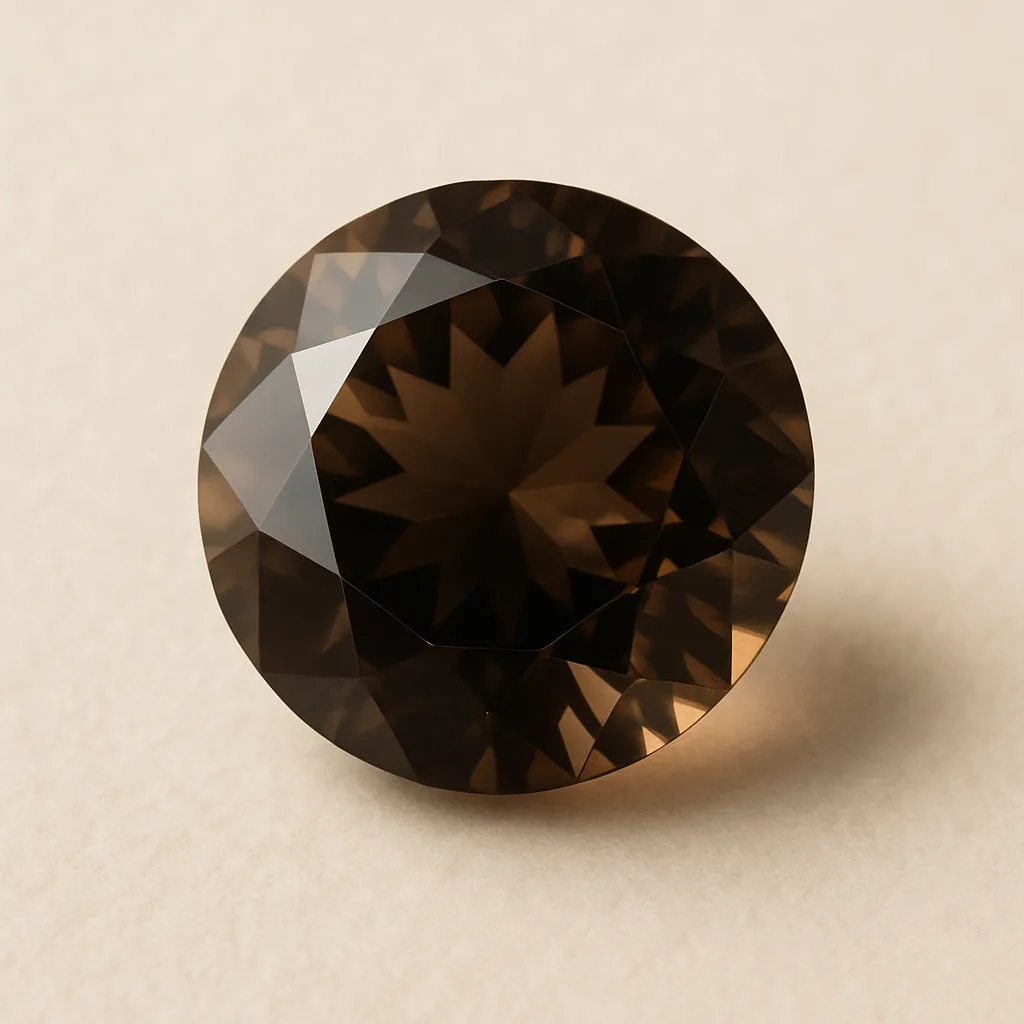
Smoky Quartz
| Hardness | 7 |
| Specific gravity | 2.65 |
| Refractive index | 1.544-1.553 |
| Crystal system | 六方晶系(三方晶系) |
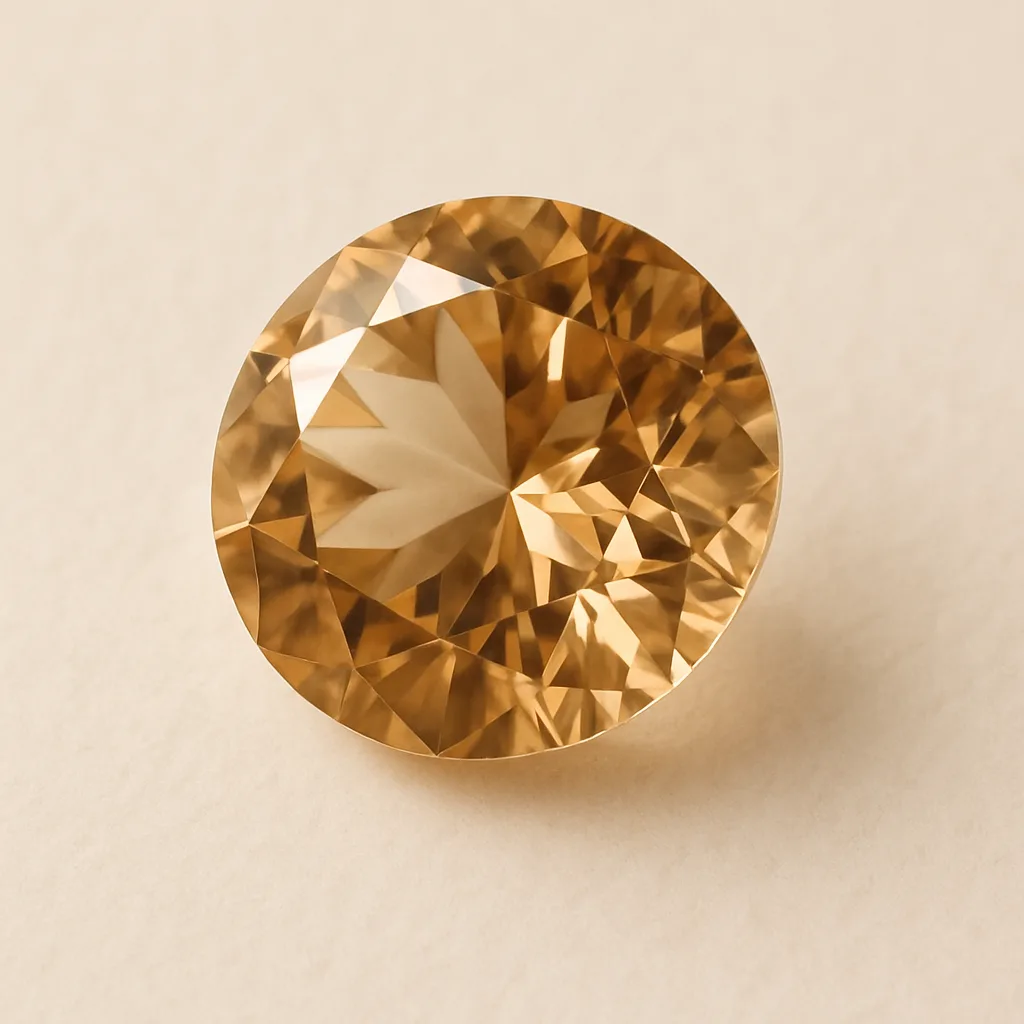
Pale champagne smoke through warm cognac brown to grey-black and opaque inky black (morion). The most prized natural stones are deep cognac brown with strong transparency; pure black morion is collector territory.
- nclusions and two-phase 'fingerprints'
- Rutile needles (when present, the stone may be called rutilated smoky quartz)
- egative crystals with hexagonal outlines
- nclusions — ghost crystal outlines marking growth pauses
- Doubly refractive (uniaxial positive)
- Weak to moderate dichroism — yellow-brown and reddish-brown
- Vitreous luster, brilliant when well-cut
- Strong fire and brilliance in pale 'champagne smoky' material
- 01RI 1.544–1.553 and SG 2.65 confirm quartz
- 02Distinct visible at 10× distinguishes smoky quartz from glass and singly refractive imitations
- 03Heat test: prolonged exposure above 300°C bleaches smoky quartz back to colorless (do not perform on gem-quality stones)
- 04Cairngorm provenance is established by documentation, not gemology — the material itself is identical to other natural smoky quartz
- Mohs 7 — durable for everyday wear
- Color can fade under prolonged direct sunlight or temperatures above 200°C; store away from windows
- Ultrasonic cleaning generally safe
- Stable to all normal cleaning chemicals
Roughly $1–$5/ct for commercial irradiated Brazilian material, $10–$50/ct for clean faceted natural stones above 5 ct, and $100–$500/ct for documented Cairngorm material or fine alpine specimens. One of the most affordable transparent gems on the market.
Note: Roughly 80–90% of commercial smoky quartz is irradiated colorless quartz — the treatment is permanent, stable to normal wear, and indistinguishable from natural smoky quartz by visual inspection. Disclosure norms vary by market: European trade tends to specify, while bulk costume jewelry typically does not. True Cairngorm material — Scottish-mined smoky quartz — commands a substantial premium among Highland-jewelry collectors and is verified by provenance documentation rather than gemological tests.
Smoky quartz is quartz (SiO₂) where natural ionizing radiation from surrounding granitic host rock has knocked electrons loose around trace aluminum atoms substituting for silicon. The resulting color centers absorb light in the visible range and produce the characteristic smoky brown-to-black tones. The deeper the color, the longer or more intense the radiation exposure; near-opaque material is traditionally called morion. Most commercial smoky quartz today is colorless quartz that has been deliberately gamma-irradiated — gemologically identical to natural smoky quartz.
Origins
Scotland's Cairngorm Mountains in the Grampians are the historic source — the Cairngorm pebble has been a Scottish national emblem for centuries and is still found by walkers in the hills above Braemar. The Swiss Alps produce magnificent transparent smoky quartz crystals from alpine clefts, including the famous Tiefengletscher and Tujetsch finds. Brazil's Minas Gerais and Goiás supply most of the modern jewelry market. Madagascar, Ukraine's Volyn pegmatites, Colorado's Pikes Peak batholith, and Namibia round out the global supply.
History
Smoky quartz has been used in Scottish jewelry since at least the Iron Age; polished pebbles have been recovered from Bronze Age cairns in the Cairngorms. By the 18th and 19th centuries, Cairngorm smoky quartz was the standard stone in Highland dress accessories — kilt pins, sgian-dubh handles, and the central jewel of the Highland Brooch. Queen Victoria's enthusiasm for Balmoral and Scottish culture drove a 19th-century cairngorm boom across British jewelry. Bohemia's mid-19th-century irradiation experiments laid the groundwork for the modern treated trade.
Lore & symbolism
Smoky quartz has no formal birthstone status but appears in modern crystal writing as the 'grounding stone' — paired with the root chakra and associated with releasing stress. In Scottish folklore it was carried as a protective talisman against the evil eye. The 22nd wedding anniversary gem in some traditions.
Tools to confirm this stone
Tools that help confirm Smoky Quartz. Tap any item to jump to the matching section on the gem tools page.
- 最終確認日
- 2026年4月28日
- 参 考 文 献
- Gem Encyclopedia/ GIA (Gemological Institute of America)
- 宝石鑑別基準/ 中央宝石研究所 (CGL)
- Mineral & Gem Database/ Mindat.org / Gemdat.org
- 宝石学入門/ 全国宝石学協会
本ページの物性値(屈折率・比重・硬度・結晶系等)は、上記の権威ある一次資料を相互参照して編集しています。最新の鑑別研究の進展により値が更新される場合があります。