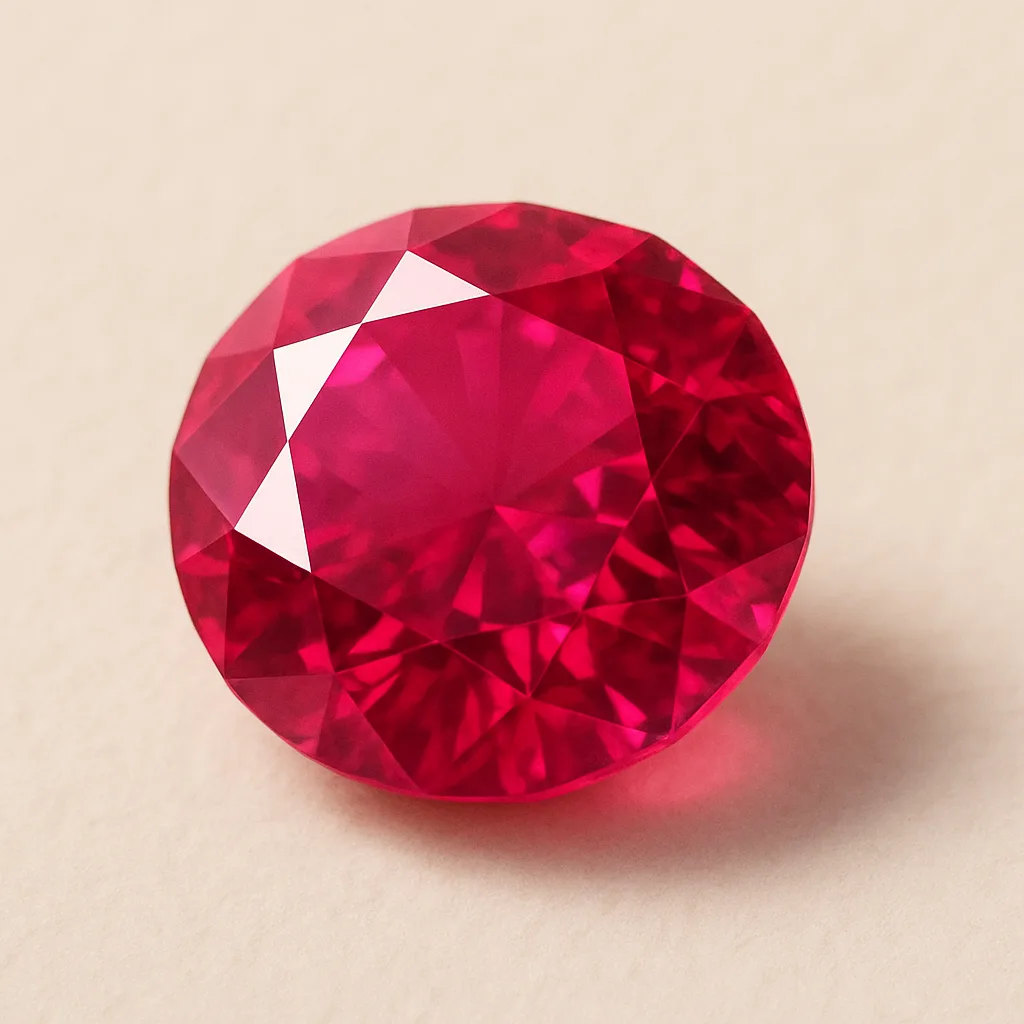
identified this stone yet
Natural Ruby
| Hardness | 9 |
| Specific gravity | 4.00 |
| Refractive index | 1.762-1.770 |
| Crystal system | 六方晶系(三方晶系) |
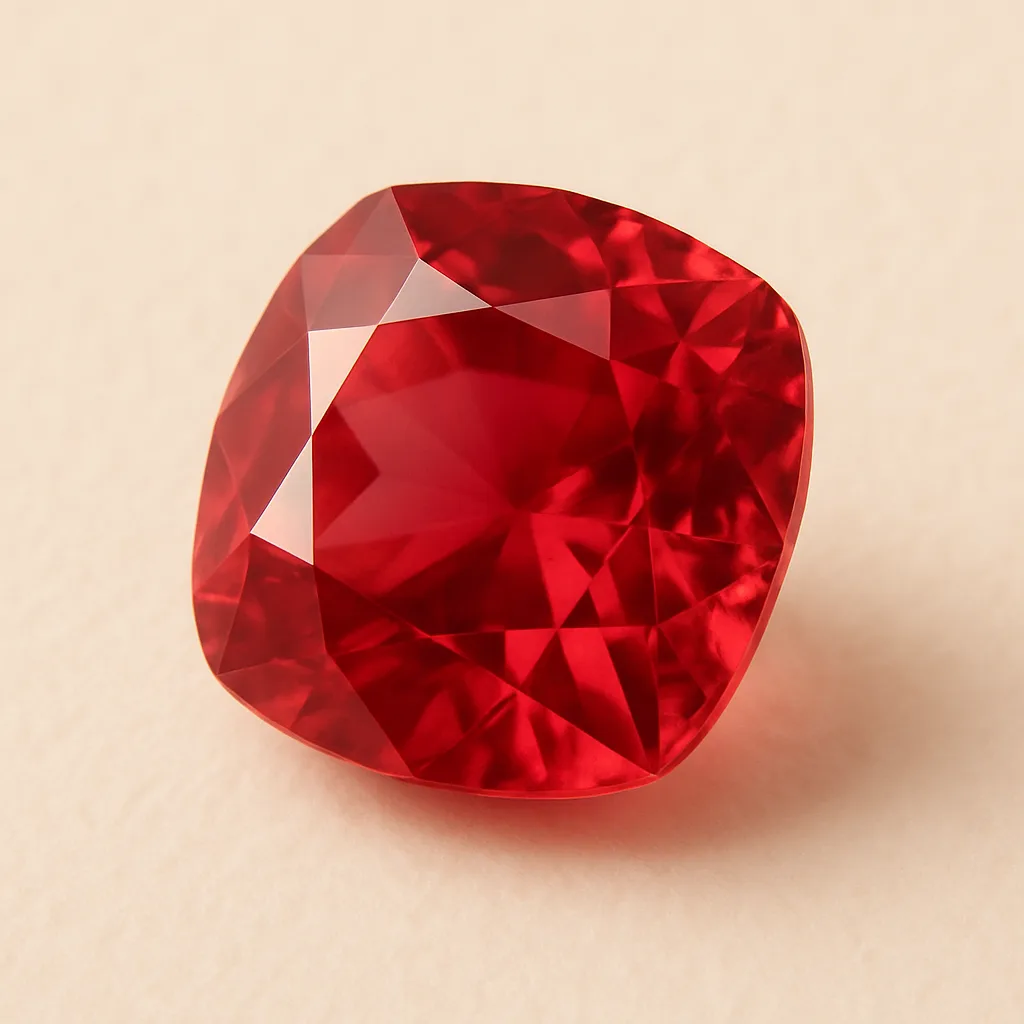
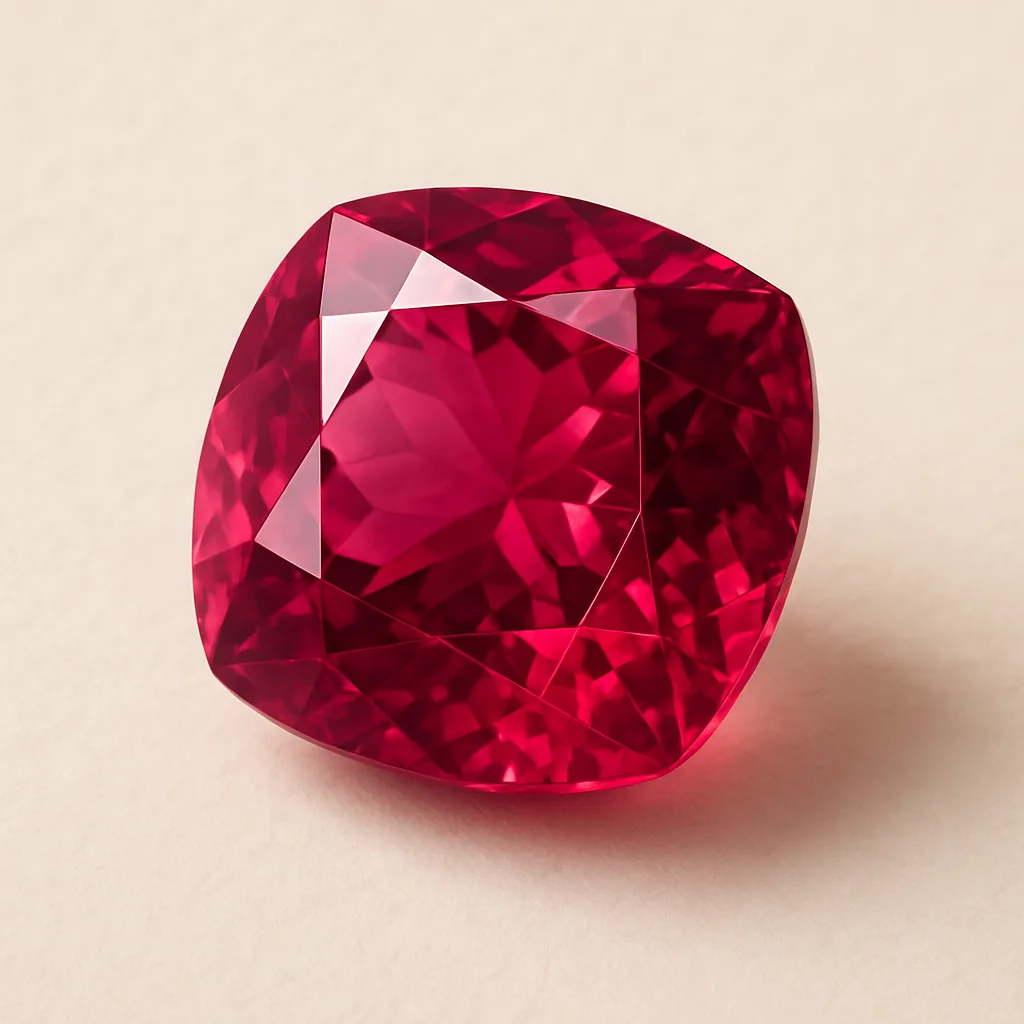
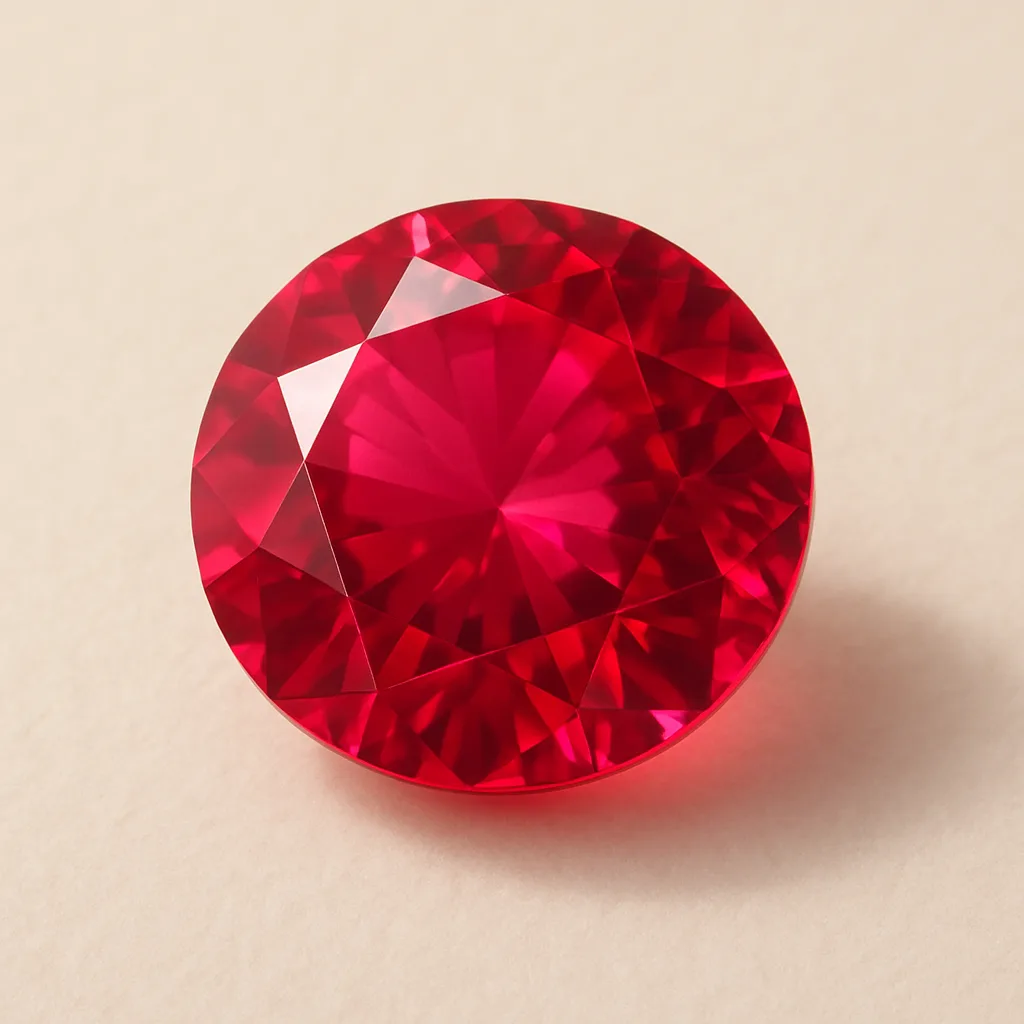
Deep red through pinkish red and slightly purplish red. The most prized tone — pure red with a faint blue undertone, neither too dark nor too pink — is called pigeon's blood.
- Silk: short rutile needles in three crystallographic directions
- nclusions
- Color zoning in straight bands or hexagonal patterns
- Hexagonal growth zoning visible under magnification
- Doubly refractive (uniaxial negative); is subtle
- Strong dichroism: purplish red and yellowish red
- 01nclusions strongly support a natural origin
- 02 visible under 10× indicate Verneuil (flame-fusion) synthetic
- 03Round gas bubbles indicate glass or flux-grown synthetic
- 04nclusions is suspicious — could be flux synthetic or a top-grade natural that needs a lab report
- Mohs 9 but still brittle — avoid impacts
- Never ultrasonic-clean glass-filled rubies; warm soapy water only
- Heat and direct sunlight can affect color in some material; store away from prolonged UV
From a few US dollars per carat for composite or commercial material up to several hundred thousand per carat for unheated Mogok pigeon's blood. Origin, treatment, and clarity drive most of the spread.
Note: Mogok no-heat rubies command the highest prices and continue to climb at major auctions. Heat treatment is standard and accepted. Lead-glass-filled rubies (often labeled 'composite ruby') are dramatically cheaper but fragile and require disclosure. Always ask for a lab report on high-end stones.
Ruby is corundum (Al₂O₃) tinted red by chromium. Sapphire and ruby are the same mineral; only the chromophore separates them. Major sources include Myanmar (Mogok and Mong Hsu), Mozambique, Thailand, Sri Lanka, and Madagascar. Long called 'the king of gemstones' in Sanskrit (ratnaraj), ruby has been used in royal regalia, engagement rings, and amulets across cultures.
Origins
Mogok in northern Myanmar produces the benchmark pigeon's blood color, prized for its pure red softened by a faint blue glow. Mong Hsu, also in Myanmar, came on stream in the 1990s after unlocked its color. Mozambique took over as the world's largest source from around 2009, supplying bright, lively reds. Thai and Vietnamese rubies tend toward darker, more iron-rich reds, while Sri Lankan material is lighter and pinker. Tanzanian rubies from Winza are scarce but prized when found unheated.
History
Mentioned in Sanskrit texts from around 2000 BCE as ratnaraj, the king of gems, ruby has been treasured by the Burmese, Chinese, and Indian courts for millennia. Until the late 19th century, most red stones in European crowns were called 'ruby' regardless of mineralogy — the famous Black Prince's Ruby in the British Crown Jewels was identified as red spinel only in 1851. The modern record was set in 2014 when the 25.59-carat Sunrise Ruby sold at Sotheby's for over $30 million.
Lore & symbolism
The July birthstone, symbolizing passion, courage, and protection. Hindu warriors are said to have implanted rubies under their skin for invulnerability; medieval European nobility wore ruby to ward off plague and poison. Ruby remains the gift for the 40th wedding anniversary.
Tools to confirm this stone
Tools that help confirm Natural Ruby. Tap any item to jump to the matching section on the gem tools page.
- 最終確認日
- 2026年4月28日
- 参 考 文 献
- Gem Encyclopedia/ GIA (Gemological Institute of America)
- 宝石鑑別基準/ 中央宝石研究所 (CGL)
- Mineral & Gem Database/ Mindat.org / Gemdat.org
- 宝石学入門/ 全国宝石学協会
本ページの物性値(屈折率・比重・硬度・結晶系等)は、上記の権威ある一次資料を相互参照して編集しています。最新の鑑別研究の進展により値が更新される場合があります。