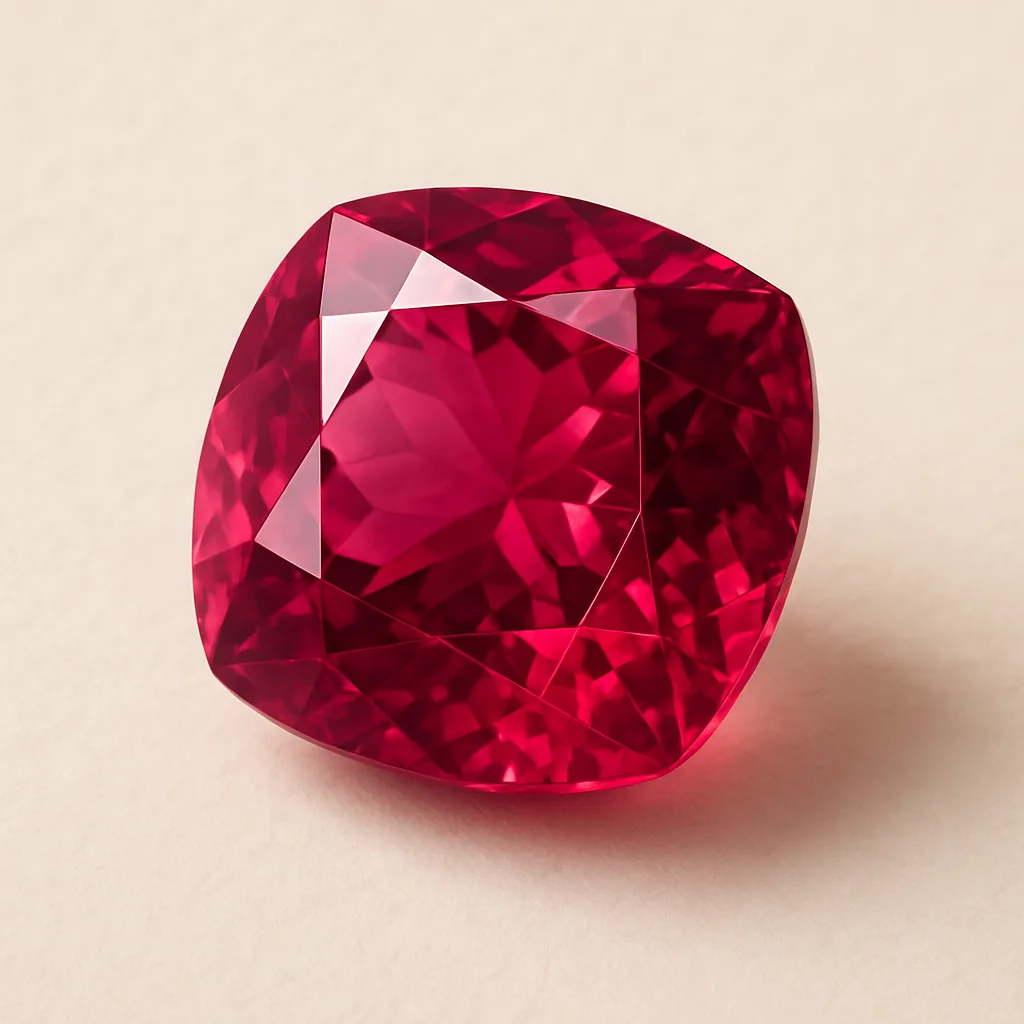
identified this stone yet
Rubellite
| Hardness | 7-7.5 |
| Specific gravity | 3.06 |
| Refractive index | 1.620-1.640 |
| Crystal system | 六方晶系(三方晶系) |
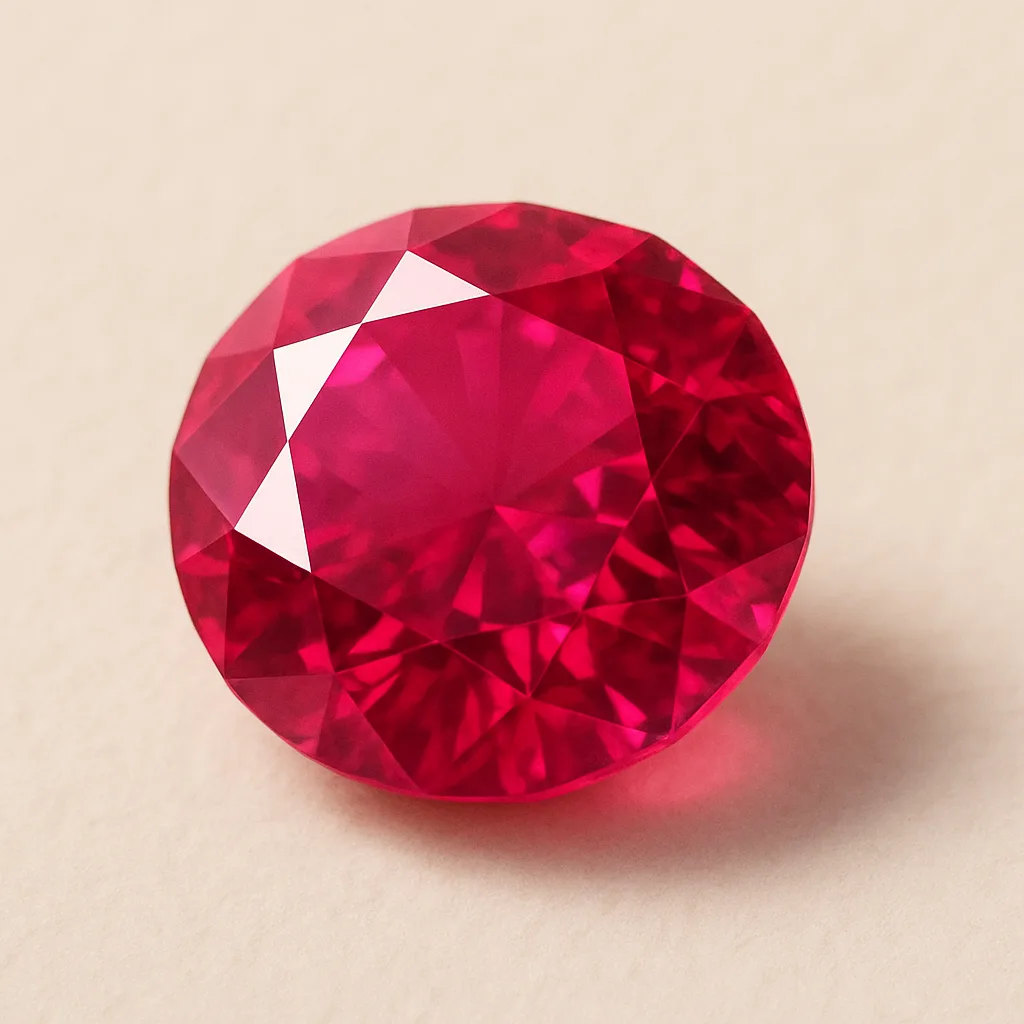
Cherry red, raspberry, slightly purplish red and deep ruby-red tones. The most desirable stones are pure red without any brown or grey.
- along the c-axis
- nclusions and partially healed fingerprints
- Stress fractures, often surface-reaching
- Doubly refractive with clearly visible at 10×
- Strong dichroism: red and pale pinkish red
- 01Daylight-and-incandescent color check: a true rubellite holds its red in both
- 02Visible 10× and capillary tubes are the tourmaline signature
- 03Inert under UV — separates it cleanly from ruby's strong
- Skip ultrasonic and steam — included stones can crack
- Heat from a jeweler's torch will propagate fractures; remove from settings before any repair work
- Lukewarm soapy water and a soft brush only
Roughly $200–$800 per carat for included commercial stones, $1,000–$3,000 per carat for clean, well-saturated reds, and $5,000+ per carat for top Brazilian Cruzeiro material.
Note: Heat treatment to deepen color is common; oiling or resin-filling of surface-reaching cracks is also widespread because rubellite is famously included. A 'clean' rubellite over 5 carats is genuinely rare. Always inspect at 10× — included material with no treatment disclosure can still be honest if the inclusions are stable.
Rubellite is manganese-colored elbaite tourmaline in the red to slightly purplish-red part of the spectrum. The accepted trade test: a stone is rubellite if it keeps its red color (without shifting noticeably to pink or brown) under both daylight and incandescent light. Brazil, Madagascar, Nigeria and Mozambique are the leading sources today.
Origins
Brazil's Minas Gerais (Cruzeiro Mine, Jonas Mine) sets the benchmark for deep, almost ruby-saturated reds. Madagascar's Antsirabe district produces vivid pinkish-reds. Nigeria, Mozambique (Alto Ligonha), Russia (Siberia, historically) and California's Himalaya Mine also contribute. Clean rubellite over 3 carats from any source is scarce.
History
Catherine the Great's collection at the Russian Imperial court included large rubellites in the 18th century — at the time they were thought to be rubies. The famous 'Caesar's Ruby' (255.75 ct) in Prague's National Museum, once owned by Holy Roman Emperor Rudolf II, was reclassified as rubellite in the 19th century. The 'rubellite' name from the Latin rubellus ('reddish') was formalized as the trade name for red elbaite around the same time.
Lore & symbolism
October's birthstone alongside other tourmalines and opal. Lore treats rubellite as a stone of passion, vitality and devotion, and it appears as a 40th anniversary gift in some traditions.
Tools to confirm this stone
Tools that help confirm Rubellite. Tap any item to jump to the matching section on the gem tools page.
- 最終確認日
- 2026年4月28日
- 参 考 文 献
- Gem Encyclopedia/ GIA (Gemological Institute of America)
- 宝石鑑別基準/ 中央宝石研究所 (CGL)
- Mineral & Gem Database/ Mindat.org / Gemdat.org
- 宝石学入門/ 全国宝石学協会
本ページの物性値(屈折率・比重・硬度・結晶系等)は、上記の権威ある一次資料を相互参照して編集しています。最新の鑑別研究の進展により値が更新される場合があります。