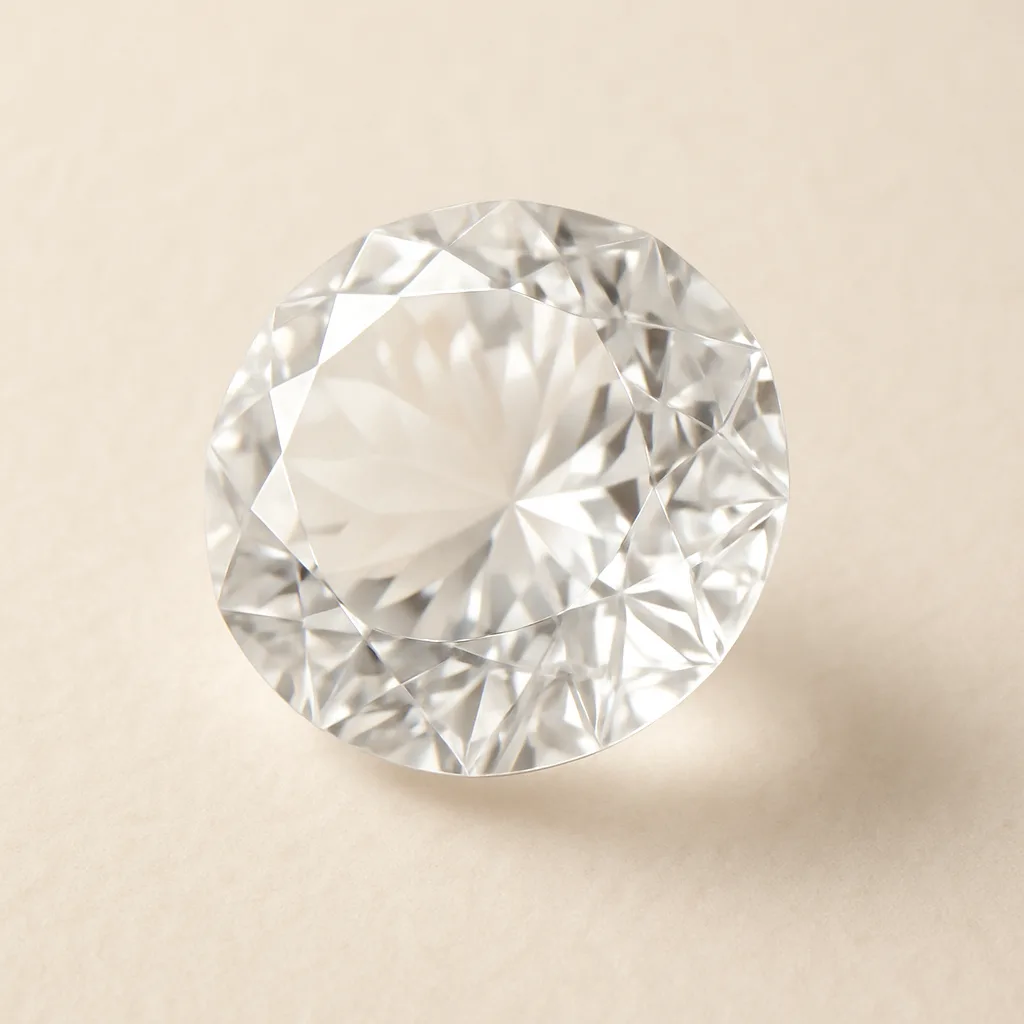
identified this stone yet
Rock Crystal / Quartz
| Hardness | 7 |
| Specific gravity | 2.65 |
| Refractive index | 1.544-1.553 |
| Crystal system | 三方晶系 |
nclusions can produce visual effects without changing the underlying color — rutile needles make 'rutilated quartz' (a.k.a. Venus hair stone), tourmaline crystals make 'tourmalinated quartz,' and chlorite or actinolite produce 'phantom quartz' and 'garden quartz.'
- Rutile needles — golden, copper-red, or silver — producing 'rutilated quartz' or 'Venus hair stone'
- Tourmaline rods — black, green, or pink — producing 'tourmalinated quartz'
- egative crystals — hexagonal voids that may contain fluid and a gas bubble
- nclusions producing 'phantom' or 'garden' quartz
- Doubly refractive (uniaxial positive)
- Visible at 10× — edges appear doubled when viewed through the table
- Vitreous luster, cool to the touch
- 0.009 — useful diagnostic against glass
- 01 visible at 10× under a loupe — glass shows no
- 02Cool, faintly cold thermal response in hand — quartz draws heat away faster than glass
- 03RI 1.544–1.553 and SG 2.65 confirm quartz
- 04 habit — rutile needles, tourmaline crystals, or fluid 'fingerprints' — supports natural origin
- Mohs 7 — durable for everyday wear
- Stable to all normal cleaning methods including ultrasonic and steam
- Avoid sudden thermal shock — sustained high heat (above 573°C) triggers the alpha-to-beta quartz inversion and can crack large specimens
- Aura-coated material is heat- and solvent-sensitive and should be cleaned only with a dry cloth
Roughly $0.50–$2/ct for commercial Brazilian or Malagasy rough, $5–$30/ct for clean faceted stones, $20–$200/ct for fine alpine or Herkimer specimens with exceptional clarity, and $1,000+ per stone for historically significant or museum-quality carvings. Internal inclusions (rutile, tourmaline) generally raise the price as decorative features rather than lowering it as flaws.
Note: Rock crystal is essentially untreated at the rough stage but is frequently coated to produce so-called 'aura quartz' varieties (titanium aura, angel aura, etc.) — disclosure is critical and the coating wears with time. Faceted rock crystal exists but rarely commands gem prices; the material is more often sold as ornamental carvings, beads, and natural-form crystal points. The Herkimer diamond, with its naturally doubly-terminated crystal habit, is a notable exception that commands a premium as a 'natural' uncut gem.
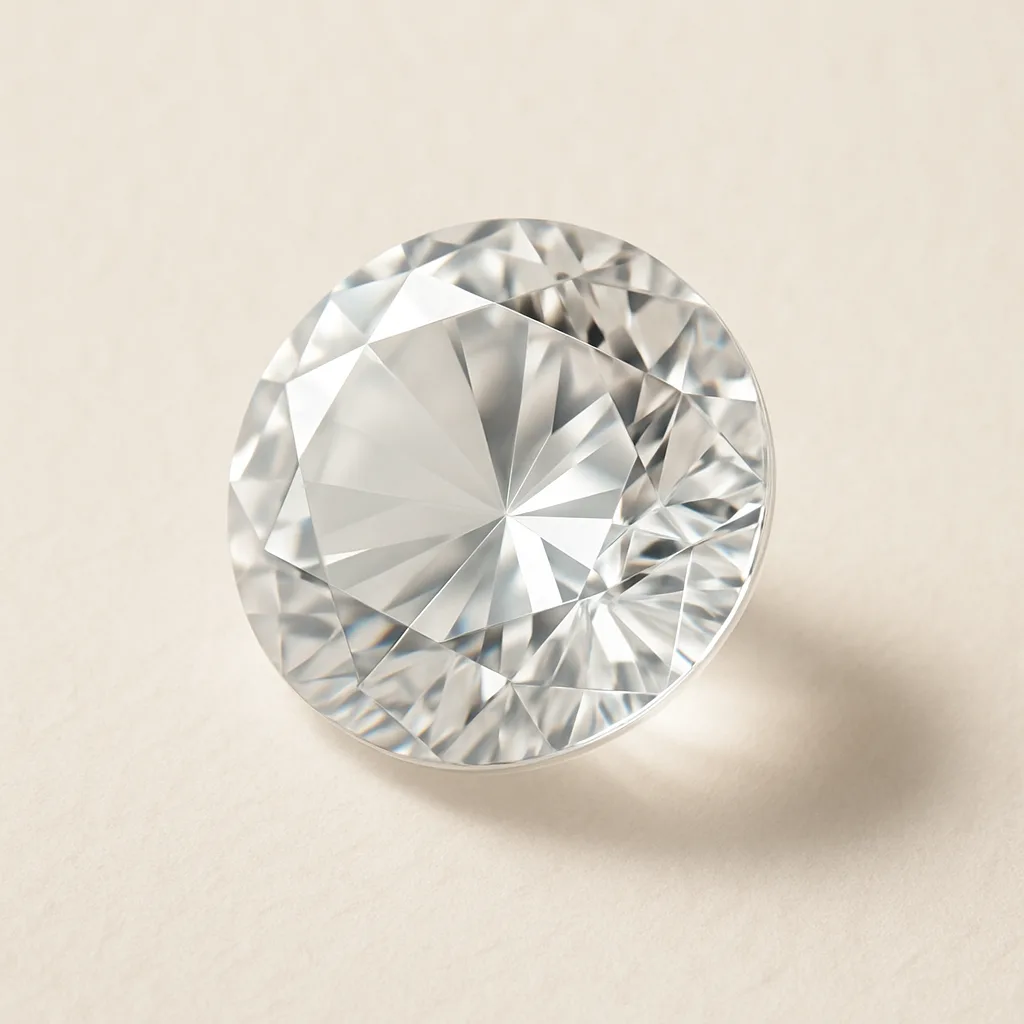
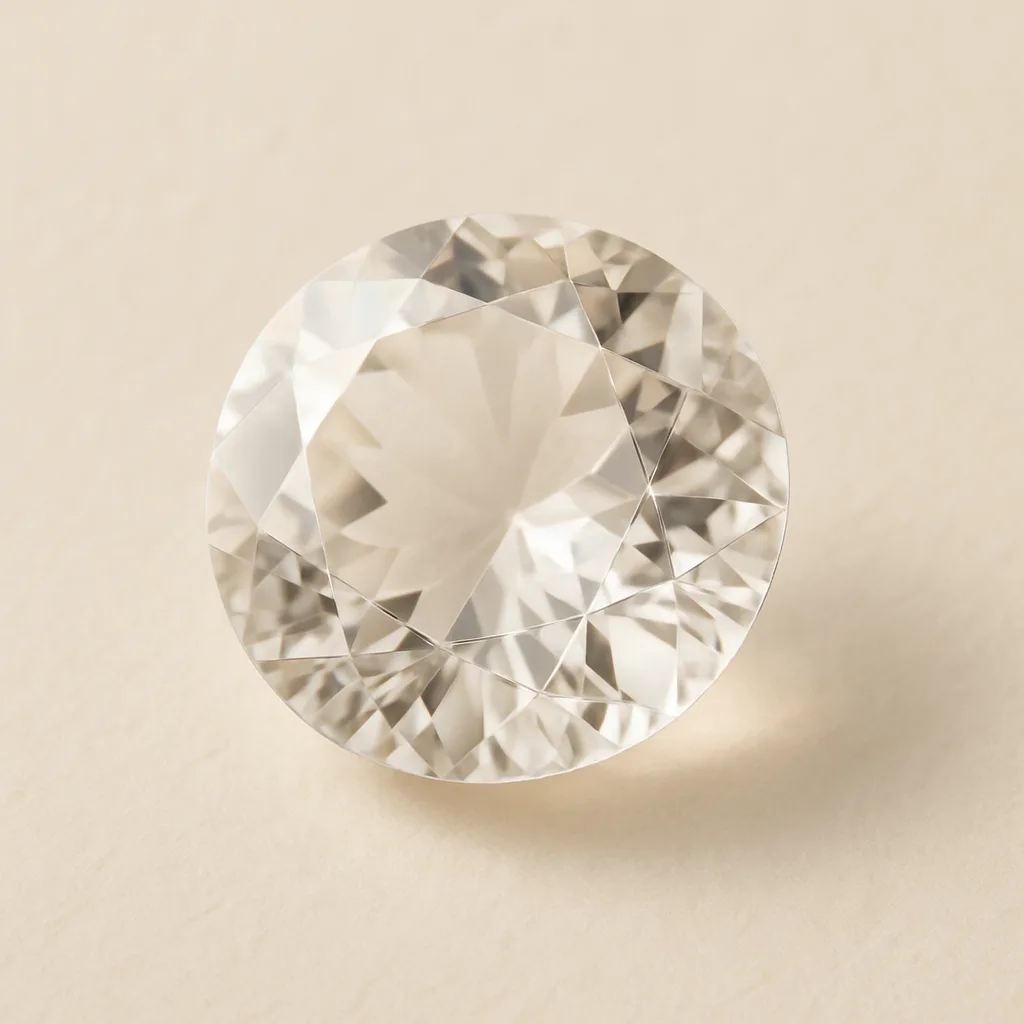
Rock crystal is pure quartz (SiO₂) free of the chromophores that produce smoky, amethyst, citrine, or rose quartz colors. The mineral grows the world over — from Brazilian and Malagasy pegmatites to Swiss alpine clefts to Arkansas hot spring deposits — and exceptional specimens reach meter-plus dimensions. The Greek word for ice, krystallos (κρύσταλλος), originally referred specifically to this stone; Pliny's Naturalis Historia (~77 CE) records the belief that rock crystal was permanently frozen water, a notion only displaced in the 17th century by experimental chemistry.
Origins
Brazil's Minas Gerais (Cristalina is the namesake town for some material) is the dominant commercial producer. Madagascar's Antsirabe and Ambositra districts supply large clean crystals. The Swiss Alps — Tiefengletscher (Uri), Val Giuv (Graubünden), and the Tujetsch finds — produce water-clear alpine crystals prized by collectors. Arkansas (Mt. Ida and Hot Springs), New York's Herkimer County (the famous doubly-terminated 'Herkimer diamonds'), and Japan's Yamanashi prefecture (Kai/Mitomi area) all produce historically significant material. Rock crystal essentially occurs in every quartz-bearing region globally.
History
Rock crystal has been carved and treasured since the Paleolithic — Sumerian cylinder seals, Egyptian funerary amulets, and Roman intaglios all use it. Pliny the Elder wrote that 'crystal forms only where the alpine winter ices are most intense and is in fact ice itself, congealed by intense cold' — a view that persisted for sixteen centuries. The Edo-period (1603–1868) Japanese carved rock crystal balls reached such fame that the Yamanashi industry continues today. The 1601 English Privy Seal of Elizabeth I was capped with a rock crystal globe. In the 19th century, rock crystal was the standard material for high-end seal carvings and optical lenses.
Lore & symbolism
Rock crystal carries no formal birthstone status but is the central stone of modern crystal-energy practice — described as the 'master healer' and used to amplify the energy of other gems. Crystal balls used for divination ('scrying') traditionally consist of clear rock crystal. The 15th wedding anniversary gem in some traditions.
Tools to confirm this stone
Tools that help confirm Rock Crystal / Quartz. Tap any item to jump to the matching section on the gem tools page.
- 最終確認日
- 2026年4月28日
- 参 考 文 献
- Gem Encyclopedia/ GIA (Gemological Institute of America)
- 宝石鑑別基準/ 中央宝石研究所 (CGL)
- Mineral & Gem Database/ Mindat.org / Gemdat.org
- 宝石学入門/ 全国宝石学協会
本ページの物性値(屈折率・比重・硬度・結晶系等)は、上記の権威ある一次資料を相互参照して編集しています。最新の鑑別研究の進展により値が更新される場合があります。