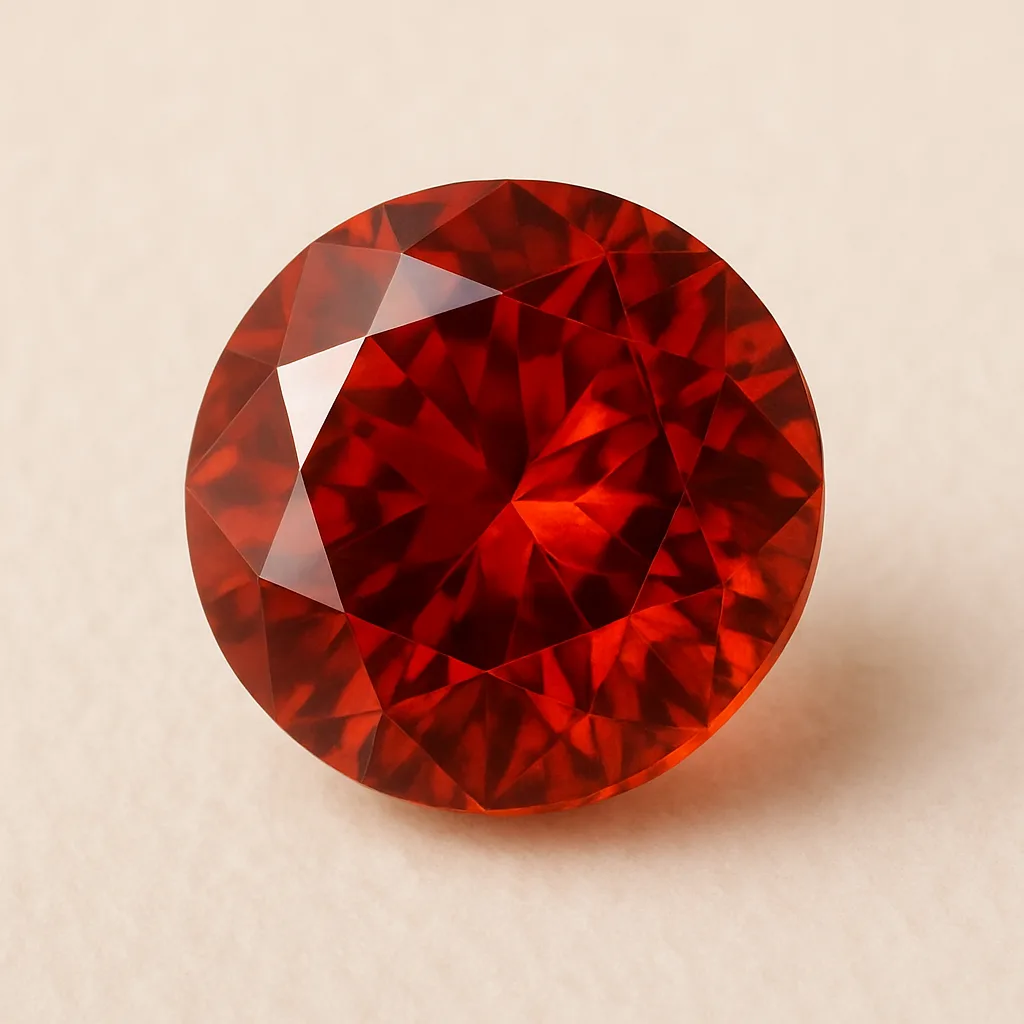
identified this stone yet
Red Zircon
| Hardness | 6.5-7.5 |
| Specific gravity | 4.65 |
| Refractive index | 1.925-1.984 |
| Crystal system | 正方晶系 |
Orange-red, deep crimson, brownish red, and warm cinnamon tones. The most prized color is a saturated pure red with strong fire; brownish casts are common in lower-grade material.
- Strain features from metamictization
- nclusions
- nclusions of monazite, xenotime, or apatite
- Color zoning along growth planes
- Doubly refractive, uniaxial positive
- Refractive index 1.92–2.01
- 0.04–0.06 — pronounced at 10×
- Specific gravity 4.6–4.7
- 0.039 — strong fire
- 01Strong visible at 10× — separates red zircon from singly refractive ruby and garnet
- 02Refractive index above the refractometer scale (over-the-limit reading >1.81) confirms zircon
- 03Specific gravity 4.6–4.7 — heavier than both ruby (4.0) and pyrope-almandine garnet (3.7–4.2)
- 04Characteristic 653.5 nm uranium absorption visible through a hand spectroscope
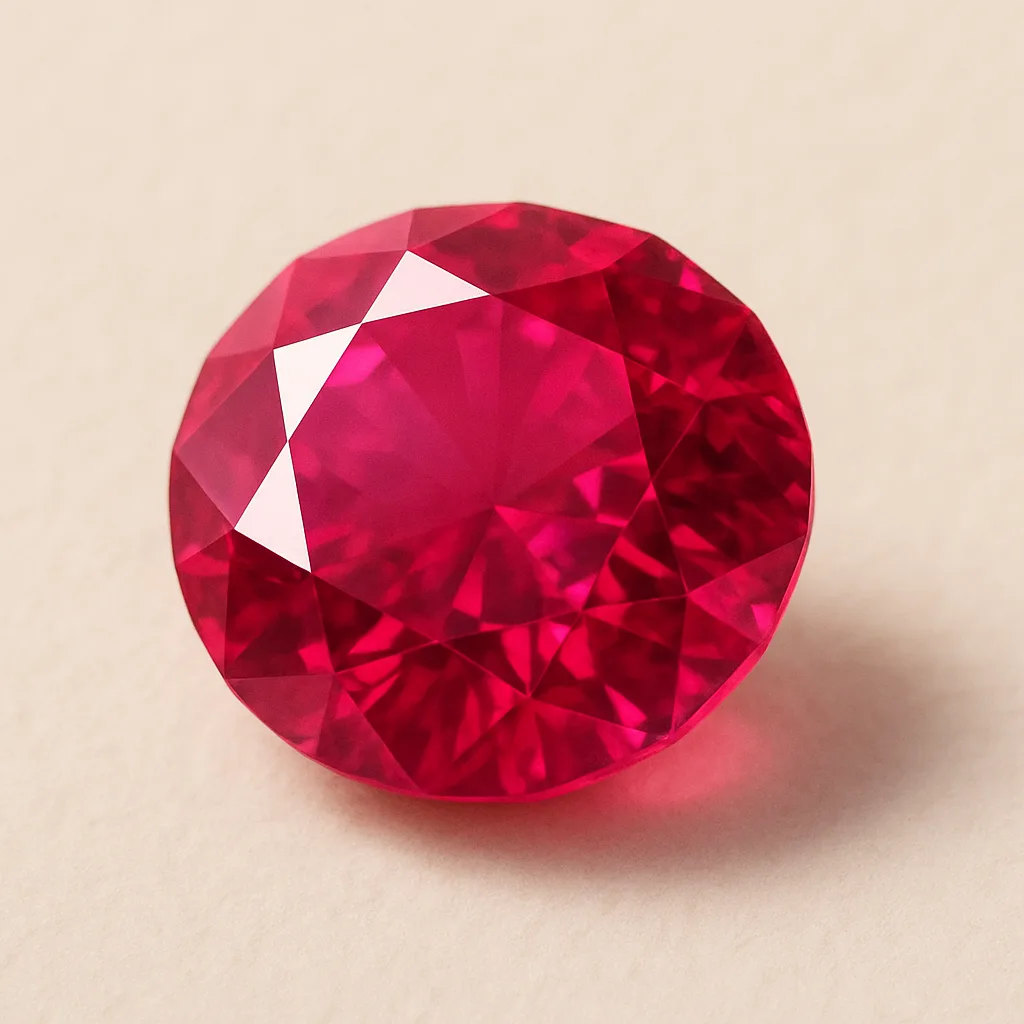
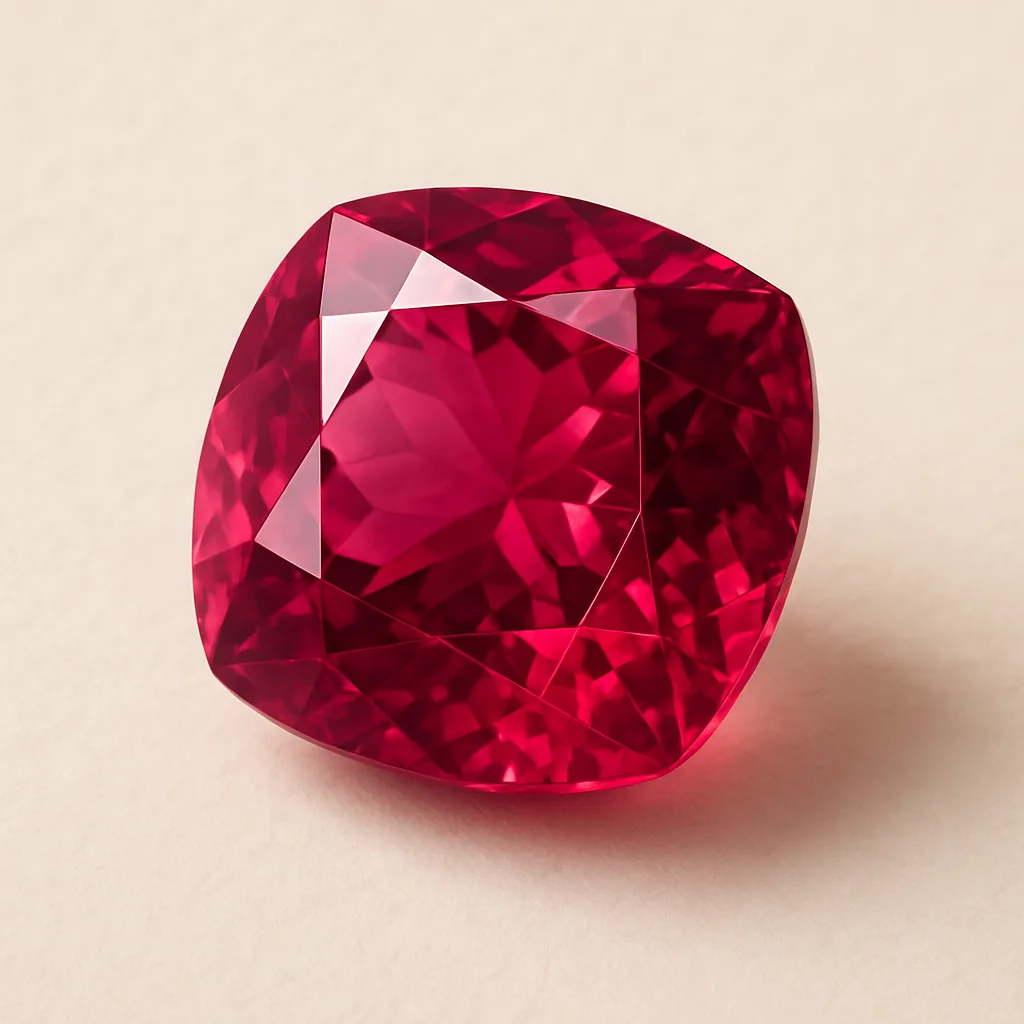
- Mohs 6.5–7.5 — durable enough for normal jewelry use, but edges chip easily; avoid impact and abrasion
- Heat-treated stones may revert under prolonged UV — store away from sunlight
- nclusions are vulnerable
¥5,000–15,000/ct for commercial Cambodian heat-treated material, up to ¥40,000–60,000/ct for fine Sri Lankan stones with pure red color above 3 ct.
Note: Heat treatment to enhance red color from brown rough is common and disclosed. The chief market concern is the same zircon-versus-CZ consumer confusion that affects every zircon color — explicit identification as natural zirconium silicate is essential at sale. Genuinely fine large stones (above 5 ct) in pure red without brownish casts are scarce and command premium prices.
Red zircon is zirconium silicate (ZrSiO₄, tetragonal) colored orange-red to deep red by trace uranium and titanium, with iron contributing brownish tones. The mineral takes its English name 'hyacinth' (and the medieval variant 'jacinth') from the Greek hyakinthos — both the mythological youth slain by Apollo's discus and the flower said to have grown from his blood. Medieval European lapidaries did not distinguish red zircon from similarly colored red garnets and red corundum, and 'hyacinth' was applied loosely to all three. RI 1.92–2.01, SG 4.6–4.7, Mohs 6.5–7.5, 0.039.
Origins
Sri Lanka (Ratnapura, Elahera) is the classical source and continues to produce the finest crimson-to-cinnamon hyacinth zircon. Myanmar (Mogok), Cambodia (Ratanakiri), Tanzania, and Madagascar contribute additional production. Sri Lankan stones tend toward pure red with strong fire; Cambodian material is more orange-toned and is frequently heat-treated.
History
Hyacinth zircon appears in Pliny's Naturalis Historia (77 CE) as a red gem and is the eleventh foundation stone of the New Jerusalem in the Book of Revelation (21:20). It was widely used in medieval European ecclesiastical jewelry — reliquaries, episcopal rings, monstrances — and is recorded among the gems of the Hungarian Holy Crown of St. Stephen (early 11th century), one of the foundational pieces of Christian European royal regalia. The systematic separation of red zircon from red garnet and red corundum came only with 19th-century gemology.
Lore & symbolism
Medieval European tradition associated jacinth with sleep — the stone was said to dispel insomnia and protect travelers — and the Renaissance lapidary of Camillus Leonardus (1502) prescribes it against melancholy and plague. The biblical association with the New Jerusalem gives the stone an enduring Christian symbolism of celestial reward. Sanskrit tradition links red zircon with Surya (the Sun) and prescribes it as a planetary remedy for solar deficiencies in Vedic jyotish.
Tools to confirm this stone
Tools that help confirm Red Zircon. Tap any item to jump to the matching section on the gem tools page.
- 最終確認日
- 2026年4月28日
- 参 考 文 献
- Gem Encyclopedia/ GIA (Gemological Institute of America)
- 宝石鑑別基準/ 中央宝石研究所 (CGL)
- Mineral & Gem Database/ Mindat.org / Gemdat.org
- 宝石学入門/ 全国宝石学協会
本ページの物性値(屈折率・比重・硬度・結晶系等)は、上記の権威ある一次資料を相互参照して編集しています。最新の鑑別研究の進展により値が更新される場合があります。