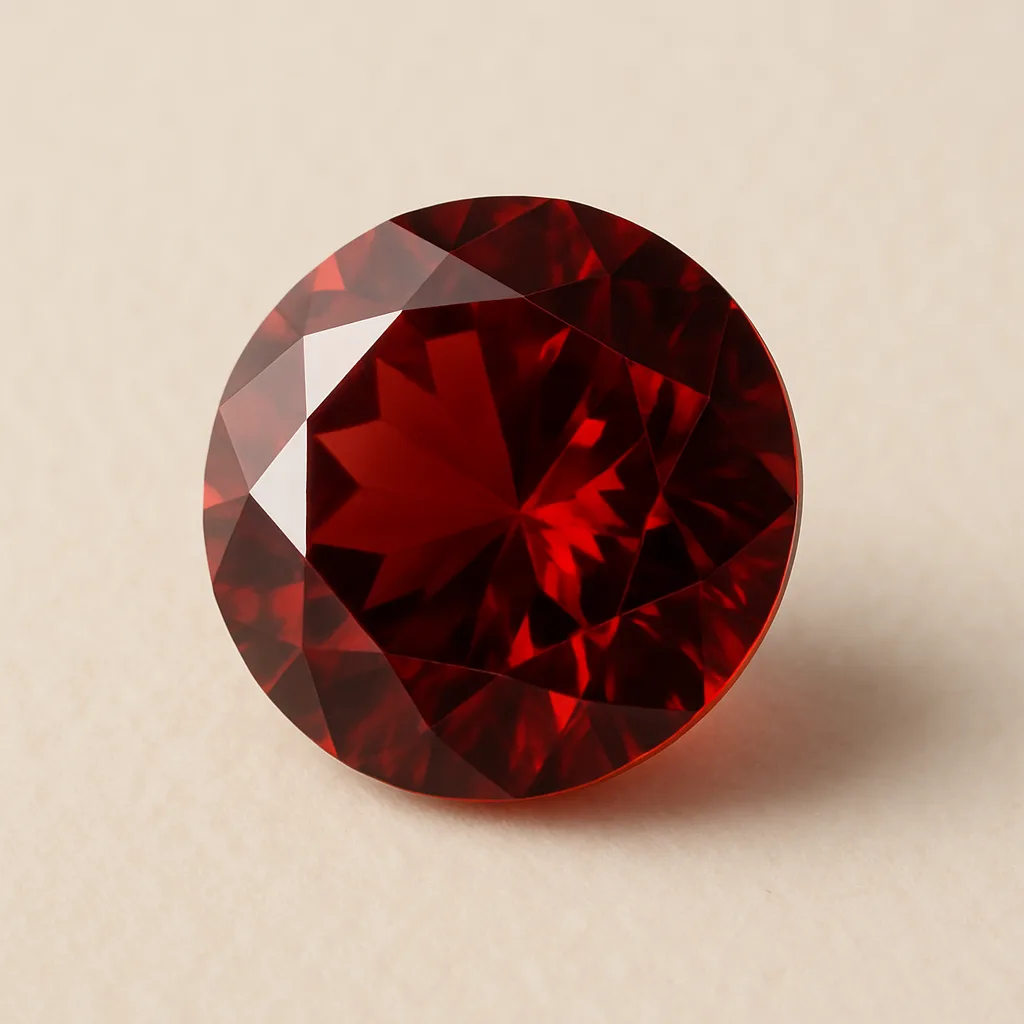
identified this stone yet
Pyrope Garnet
| Hardness | 7-7.5 |
| Specific gravity | 3.78 |
| Refractive index | 1.714-1.742 |
| Crystal system | 等軸晶系 |
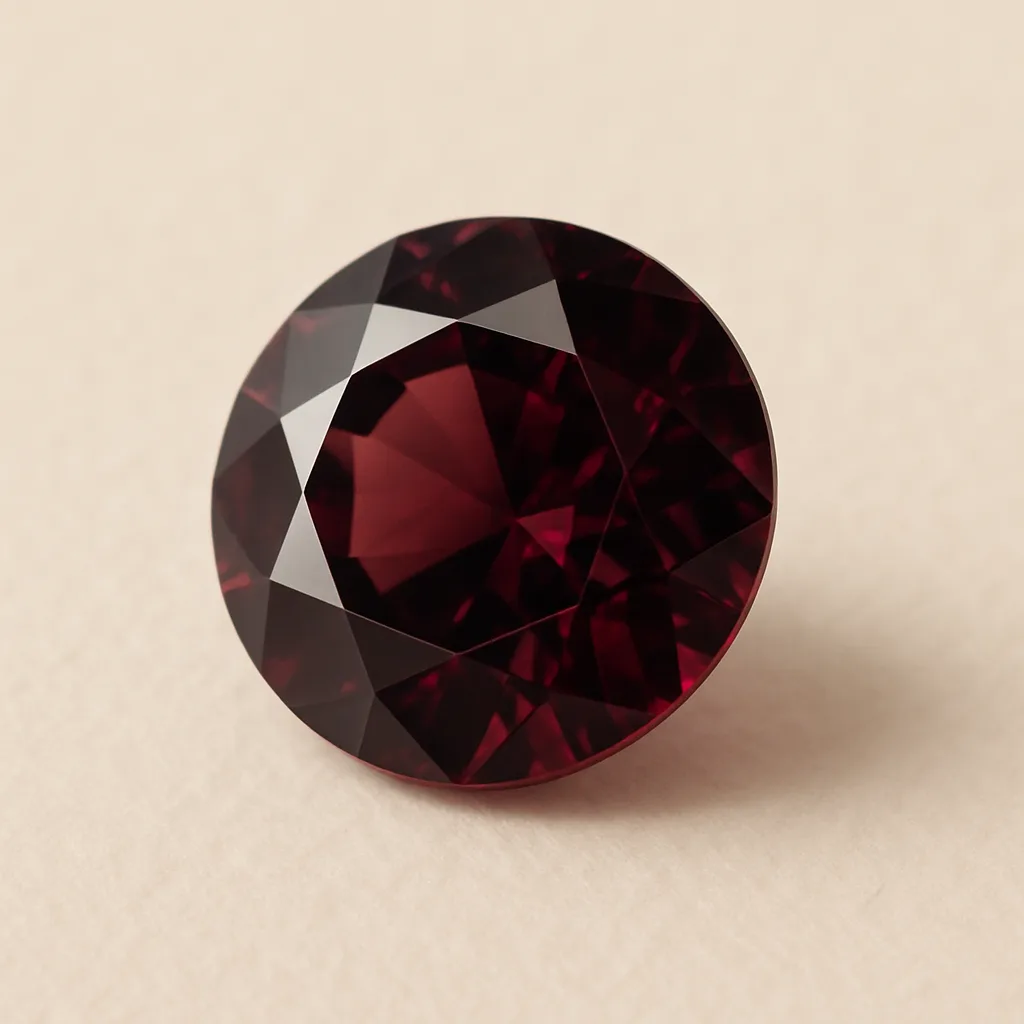
Deep blood red, brownish red, slightly purplish red. The most prized stones are pure red without brown undertones; darker stones can look almost black in low light.
- Rounded crystal grains (apatite, rutile)
- nclusions
- nclusions and partially healed fingerprints
- Singly refractive — no
- No dichroism
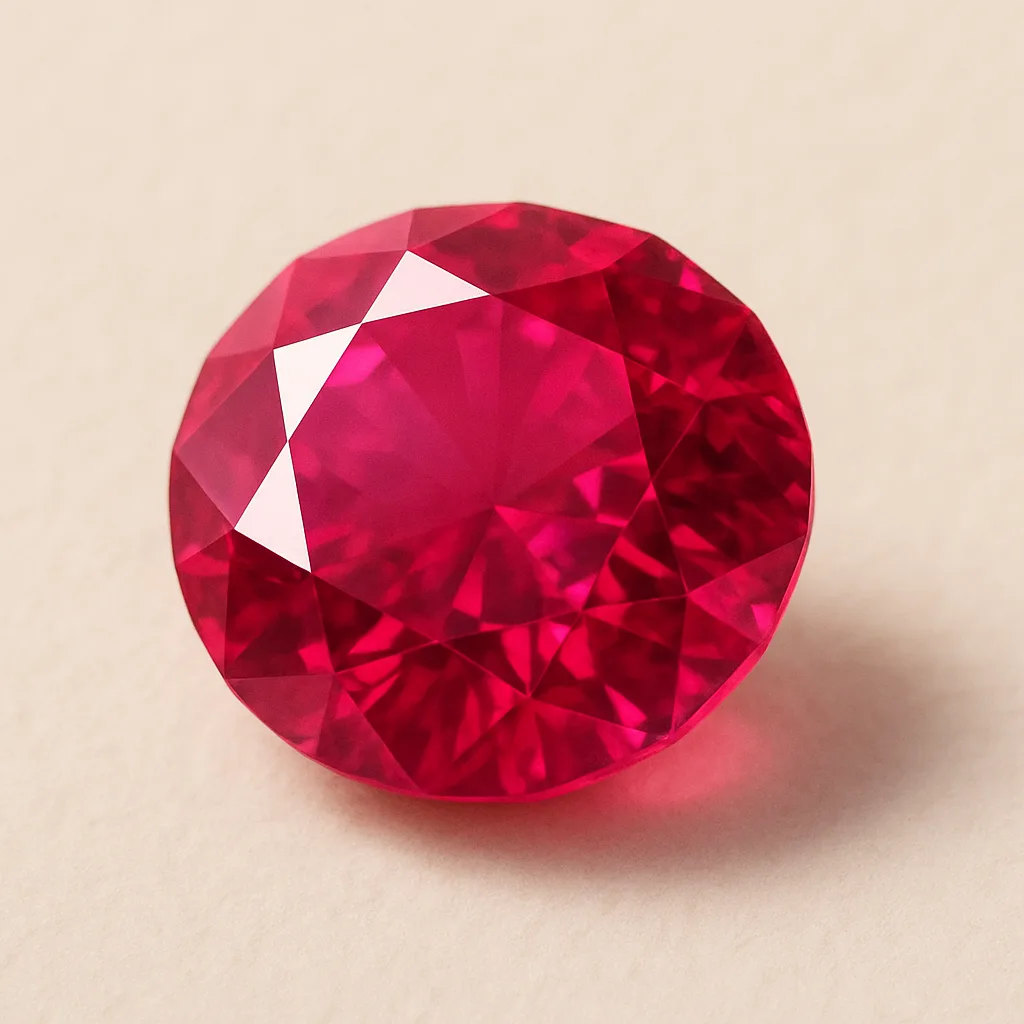
- 01Inert UV plus a deep brownish-red color in a singly refractive stone strongly suggests pyrope
- 02No and no dichroism separate it from ruby
- 03Slightly lower SG (3.65–3.87) separates it from almandine (closer to 4.0+)
- Mohs 7–7.5 — durable for daily wear
- nclusions first
- No special storage requirements
Roughly $20–$80 per carat for commercial Bohemian-style material, $100–$300 per carat for cleaner medium stones, and $500–$1,500 per carat for fine vivid red rhodolite blends.
Note: Untreated by trade standard. Most 'garnet' jewelry in the affordable price range is pyrope or pyrope-almandine. Clean Bohemian pyrope antique pieces are collectible. The biggest pricing variable is purity of red — brownish or overly dark stones trade at a significant discount.
Pyrope is Mg₃Al₂(SiO₄)₃ tinted red by trace chromium and iron. Pure pyrope is uncommon in nature — most stones in the market are part of a continuous pyrope-almandine solid solution, with 'rhodolite' the trade name for the purplish-red blend. The Czech (Bohemian) deposits set the historical standard, but modern supply comes mainly from southern Africa, the USA, Tanzania, Madagascar and China.
Origins
The Czech Republic's Bohemian deposits supplied the original 'Bohemian garnet' that dominated 19th-century European jewelry. South Africa's Kimberley diamond mines yield pyrope as a kimberlite byproduct. Arizona's Navajo Nation has the famous 'anthill garnets' — small stones brought to the surface by harvester ants. Tanzania's Umba Valley, Madagascar and China round out today's market.
History
Pyrope was used as a signet stone in ancient Rome — the name comes from Greek pyropos, 'fire-eyed.' The 19th-century Bohemian craze made it the defining colored stone of Victorian jewelry, particularly in tightly massed cluster brooches and pins. The Bohemian industry collapsed after WWII and never fully recovered; modern garnet jewelry tends to feature mixed pyrope-almandine 'rhodolite' rather than pure pyrope.
Lore & symbolism
January's birthstone and the 2nd wedding anniversary gift in many traditions. Pyrope has long been associated with passion, loyalty, and protection — medieval European soldiers carried garnet amulets as a charm against wounds.
Tools to confirm this stone
Tools that help confirm Pyrope Garnet. Tap any item to jump to the matching section on the gem tools page.
- 最終確認日
- 2026年4月28日
- 参 考 文 献
- Gem Encyclopedia/ GIA (Gemological Institute of America)
- 宝石鑑別基準/ 中央宝石研究所 (CGL)
- Mineral & Gem Database/ Mindat.org / Gemdat.org
- 宝石学入門/ 全国宝石学協会
本ページの物性値(屈折率・比重・硬度・結晶系等)は、上記の権威ある一次資料を相互参照して編集しています。最新の鑑別研究の進展により値が更新される場合があります。