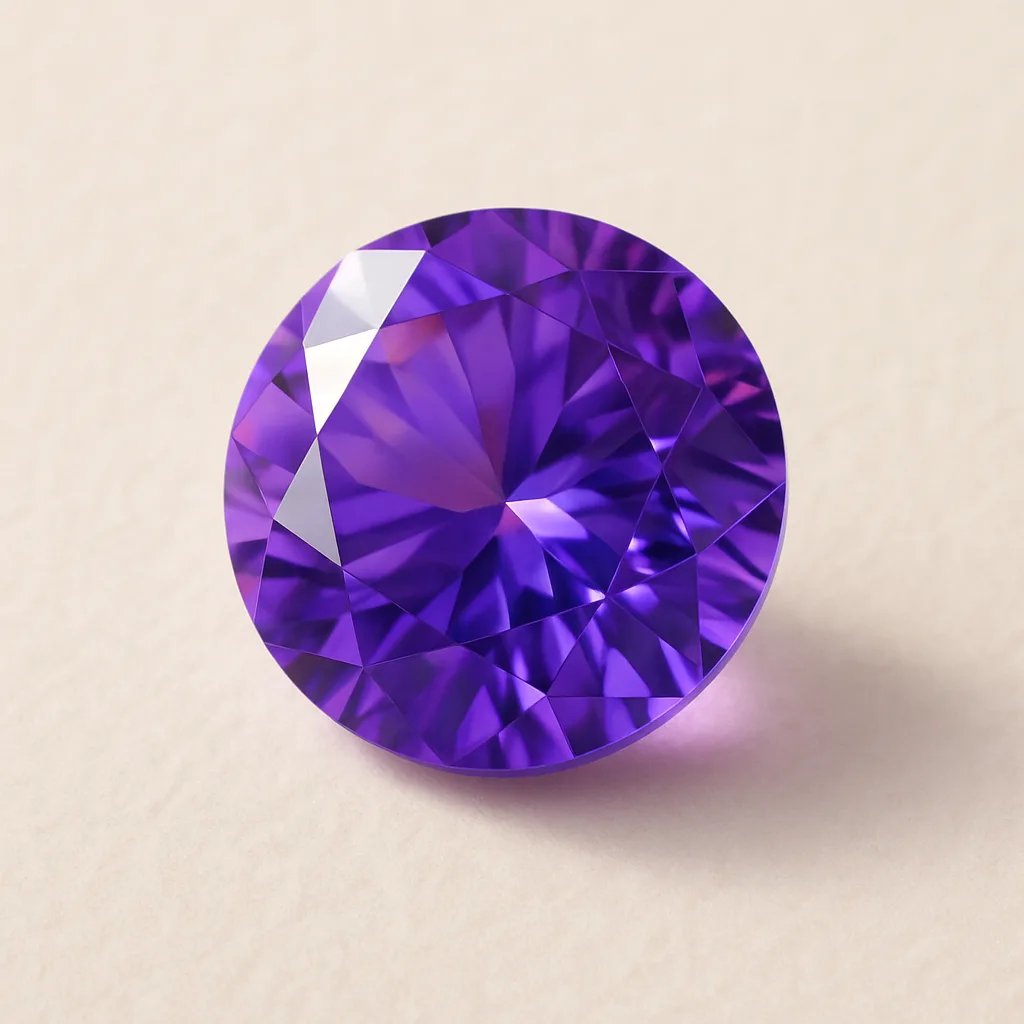
identified this stone yet
Synthetic Purple Sapphire
| Hardness | 9 |
| Specific gravity | 3.95-4.03 |
| Refractive index | 1.760-1.770 |
| Crystal system | 六方晶系(三方晶系) |
Royal violet, red-purple, blue-purple, magenta-purple. Flame-fusion produces consistently saturated, even color; some material approaches the saturation of fine Sri Lankan natural purple sapphire under fluorescent light, though shifts less convincingly to red under incandescent than natural color-change material.
- Curved growth striae (Verneuil) — diagnostic at 10× immersion
- Round gas bubbles
- Swirl flow patterns
- Otherwise very clean
- Doubly refractive (uniaxial negative) — identical to natural corundum
- RI 1.760–1.770, ~0.008
- Weak (red-purple, blue-purple)
- Vitreous to sub-adamantine luster
- 01 and gas bubbles diagnostic of Verneuil at 10× immersion
- 02RI 1.760–1.770 and Mohs 9 separate from synthetic amethyst (RI 1.54, Mohs 7) and purple glass (RI ~1.50, no )
- 03UV chromium response can help distinguish from chromium-poor purple glass and from amethyst (inert)
- 04Color zoning more uniform than natural purple sapphire — a soft warning sign
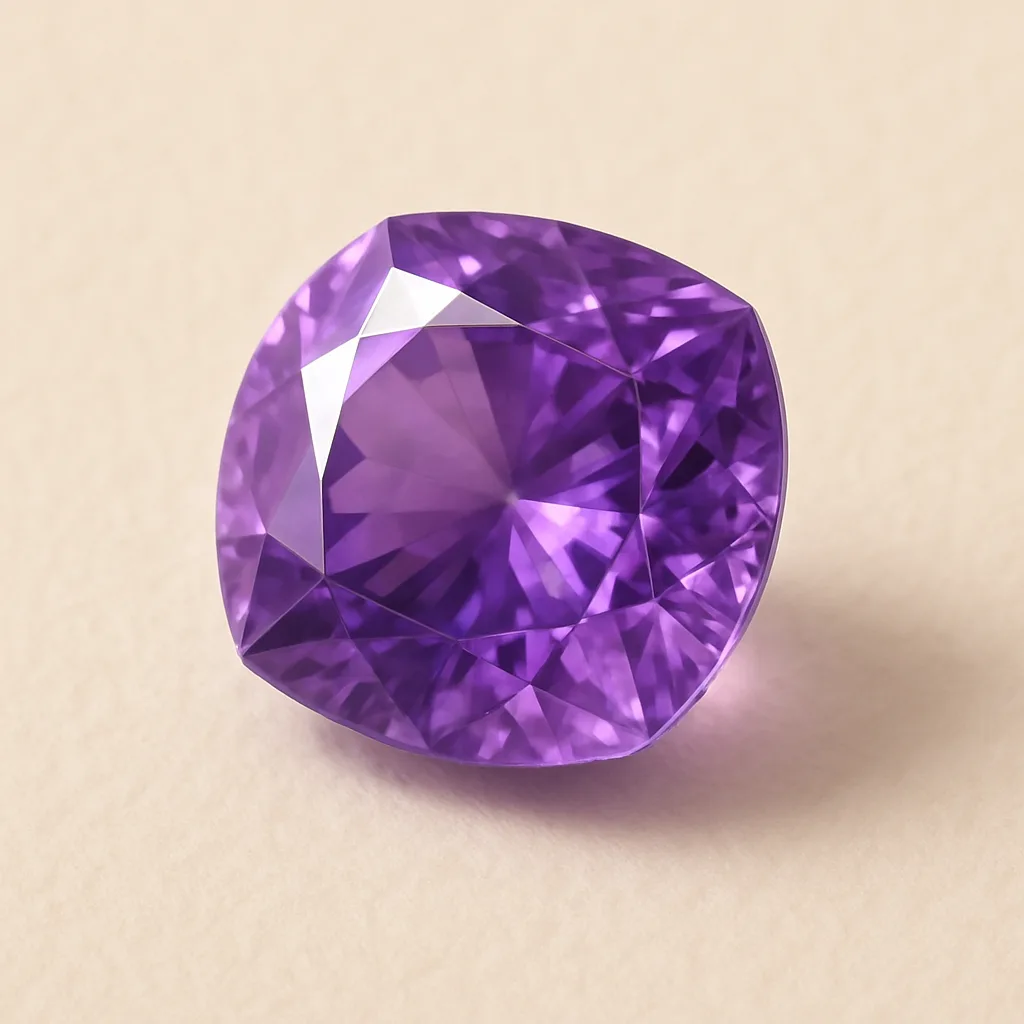
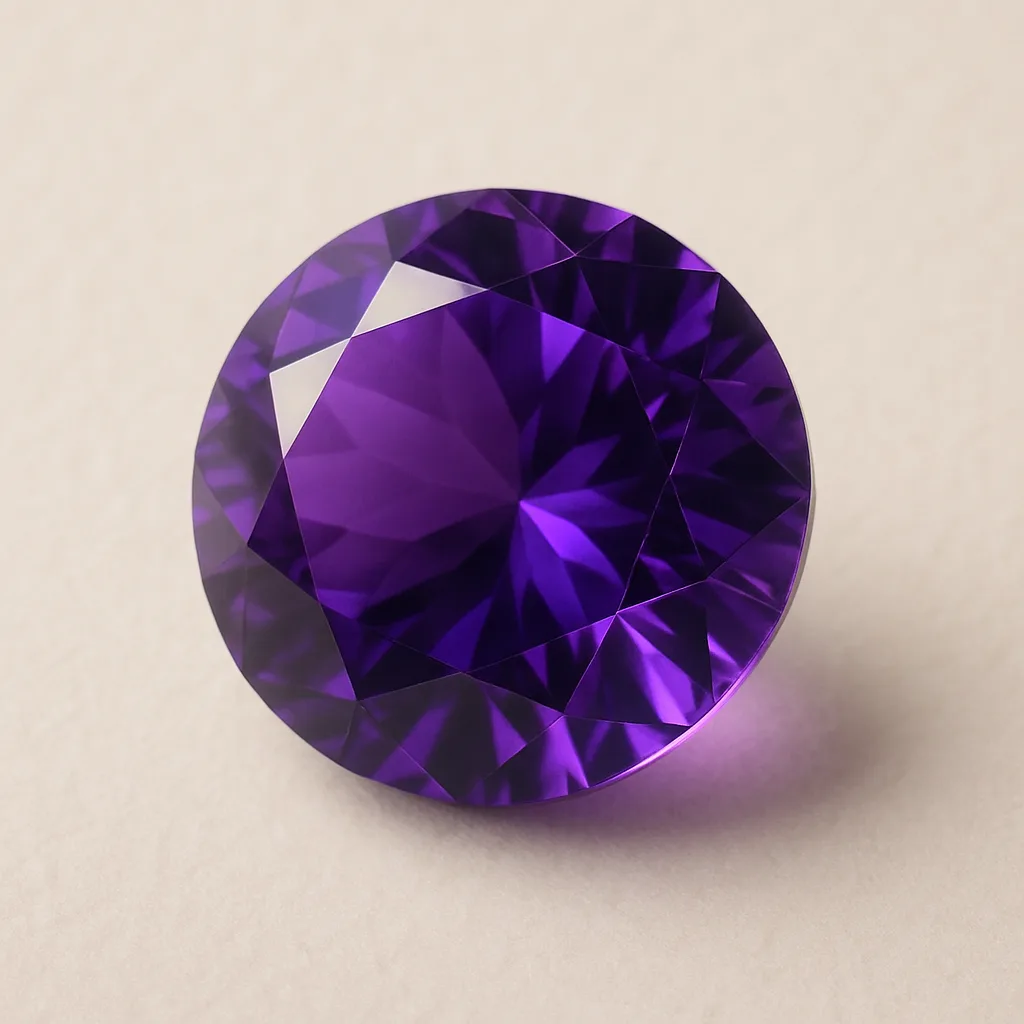
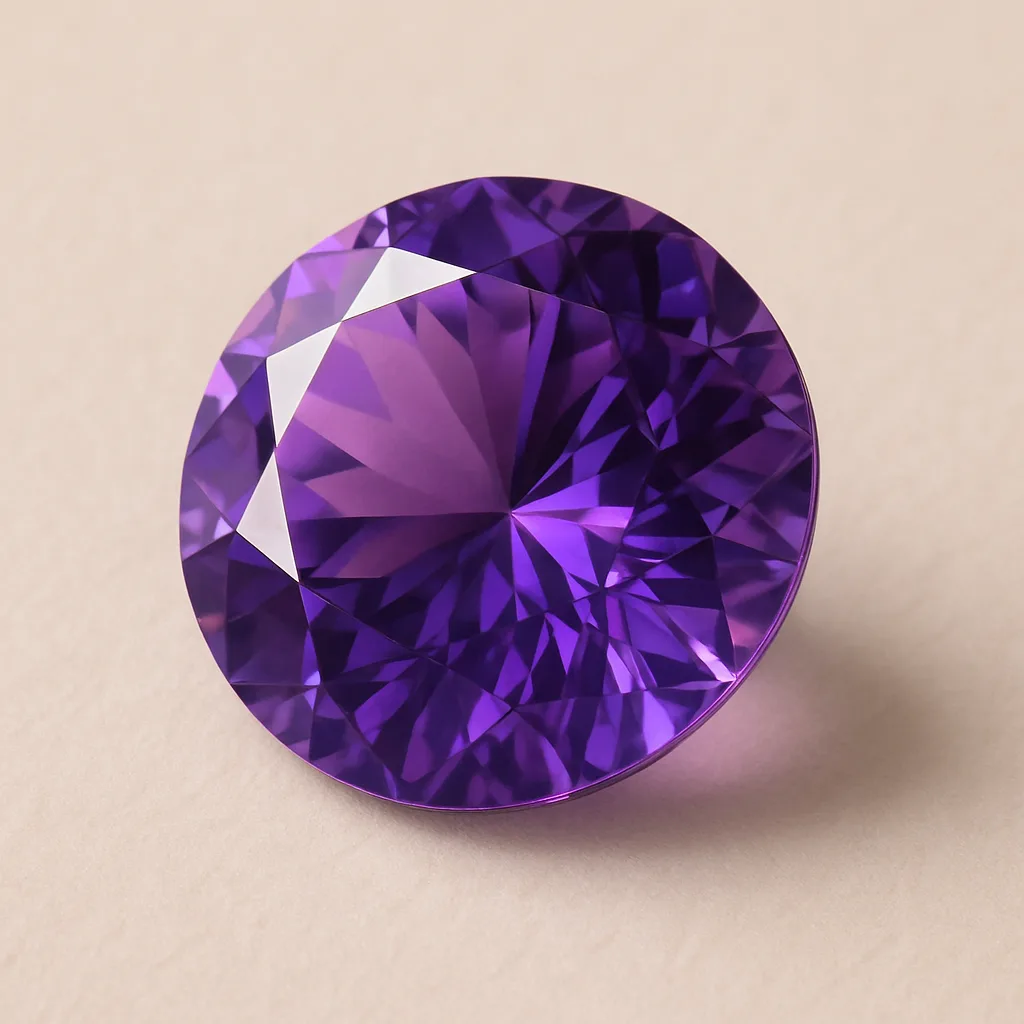
- Mohs 9 — extremely durable
- Ultrasonic and steam safe
- Stable to light and standard chemicals
$5–$30/ct for commercial flame-fusion synthetic purple sapphire. Premium Chatham flux-grown material can reach $100–$300/ct; Tairus hydrothermal material runs $50–$200/ct. Top-tier natural Sri Lankan or Madagascan purple sapphire above 3 ct in fine color trades at $500–$2,000/ct.
Note: Synthetic purple sapphire competes against natural purple sapphire, against synthetic amethyst (Mohs 7 vs. Mohs 9), against purple glass (Mohs ~5–6, no birefringence), and against vintage amethyst-doped stones. The Mohs-9 durability is the principal selling point for everyday wear, particularly engagement ring substitutes for natural amethyst. The flame-fusion volume is enormous and consistently disclosed in modern Western retail; older estate jewelry and Asian online retail more often blur the disclosure.
Synthetic purple sapphire is Al₂O₃ (trigonal) doped with chromium (Cr³⁺) and titanium (Ti⁴⁺), producing chromium d-d transitions modulated by titanium charge transfer for the violet-red color saturation. Mohs 9, SG 3.95–4.03, RI 1.760–1.770, ~0.008. Curved growth striae and round gas bubbles, the diagnostic markers of Verneuil flame-fusion, are visible at 10× immersion. The is weaker than natural purple sapphire and the color zoning markedly more uniform.
Origins
Switzerland (Djeva), Germany, France, Thailand, Russia, India, and China. Flux-grown synthetic purple sapphire is produced by Chatham in San Francisco; hydrothermal Tairus material from Novosibirsk has been available since the 1990s.
History
Verneuil flame-fusion purple corundum became a standard commercial product by the mid-1930s, with chromium-titanium chemistry providing reliable violet-purple saturation. The pre-war European jewelry trade absorbed it as both an amethyst substitute (with the considerable advantage of Mohs 9 over quartz's 7) and as a purple sapphire substitute. The 1957 FTC Jewelry Guides and subsequent 1996 revision tightened retail disclosure. Chatham flux-grown synthetic sapphire in purple has been available since the 1980s; Tairus hydrothermal purple corundum from the 1990s offers morphology much closer to natural material. The 19th-century 'oriental amethyst' trade name — used in 18th- and 19th-century Europe for fine Sri Lankan purple sapphire — was banned by the 1938 FTC ruling against the 'oriental' prefix on gem trade names; the term survives in historical references only.
Lore & symbolism
Some traditions accept purple sapphire as a February amethyst-substitute birthstone. Modern crystal writing positions synthetic purple sapphire with the same intuition-enhancing and protective associations as natural purple sapphire — 'wisdom,' 'spirituality,' 'calm' — without explicit traditional folkloric backing for the lab-grown species.
Tools to confirm this stone
Tools that help confirm Synthetic Purple Sapphire. Tap any item to jump to the matching section on the gem tools page.
- 10× loupeDETAILS →
Essential 10× tool to read inclusions, polish marks, and color zoning
- DichroscopeDETAILS →
Moderate pleochroism — confirm both axes through twin windows
- UV lamp (short-wave 254 nm)DETAILS →
Short-wave UV reveals red fluorescence (moderate) — a decisive synthetic-vs-natural cue
- RefractometerDETAILS →
Precise refractive-index reading pins down natural vs synthetic species
- Last reviewed
- April 28, 2026
- Bibliography
- Gem Encyclopedia / GIA (Gemological Institute of America)
- Gem Identification Standards / Central Gem Laboratory (CGL), Tokyo
- Mineral & Gem Database / Mindat.org / Gemdat.org
- Introduction to Gemology / Gemmological Association of All Japan (GAAJ)
The gemological data on this page (refractive index, specific gravity, hardness, crystal system, etc.) is cross-checked against the authoritative primary sources listed above. Values may be revised as gemological research advances.