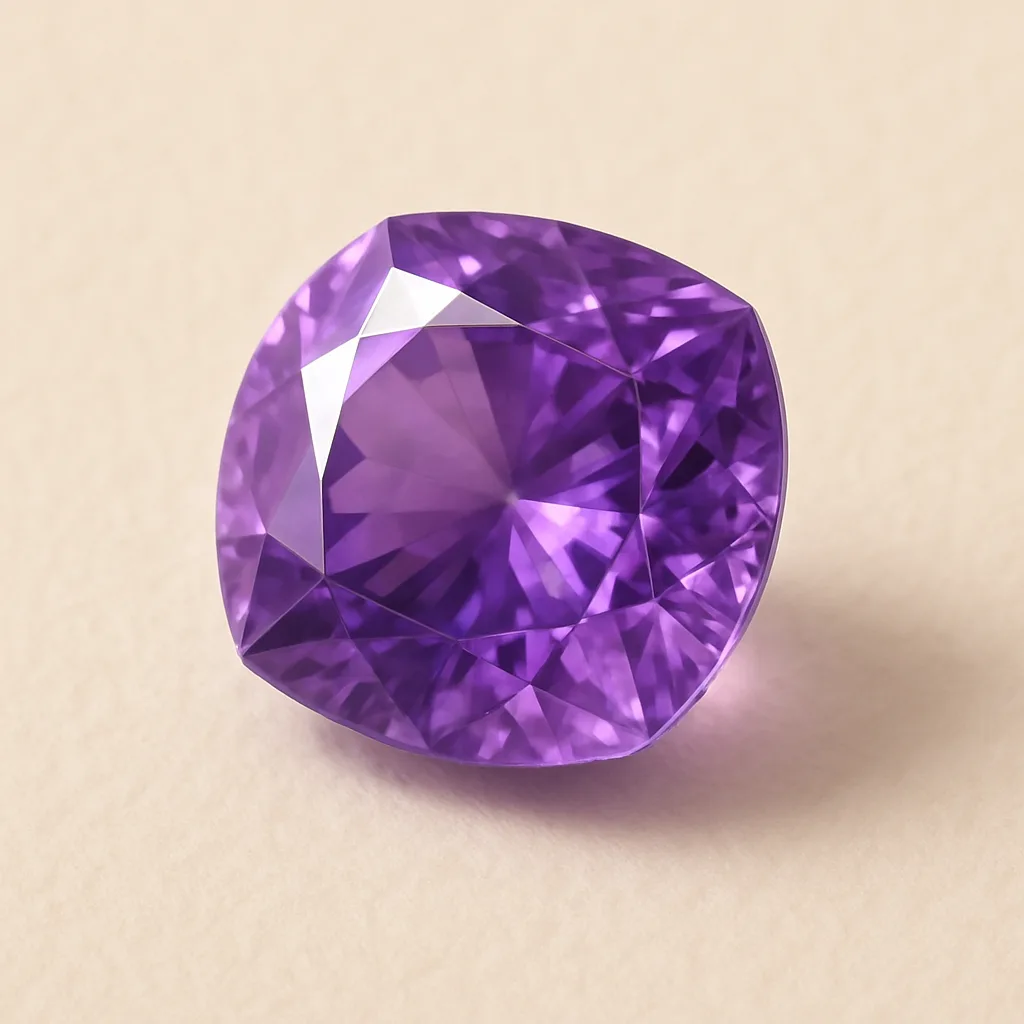
identified this stone yet
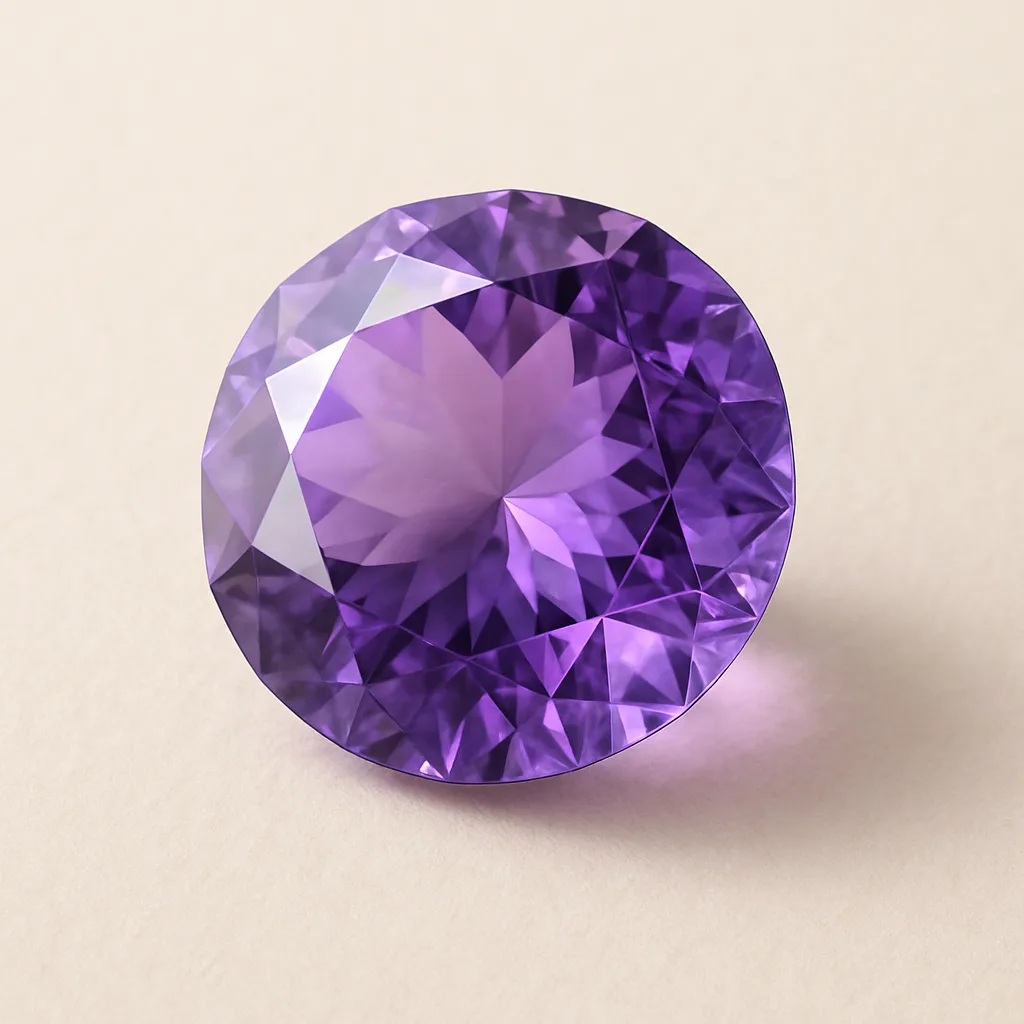
Purple Sapphire
| Hardness | 9 |
| Specific gravity | 4.00 |
| Refractive index | 1.762-1.770 |
| Crystal system | 六方晶系(三方晶系) |
Light lavender, violet, grape purple, and reddish-purple. Vanadium is the principal chromophore; trace iron and chromium modify the tone.
- producing the silky sheen typical of all corundum
- Hexagonal angular color zoning visible under immersion
- Healed fractures with fingerprint patterns
- nclusions
- Doubly refractive, uniaxial negative
- Refractive index 1.762–1.770
- 0.008
- medium to strong — purple parallel to the c-axis and reddish-purple perpendicular
- Specific gravity 3.95–4.03
- 01Refractive index 1.76–1.77 vs amethyst at 1.54–1.55 — the refractometer is decisive
- 02Specific gravity near 4.0 vs amethyst at 2.66 — purple sapphire feels noticeably heavier
- 03Pink reaction under the Chelsea filter in chromium-bearing stones; amethyst stays gray
- 04Strong dichroism visible through a dichroscope — amethyst is also dichroic but the colors are weaker
- Mohs 9 — extremely durable, second only to diamond
- Ultrasonic and steam cleaning are generally safe for untreated and heat-only stones; avoid for beryllium-diffused or fracture-filled material
- Stable to light and ordinary chemicals
Several thousand to about twenty thousand yen per carat for commercial Sri Lankan material up to a hundred thousand yen per carat or more for fine Burmese grape-purple stones above 2 ct.
Note: Heat treatment is common to lighten dark stones or to remove a brownish secondary color, and beryllium-diffusion treatment has been documented in some Madagascar material since 2003. Both treatments must be disclosed under FTC and CIBJO rules. Untreated stones from Sri Lanka with provenance documentation carry a meaningful premium.
Purple sapphire (Al₂O₃, trigonal) is the vanadium-colored variety of corundum, ranging from light lavender to deep grape. Vanadium is the dominant chromophore — the same element responsible for the green-to-red color change in synthetic 'alexandrite-like' corundum — and trace iron or chromium can shift the tone toward bluish-violet or reddish-violet. Most production comes from Sri Lanka (Ratnapura district), East African deposits (Tanzania's Umba Valley and Songea, Madagascar's Ilakaka), and small quantities from Burmese Mogok. The color is rarely saturated enough to compete with fine amethyst on its own purple merit, but the hardness (Mohs 9) and give it a wear-resistance that amethyst cannot match.
Origins
Sri Lanka's Ratnapura district produces most of the commercial-grade material, with lighter lavender tones being typical. Tanzanian Umba Valley material can show a reddish-purple tone with a slight color change to lavender in incandescent light. Madagascar's Ilakaka deposits opened in 1998 and contributed substantial purple-pink material in the early 2000s. Burmese Mogok occasionally yields deeper grape-purple stones but in small quantity.
History
Purple sapphire was traded historically as 'oriental amethyst' — a term used in 19th-century European jewelry catalogs to mean the corundum equivalent of quartz amethyst, much as 'oriental topaz' meant yellow sapphire. The trade name fell out of use after the 1938 FTC ruling against misleading 'oriental' prefixes in the United States, and modern usage simply calls the stone purple sapphire. Vanadium's role as the dominant chromophore was identified by spectroscopic work in the 1950s, distinguishing purple sapphire from the iron-titanium charge-transfer mechanism of blue sapphire.
Lore & symbolism
September birthstone via the sapphire designation. Purple sapphire is sometimes promoted as a stone of intuition and spiritual insight in modern lapidary writing — borrowing the older associations attached to amethyst.
Tools to confirm this stone
Tools that help confirm Purple Sapphire. Tap any item to jump to the matching section on the gem tools page.
- 10× loupeDETAILS →
Essential 10× tool to read inclusions, polish marks, and color zoning
- DichroscopeDETAILS →
Moderate pleochroism — confirm both axes through twin windows
- Chelsea filterDETAILS →
Quick chrome-content screen — chromium-bearing stones glow red through the filter
- UV lamp (long-wave 365 nm)DETAILS →
Long-wave UV reveals red fluorescence (moderate)
- Handheld spectroscopeDETAILS →
Absorption-line pattern identifies the chromophore (Cr, Fe, or Co)
- Last reviewed
- April 28, 2026
- Bibliography
- Gem Encyclopedia / GIA (Gemological Institute of America)
- Gem Identification Standards / Central Gem Laboratory (CGL), Tokyo
- Mineral & Gem Database / Mindat.org / Gemdat.org
- Introduction to Gemology / Gemmological Association of All Japan (GAAJ)
The gemological data on this page (refractive index, specific gravity, hardness, crystal system, etc.) is cross-checked against the authoritative primary sources listed above. Values may be revised as gemological research advances.