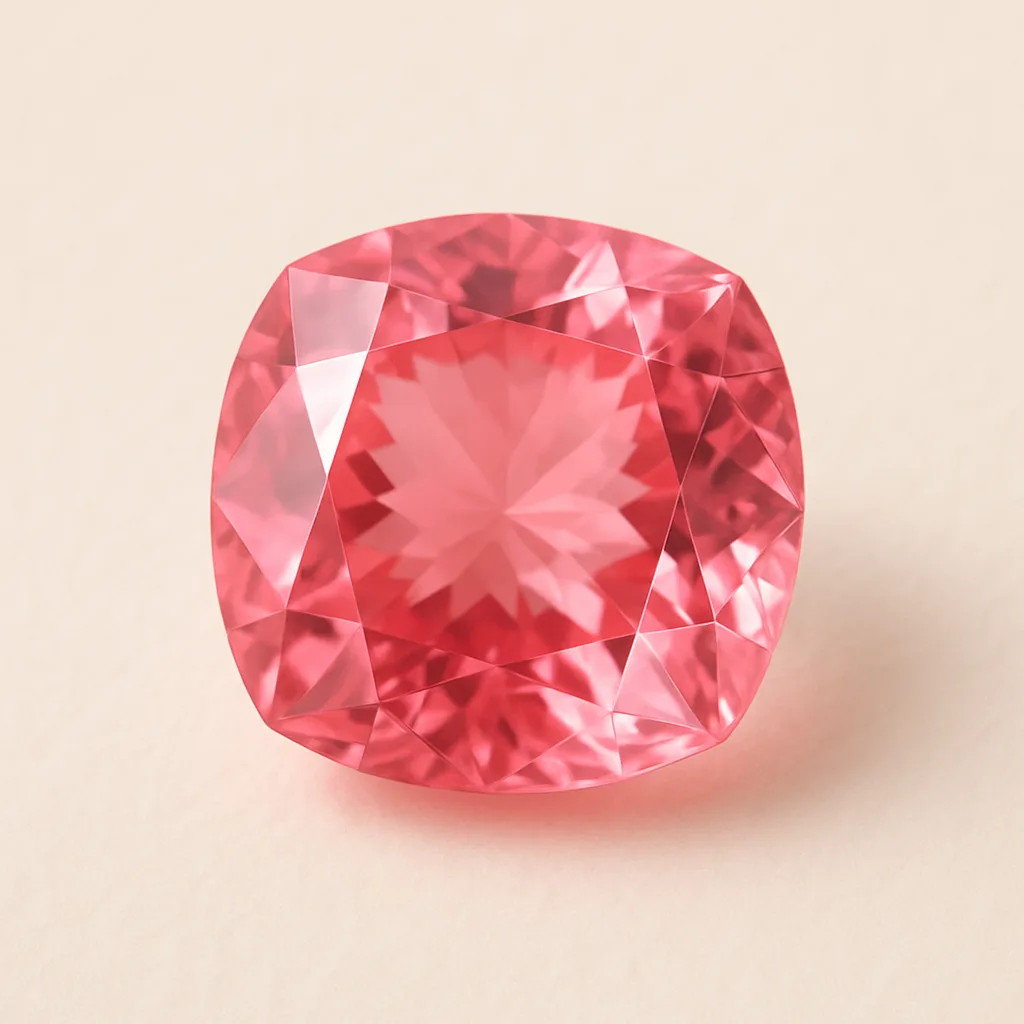
identified this stone yet
Pink Topaz
| Hardness | 8 |
| Specific gravity | 3.53 |
| Refractive index | 1.610-1.638 |
| Crystal system | 斜方晶系 |
Pale cherry pink, rose pink, salmon pink, raspberry, and the prized intense magenta-pink referred to in the trade as 'imperial pink.' The most valuable tones are pure pink with no orange or brown modifier and strong saturation, especially in stones above 3 carats.
- nclusions, often elongated parallel to the c-axis
- Healed fractures with fluid-filled tubes
- Color zoning visible as bands or sectors when the rough was zoned
- egative crystals with prismatic outlines
- Doubly refractive (biaxial positive)
- 0.008–0.010
- Moderate dichroism — pink and pale yellowish-pink along different optical directions
- Perfect basal — diagnostic of topaz
- 01SG 3.50–3.57 — feels noticeably heavy compared with morganite (~2.7) or kunzite (~3.18) at equal size
- 02RI 1.610–1.638 — distinct from pink sapphire (1.762) and morganite (1.57)
- 03 visible under 10× as a flat reflective plane perpendicular to the c-axis
- 04nclusions, partially melted internal features
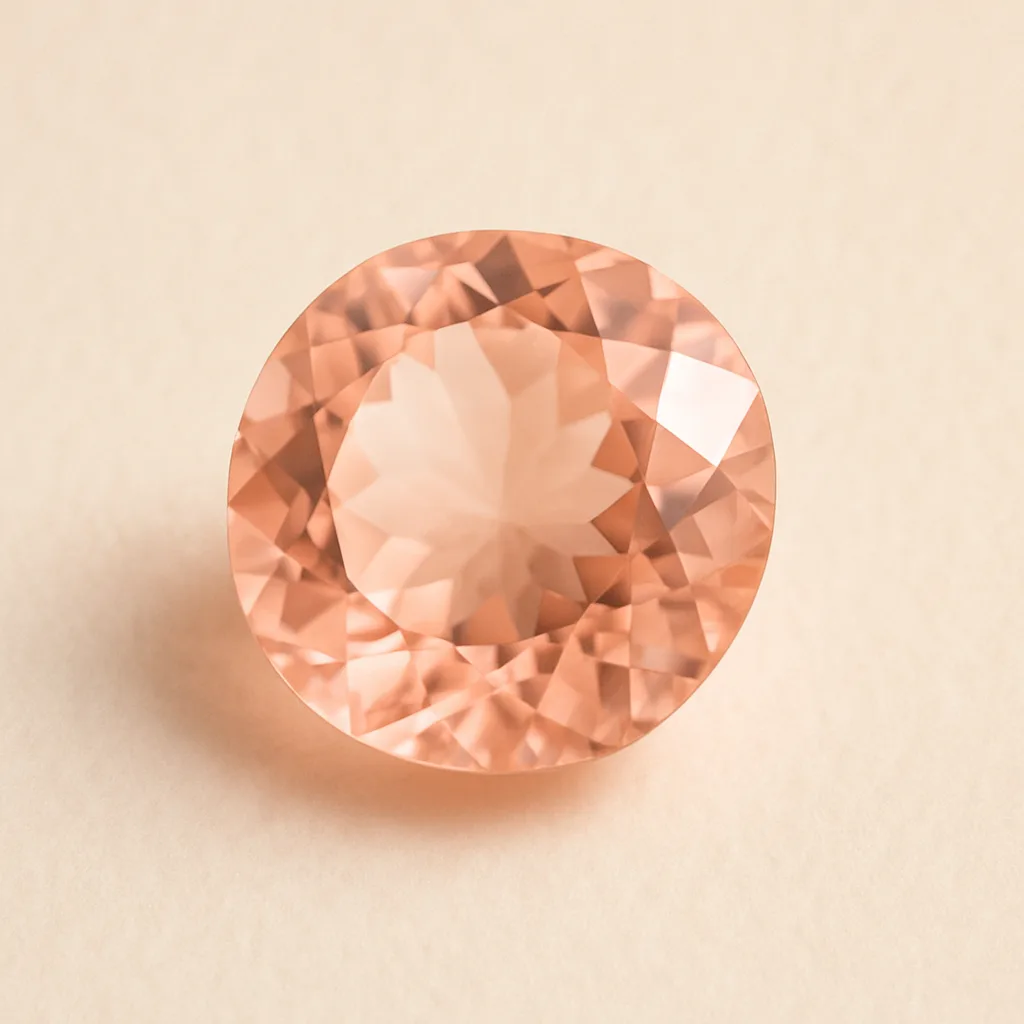
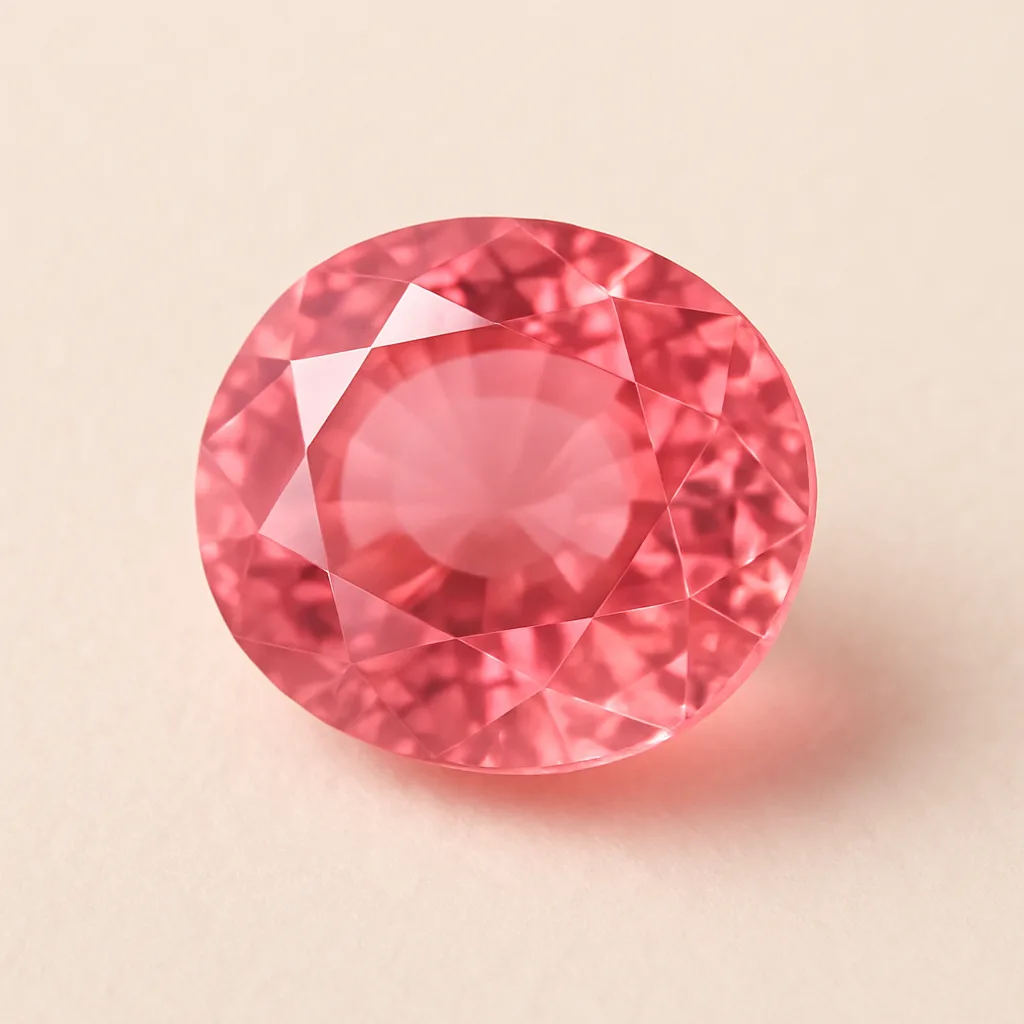
- Mohs 8 with perfect basal — avoid sharp impacts along the c-axis
- Never use ultrasonic or steam cleaning; warm soapy water with a soft brush only
- Coated stones (PVD pink coatings) can lose color with abrasion — clean with a dry cloth only
- Avoid sudden thermal shock to prevent propagation
Roughly $30–$150/ct for heat-treated commercial Brazilian pink topaz under 3 ct, $300–$1,500/ct for clean naturally-pink Katlang stones in the 2–5 ct range, and $3,000–$10,000+/ct for exceptional untreated Katlang stones above 5 ct with vivid magenta-pink saturation. Coated material trades at white-topaz prices and should be disclosed as such.
Note: Treatment disclosure is critical. Naturally untreated pink topaz from Katlang commands ten times or more the price of heat-treated Brazilian material at comparable saturation. Coated 'pink topaz' (titanium or other PVD coatings on colorless feedstock) is a low-end product whose color is surface-only and wears off with handling — reputable dealers disclose this. AGL and GIA reports routinely call out heat treatment and origin; lab reports are essential above $1,000/ct.
Pink topaz is chromium-bearing Al₂SiO₄(F,OH)₂. Untreated natural pink topaz forms only when the parent pegmatite or hydrothermal environment delivered the right combination of chromium, hydroxyl ions (rather than fluorine), and post-crystallization conditions — a coincidence that produces commercially viable pink material from essentially two sources in the world: Katlang in Pakistan's Khyber Pakhtunkhwa province (Ghundao Hill) and historically the Sanarka River in Russia's southern Urals. Most everything else sold as 'pink topaz' is heat-treated Brazilian Ouro Preto material whose natural orange-pink imperial topaz body color has been pushed toward purer pink, or low-grade colorless topaz that has been coated or irradiated-then-heated.
Origins
Pakistan's Katlang district (Ghundao Hill, near Mardan in Khyber Pakhtunkhwa) is the world's premier source of natural pink topaz — discovered commercially in the 1970s and producing the cherry-pink to magenta-pink stones that command the highest prices. Brazil's Ouro Preto in Minas Gerais yields imperial topaz that runs naturally from sherry-orange to pinkish-orange, with rare specimens showing pure pink. Russia's Sanarka River in the southern Urals produced legendary pink topaz throughout the 19th century — material favored by the Romanov court — though production has been minimal since the early 20th century. Sri Lankan and Madagascan pegmatites contribute small quantities of pale-pink material.
History
Russian pink topaz from the Sanarka and Kamenka rivers reached the European jewelry trade in the early 19th century, immediately attracting Romanov patronage — pink topaz from this source appears in Fabergé pieces and Imperial Russian crown jewelry. After Sanarka production declined in the early 20th century, the trade had no significant source of natural pink until the 1970s Katlang discovery in Pakistan. The Brazilian of imperial topaz to produce pinker tones began in earnest in the late 1960s and is now ubiquitous, with disclosure standards from GIA and other major labs becoming stricter through the 1990s and 2000s.
Lore & symbolism
Pink topaz is not a traditional birthstone but appears in modern crystal writing as a stone of compassion, gentle ambition, and self-love — properties extrapolated from the soft pink body color. The 23rd wedding anniversary gem under the 'Imperial Topaz' tradition. Russian aristocratic tradition associated pink topaz with the Romanov family specifically, and Sanarka pink topaz remained a status marker through the late Imperial period.
Tools to confirm this stone
Tools that help confirm Pink Topaz. Tap any item to jump to the matching section on the gem tools page.
- 最終確認日
- 2026年4月28日
- 参 考 文 献
- Gem Encyclopedia/ GIA (Gemological Institute of America)
- 宝石鑑別基準/ 中央宝石研究所 (CGL)
- Mineral & Gem Database/ Mindat.org / Gemdat.org
- 宝石学入門/ 全国宝石学協会
本ページの物性値(屈折率・比重・硬度・結晶系等)は、上記の権威ある一次資料を相互参照して編集しています。最新の鑑別研究の進展により値が更新される場合があります。