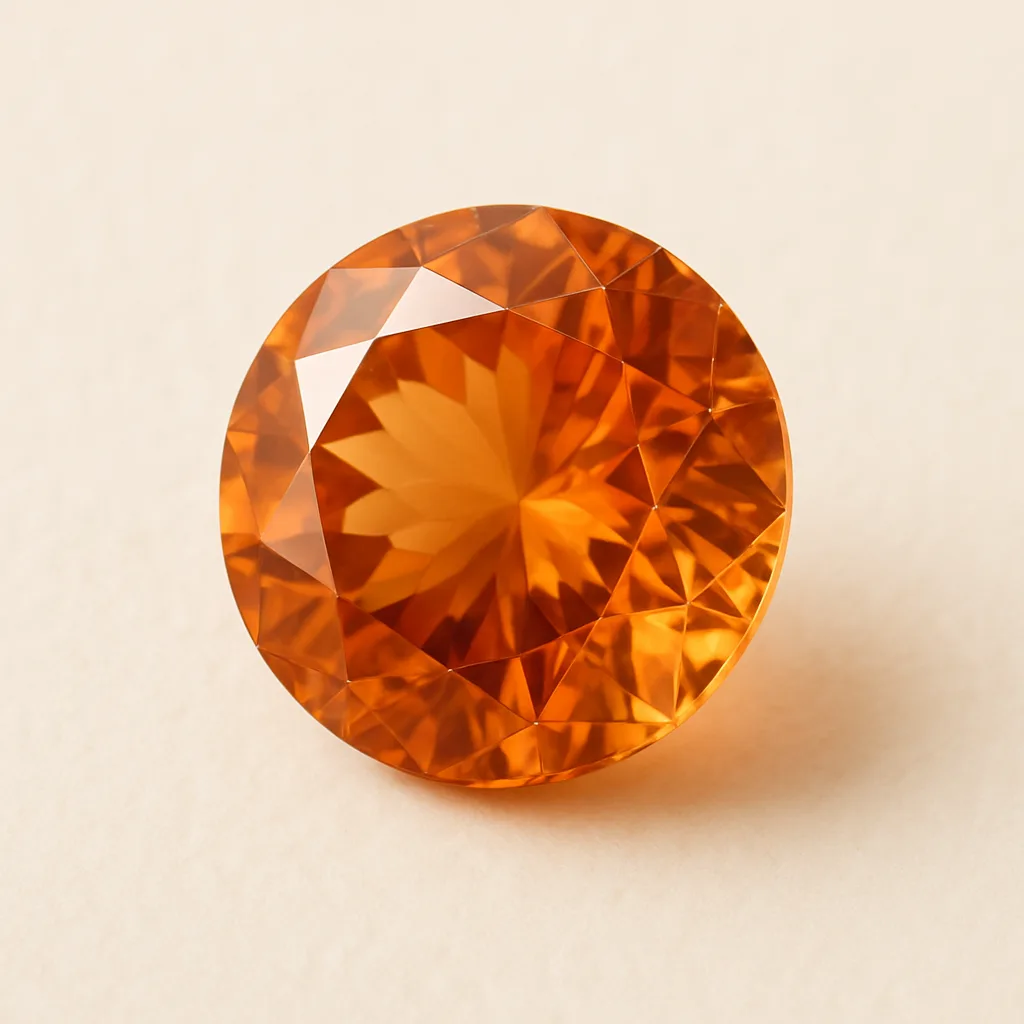
identified this stone yet
Orange Tourmaline
| Hardness | 7-7.5 |
| Specific gravity | 3.00-3.25 |
| Refractive index | 1.620-1.655 |
| Crystal system | 六方晶系 |
Golden orange through salmon and reddish orange. Some material shows a slightly brownish modifier.
- nclusions) running along the c-axis — diagnostic for the tourmaline group
- nclusions
- Healed fractures
- Uniaxial negative
- Strong : pale and saturated orange in different crystallographic directions
- 0.014–0.024 — moderate visible at 10×
- Refractive index 1.624–1.644
- 01nclusions are diagnostic for tourmaline
- 02Doubled edges at 10× distinguish from singly refractive spessartite and fire opal
- 03Strong — visible swing between pale and saturated orange under a dichroscope
- 04Mohs 7–7.5 — distinctly harder than fire opal (Mohs 5.5–6.5)
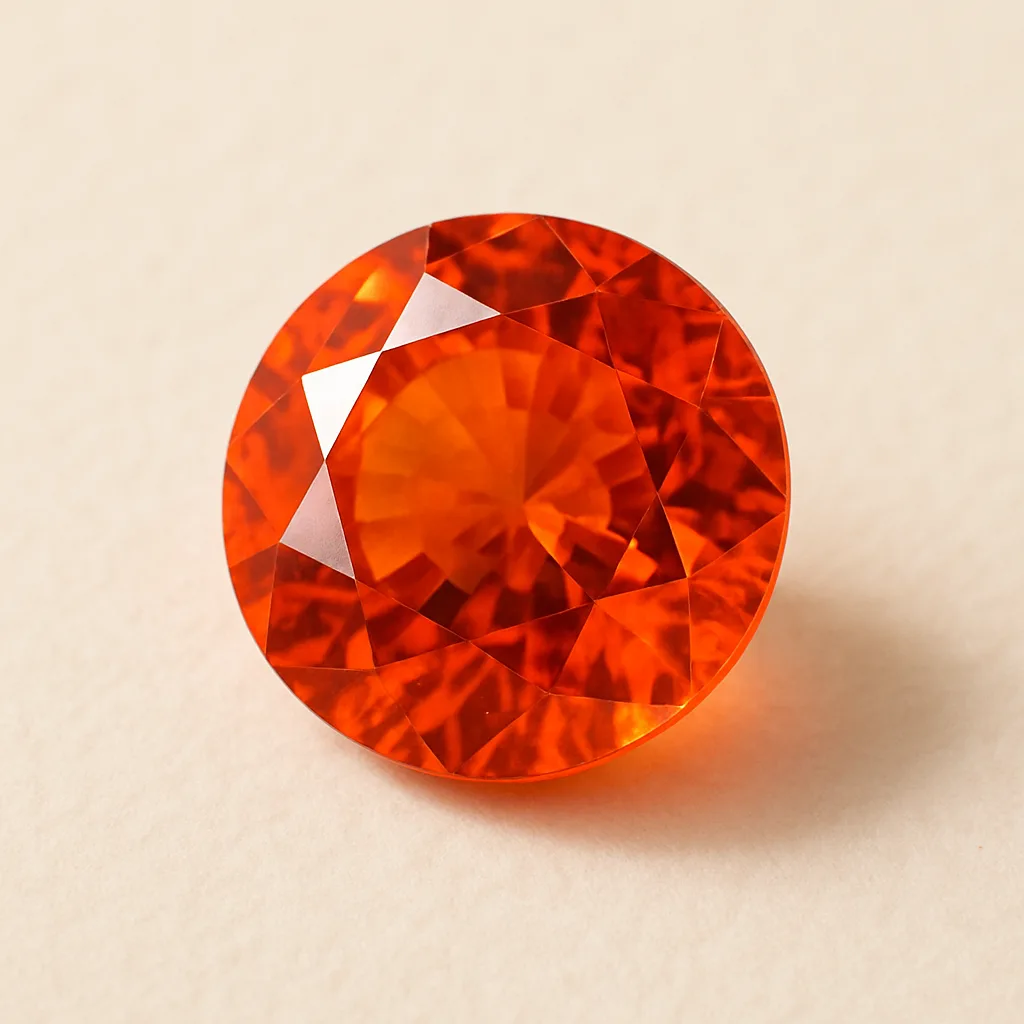
- Mohs 7–7.5 — suitable for everyday wear
- Avoid sudden temperature changes — tourmaline is pyroelectric and stressed by thermal shock
- Ultrasonic cleaning is normally safe for unfractured material
A few thousand yen per carat for ordinary commercial material up to several tens of thousands of yen per carat for top-color Namibian Sunset stones above 3 ct.
Note: Brazilian and African (Namibia, Mozambique, Madagascar) production dominate. Heat treatment is occasionally applied to lighten material or shift the orange toward a more saleable tone, and any treatment should be disclosed.
nclusions, strong , doubled edges from the high of 0.014–0.024 — are all clearly visible in orange tourmaline and separate it definitively from the more singly-refractive warm-colored gems (spessartite, fire opal, imperial topaz).
Origins
Brazil's Minas Gerais state has supplied orange tourmaline since the 19th century, particularly from the pegmatites of São José da Safira and Itinga. The Erongo Province of Namibia, especially around the village of Otjikoto, produces the bright 'Namibia Sunset' material that has dominated the high-end orange-tourmaline market since around 2010. Mozambique (Nampula and Zambezia provinces), Madagascar (Antananarivo and Antsiranana Provinces), Tanzania, Nigeria (Plateau State), and the historic Himalaya Mine in San Diego County, California, round out the producers.
History
Tourmaline was identified as a distinct species in the early 18th century by Dutch East India Company traders, who imported colored pebbles from Sri Lanka under the Sinhalese name turamali. The orange variety came to market only after the late-19th-century opening of the Brazilian pegmatite fields and has remained one of the smaller specialty markets within the tourmaline family. The Erongo discoveries of the 2000s and 2010s — particularly the bright Namibian 'sunset' material — reinvigorated the category and positioned it alongside spessartite as a serious warm-color alternative to fancy sapphire.
Lore & symbolism
October birthstone, alongside opal, and the 8th-anniversary stone. The 'sun-bringer stone' of contemporary lapidary writing — associated with creativity, energy, and the vigor of late summer.
Tools to confirm this stone
Tools that help confirm Orange Tourmaline. Tap any item to jump to the matching section on the gem tools page.
- 最終確認日
- 2026年4月28日
- 参 考 文 献
- Gem Encyclopedia/ GIA (Gemological Institute of America)
- 宝石鑑別基準/ 中央宝石研究所 (CGL)
- Mineral & Gem Database/ Mindat.org / Gemdat.org
- 宝石学入門/ 全国宝石学協会
本ページの物性値(屈折率・比重・硬度・結晶系等)は、上記の権威ある一次資料を相互参照して編集しています。最新の鑑別研究の進展により値が更新される場合があります。