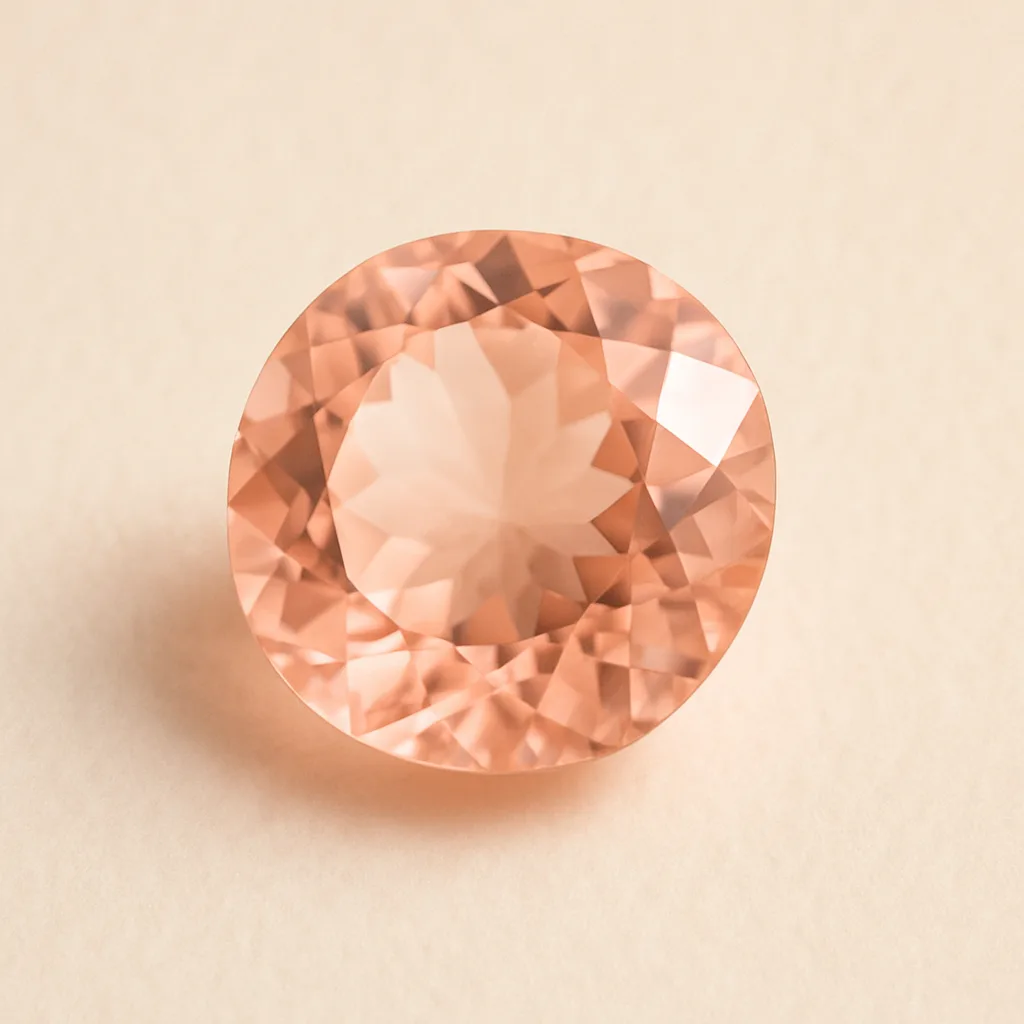
identified this stone yet
Morganite
| Hardness | 7.5-8 |
| Specific gravity | 2.72 |
| Refractive index | 1.572-1.590 |
| Crystal system | 六方晶系 |
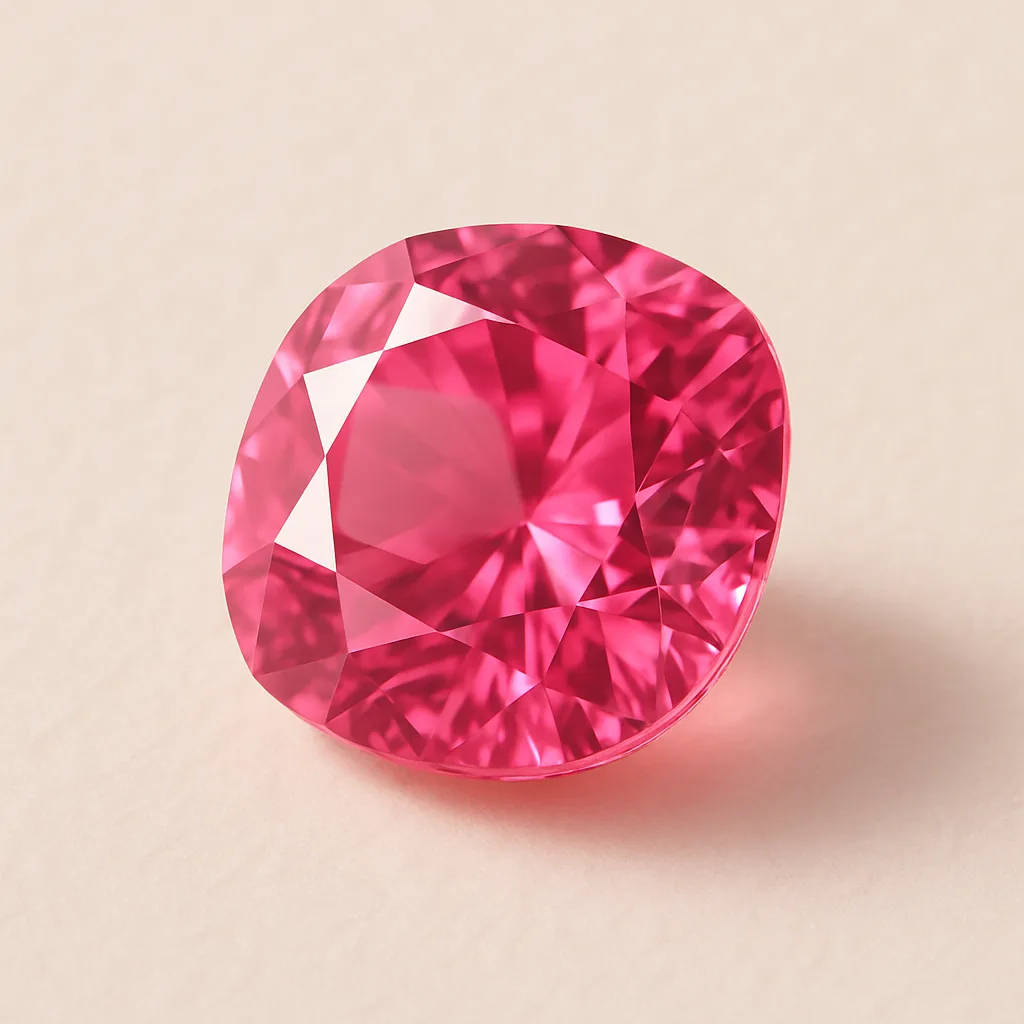
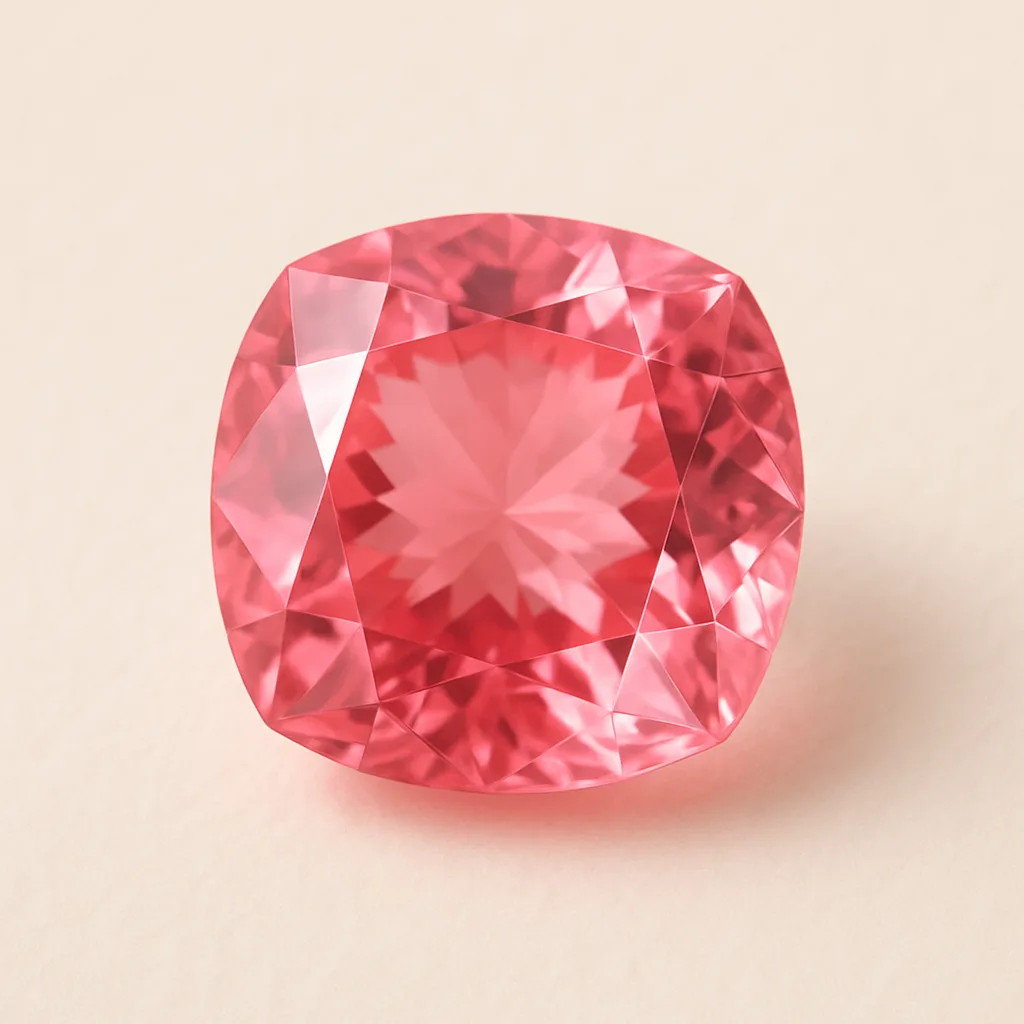
Pale baby pink, dusty rose, warm salmon pink, and peachy pink. Saturation is typically modest; finer stones lean toward 'bubblegum' or warm peach tones. Larger sizes hold color more visibly than tiny calibrated goods.
- nclusions are minor
- nclusions in straight or zigzag patterns
- Hollow growth tubes parallel to the c-axis
- Thin reflective sheets along basal pinacoid
- Doubly refractive (uniaxial negative)
- Distinct dichroism: pale pink and deeper bluish pink
- Vitreous luster with bright polish
- 01RI 1.583–1.590 and SG 2.71–2.90 separate morganite from kunzite (higher RI/SG) and pink tourmaline (higher RI, stronger )
- 02 is distinct but not extreme — far weaker than kunzite
- 03nclusions and growth tubes are the hallmark beryl signature
- Durable for everyday wear with reasonable care
- Safe in warm soapy water; ultrasonic and steam are acceptable if no fractures are present
- Avoid prolonged heat or sunlight on irradiated stones — color may fade
Roughly $50–$150/ct for commercial pale stones under 5 ct, $200–$500/ct for clean 5–10 ct material with good pink saturation, and $700–$1,500+/ct for fine large peachy-pink stones above 10 ct. Color saturation, not clarity, drives price — most morganite is eye-clean.
Note: Heat treatment to remove yellowish components and intensify the pink is routine, stable, and not separately disclosed by most dealers. Irradiation can deepen color but typically fades; reputable cut stones are heat-treated only. Watch for synthetic beryl marketed as morganite — almost all gem-quality morganite is natural, since the price point doesn't justify synthesis.
Morganite is beryl (Be₃Al₂Si₆O₁₈) where divalent manganese (Mn²⁺) produces a delicate pink. The variety was identified at the Pala Chief Mine in California in 1910 and named the following year by George Frederick Kunz in honor of banker and gem collector J.P. Morgan. Brazil's Minas Gerais is now the dominant commercial source, with Madagascar, Mozambique, Afghanistan, and Pakistan supplying smaller volumes.
Origins
The Minas Gerais pegmatites of Brazil supply most of the world's commercial morganite, especially the Galiléia and Conselheiro Pena districts. Madagascar produces clean, lightly colored stones from Anjanabonoina and surrounding pegmatites. Mozambique's pegmatite belt has been a growing source since the 2000s. Afghan Kunar and Pakistani Shigar yield smaller but often vivid stones, including bicolor pink/peach crystals.
History
Although pink beryl crystals had been described from Madagascar in the late 19th century, the variety lacked a unifying name until Kunz formalized 'morganite' in 1911 in honor of J.P. Morgan, Tiffany & Co.'s principal benefactor and one of the era's great gem collectors. Tiffany & Co. promoted the stone in the early 20th century, and it had a strong renaissance in bridal jewelry from the mid-2010s as rose-gold engagement rings became fashionable.
Lore & symbolism
Modern crystal-healing lore associates morganite with the heart and unconditional love; it has no traditional birthstone assignment but is now widely marketed as an alternative engagement stone.
Tools to confirm this stone
Tools that help confirm Morganite. Tap any item to jump to the matching section on the gem tools page.
- 最終確認日
- 2026年4月28日
- 参 考 文 献
- Gem Encyclopedia/ GIA (Gemological Institute of America)
- 宝石鑑別基準/ 中央宝石研究所 (CGL)
- Mineral & Gem Database/ Mindat.org / Gemdat.org
- 宝石学入門/ 全国宝石学協会
本ページの物性値(屈折率・比重・硬度・結晶系等)は、上記の権威ある一次資料を相互参照して編集しています。最新の鑑別研究の進展により値が更新される場合があります。