identified this stone yet
Lapis Lazuli
| Hardness | 5.5 |
| Specific gravity | 2.80 |
| Refractive index | 1.50 |
| Crystal system | 等軸晶系(ラズライト主成分) |
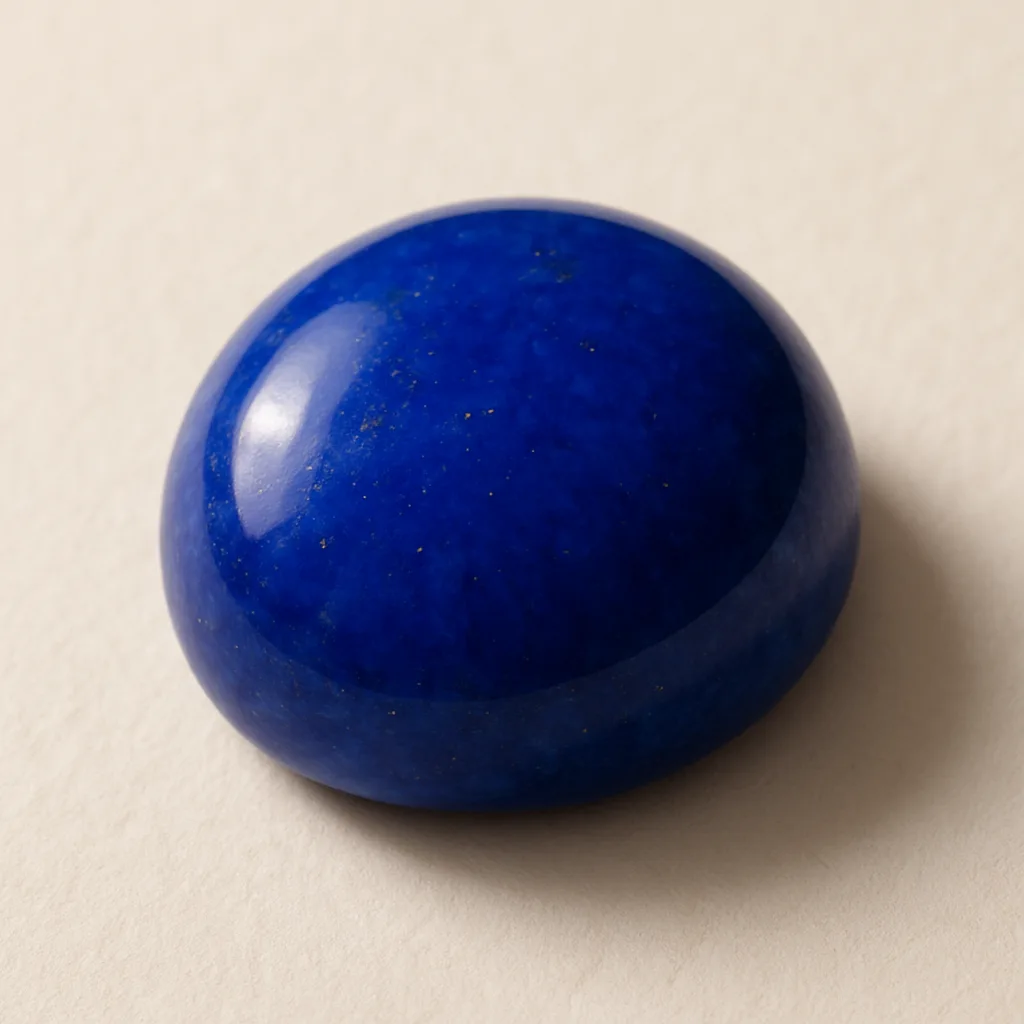
Deep ultramarine to royal blue to slightly violet-blue, with golden pyrite specks ('starry sky' patterning) and variable white calcite. Top stones are uniformly saturated blue; commercial material may show heavy calcite and look mottled.
- Golden pyrite specks — diagnostic when present
- White calcite veins or patches
- Color variation from royal blue through to greenish-blue zones
- Granular texture visible under magnification
- Singly refractive (rock — multi-mineral aggregate)
- Opaque to very slightly translucent at edges
- Vitreous to dull luster depending on polish and calcite content
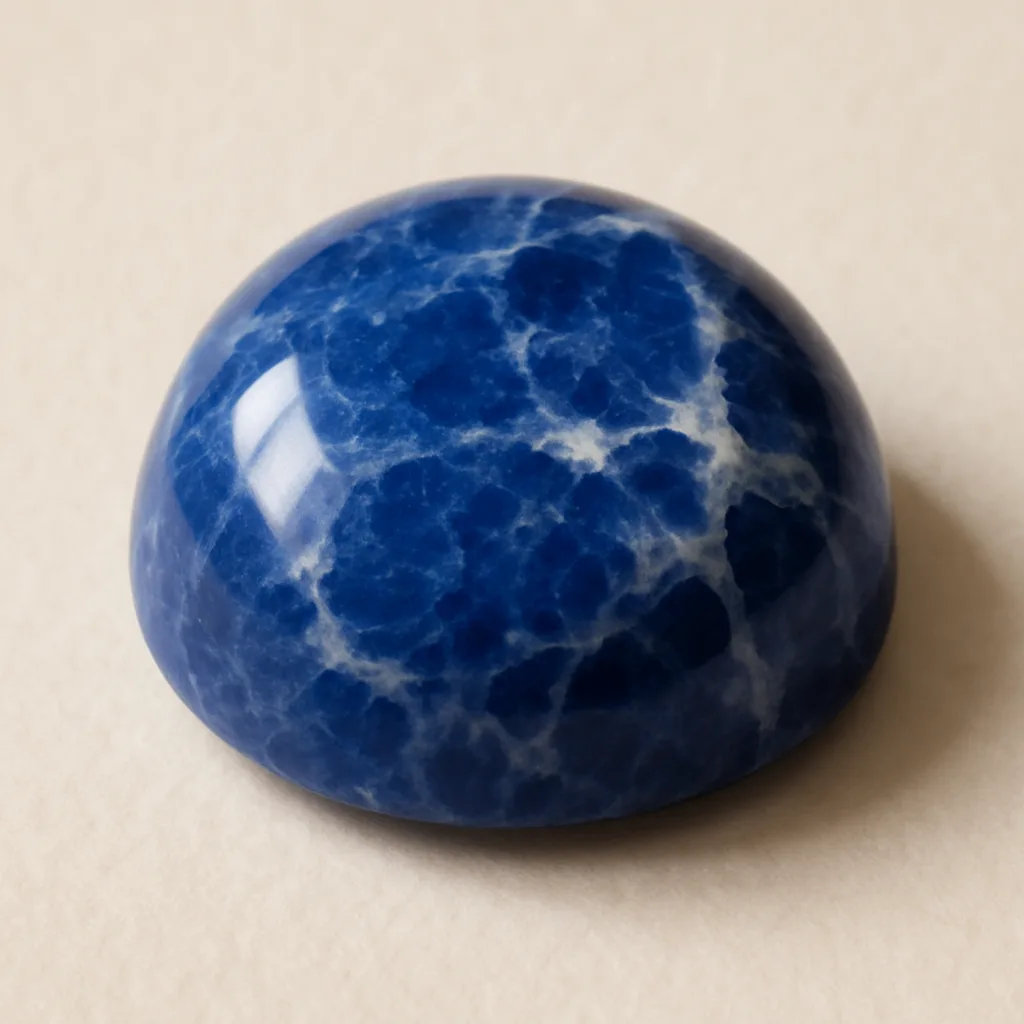
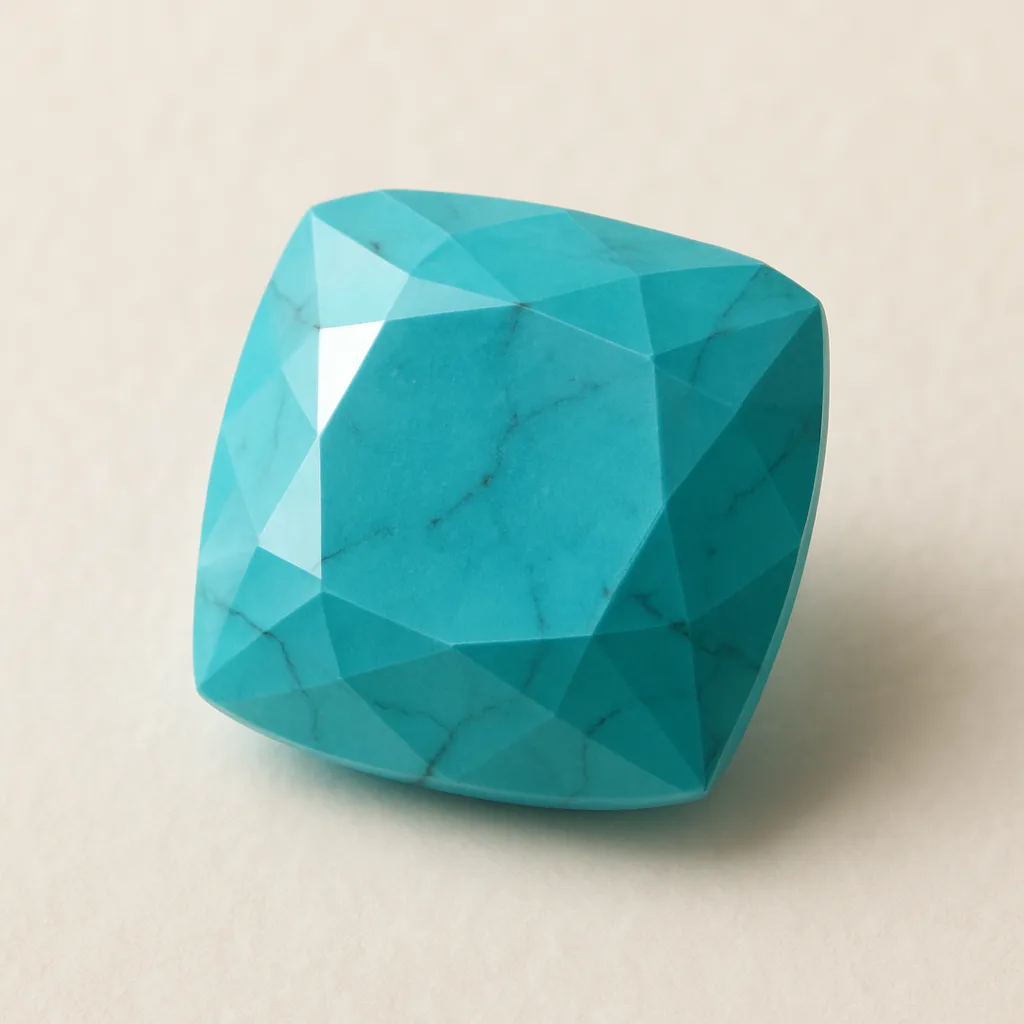
- 01nclusions are the strongest single identifier — sodalite and dyed howlite lack them
- 02RI ~1.50 and SG 2.5–3.0 (variable due to multi-mineral nature)
- 03Acetone or a damp cloth will reveal dye in treated material (color transfers)
- 04aceted stones) gives pale blue powder
- Mohs 5.5 — easily scratched; soft polish dulls quickly
- Avoid ultrasonic, steam, acids, and prolonged water exposure (calcite is reactive)
- Wipe with a soft dry cloth; store separately to prevent harder gems from scratching
Roughly $1–$10/ct for commercial mottled material, $20–$80/ct for clean Afghan blue with even sparse pyrite, and $100–$300+/ct for top-grade Sar-e-Sang stones. Cabochons over 20 ct in fine quality can reach four figures per cabochon, not per carat.
Note: Color enhancement is widespread: dyeing pale stones with blue ink, wax-impregnation to deepen color, and resin-impregnation to stabilize porous material. Top untreated Afghan rough commands large premiums. 'Reconstituted lapis' is powdered lapis pressed with resin — inexpensive but legally must be disclosed. Lower-quality stones may be marketed as 'denim lapis' if calcite-heavy.
Lapis lazuli is a polymineral rock, not a single mineral. Its dominant blue phase is lazurite ((Na,Ca)₈(AlSiO₄)₆(SO₄,S,Cl)₂), with accessory hauyne, sodalite, and nosean — all members of the feldspathoid family. Pyrite (FeS₂) provides the golden flecks; calcite the white veining. The finest material is uniformly deep blue with sparse pyrite and minimal calcite. Sar-e-Sang in Afghanistan's Badakhshan province has been the primary source since at least 4000 BCE; Chile and Russia (Lake Baikal) supply paler commercial material.
Origins
Afghanistan's Sar-e-Sang Mine in the Kokcha valley of Badakhshan province is the world benchmark, producing rich royal blue rough continuously for at least 6,000 years. Chile's Andean deposits (Cordillera de Ovalle) yield paler, more calcite-rich material widely used in beads. Russia's Lake Baikal sources produce strong blue with darker pyrite. Smaller occurrences in California (San Bernardino), Pakistan, Myanmar, and Angola supply niche markets.
History
Lapis was carved into beads, amulets, and seals across the ancient Near East: Sumerian Ur royal tombs (2500 BCE), Egyptian dynasties (Tutankhamun's funerary mask is inlaid with lapis), and the Indus Valley. From the 6th to the 19th centuries, lapis was ground into ultramarine pigment — at times more expensive than gold, reserved for the robes of the Virgin Mary in European Renaissance painting. Synthetic ultramarine, developed in 1828, ended that monopoly.
Lore & symbolism
December's traditional birthstone (modern lists vary) and the 9th wedding anniversary stone. Associated since antiquity with truth, royalty, and divine knowledge; ground lapis was used in Egyptian cosmetics and ceremonial inks.
Tools to confirm this stone
Tools that help confirm Lapis Lazuli. Tap any item to jump to the matching section on the gem tools page.
- 最終確認日
- 2026年4月28日
- 参 考 文 献
- Gem Encyclopedia/ GIA (Gemological Institute of America)
- 宝石鑑別基準/ 中央宝石研究所 (CGL)
- Mineral & Gem Database/ Mindat.org / Gemdat.org
- 宝石学入門/ 全国宝石学協会
本ページの物性値(屈折率・比重・硬度・結晶系等)は、上記の権威ある一次資料を相互参照して編集しています。最新の鑑別研究の進展により値が更新される場合があります。