identified this stone yet
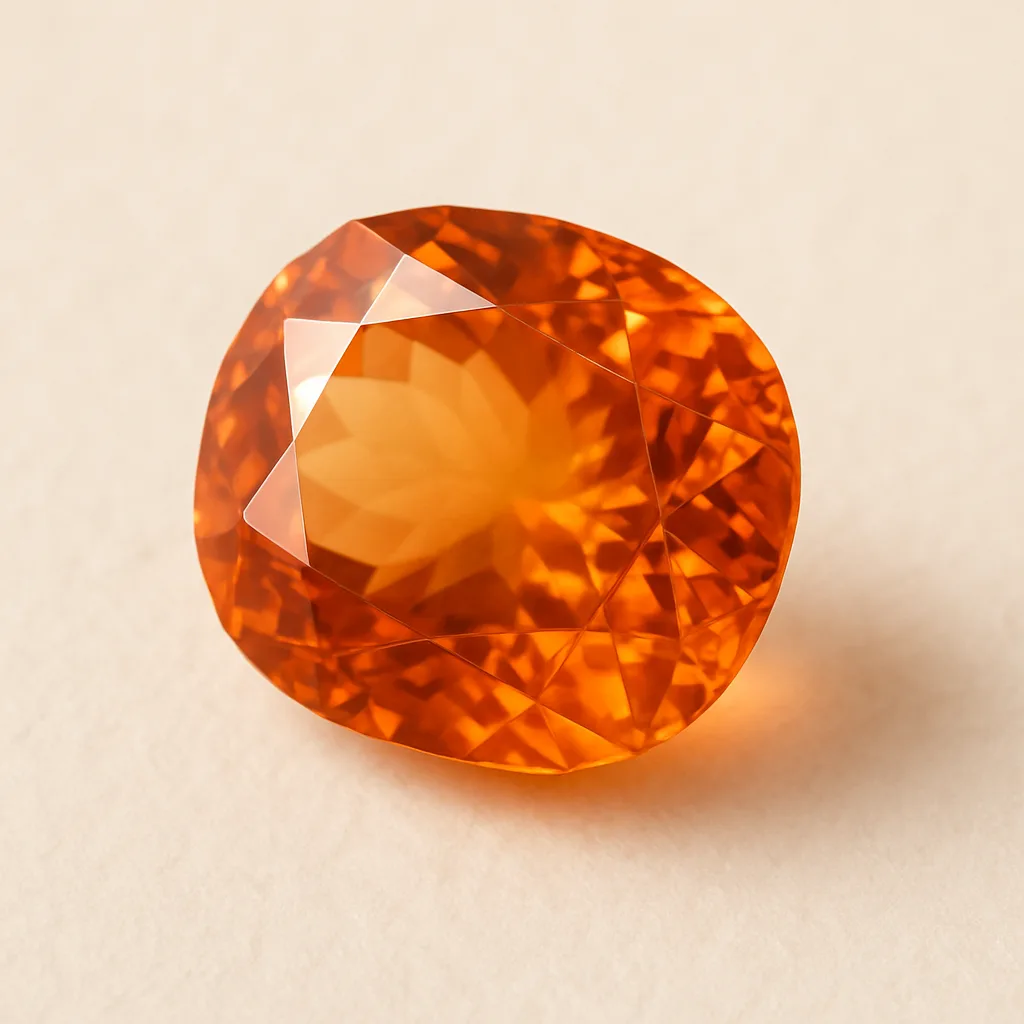
Imperial Topaz
| Hardness | 8 |
| Specific gravity | 3.50 |
| Refractive index | 1.619-1.627 |
| Crystal system | 斜方晶系 |
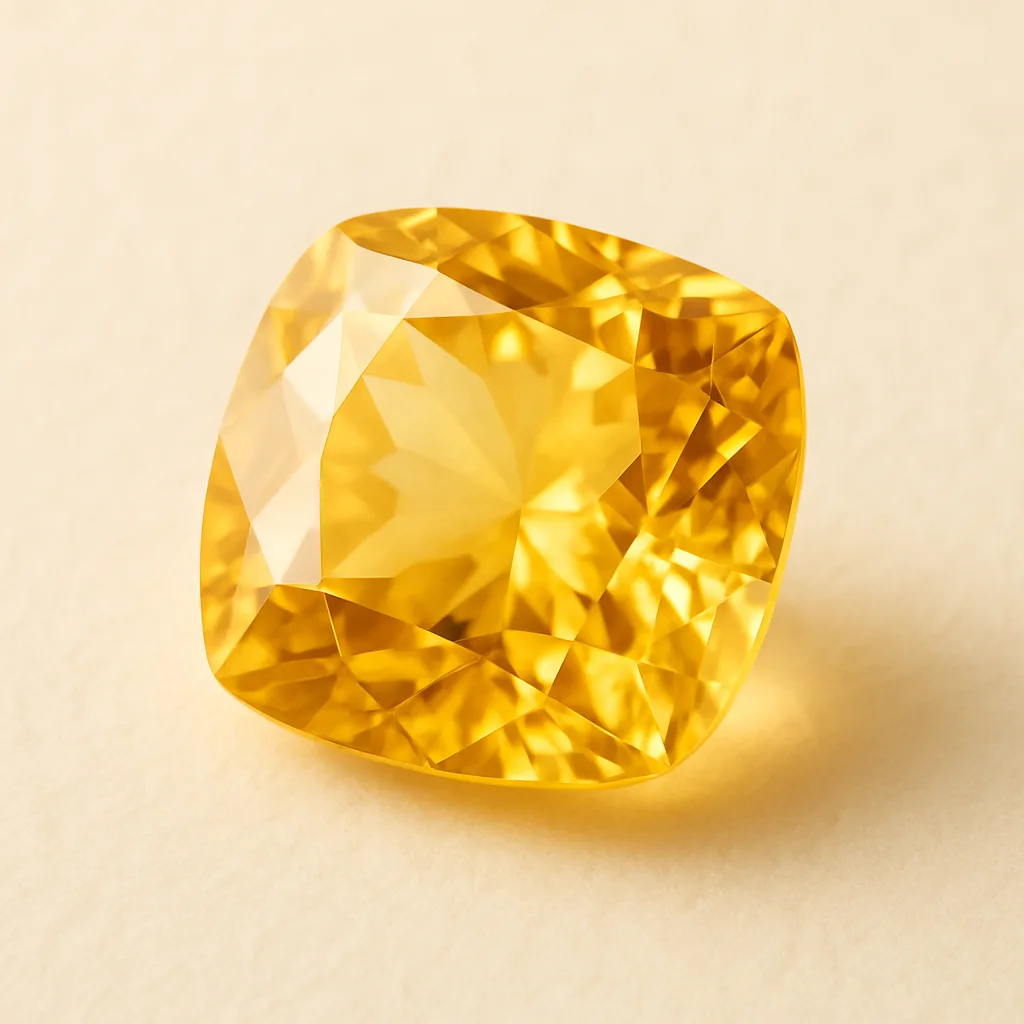
Sherry red, peach pink, golden orange, and the most prized 'imperial' tone — a warm reddish-pink-orange blend. Bicolor stones with red and yellow zones are particularly prized.
- Very clean — eye-clean stones are the norm
- nclusions when present
- planes parallel to the basal pinacoid
- Doubly refractive (biaxial positive)
- Strong dichroism: yellow, red and pink axes
- Perfect basal in one direction
- 01Strong dichroism showing three distinct colors confirms topaz
- 02Basal can show as a single flat reflective plane inside the stone
- 03SG 3.5 separates it from citrine (~2.65) and most yellow garnets
- makes imperial topaz vulnerable to impacts despite Mohs 8 hardness — protective settings only
- Never ultrasonic clean — vibration can split along the plane
- Avoid sudden temperature changes; lukewarm soapy water and a soft brush only
Roughly $500–$2,000 per carat for commercial sherry or peach stones, $3,000–$8,000 per carat for fine 2–5 ct material with pink-red dominance, and $10,000–$20,000+ per carat for top pink stones over 5 carats.
Note: No standard treatments — imperial topaz is sold as-mined. Heat treatment is occasionally used to adjust subtle color but is rare; lab reports for high-value stones should specify. The biggest price drivers are pure pink-red color, clarity, and size — clean stones over 5 carats become very expensive.
Imperial topaz is the warm-toned variety of topaz (Al₂SiO₄(F,OH)₂) where trace chromium and OH groups produce sherry-red, peach-pink, and golden orange hues. The trade name 'imperial' is traditionally reserved for stones with a noticeable pink or red component, not pure yellow. Brazil's Ouro Preto district in Minas Gerais is the world's only major commercial source; Pakistan's Katlang produces smaller pink stones sometimes classed separately.
Origins
Brazil's Ouro Preto district in Minas Gerais — particularly the Capão do Lana, Vermelhão and Saramenha mines — is the world's only meaningful commercial source. The deposit has been mined for over 300 years and yields sherry, peach and golden-pink material. Pakistan's Katlang Mine in Mardan district produces a separate pink topaz that some labs class as imperial; output is small. No other deposit worldwide produces 'imperial' color in commercial quantity.
History
The name 'imperial' is generally traced to 18th- or 19th-century Russia: either honoring the Russian Tsar (imperator) or referring to pink topaz from the Ural Mountains that was reserved for the imperial family. The Russian pink material is essentially exhausted today, and the Brazilian sherry stones inherited the trade name. The Ouro Preto deposit, mined continuously since the 18th century, has driven the market since.
Lore & symbolism
November's birthstone alongside citrine. Imperial topaz has long been associated with the sun, friendship, and clarity of purpose — and it appears as the 23rd wedding anniversary gift in some traditions.
Tools to confirm this stone
Tools that help confirm Imperial Topaz. Tap any item to jump to the matching section on the gem tools page.
- 最終確認日
- 2026年4月28日
- 参 考 文 献
- Gem Encyclopedia/ GIA (Gemological Institute of America)
- 宝石鑑別基準/ 中央宝石研究所 (CGL)
- Mineral & Gem Database/ Mindat.org / Gemdat.org
- 宝石学入門/ 全国宝石学協会
本ページの物性値(屈折率・比重・硬度・結晶系等)は、上記の権威ある一次資料を相互参照して編集しています。最新の鑑別研究の進展により値が更新される場合があります。