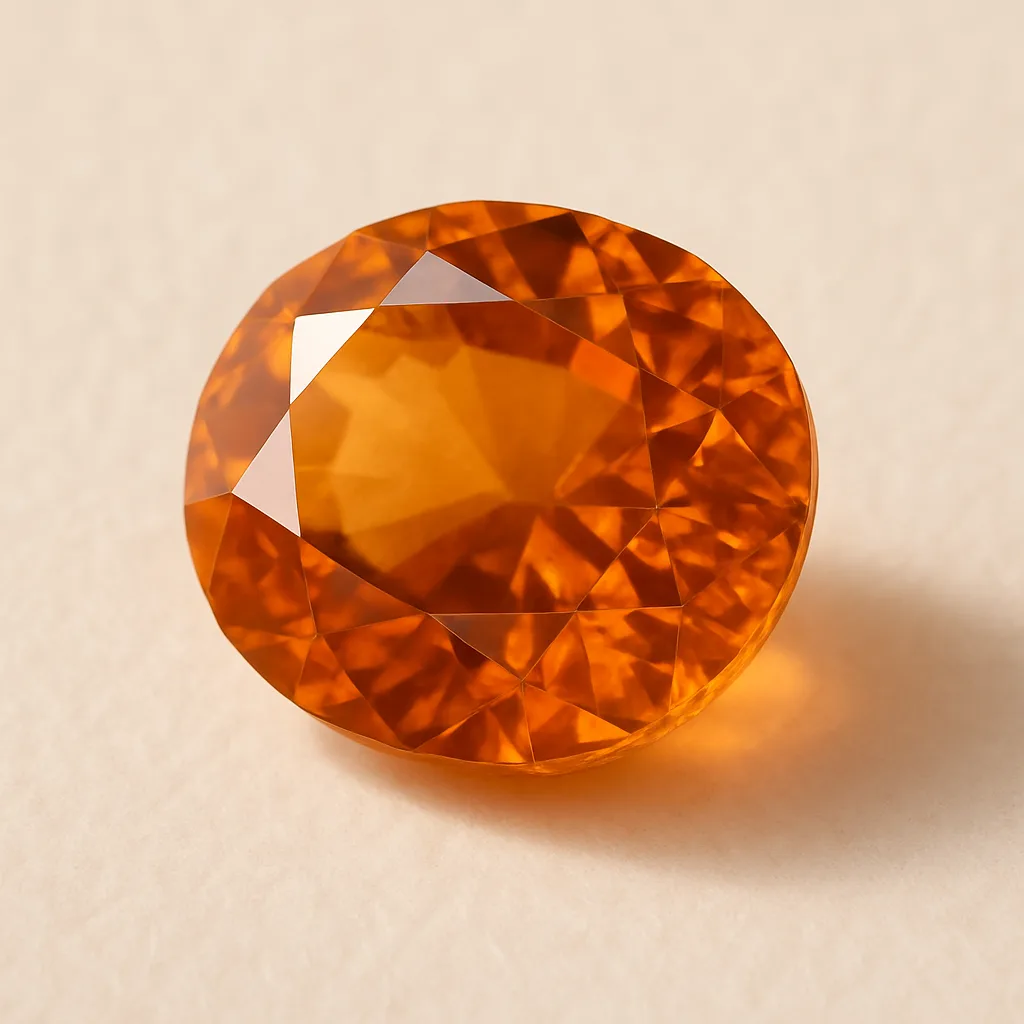
identified this stone yet
Hessonite Garnet
| Hardness | 7-7.5 |
| Specific gravity | 3.55-3.75 |
| Refractive index | 1.738-1.745 |
| Crystal system | 等軸晶系 |
Honey yellow, golden orange, cinnamon brown, and reddish brown. Iron is the principal chromophore; manganese contributes a pinker secondary tone in some material.
- Roiling 'treacle' or 'heat-wave' internal effect — diagnostic at 10×
- nclusions of apatite, scapolite, or diopside
- Healed fractures with fingerprint patterns
- Growth-zone color banding visible under immersion
- Singly refractive (cubic system) — no , no
- Refractive index 1.738–1.745
- Specific gravity 3.61–3.68 — lower than spessartine (4.12–4.20) or almandine (3.95–4.20)
- Chelsea filter inert — does not redden, unlike chromium-bearing garnets
- 01Roiling 'treacle' effect at 10× is diagnostic and unique among gem species
- 02Specific gravity 3.65 separates hessonite from spessartine (4.15) — a hydrostatic balance gives an immediate answer
- 03Refractive index 1.74 separates from zircon (1.92+) and from topaz (1.61–1.64)
- 04Chelsea filter inert — separates hessonite (iron-manganese) from chromium-vanadium garnets like tsavorite (1.74 RI but reddens through the filter)
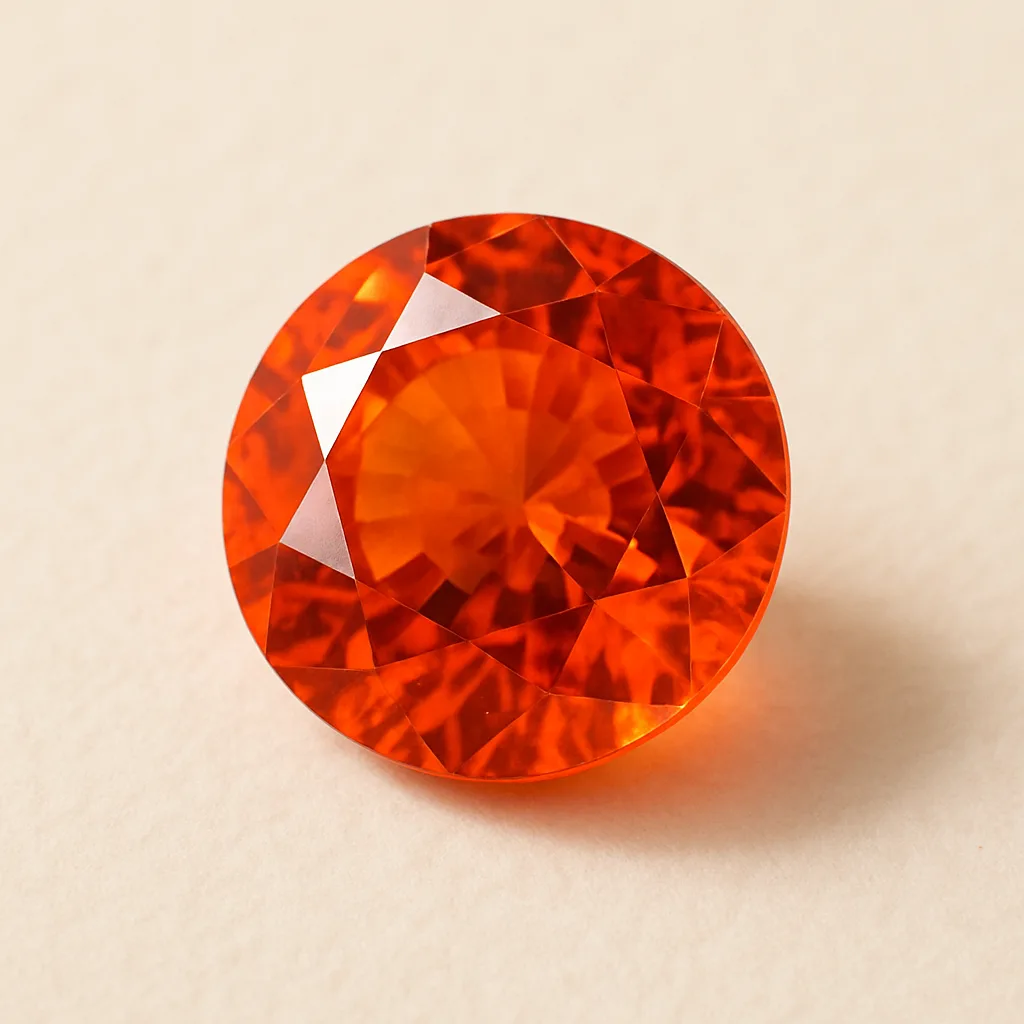
- Mohs 7–7.5 — suitable for daily wear with normal care
- nclusions
- Stable to light and ordinary chemicals
A few thousand to ten thousand yen per carat for commercial material up to several tens of thousands of yen per carat for top Sri Lankan cinnamon-color stones above 5 ct.
Note: No treatments are recognized — hessonite is sold as-found and the diagnostic treacle effect is itself part of its commercial identity. Sri Lankan material with strong cinnamon color and clean clarity carries a premium; the South Asian astrological market values transparency and color uniformity above all else.
nclusions, and roiling refractive-index zones combine to produce a 'treacle effect' or 'heat-wave' look at 10× that is unique to the variety. Sri Lanka has been the dominant source since classical antiquity, when the Ratnapura district supplied 'hyacinthus' to the Roman gem trade; modern mining adds Brazilian and East African production.
Origins
aceted material.
History
Hessonite was traded as hyacinthus or 'cinnamon stone' from the Roman period onward — Pliny the Elder's Natural History (Book XXXVII) describes the variety and notes its Sri Lankan source. The classical confusion between hessonite and zircon persisted until Haüy's 1817 chemical study separated the two by hardness and density. In Vedic astrological tradition (jyotish), hessonite (gomed) is the gemstone of the lunar node Rahu, and is prescribed to mitigate the malefic influence of the planet — a tradition that drives substantial demand from the South Asian market and supports a price floor for clean Sri Lankan material independent of the Western gem trade.
Lore & symbolism
Garnet group January birthstone (modern list, 1952). In Vedic jyotish hessonite is gomed, the gemstone of Rahu, prescribed for protection against the malefic influence of the north lunar node — a tradition that gives hessonite a substantial parallel market in India and Sri Lanka quite distinct from Western gem usage.
Tools to confirm this stone
Tools that help confirm Hessonite Garnet. Tap any item to jump to the matching section on the gem tools page.
- 最終確認日
- 2026年4月28日
- 参 考 文 献
- Gem Encyclopedia/ GIA (Gemological Institute of America)
- 宝石鑑別基準/ 中央宝石研究所 (CGL)
- Mineral & Gem Database/ Mindat.org / Gemdat.org
- 宝石学入門/ 全国宝石学協会
本ページの物性値(屈折率・比重・硬度・結晶系等)は、上記の権威ある一次資料を相互参照して編集しています。最新の鑑別研究の進展により値が更新される場合があります。