identified this stone yet
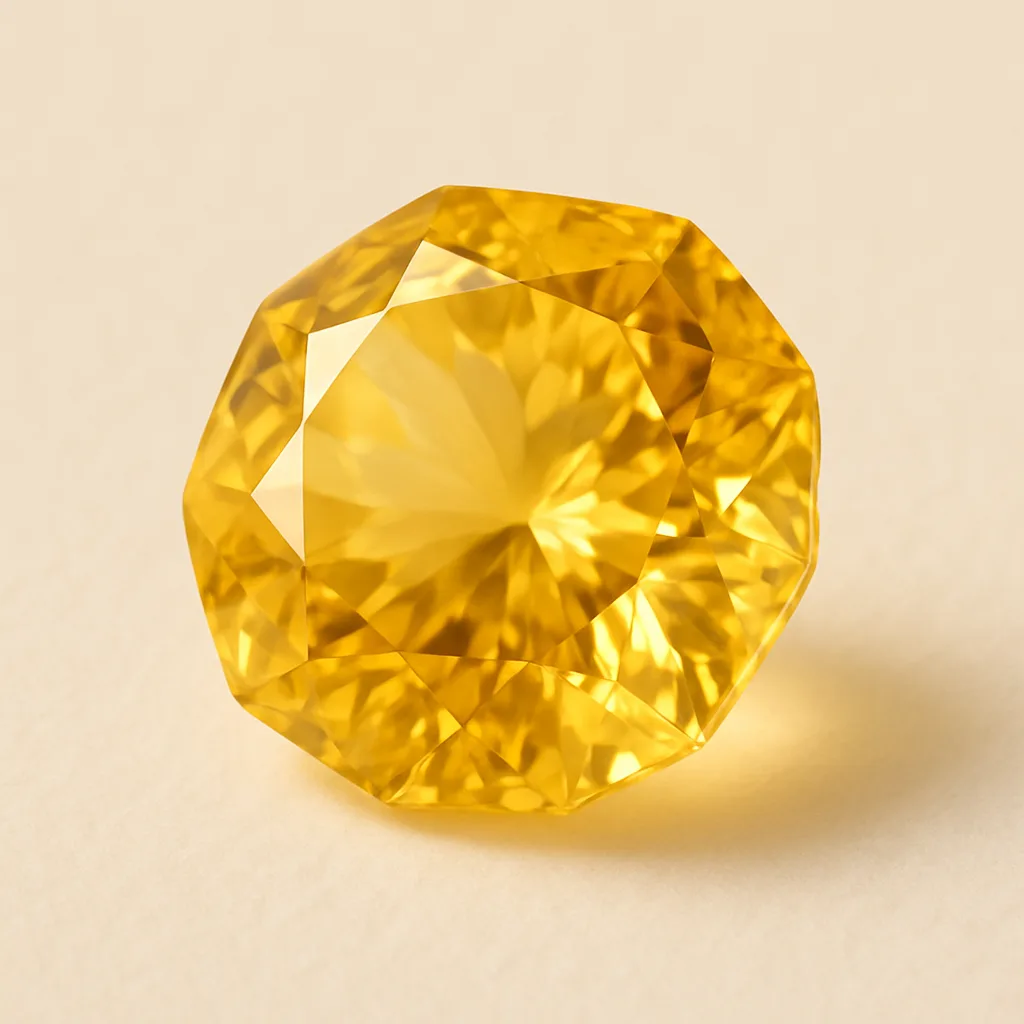
Heliodor
| Hardness | 7.5-8 |
| Specific gravity | 2.66-2.80 |
| Refractive index | 1.567-1.590 |
| Crystal system | 六方晶系 |
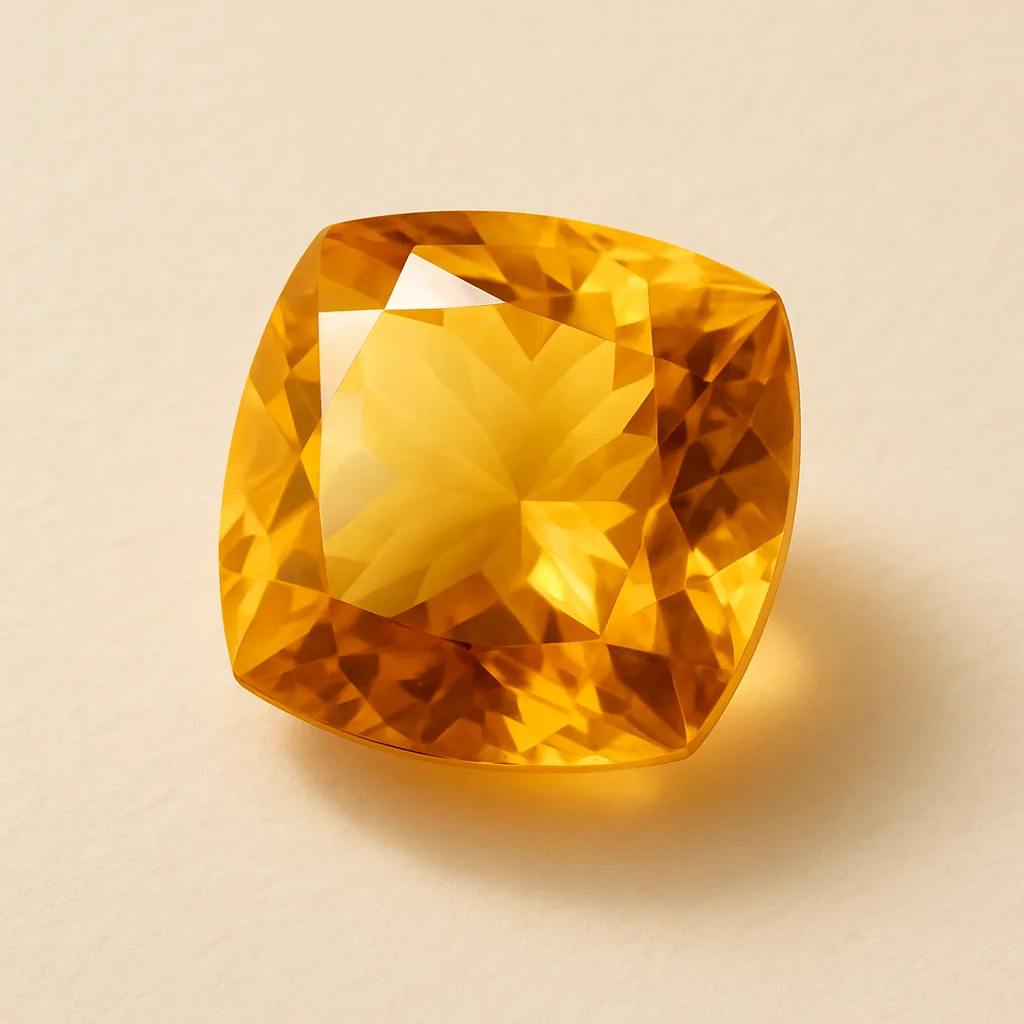
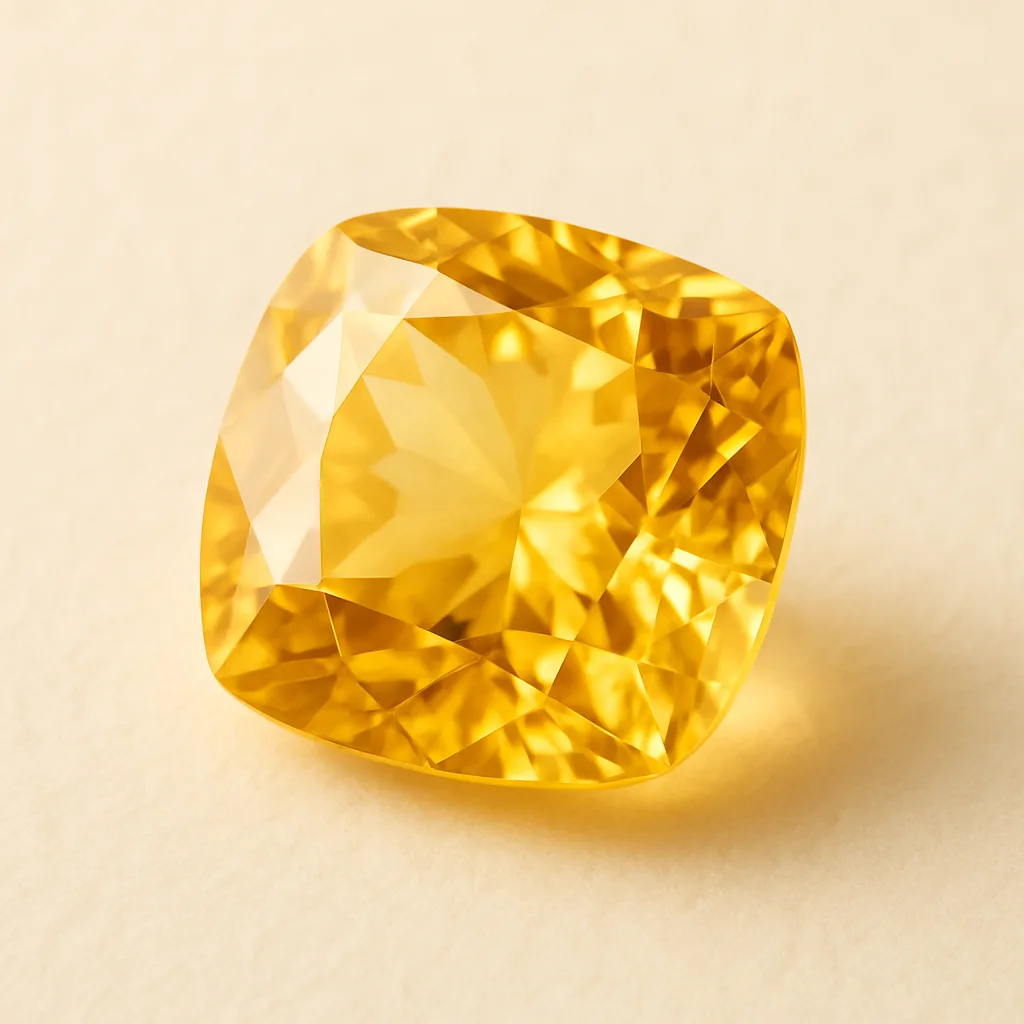
Pale lemon yellow through saturated golden yellow to greenish-yellow ('canary') and warm honey. The most prized tone is a vivid pure gold without brown or green modifiers, especially in clean stones above 5 carats.
- nclusions — liquid-gas bubbles aligned with the c-axis, diagnostic of the beryl family
- Hollow growth tubes running parallel to the crystal length
- Color zoning along the c-axis — pale and saturated bands
- nclusions: small crystals of mica, columbite, or feldspar
- Doubly refractive (uniaxial negative)
- 0.005–0.009 — subtle at 10×
- Weak to moderate dichroism — yellow and pale yellow or near-colorless
- Vitreous luster, excellent transparency in clean material
- 01RI 1.567–1.590 and SG 2.66–2.87 confirm beryl — markedly different from quartz (RI 1.544, SG 2.65)
- 02nclusions strongly support a natural beryl identification
- 03Hexagonal crystal habit on rough specimens
- 04Hand-weight test against citrine: heliodor and citrine feel similar, while yellow topaz feels noticeably heavier
- Mohs 7.5–8 — durable enough for everyday wear, though beryl has a weak basal
- acets
- Stable to light and normal cleaning chemicals
- Protect from sharp impacts to prevent chipping
Roughly $20–$80/ct for commercial Brazilian or Madagascan heliodor under 3 ct, $100–$400/ct for clean Volyn material above 5 ct with saturated golden body, and $500–$1,500+/ct for top-grade unheated stones above 10 ct with vivid pure gold and high transparency. Volyn provenance commands a premium among collectors.
Note: Heat treatment is rare but exists — heating can shift some yellow material toward more neutral tones and reduce green modifiers. Disclosure is uncommon at the commercial level but expected for fine stones. Irradiation enhancement is essentially absent. The main market concern is misidentification: yellow heliodor is sometimes sold as 'imperial topaz' or 'citrine' depending on what commands a better price at the moment, despite different gemological profiles.
Heliodor is beryl (Be₃Al₂Si₆O₁₈) where Fe³⁺ in the channel sites of the beryl structure produces yellow-to-golden color, sometimes with a greenish tint when Fe²⁺ is also present in the octahedral sites. The trade name was coined in 1910 to describe golden beryl from the newly opened Rössing pegmatite in German Southwest Africa (now Namibia), though the name has since been applied to similar material from Brazil, Madagascar, and Ukraine. 'Golden beryl' and 'heliodor' are used somewhat interchangeably; some dealers reserve 'heliodor' for the greener-yellow stones and 'golden beryl' for pure yellow.
Origins
aceted stones of 200+ carats not unusual. Brazil's Minas Gerais (especially the Marambaia and Padre Paraíso districts) is the main commercial source. Namibia's Rössing pegmatite, opened in 1910, produced the original golden beryl that gave heliodor its name. Madagascar's Anjanabonoina and Sahatany Valley supply collector-grade crystals, and additional production comes from Tajikistan, the United States (Maine and Connecticut), and Russia's Ural Mountains.
History
Beryl was named in antiquity (Latin beryllus, Greek beryllos) for the blue-green to yellow stones that included aquamarine, golden beryl, and prase. The specific name 'heliodor' was coined in 1910 by German mineral dealers for crystals from the newly discovered Rössing pegmatite in German Southwest Africa, marketed at Berlin Mineralogical Society exhibitions. Ukrainian Volyn material reached the gem trade in the 1930s and produced the famous specimens still displayed at the Mineralogical Museum in Kyiv. Modern interest in heliodor expanded with the 1980s wave of Brazilian Marambaia material flooding international markets at accessible prices.
Lore & symbolism
Heliodor has no traditional birthstone status — it is too geologically young in trade terms — but is associated in modern lapidary writing with warmth, optimism, and the solar plexus chakra. Sometimes used as an alternative November stone alongside citrine and yellow topaz. The 18th wedding anniversary gem in some traditions.
Tools to confirm this stone
Tools that help confirm Heliodor. Tap any item to jump to the matching section on the gem tools page.
- 最終確認日
- 2026年4月28日
- 参 考 文 献
- Gem Encyclopedia/ GIA (Gemological Institute of America)
- 宝石鑑別基準/ 中央宝石研究所 (CGL)
- Mineral & Gem Database/ Mindat.org / Gemdat.org
- 宝石学入門/ 全国宝石学協会
本ページの物性値(屈折率・比重・硬度・結晶系等)は、上記の権威ある一次資料を相互参照して編集しています。最新の鑑別研究の進展により値が更新される場合があります。