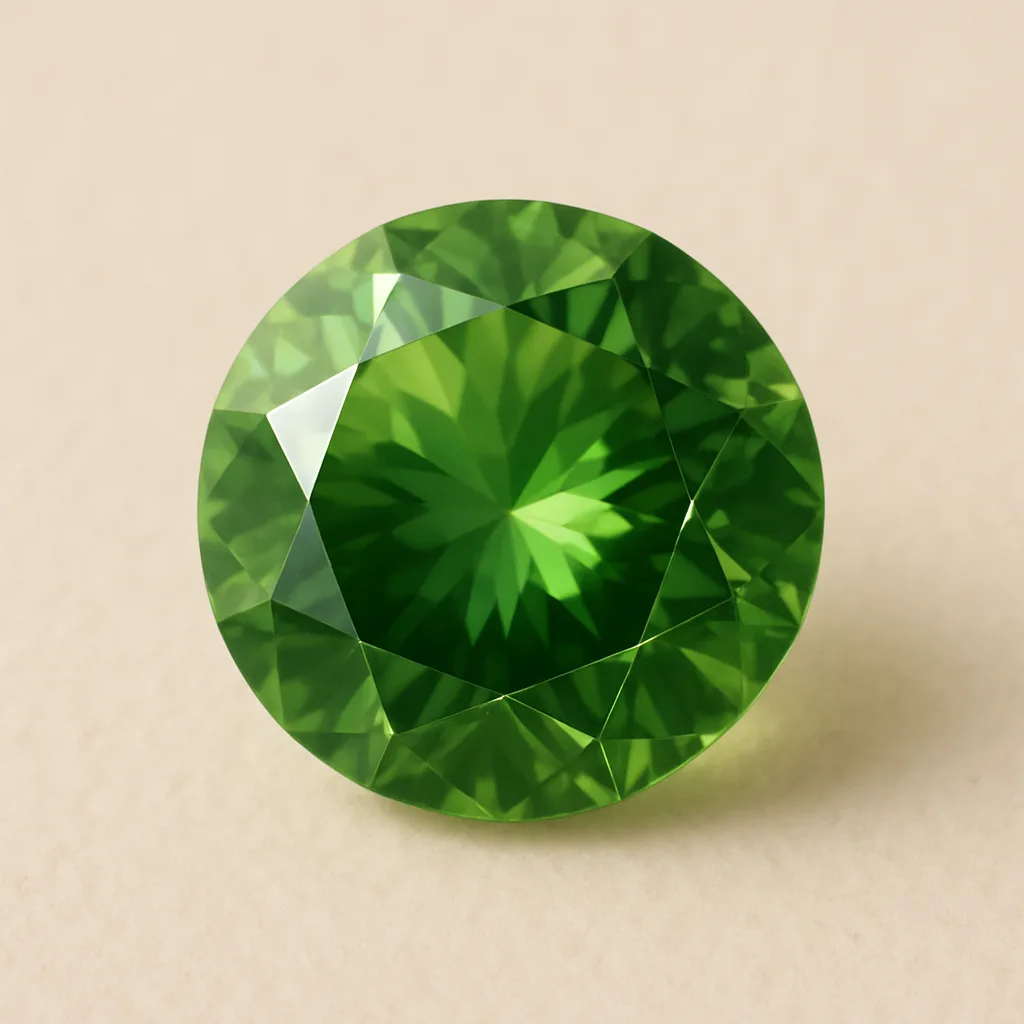
identified this stone yet
Synthetic Green Sapphire
| Hardness | 9 |
| Specific gravity | 3.95-4.03 |
| Refractive index | 1.760-1.770 |
| Crystal system | 六方晶系(三方晶系) |
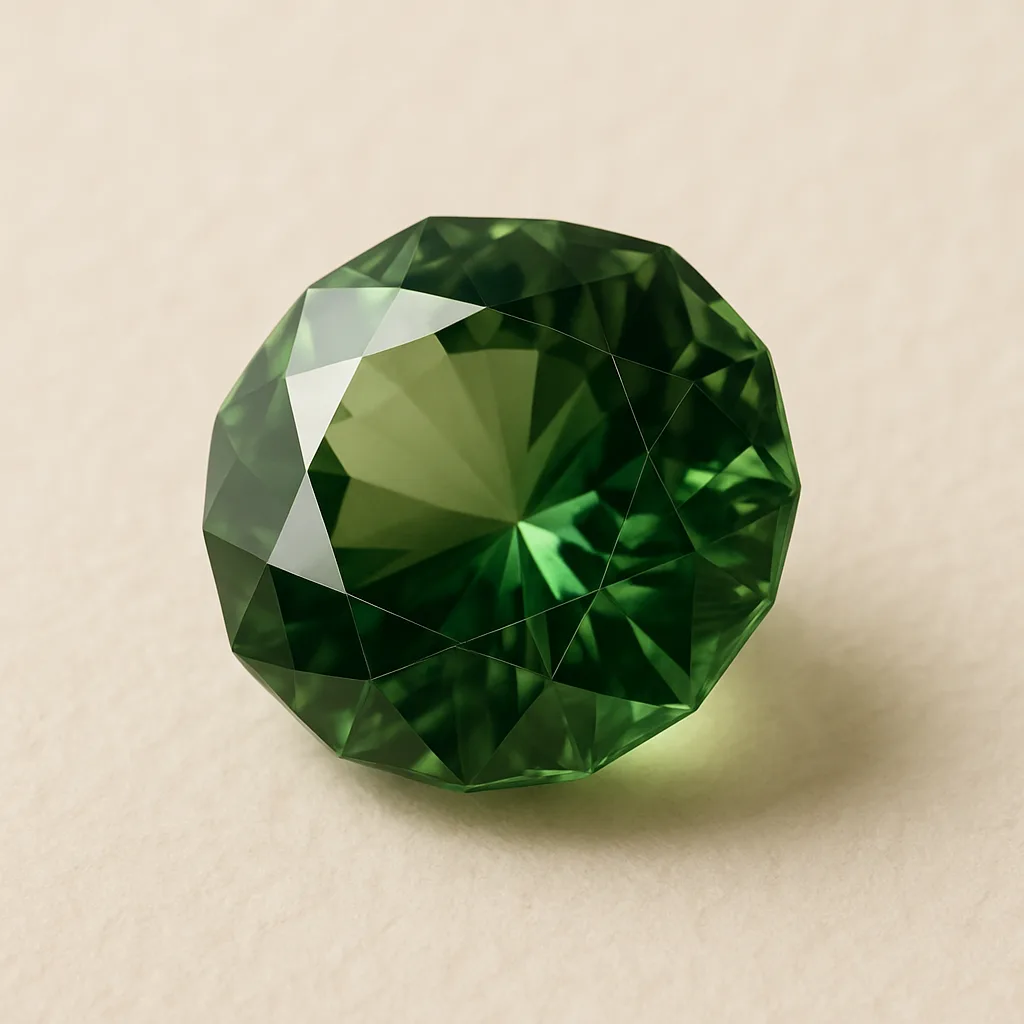
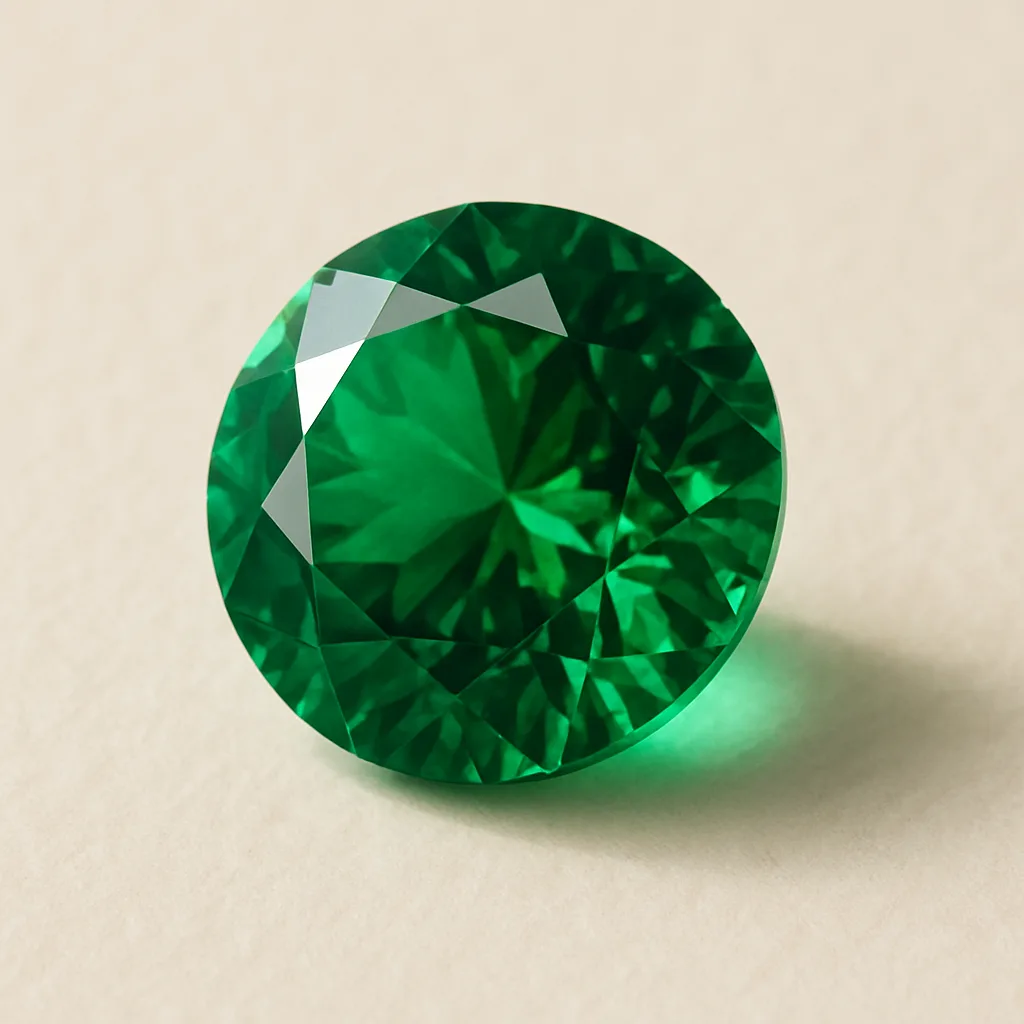
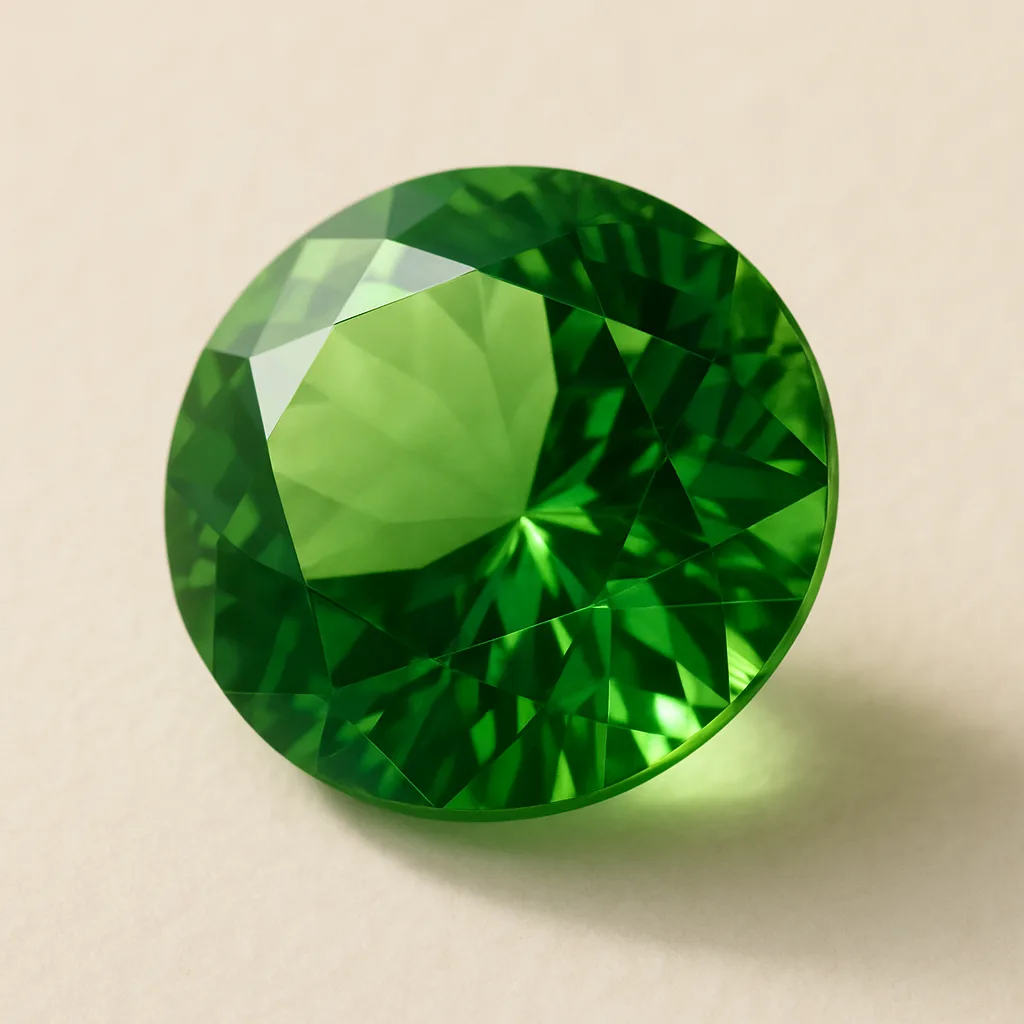
Olive green, bottle green, light grass green, and occasionally teal-leaning bluish-green depending on iron-titanium ratio in the melt. The flame-fusion process produces consistently saturated, even color across the boule — typically more uniform and less interesting than the angular zoning of fine Montana material.
- Curved growth striae (Verneuil) — diagnostic at 10× immersion
- Round gas bubbles, often in trails or clusters
- Swirl flow patterns in the melt
- Otherwise typically very clean — much cleaner than natural Montana or Australian green sapphire
- Doubly refractive (uniaxial negative) — identical to natural corundum
- RI 1.760–1.770, ~0.008
- Weak (yellowish-green, bluish-green)
- Vitreous to sub-adamantine luster
- 01 and gas bubbles diagnostic of Verneuil at 10× immersion
- 02RI 1.760–1.770 and Mohs 9 immediately separate from synthetic emerald (RI 1.560, Mohs 7.5) and green glass (RI ~1.50, no )
- 03UV inert response separates from synthetic emerald (which moderately to strongly under long-wave)
- 04Color zoning markedly more uniform than natural Montana green sapphire — a soft warning sign
- 05Lab reports are straightforward and inexpensive at any major gem lab
- Mohs 9 — extremely durable, excellent for everyday wear and engagement applications
- Ultrasonic and steam safe
- Stable to all standard cleaning chemicals
- No fade or color shift under light or heat
$5–$30/ct for commercial flame-fusion synthetic green sapphire in standard sizes; premium Djeva-grade material with selected color can reach $50–$100/ct for clean stones above 3 ct. Natural fine Montana 'teal' green sapphire above 2 ct trades at $500–$3,000/ct.
Note: Synthetic green sapphire competes against natural green sapphire (Montana, Australian Anakie, Madagascan, Sri Lankan), against synthetic emerald (Mohs 7.5 with strong red UV fluorescence vs. Mohs 9 with weak UV), and against green glass (Mohs ~5–6 with no birefringence). The Mohs-9 durability is the principal selling point for everyday-wear emerald-substitute applications — particularly engagement rings and men's signet rings, where natural emerald's brittleness is a chronic problem. Disclosure as 'synthetic,' 'lab-grown,' or 'created' is required under FTC, CIBJO, and JIS rules.
Synthetic green sapphire is Al₂O₃ (trigonal) doped with iron (Fe²⁺ and Fe³⁺) and titanium (Ti⁴⁺), producing the same iron-titanium intervalence charge-transfer transitions that color natural sapphire — though typically with iron-dominant rather than titanium-dominant balance, producing more olive- and bottle-green tones than the teal of fine Montana material. Mohs 9, SG 3.95–4.03, RI 1.760–1.770, ~0.008. Curved growth striae and round gas bubbles, the diagnostic markers of Verneuil flame-fusion, are visible at 10× immersion. The is weaker and the color zoning markedly more uniform than natural Montana, Australian Anakie, or Madagascan green sapphire.
Origins
Switzerland (Djeva and other Monthey workshops), Germany, France, Thailand (significant capacity since the 1970s), Russia, India, and China. Thai and Chinese flame-fusion producers dominate modern commercial supply; Djeva-grade material is reserved for premium applications.
History
Verneuil and colleagues at the French Academy of Sciences extended their 1902 flame-fusion process to colored sapphire variants progressively through the 1900s–1940s. Green flame-fusion corundum became a standard commercial product by the late 1920s, with significant volumes consumed by the Art Deco men's jewelry trade — cufflinks, tie pins, signet rings, stud sets — under the 'bottle green' trade name. The post-war American costume jewelry industry — Coro, Trifari, Eisenberg, Boucher, Schreiner — used synthetic green sapphire as an emerald substitute in inexpensive lines, set in vermeil or sterling mountings without explicit synthetic disclosure under the loose pre-1957 FTC environment. The 1957 FTC Jewelry Guides and subsequent 1996 revision tightened the disclosure rules at the retail level. Modern Thai and Chinese flame-fusion producers compete primarily on cost; Tiffany & Co.'s 1990s rebranding of Montana sapphire as 'Tiffany Montana Sapphire' positioned natural Yogo Gulch and Rock Creek material in the premium market, leaving synthetic green sapphire firmly in the commercial-substitute role.
Lore & symbolism
September's birthstone in some traditions where sapphire-color-variant substitutes are accepted (synthetic versions accepted in modern lay practice). The 5th and 45th wedding anniversary green sapphire associations apply to natural material; modern crystal writing extends the symbolism — 'growth,' 'renewal,' 'abundance' — to synthetic stones without explicit traditional precedent.
Tools to confirm this stone
Tools that help confirm Synthetic Green Sapphire. Tap any item to jump to the matching section on the gem tools page.
- 最終確認日
- 2026年4月28日
- 参 考 文 献
- Gem Encyclopedia/ GIA (Gemological Institute of America)
- 宝石鑑別基準/ 中央宝石研究所 (CGL)
- Mineral & Gem Database/ Mindat.org / Gemdat.org
- 宝石学入門/ 全国宝石学協会
本ページの物性値(屈折率・比重・硬度・結晶系等)は、上記の権威ある一次資料を相互参照して編集しています。最新の鑑別研究の進展により値が更新される場合があります。