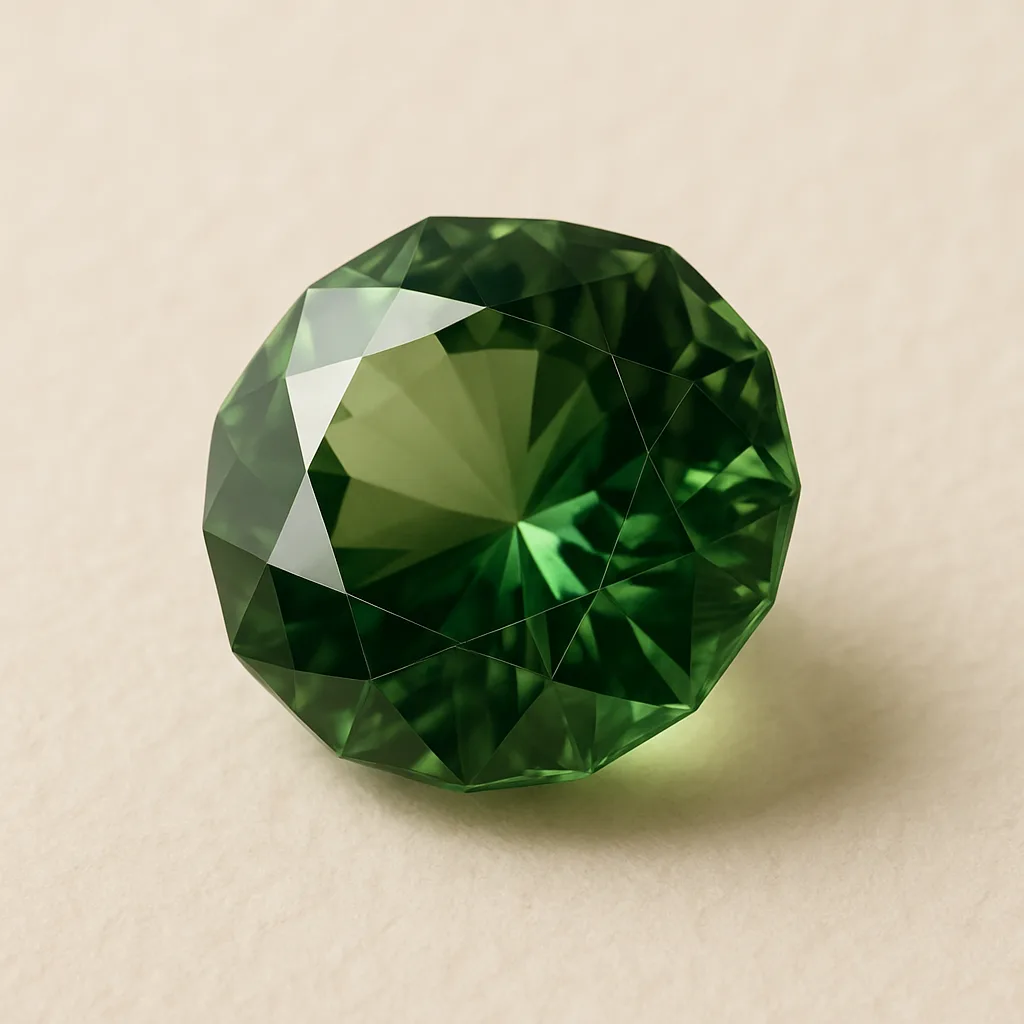
identified this stone yet
Green Sapphire
| Hardness | 9 |
| Specific gravity | 4.00 |
| Refractive index | 1.762-1.770 |
| Crystal system | 六方晶系(三方晶系) |
Bright grass green through deep bottle-green and olive. The most coveted modern tone is teal — a saturated blue-green sometimes called 'duck blue' or 'mermaid sapphire.'
- Silk (fine rutile needles) — the diagnostic natural-corundum feature
- Hexagonal color zoning visible in immersion
- nclusions along healed fractures
- egative crystals with characteristic flat parallel faces
- Uniaxial negative
- Weak visible only at very high magnification
- Dichroism: bluish green parallel to the c-axis, yellow-green perpendicular
- acets
- 01Mohs 9 — sharp, undamaged edges even after years of wear
- 02 and hexagonal zoning confirm natural origin
- 03Inert under UV — distinguishes from emerald (weak ) and most synthetic greens
- 04Dichroism between blue-green and yellow-green is diagnostic
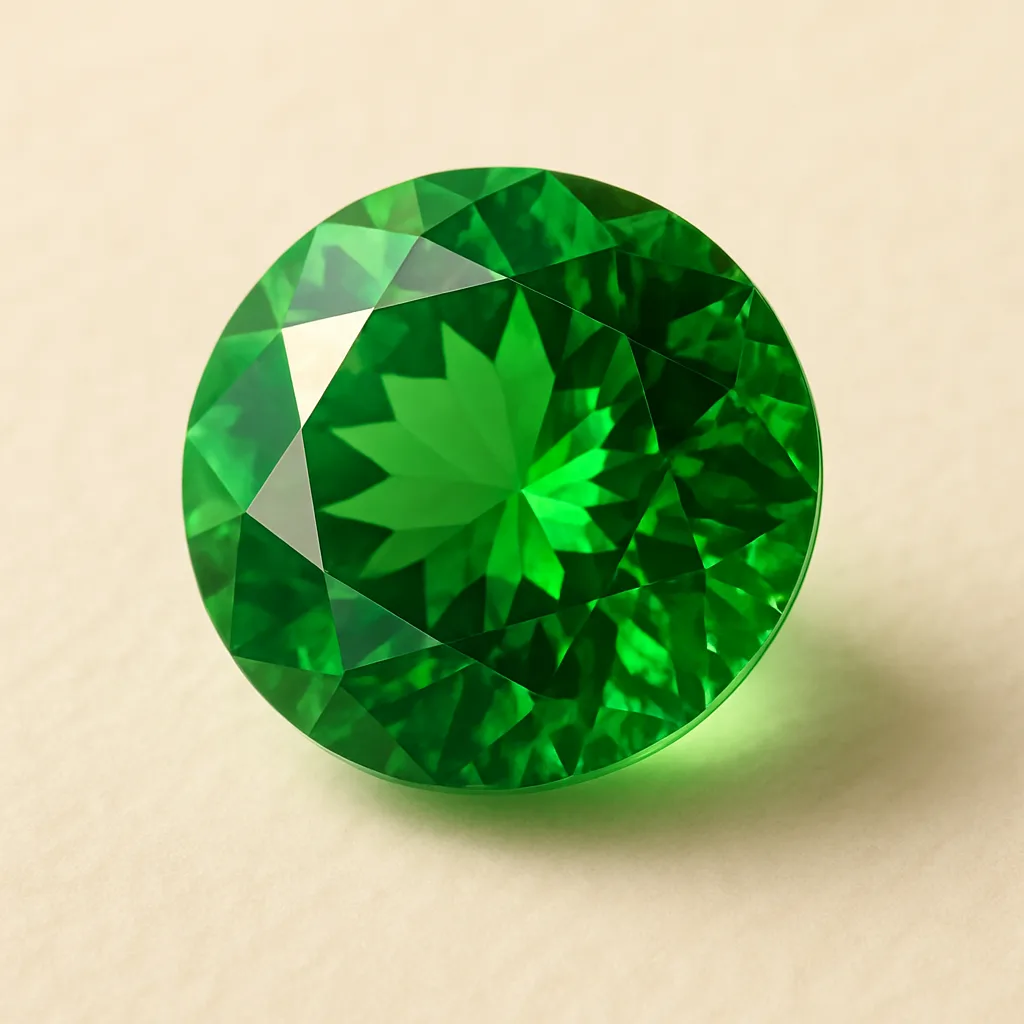
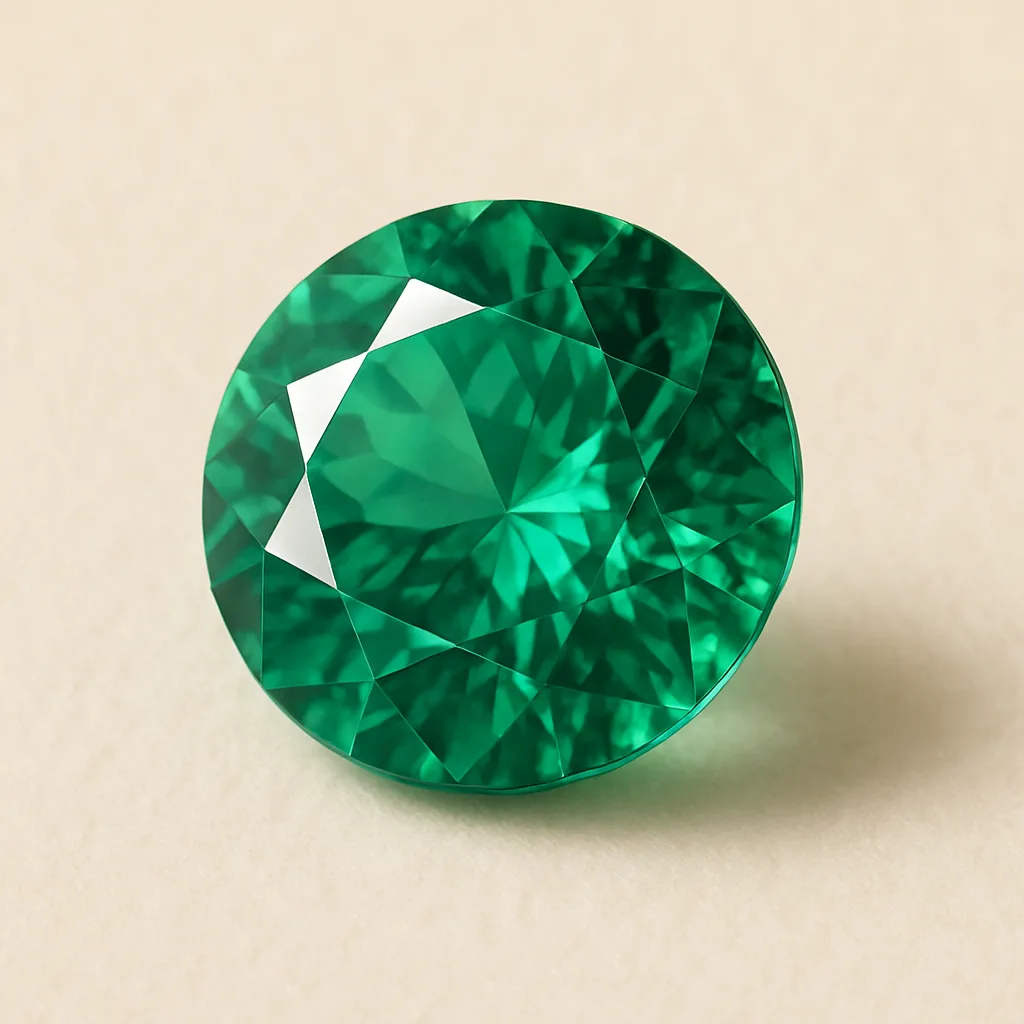
- Mohs 9 with no — among the most durable gems known
- Ultrasonic and steam cleaning are safe for unfractured stones
- Stable to light, heat, and ordinary chemicals
A few thousand yen per carat for ordinary commercial olive material up to several tens of thousands of yen per carat for top-color Montana or Australian teal stones above 1 ct.
Note: Australian, Montana, and Madagascar material dominate the modern teal-sapphire market. Most green sapphire on the market is heated; beryllium diffusion is occasionally encountered and must be disclosed. Lab reports (GIA, SSEF, Gübelin) are standard for high-value stones above a few thousand US dollars per carat.
Green sapphire is corundum (Al₂O₃) colored by iron — the same chromophore that gives a hint of blue to yellow sapphires and a green cast to many alluvial Sri Lankan stones. Without chromium it lacks the of ruby, but it inherits all of corundum's structural virtues: Mohs 9, no , exceptional adamantine luster. The most prized modern grade is 'teal sapphire' — a bluish-green tone associated with Australian, Montana, and Madagascar material — which became a runaway success in alternative-bridal jewelry from around 2017 onward.
Origins
The Anakie sapphire fields in Queensland and the Inverell-Glen Innes area of New South Wales together make Australia the world's largest source of green sapphire, producing the characteristic dark bottle-green and the most reliable supply of teal material. Pailin in Cambodia and the Bo Phloi field in Thailand produce darker greens. Montana's Rock Creek and Yogo Gulch deposits supply the prized 'Montana teal.' Smaller commercial sources include Madagascar (Ilakaka), Tanzania (Umba Valley), and the alluvial fields of Sri Lanka. Burmese 'teal' material from Mogok has attracted strong premium prices since the late 2010s.
History
Australian green sapphires emerged on the European market after the 1870 discoveries at Anakie in Queensland, and through the late 19th and early 20th centuries they supplied Victorian mourning jewelry alongside jet and onyx — green was an accepted half-mourning color. For most of the 20th century green sapphire was a backwater of the trade, sold mainly as inexpensive parcels to the cutting industries of Bangkok and Chanthaburi. The market repositioned itself entirely after about 2017, when Instagram-era bridal blogs reframed bluish-green sapphires as 'teal' or 'Montana' stones and prices for top material rose tenfold within a few years.
Lore & symbolism
September birthstone, sharing the designation with the more familiar blue sapphire. Listed as the 45th-anniversary stone in Western traditions. The 'wise man's stone' of folk lapidaries — green sapphires were thought in medieval Europe to detect poison and protect against envy.
Tools to confirm this stone
Tools that help confirm Green Sapphire. Tap any item to jump to the matching section on the gem tools page.
- 最終確認日
- 2026年4月28日
- 参 考 文 献
- Gem Encyclopedia/ GIA (Gemological Institute of America)
- 宝石鑑別基準/ 中央宝石研究所 (CGL)
- Mineral & Gem Database/ Mindat.org / Gemdat.org
- 宝石学入門/ 全国宝石学協会
本ページの物性値(屈折率・比重・硬度・結晶系等)は、上記の権威ある一次資料を相互参照して編集しています。最新の鑑別研究の進展により値が更新される場合があります。