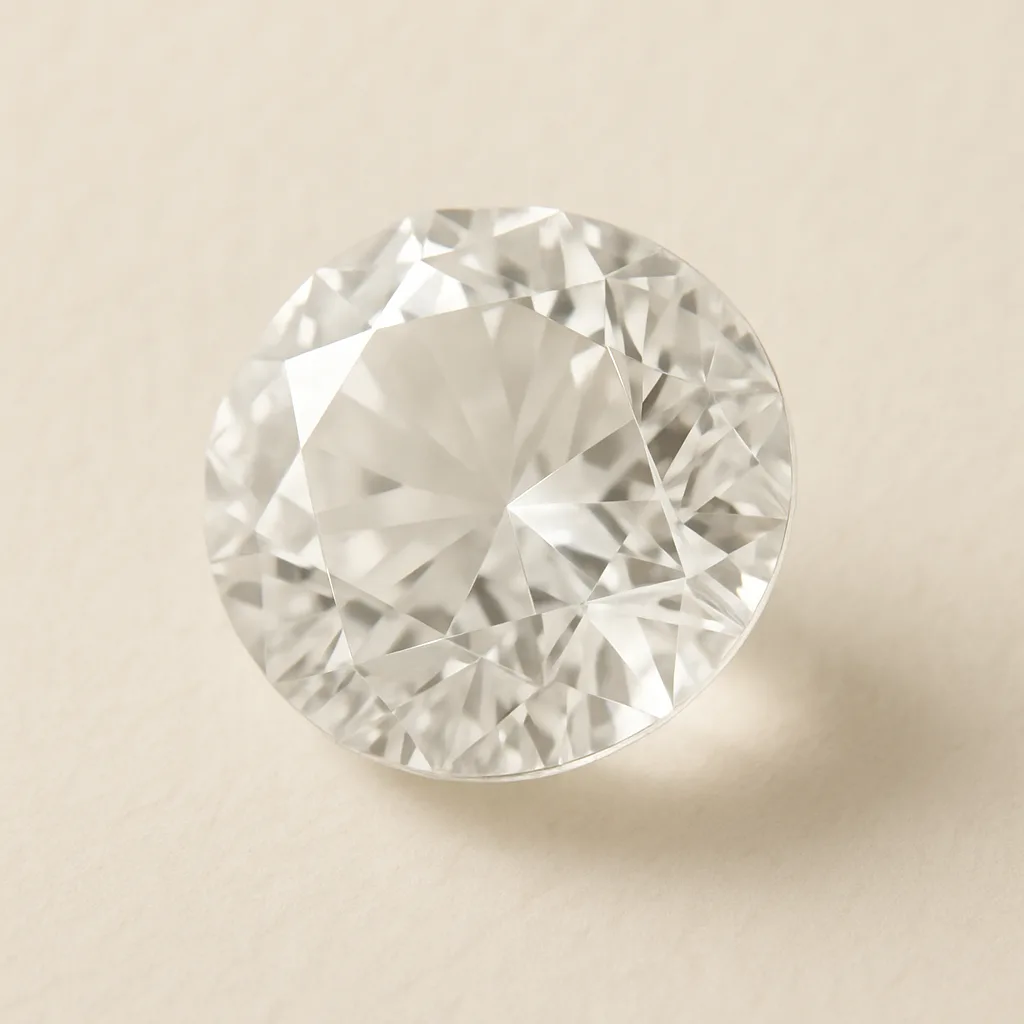
identified this stone yet
Goshenite
| Hardness | 7.5-8 |
| Specific gravity | 2.66-2.80 |
| Refractive index | 1.567-1.590 |
| Crystal system | 六方晶系 |
nclusions.
- nclusions — liquid-gas bubbles aligned with the c-axis, diagnostic of the beryl family
- Hollow growth tubes running parallel to the crystal length
- nclusions: small crystals of mica, columbite, or feldspar
- egative crystals with hexagonal outlines
- Doubly refractive (uniaxial negative)
- 0.005–0.009 — subtle at 10×
- No dichroism in colorless stones
- Vitreous luster, excellent transparency in clean material
- 01RI 1.567–1.590 and SG 2.66–2.87 confirm beryl — clearly distinct from rock crystal (RI 1.544, SG 2.65)
- 02nclusions strongly support a natural beryl identification
- 03Hexagonal crystal habit on rough specimens
- 04Hand-weight comparison: goshenite and rock crystal feel similar; white topaz feels noticeably heavier at equal size
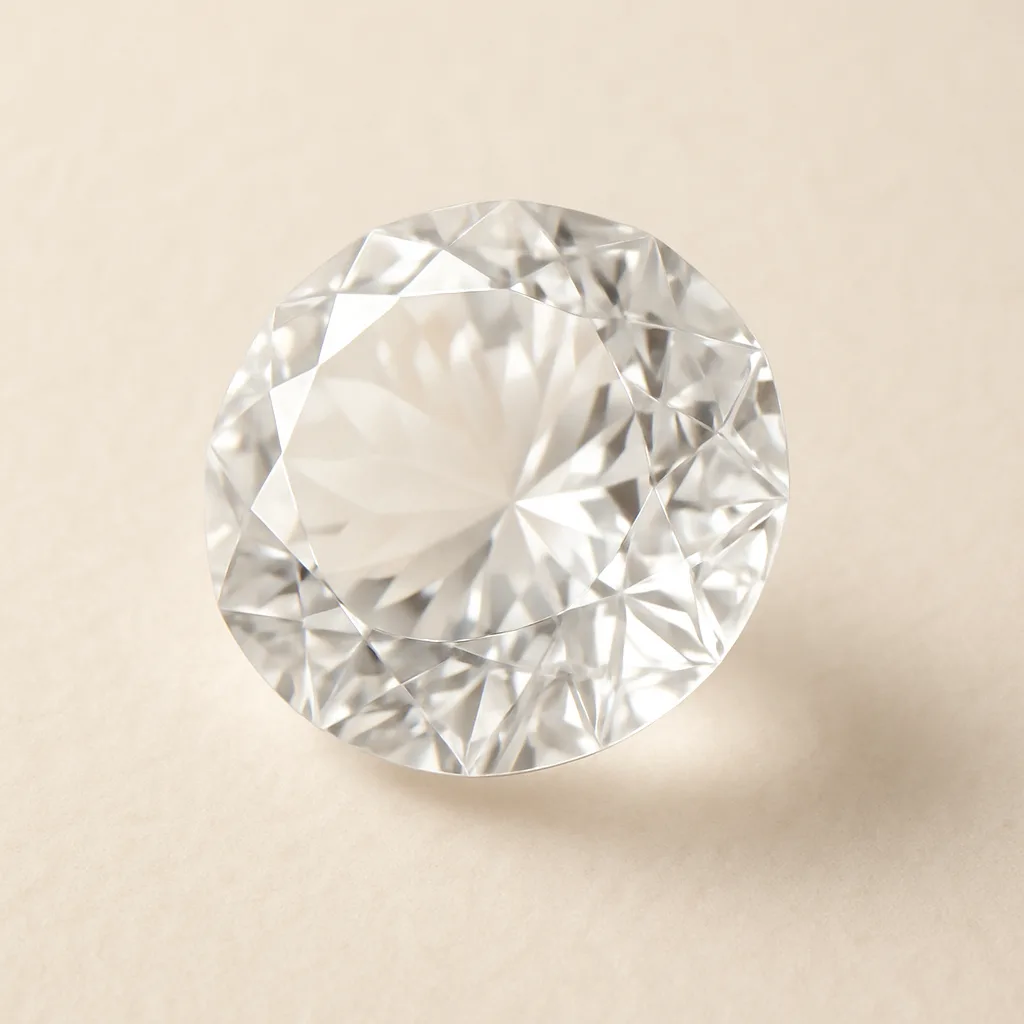
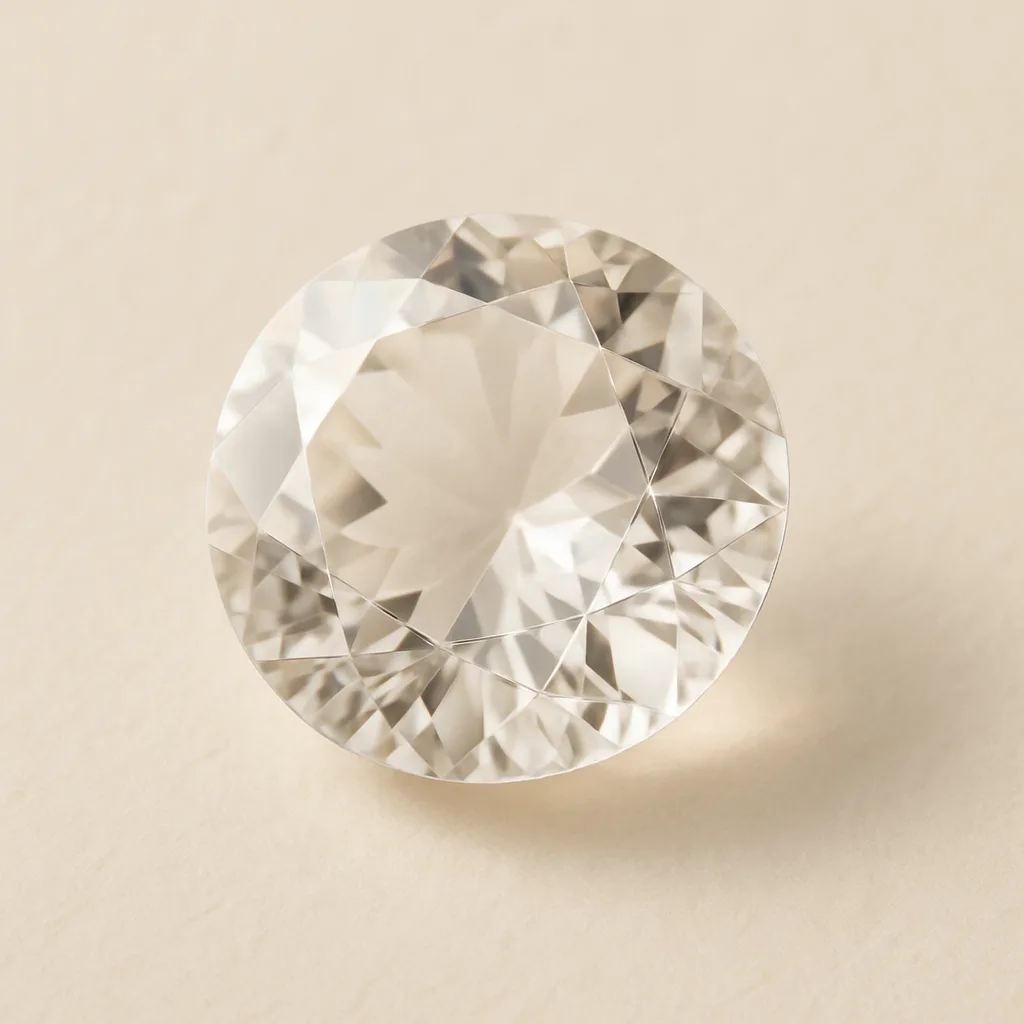
- Mohs 7.5–8 — durable enough for everyday wear, though beryl has a weak basal
- nclusions
- Stable to light and normal cleaning chemicals
- Protect from sharp impacts to prevent chipping
Roughly $5–$30/ct for commercial faceted goshenite under 3 ct, $40–$150/ct for clean stones above 5 ct with high transparency, and $200–$500+/ct for exceptional crystals or large stones from the Goshen type locality. Most goshenite is sold as part of beryl-family suites rather than as a standalone gem.
Note: Goshenite is essentially untreated — there is no commercial incentive to heat or irradiate a stone whose value comes from its lack of color. The main market concern is identification rather than treatment: goshenite is often confused with colorless quartz, topaz, or sapphire, and its trade value tracks the gemological skill of the seller. Faceted goshenite is rare and prized by beryl-family completionists; carved goshenite cameos exist as 19th-century novelties.
Goshenite is the purest form of beryl (Be₃Al₂Si₆O₁₈), free of the iron, chromium, manganese, vanadium, or cesium impurities that produce color in the other beryl varieties. It typically forms in granitic pegmatites and is far less common in gem quality than its colored siblings, making it primarily a collector and connoisseur stone. The type locality is Goshen, Hampshire County, Massachusetts, where Charles Upham Shepard described and named the material in 1844 — one of the few internationally established gem varieties named for a New England town.
Origins
Goshen, Massachusetts is the historical type locality but produces only modest quantities today. Brazil's Minas Gerais (Padre Paraíso and Marambaia) supplies the bulk of modern commercial goshenite. Pakistan's Kunar Province (across the border from Afghanistan's Kunar) yields fine clean crystals. Madagascar's Sahatany Valley contributes collector-grade material, and additional production comes from Russia's Ural Mountains, Maine's Mount Mica, and South Dakota's Black Hills pegmatites.
History
Charles Upham Shepard, professor of mineralogy at Yale and later Amherst College, described the colorless beryl from Goshen in his 1844 mineralogical writings. Goshen at the time was a thriving pegmatite mining district producing tourmaline, beryl, and mica, and Shepard's classification gave the colorless variety a permanent name. Goshenite was historically used as a lens material in scientific instruments and early eyeglasses — German optical workshops favored beryl for high-quality magnifiers in the late 19th century — though synthetic optical glass has long since replaced it. The colorless variety has never reached the trade prominence of aquamarine or emerald, remaining a niche collector category.
Lore & symbolism
Goshenite has no traditional birthstone status and minimal historical lore. Modern crystal writing positions it as a stone of clarity, focus, and truthful communication — properties extrapolated from its colorlessness and transparency. The 23rd wedding anniversary gem in some modern lists.
Tools to confirm this stone
Tools that help confirm Goshenite. Tap any item to jump to the matching section on the gem tools page.
- 最終確認日
- 2026年4月28日
- 参 考 文 献
- Gem Encyclopedia/ GIA (Gemological Institute of America)
- 宝石鑑別基準/ 中央宝石研究所 (CGL)
- Mineral & Gem Database/ Mindat.org / Gemdat.org
- 宝石学入門/ 全国宝石学協会
本ページの物性値(屈折率・比重・硬度・結晶系等)は、上記の権威ある一次資料を相互参照して編集しています。最新の鑑別研究の進展により値が更新される場合があります。