identified this stone yet
GGG
| Hardness | 6.5-7 |
| Specific gravity | 7.02-7.09 |
| Refractive index | 1.970 |
| Crystal system | 立方晶系 |
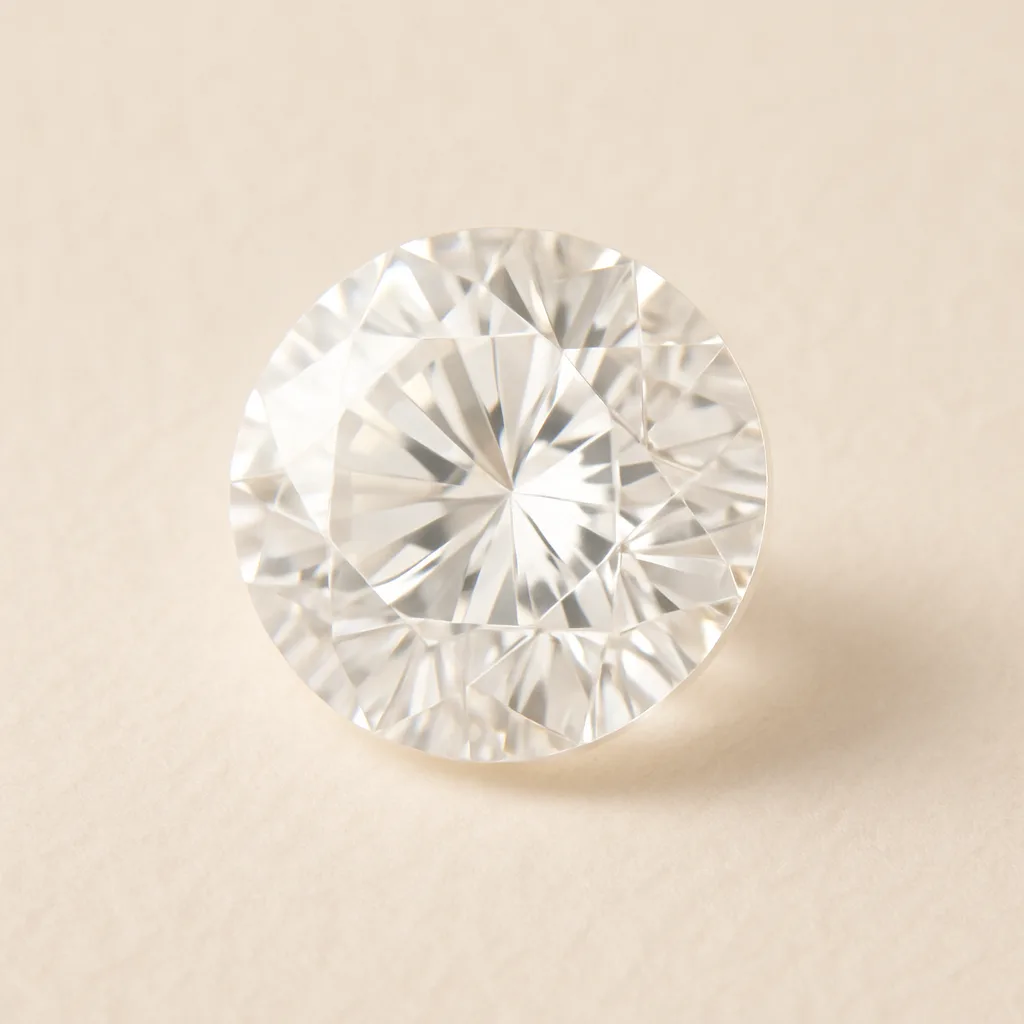
Colorless, water-clear, with a faint warm tint occasionally noticeable in larger stones reflecting trace iron contamination from the gadolinium feedstock supply. Color-doped variants (Cr³⁺-doped green, Nd³⁺-doped pink-purple) exist as laboratory novelties but never reached significant commercial gem production. Most commercial supply has been the colorless variety.
- Czochralski-process seed-crystal residue at the boule core
- nclusion-poor material by design
- nclusions by spherical morphology
- Singly refractive (cubic garnet structure) — no at any orientation
- Refractive index 1.97 — high among synthetic garnets, though below diamond (2.42) and CZ (2.15)
- 0.045 — essentially identical to diamond's 0.044, the closest match of any common diamond substitute
- Specific gravity 7.02 — the heaviest of common gemstones, dramatically heavier than diamond (3.52) or CZ (5.6–6.0)
- Mohs 6.5–7.0 — substantially softer than CZ (8.0–8.5) or YAG (8.25)
- 01Specific gravity 7.02 — diagnostic at first hand-heft for any stone larger than 0.5 ct; nothing else in common gem use is this dense
- 02Strong orange UV at SW (and LW) is the signature optical test for GGG — distinct from any natural gemstone or other common synthetic
- 03Singly refractive (no ) separates from natural zircon and moissanite
- 04Mohs 6.5–7.0 makes GGG noticeably softer than CZ (8.0–8.5) — accumulates surface scratches faster in worn pieces
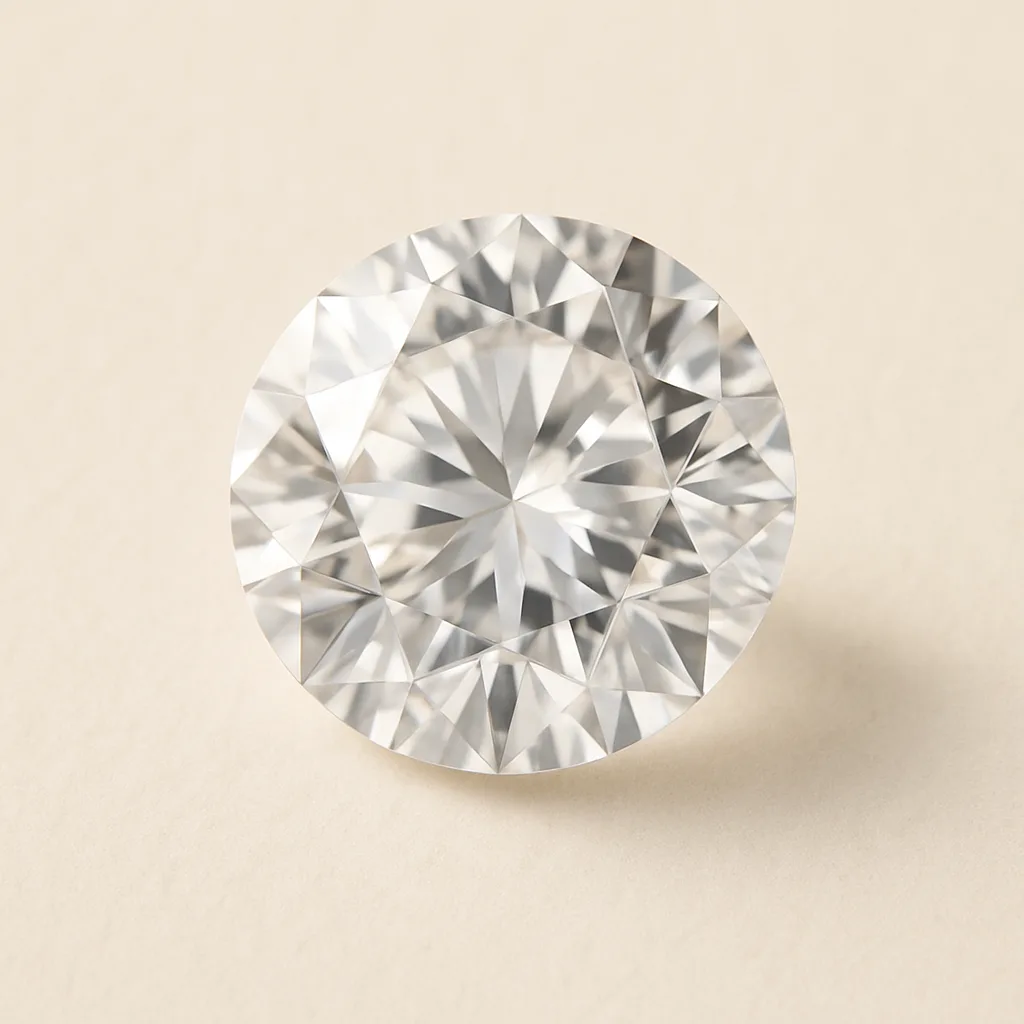
- Mohs 6.5–7.0 — soft for ring wear; accumulates surface scratches readily, periodic professional polishing recommended for jewelry pieces
- Ultrasonic and steam cleaning are safe
- Stable to light and standard household cleaning chemicals
- Stable to jeweller's torch repair work
Loose GGG from boutique and vintage sources trades at $30–$200 per carat for clean, well-cut faceted stones. Vintage 1973–1976 costume-jewelry pieces in original setting trade in estate auction at $100–$500 depending on setting metal and designer attribution. Industrial GGG substrate wafers trade at $50–$1,000 per piece for laboratory-grade material reflecting precision-polishing and crystallographic-orientation costs.
Note: Commercial gem supply today is essentially limited to vintage-jewelry inventory and rare specialist offerings. New GGG production is overwhelmingly for industrial magneto-optical and laser-host applications. Disclosure as 'GGG,' 'gadolinium gallium garnet,' or 'synthetic' is mandatory where sold as gem material. Important: GGG is a synthetic garnet (cubic-garnet structure with gadolinium on the A site and gallium on B and C sites); it is not chemically related to natural pyrope, almandine, or other gem garnets despite the shared crystal structure. The dramatic SG 7.02 makes GGG immediately distinguishable from any natural gemstone by hand-heft alone — a one-carat GGG weighs roughly twice as much as a one-carat diamond.
GGG is synthetic Gd₃Ga₅O₁₂ — gadolinium gallium garnet, complex oxide crystallizing in the cubic garnet structure (space group Ia-3d) with gadolinium occupying the dodecahedral A site and gallium occupying both the octahedral B and tetrahedral C sites. Grown commercially by Czochralski pulling from a 1750 °C iridium-crucible melt under inert atmosphere, GGG yields large, clean, single-crystal boules. Mohs 6.5–7.0 (softer than YAG's 8.25 and dramatically softer than diamond's 10), SG 7.02 (the heaviest of all common gemstones — significantly heavier than zircon at 4.7 or even hematite at 5.3), RI 1.97 (singly refractive, cubic), 0.045 (essentially identical to diamond's 0.044), no . The high gadolinium content drives GGG's diagnostic orange UV (Gd³⁺ rare-earth f-f transitions) and the extreme density. The principal commercial-gem problem with GGG is the combination of low hardness and very high gallium feedstock cost: GGG was always more expensive to produce than YAG at gem scale despite offering somewhat better diamond-mimicking optics, and CZ's 1976 debut at lower cost with even better eliminated GGG's market niche essentially overnight.
Origins
The 1968 development at Bell Telephone Laboratories (Murray Hill, New Jersey) under John P. Remeika and J. R. Carruthers produced the first GGG crystals as substrates for magnetic-bubble memory experiments — the magnetic-bubble technology that IBM's Andrew Bobeck had introduced in 1967 and that briefly seemed to threaten magnetic-disk storage in the 1970s before semiconductor memory and improved disk technology rendered it commercially obsolete. Allied Chemical's Crystal Products Division (Morristown, New Jersey) and Litton Industries (Beverly Hills, California) scaled Czochralski GGG production for the bubble-memory substrate market and derivative gem-jewelry application between 1973 and 1976. Union Carbide and General Electric maintained smaller production lines. Japanese producers (Sumitomo Special Metals, Hitachi Metals) entered in the mid-1970s. Commercial gem production largely collapsed within months of the 1976 Soviet CZ commercial debut and the parallel collapse of the magnetic-bubble memory market. Industrial substrate production for magneto-optical thin-film applications, laser host crystal substrates (especially Nd:GGG and Nd:YGG variants), and Faraday rotator devices continues to the present at companies including II-VI Incorporated (Saxonburg, Pennsylvania), Russian Federal Crystal Production (Moscow), and Japanese specialty crystal houses.
History
The magnetic-bubble memory technology that drove GGG's industrial development arose from Andrew Bobeck's 1967 work at Bell Labs, where the discovery that small cylindrical magnetic domains ('bubbles') in thin iron-garnet films could be moved by external magnetic field gradients seemed to offer a non-volatile, mechanically-robust alternative to magnetic-disk storage. The bubble-memory chip required a magnetically-inert, lattice-matched substrate to support the active iron-garnet film, and GGG (Gd₃Ga₅O₁₂) provided a near-perfect lattice match (within 0.1 %) for yttrium iron garnet (Y₃Fe₅O₁₂) — the active bubble-memory medium. Bell Labs, Texas Instruments, and Hitachi all invested heavily in bubble-memory commercialization through the 1970s. The fundamental problem — bubble memory was non-volatile but slow, while semiconductor DRAM was fast and getting cheaper, and magnetic-disk storage was getting denser and cheaper at the same time — meant that bubble memory had no clear market position by the early 1980s and the technology was essentially abandoned by 1985. GGG's brief gem-jewelry life rode in parallel with the bubble-memory boom: Allied Chemical and Litton Industries marketed GGG between 1973 and 1976 under trade names including 'Diamonique' (later transferred to CZ) as 'the closest match to diamond' on . The 1976 Soviet CZ commercial debut combined with the simultaneously rising cost of gallium feedstock (driven by gallium's emerging use in semiconductor lasers and LEDs) together eliminated GGG's gem-jewelry niche within three years. Industrial GGG production continues to the present for magneto-optical thin-film substrates, Faraday-rotator devices used in fiber-optic isolators and circulators, and certain rare-earth-doped laser host applications. The 2000s rare-earth supply-chain crisis in gadolinium markets reaffirmed GGG's status as a specialty industrial material rather than a commodity gem stone.
Lore & symbolism
Not assigned to any traditional birthstone list. Modern crystal-writing essentially ignores GGG given its three-year commercial gem-jewelry life and immediate displacement by CZ. The marketing of the 1973–1976 period emphasized 'closest to diamond' , technological modernity (the bubble-memory connection was occasionally mentioned as a 'space-age origin' marketing point), and price accessibility. Vintage-jewelry collectors today value GGG specifically as a documentary artifact of the brief 1970s diamond-substitute experimentation period and the broader Bell Labs / Allied Chemical / Litton crystal-growth industrial heritage.
Tools to confirm this stone
Tools that help confirm GGG. Tap any item to jump to the matching section on the gem tools page.
- 最終確認日
- 2026年4月28日
- 参 考 文 献
- Gem Encyclopedia/ GIA (Gemological Institute of America)
- 宝石鑑別基準/ 中央宝石研究所 (CGL)
- Mineral & Gem Database/ Mindat.org / Gemdat.org
- 宝石学入門/ 全国宝石学協会
本ページの物性値(屈折率・比重・硬度・結晶系等)は、上記の権威ある一次資料を相互参照して編集しています。最新の鑑別研究の進展により値が更新される場合があります。