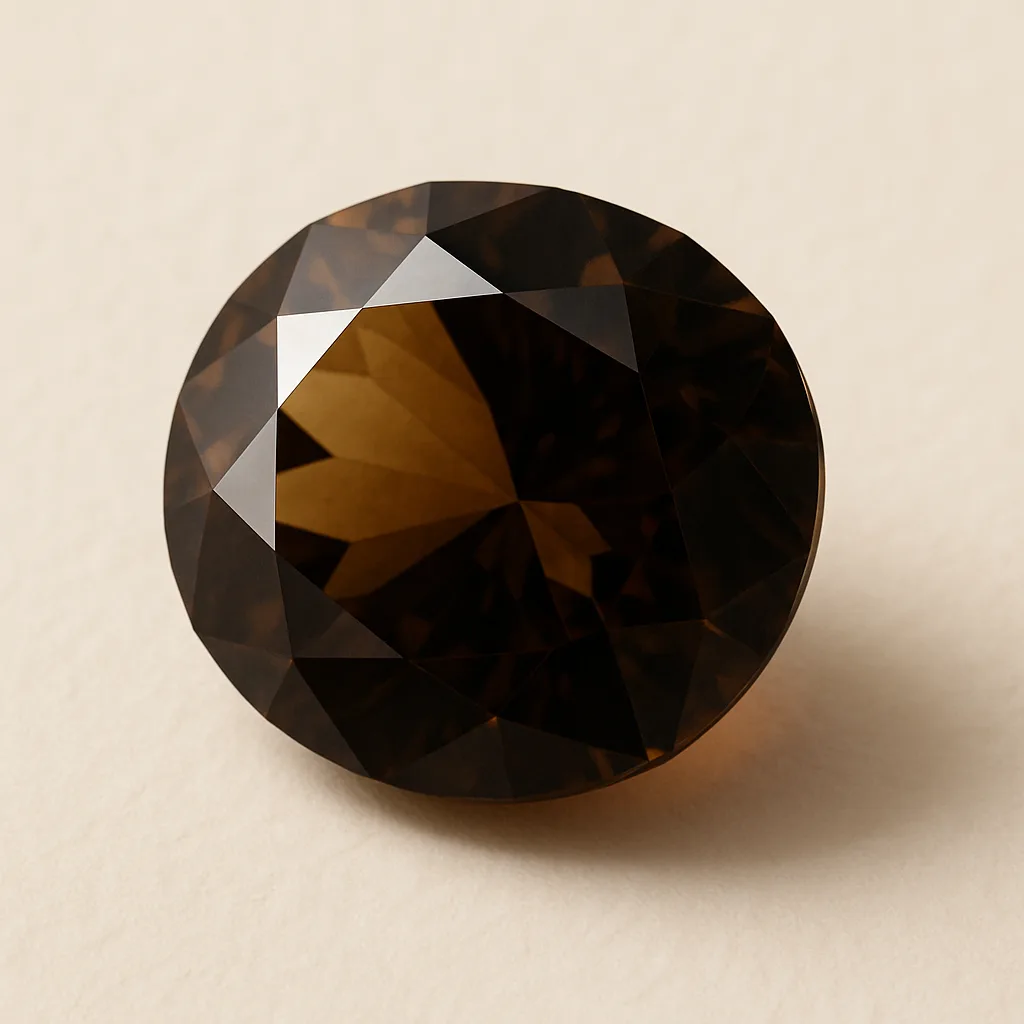
identified this stone yet
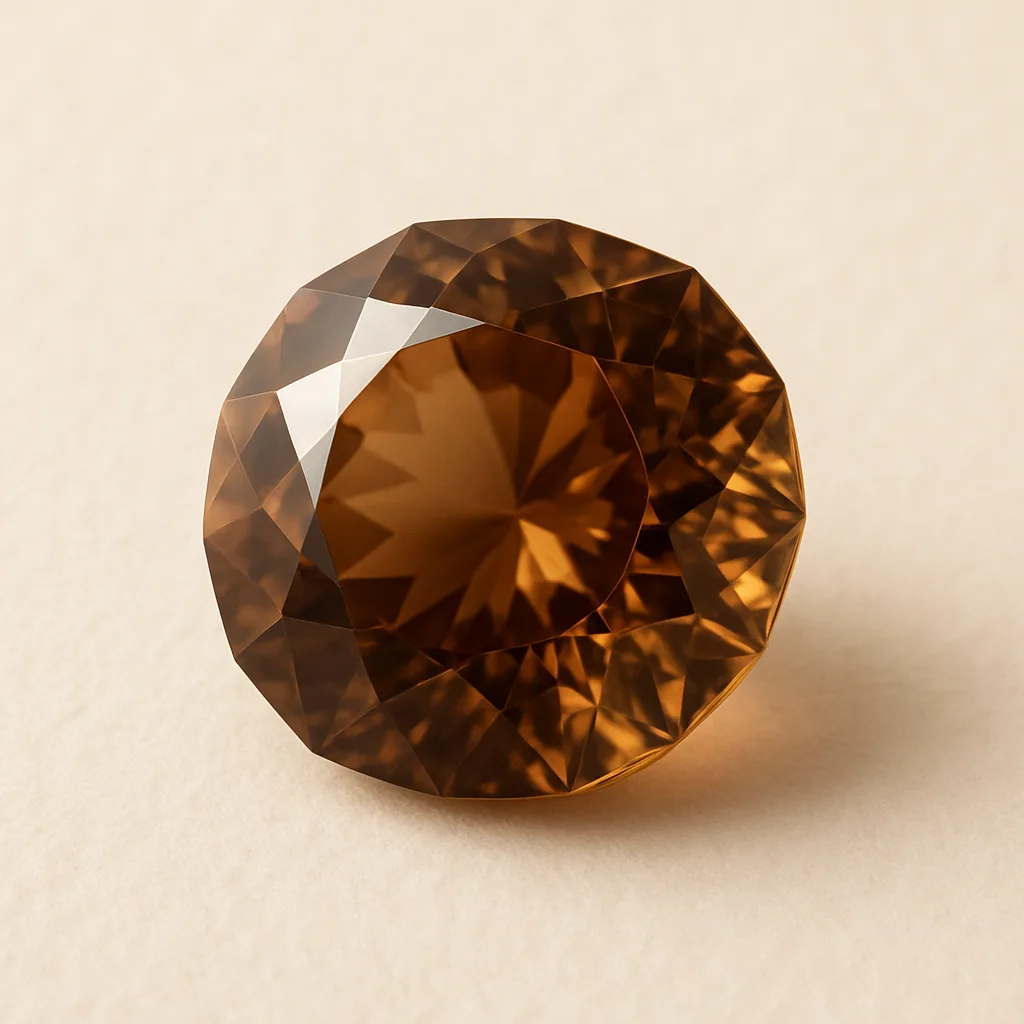
Dravite
| Hardness | 7-7.5 |
| Specific gravity | 3.03-3.25 |
| Refractive index | 1.610-1.650 |
| Crystal system | 六方晶系 |
Honey yellow, golden brown, cognac, chocolate, and blackish brown. Magnesium is the species-defining cation; iron deepens the tone, and titanium can contribute a reddish modifier.
- nclusions of the tourmaline supergroup
- Healed fractures with fingerprint patterns
- egative crystals
- Iron oxide needles in deeper-toned stones
- Doubly refractive, uniaxial negative
- Refractive index 1.624–1.644 — essentially identical to other gem tourmalines
- 0.018
- strong — deep brown parallel to the c-axis and pale yellow-brown perpendicular
- Specific gravity 3.04–3.20 — slightly higher than elbaite tourmalines
- 01Parallel hollow tubes at 10× confirm tourmaline-family identity
- 02Strong dichroism — the c-axis view is often noticeably darker than the perpendicular view
- 03Refractive index 1.62–1.64 separates dravite from brown topaz (1.61–1.64 but with different optic-figure character and SG 3.5), brown sapphire (1.76+), and andalusite (1.63–1.65 but with biaxial three-color )
- 04Chemical confirmation by EDS or XRF — magnesium dominance is the species definition
- Mohs 7–7.5 — suitable for daily wear with normal care
- Avoid ultrasonic and steam cleaning — the included tubes and liquid pockets are sensitive to thermal shock
- Pyroelectric and piezoelectric like all tourmalines — develops a static charge under heat or pressure
A few thousand to ten thousand yen per carat for typical commercial material up to several tens of thousands of yen per carat for clean cognac or sherry-brown stones above 3 ct.
Note: Heat treatment is occasionally used to lighten very dark stones or to bring out a more golden tone; the treatment is stable and disclosed but not universal. Dravite remains a niche species in the gem trade, valued more by collectors and specialty cutters than by mainstream jewelry, and prices are markedly lower than for equivalent-quality elbaite.
aceting — but East African production, especially from Tanzania and Kenya, yields warm cognac and sherry-brown stones with the strong characteristic of the family.
Origins
aceting-grade material. The Austrian Drava type locality and the Yinnietharra district of Western Australia produce fine specimens but rarely gem-quality crystals. Brazilian Bahia state produces large brown tourmaline crystals that are often more correctly classified as iron-rich schorl-dravite intermediate.
History
Dravite was distinguished from schorl (the iron end-member) and elbaite (the lithium end-member) by Tschermak in his Lehrbuch der Mineralogie (1884) on the basis of magnesium-dominant chemistry. The Drava River type locality at Dobrowa near Unterdrauburg (now Dravograd, Slovenia) was worked for mineralogical specimens in the late 19th century. The species name has gained commercial visibility since Tanzanian production began in the 1970s, when the warm honey and cognac colors found a market alongside the better-known green and pink Brazilian tourmalines.
Lore & symbolism
Modern lapidary writing associates brown tourmaline with grounding and stability — borrowing the protective associations historically attached to schorl (black tourmaline). October birthstone via the broader tourmaline designation.
Tools to confirm this stone
Tools that help confirm Dravite. Tap any item to jump to the matching section on the gem tools page.
- 10× loupeDETAILS →
Essential 10× tool to read inclusions, polish marks, and color zoning
- DichroscopeDETAILS →
Strong pleochroism — confirm both axes through twin windows
- RefractometerDETAILS →
Refractive index (1.624–1.644) narrows the species
- PolariscopeDETAILS →
Polariscope confirms double refraction (optical anisotropy)
- Last reviewed
- April 28, 2026
- Bibliography
- Gem Encyclopedia / GIA (Gemological Institute of America)
- Gem Identification Standards / Central Gem Laboratory (CGL), Tokyo
- Mineral & Gem Database / Mindat.org / Gemdat.org
- Introduction to Gemology / Gemmological Association of All Japan (GAAJ)
The gemological data on this page (refractive index, specific gravity, hardness, crystal system, etc.) is cross-checked against the authoritative primary sources listed above. Values may be revised as gemological research advances.