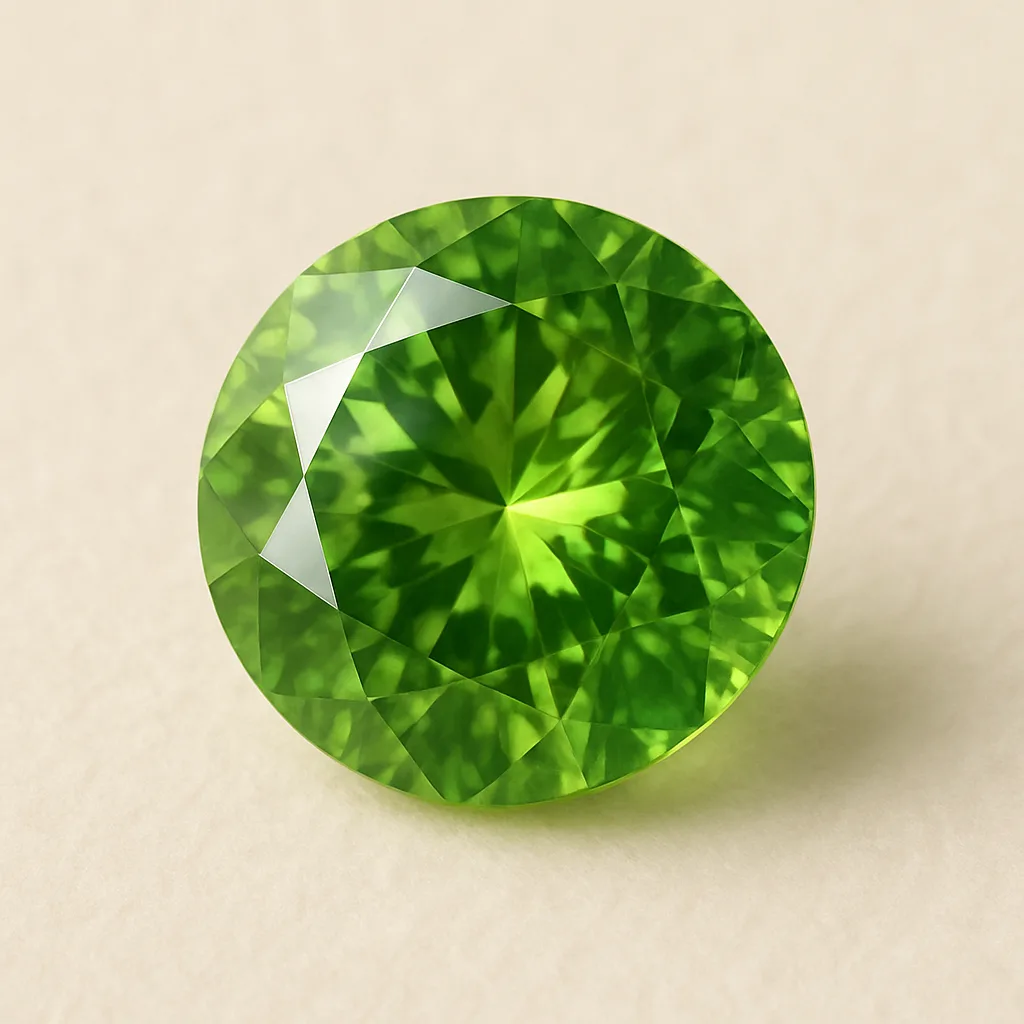
identified this stone yet
Demantoid Garnet
| Hardness | 6.5-7 |
| Specific gravity | 3.84 |
| Refractive index | 1.880-1.888 |
| Crystal system | 等軸晶系 |
Yellowish green, pure spring green, and the most desirable saturated emerald green of chromium-rich Russian material.
- nclusions — radiating byssolite or chrysotile fibers (Russian origin signature)
- nclusions
- nclusions in non-Russian material
- Singly refractive — no
- Exceptional (0.057) — visibly fiery in well-cut stones
- 01Strong rainbow in a green stone is demantoid's calling card
- 02nclusions confirm Russian Ural origin
- 03Very high RI (~1.88) separates it from emerald (1.58) and tsavorite (1.74)
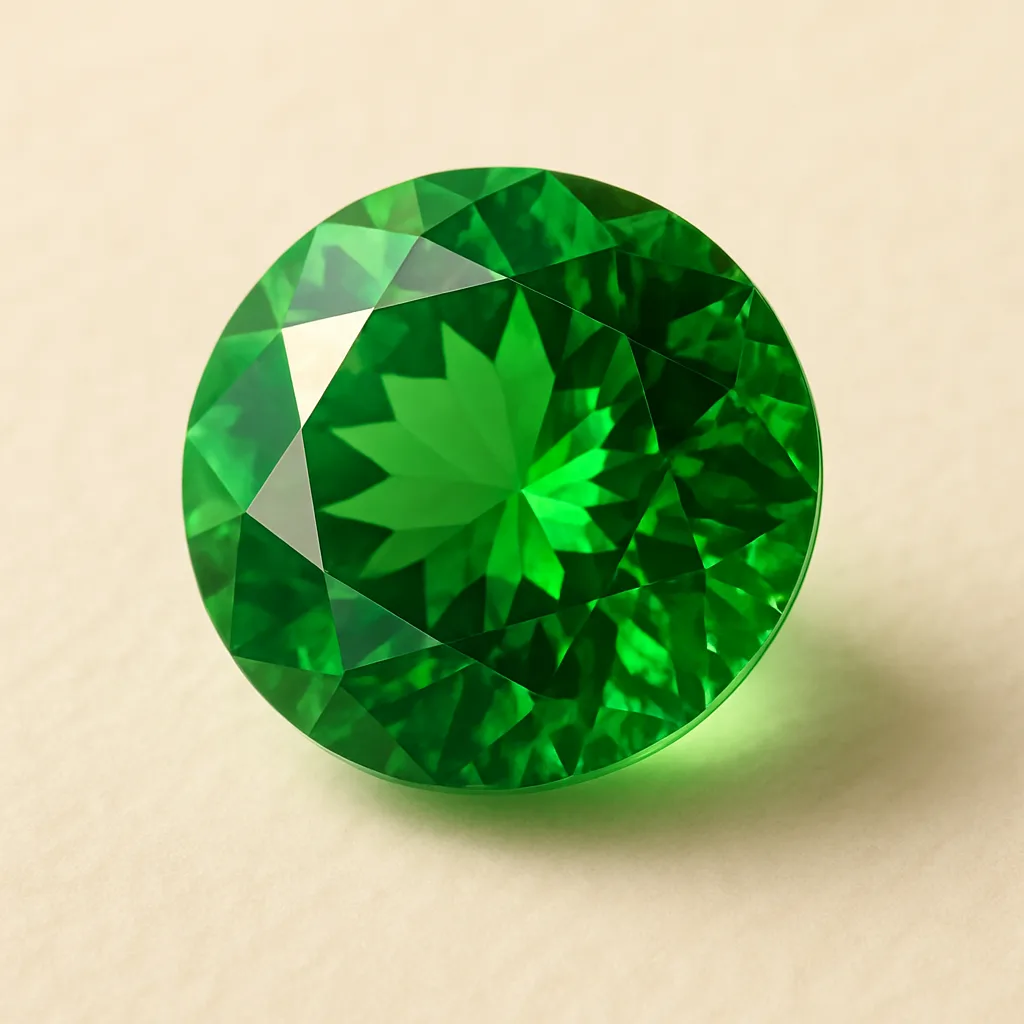
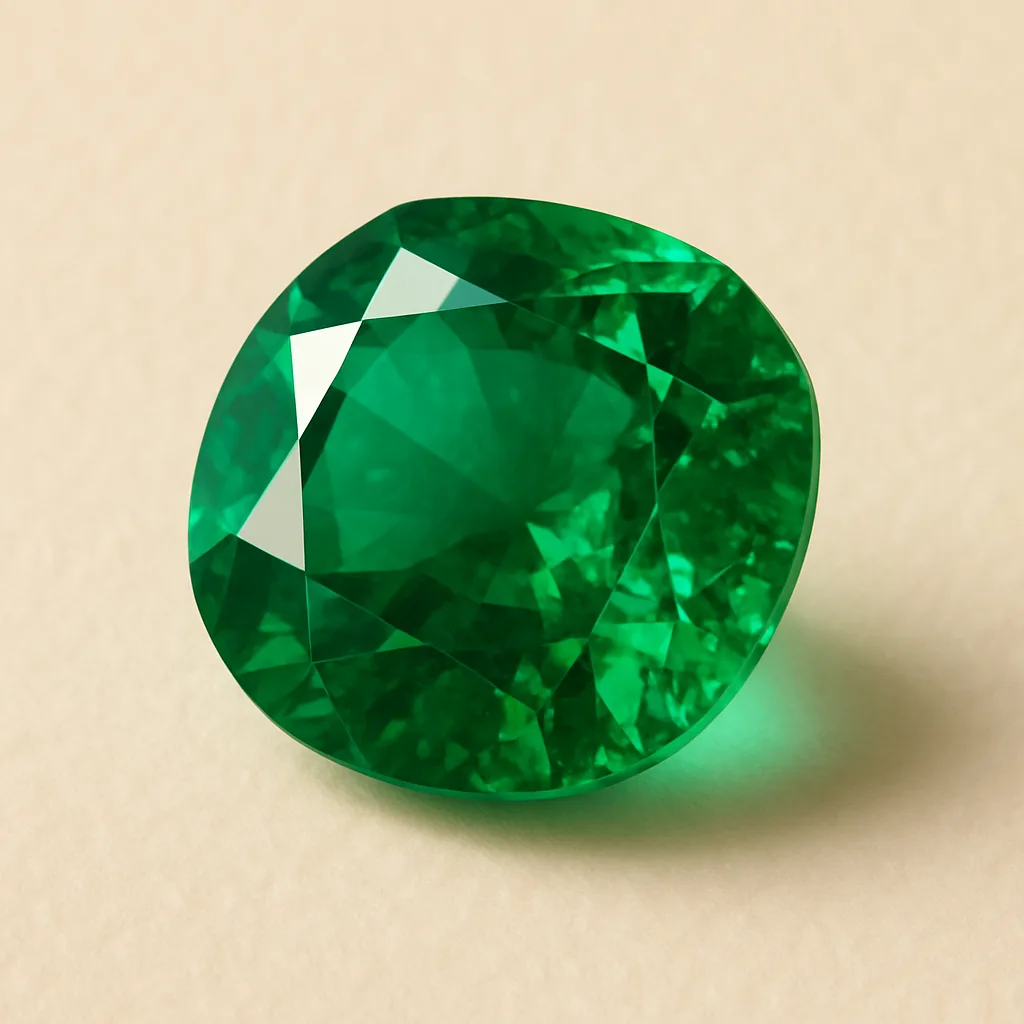
- Mohs 6.5–7 — durable for jewelry but not as tough as harder garnets
- Skip ultrasonic on heavily included stones
- Avoid hard impacts; protective settings recommended for ring wear
Roughly $500–$2,000 per carat for smaller Namibian or Madagascan stones, $3,000–$8,000 per carat for fine 1–2 ct Russian stones, and $10,000–$20,000+ per carat for top Russian horsetail material over 3 carats.
Note: Russian horsetail material commands the highest prices and is essentially never treated. Some non-Russian stones are lightly heated to clean up color; the trade accepts this. Stones over 2 carats from any source are scarce; over 3 carats they are rare; over 5 carats they are auction territory.
Demantoid is andradite garnet (Ca₃Fe₂(SiO₄)₃) colored green by chromium (the most prized) or by ferric iron. The name comes from the Dutch 'demant,' meaning diamond, in reference to its exceptional fire. Discovered in 1868 in Russia's Ural Mountains, it experienced a second life when Namibian (1996), Madagascan (2009) and Iranian deposits came online.
Origins
nclusions: byssolite or chrysotile fibers radiating in fan or tail patterns, which serve as an origin signature. Namibia (Erongo, 1996), Madagascar (Ambanja, 2009) and Iran (Kerman province) round out the modern market with material that lacks horsetails but can be cleaner and larger.
History
Imperial Russia adored demantoid between the 1880s and the 1917 revolution. Court jeweler Carl Fabergé used it in eggs, brooches and presentation pieces, and the Romanovs commissioned major suites. The mines closed for most of the 20th century after the revolution, and demantoid effectively disappeared from the market. Reopened deposits and new African and Iranian finds since the 1990s have brought it back, with prices climbing as supply remains tight.
Lore & symbolism
January's birthstone alongside other garnets. Demantoid has come to be associated with prosperity, success, and the courage to chase brilliance — themes that fit its Tsarist Russian provenance.
Tools to confirm this stone
Tools that help confirm Demantoid Garnet. Tap any item to jump to the matching section on the gem tools page.
- 最終確認日
- 2026年4月28日
- 参 考 文 献
- Gem Encyclopedia/ GIA (Gemological Institute of America)
- 宝石鑑別基準/ 中央宝石研究所 (CGL)
- Mineral & Gem Database/ Mindat.org / Gemdat.org
- 宝石学入門/ 全国宝石学協会
本ページの物性値(屈折率・比重・硬度・結晶系等)は、上記の権威ある一次資料を相互参照して編集しています。最新の鑑別研究の進展により値が更新される場合があります。