identified this stone yet
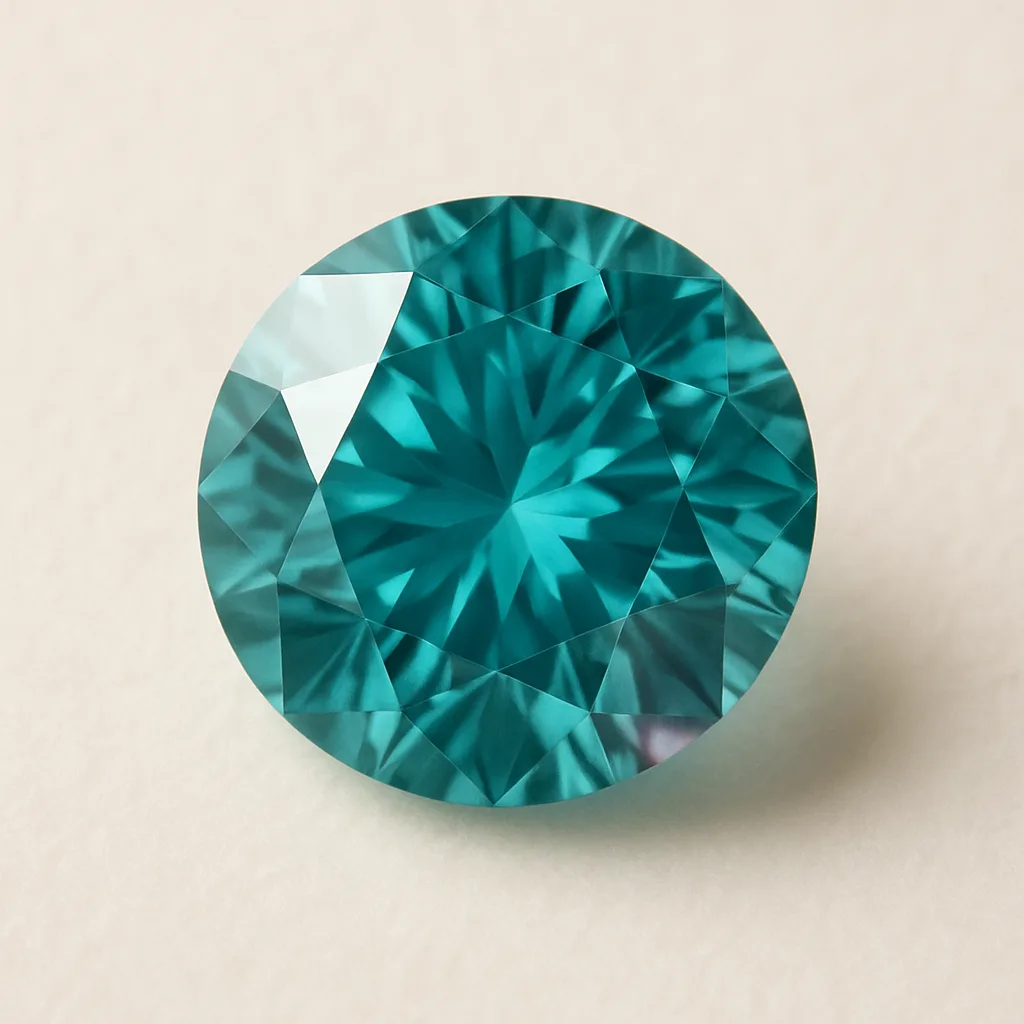
Synthetic Color Change Sapphire
| Hardness | 9 |
| Specific gravity | 4.00 |
| Refractive index | 1.762-1.770 |
| Crystal system | 六方晶系(三方晶系) |
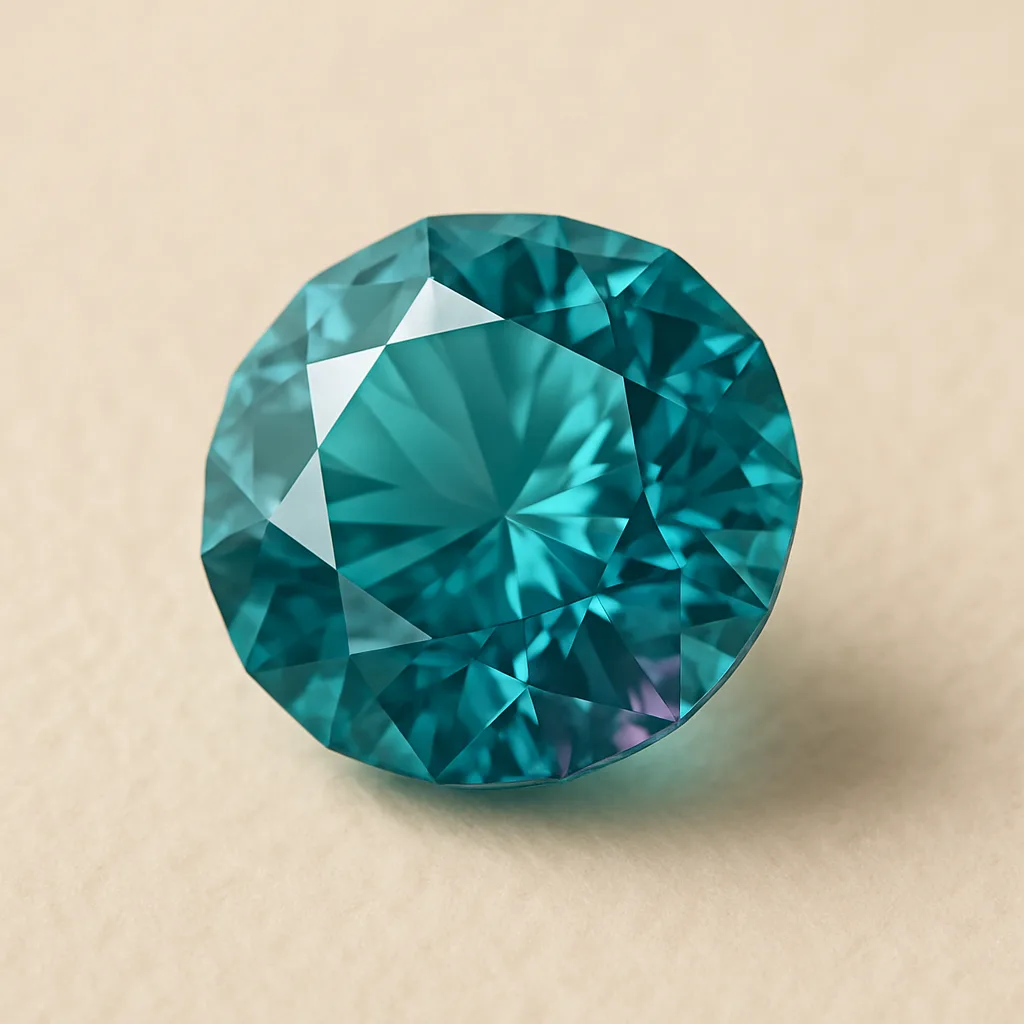
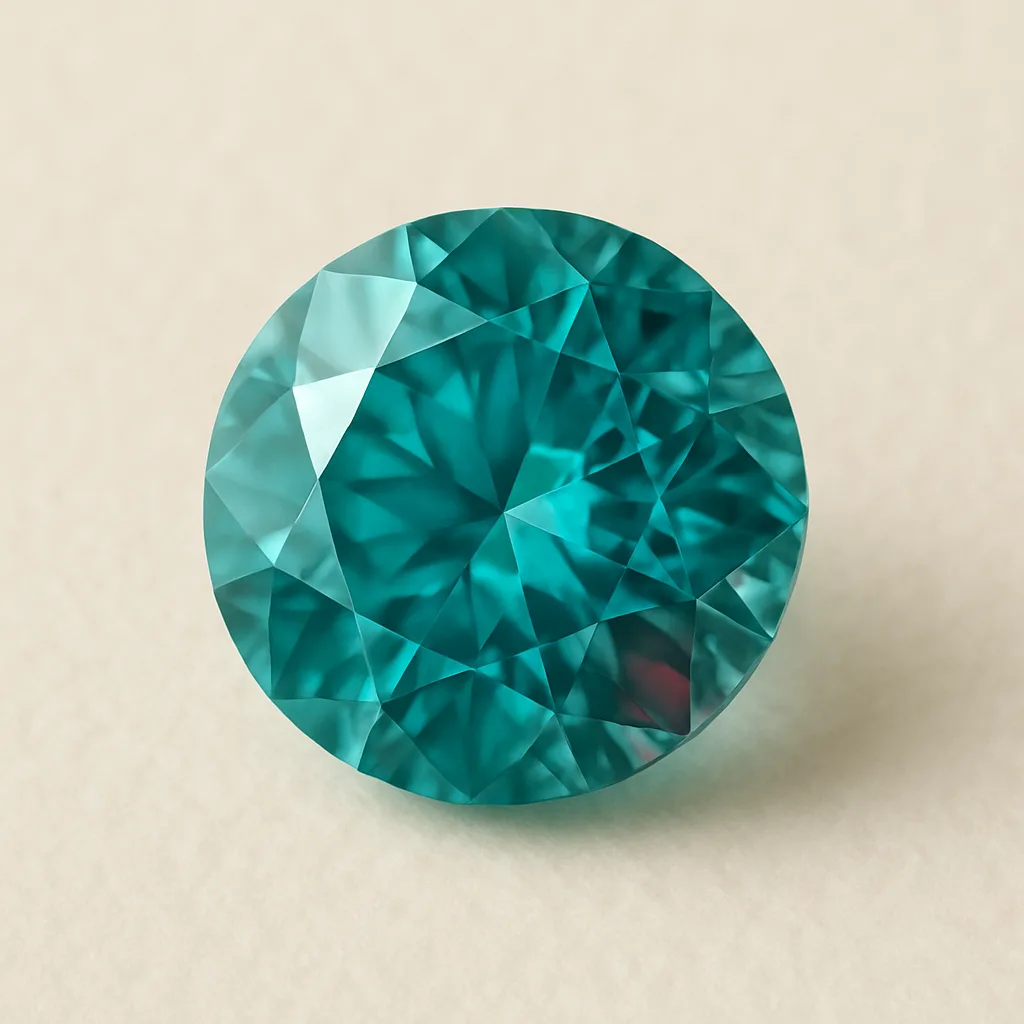
Daylight: blue, bluish-green, sometimes purplish-blue. Incandescent: purplish-red, raspberry-red, sometimes magenta. The shift is blue→purple-red rather than the green→red of true alexandrite — a fundamental species-level signature, not a quality difference.
- Curved growth striae (Verneuil) — diagnostic at 10× immersion
- Round gas bubbles, sometimes in trails
- Swirl-like flow patterns
- Otherwise typically very clean
- Doubly refractive (uniaxial negative) — identical to natural corundum
- RI 1.762–1.770, 0.008
- Color change: blue / bluish-green (daylight) → purplish-red (incandescent)
- Vitreous to sub-adamantine luster
- 01 and round gas bubbles diagnostic of Verneuil at 10× immersion
- 02RI 1.762–1.770 and SG 4.00 separate from genuine chrysoberyl alexandrite (RI 1.745–1.755, SG 3.71–3.75)
- 03Color shift is blue→purple-red, not green→red of fine Russian Ural alexandrite
- 04Trade name 'synthetic color-change sapphire' or 'vanadium-doped synthetic corundum' reflects accurate species disclosure
- Mohs 9 — extremely durable
- Ultrasonic and steam safe
- Stable to light and chemicals
$5–$50/ct for commercial flame-fusion vanadium-doped synthetic corundum sold with proper disclosure — slightly higher than the same material sold under misleading 'alexandrite' names, reflecting buyer comfort with the honest disclosure. Premium Djeva-cut material can reach $100–$200/ct for fine color and clean stones above 3 ct.
Note: The decisive market distinction from 'synthetic alexandrite' terminology is honest disclosure. A piece sold as 'synthetic color-change sapphire' or 'vanadium-doped synthetic corundum' reflects the GIA-standard naming convention and gives the consumer accurate species information. The same physical material sold as 'synthetic alexandrite' without further specification is the trade-name abuse that has persisted in the costume jewelry market for over a century. Lab-grade discrimination from natural vanadium-doped color-change sapphire (Tanzanian Tunduru/Songea and Madagascan Ilakaka/Bekily material from the 1980s onward) requires inclusion analysis and FTIR/UV-Vis spectroscopy at a major laboratory.
Synthetic color-change sapphire is Al₂O₃ (trigonal) doped with V³⁺, producing a vanadium d-d transition that shifts perceived color from blue or bluish-green in daylight to purplish-red under incandescent illumination. Identical bulk physical and optical properties to colorless synthetic sapphire — Mohs 9, SG 4.00, RI 1.762–1.770, 0.008. Curved growth striae and round gas bubbles, the diagnostic markers of Verneuil flame-fusion, are visible at 10× immersion. The color-change behavior is fundamentally a vanadium d-d transition, distinct from the chromium-driven shift of genuine alexandrite or the chromium+vanadium balance of natural color-change sapphire from Tanzania and Madagascar.
Origins
Switzerland (Djeva, since the 1910s), France (the original Verneuil workshops at the Pierre Soudur d'Onthier facility near Paris), Germany (Idar-Oberstein cutting houses), Russia, Thailand, India, and China. Djeva remains the historic premium producer for Verneuil color-change corundum.
History
The vanadium-doped flame-fusion color-change corundum was patented by Verneuil and colleagues in 1909, seven years after the original 1902 ruby breakthrough. The commercial decision to market it as 'synthetic alexandrite' was made by the early 20th-century European jewelry trade — Pierre Charles Bourret in Paris, Hrand Djevahirdjian's Djeva in Monthey (founded 1914), and the Idar-Oberstein cutting community all distributed material under variants of the 'alexandrite' trade name. GIA's Robert Crowningshield in the 1950s and Karl Schmetzer in his 1980s–1990s Gems & Gemology studies formalized the species-level distinction between this vanadium-doped corundum and genuine chrysoberyl alexandrite. Modern major-lab terminology — 'vanadium-doped synthetic corundum' or 'color-change synthetic sapphire' — explicitly reserves the alexandrite designation for genuine chrysoberyl. The shift in retail terminology has been gradual; some jurisdictions (notably the United Kingdom under National Association of Goldsmiths / Gem-A guidance) more strictly enforce the distinction than others.
Lore & symbolism
Some traditions accept color-change sapphire as an alexandrite alternative or June birthstone substitute. Modern crystal writing positions the synthetic species similarly to natural color-change sapphire — 'transformation,' 'adaptability,' 'duality' — without the chromium-driven mystique that surrounds genuine chrysoberyl alexandrite.
Tools to confirm this stone
Tools that help confirm Synthetic Color Change Sapphire. Tap any item to jump to the matching section on the gem tools page.
- 最終確認日
- 2026年4月28日
- 参 考 文 献
- Gem Encyclopedia/ GIA (Gemological Institute of America)
- 宝石鑑別基準/ 中央宝石研究所 (CGL)
- Mineral & Gem Database/ Mindat.org / Gemdat.org
- 宝石学入門/ 全国宝石学協会
本ページの物性値(屈折率・比重・硬度・結晶系等)は、上記の権威ある一次資料を相互参照して編集しています。最新の鑑別研究の進展により値が更新される場合があります。