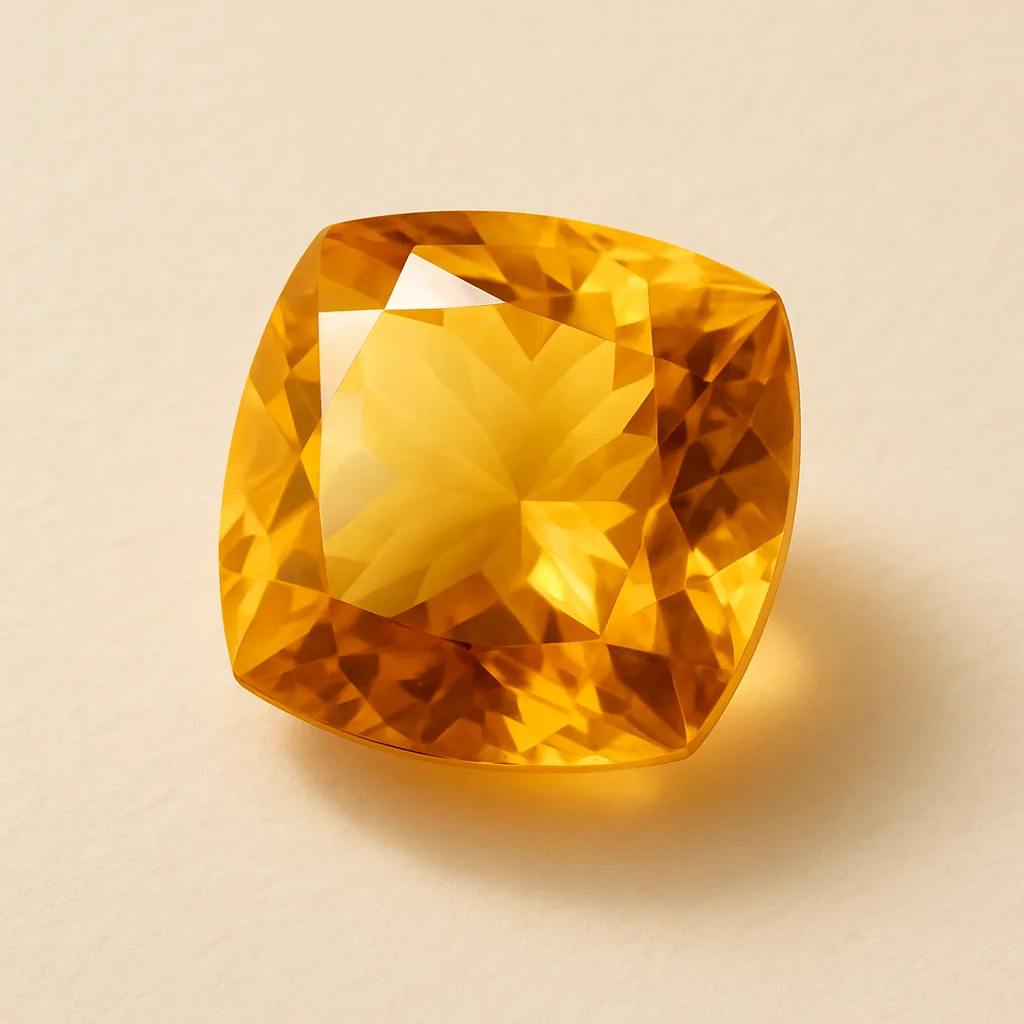
identified this stone yet
Citrine
| Hardness | 7 |
| Specific gravity | 2.65 |
| Refractive index | 1.544-1.553 |
| Crystal system | 六方晶系(三方晶系) |
Pale lemon yellow, deep honey gold, brandy orange, and Madeira (deep reddish brown-orange). Natural citrine tends toward pale yellow; heat-treated material is typically a warmer, more orange-brown tone.
- nclusions
- Color zoning in pale and deeper bands, sometimes hexagonal
- egative crystals and growth tubes
- Heat-treated amethyst may show color concentration near the apex and pale base
- Doubly refractive (uniaxial positive)
- Weak dichroism: pale yellow and deeper yellow
- Vitreous luster
- 01RI 1.544–1.553 and SG 2.65 separate citrine from yellow topaz (SG ~3.5) and yellow beryl (heliodor) (SG ~2.7, RI ~1.57)
- 02Weak dichroism rules out singly refractive yellow stones (cubic zirconia, YAG)
- 03nclusions confirm natural quartz
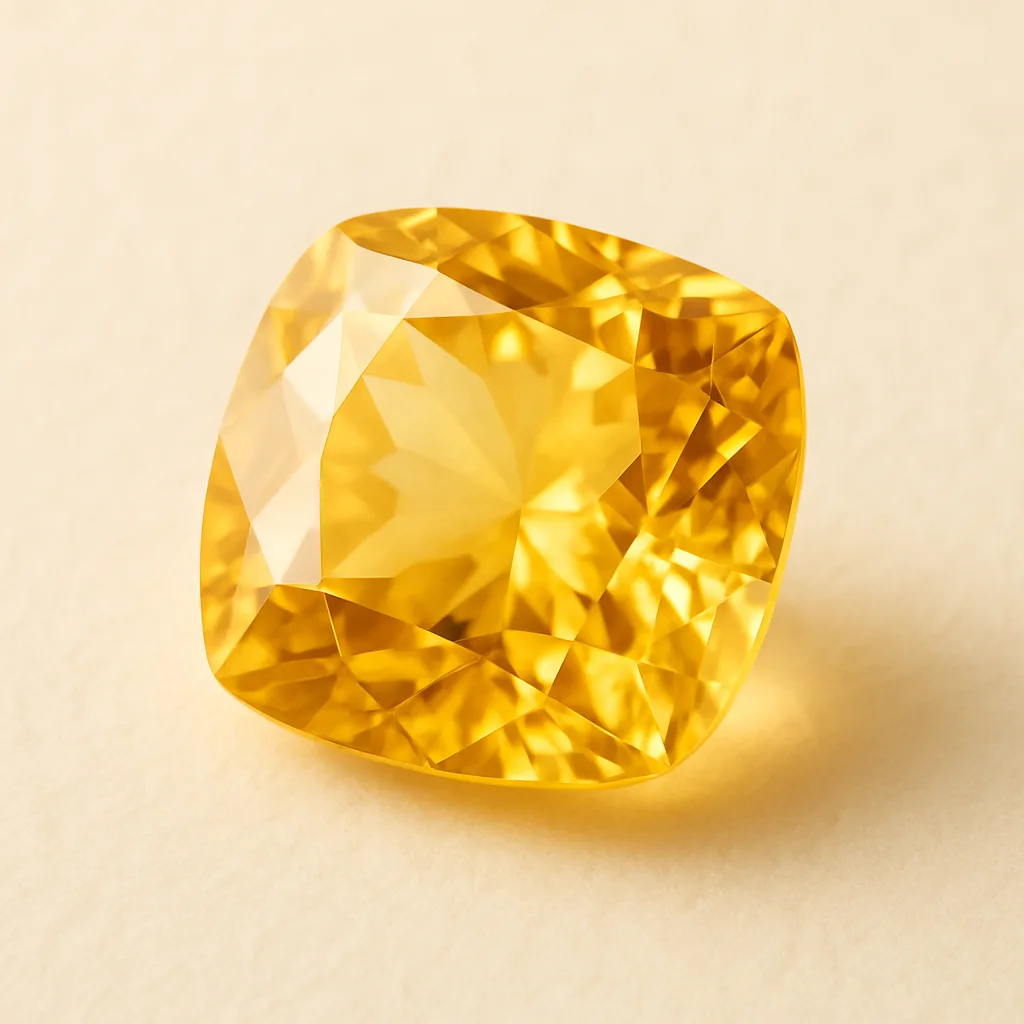
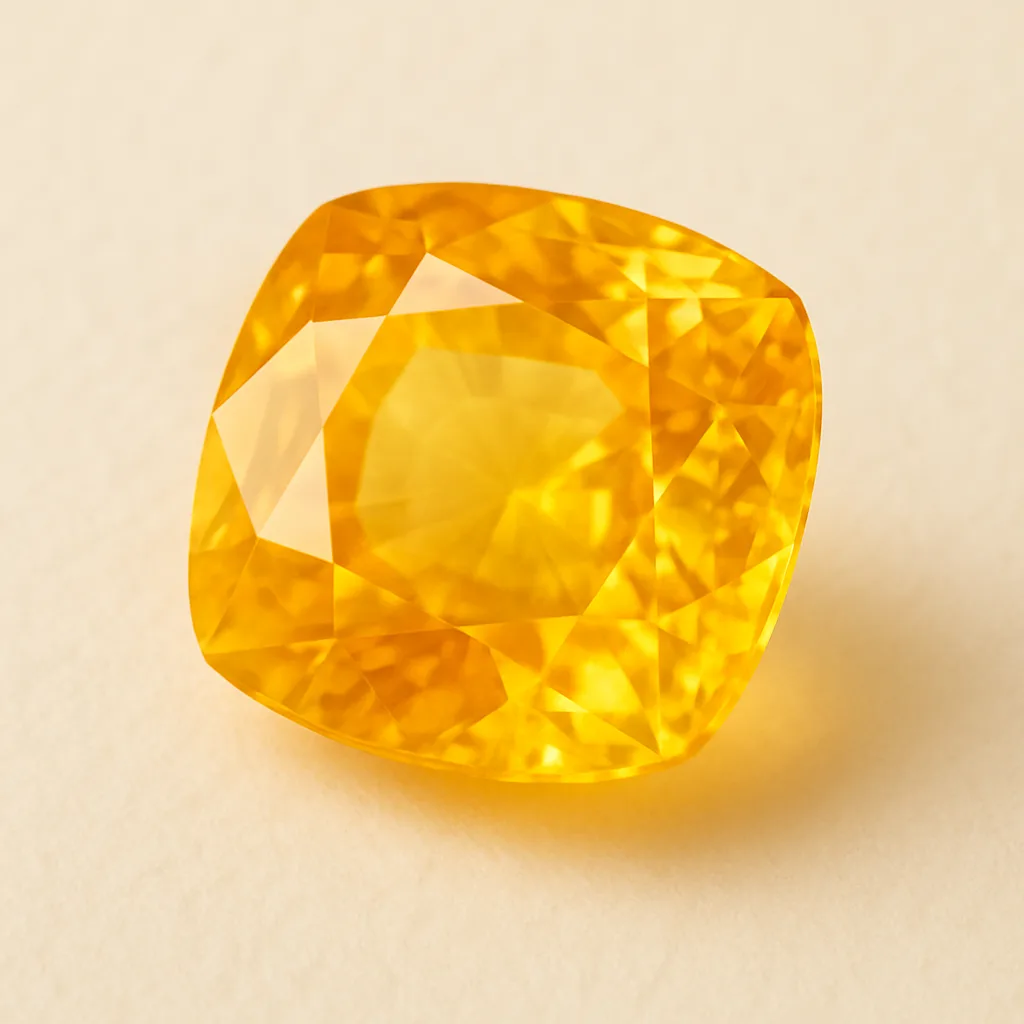
- Durable for everyday wear with reasonable care
- Safe in warm soapy water; ultrasonic and steam are acceptable if no fractures
- Avoid prolonged direct sunlight — heat-treated citrine can revert slowly toward amethyst
Roughly $10–$30/ct for commercial pale yellow stones, $30–$80/ct for deeper Madeira-toned material, and $100–$200+/ct for fine large natural citrine over 20 ct. Citrine is one of the most affordable major colored stones — a clean 50 ct stone is often under $5,000.
Note: Heat treatment from amethyst is so universal that it is rarely disclosed separately — assume any deep-orange or 'Madeira' citrine is heated amethyst. True natural citrine is paler and typically commands a small premium when documented. Synthetic quartz exists and is occasionally encountered as citrine; lab confirmation is needed for high-value or unusual stones.
Citrine is quartz (SiO₂) where trivalent iron (Fe³⁺) in irradiated form produces yellow to brownish-orange color. Natural citrine is uncommon — most stones sold as citrine are heat-treated amethyst from Brazil, particularly the Rio Grande do Sul deposits, which converts purple to honey-yellow at around 470 °C. Genuine natural citrine occurs in smaller quantities in Brazil, Madagascar, Russia (Ural Mountains), and Bolivia.
Origins
Brazil dominates supply, with the Rio Grande do Sul amethyst-citrine geodes feeding most commercial production. Bolivia's Anahí mine produces both natural citrine and the bicolor ametrine (citrine + amethyst in one crystal). Madagascar and Zambia supply natural pale-yellow material. The Ural Mountains produced the historical 'Madeira citrine' favored in 19th-century European jewelry, though commercial mining there has largely ceased.
History
Citrine was used in Greek and Roman jewelry from the 1st century BCE, often confused with topaz — the two share warm color and the trade name 'citrine topaz' persisted into the 20th century. of amethyst to produce citrine was developed commercially in the 1930s in Brazil and now accounts for the great majority of the market. The Art Deco era was particularly fond of large citrine cocktail rings.
Lore & symbolism
November's birthstone alongside topaz, and the traditional 13th wedding anniversary gem. Modern crystal lore associates citrine with abundance and prosperity — sometimes called the 'merchant's stone' for its supposed effect on business.
Tools to confirm this stone
Tools that help confirm Citrine. Tap any item to jump to the matching section on the gem tools page.
- 最終確認日
- 2026年4月28日
- 参 考 文 献
- Gem Encyclopedia/ GIA (Gemological Institute of America)
- 宝石鑑別基準/ 中央宝石研究所 (CGL)
- Mineral & Gem Database/ Mindat.org / Gemdat.org
- 宝石学入門/ 全国宝石学協会
本ページの物性値(屈折率・比重・硬度・結晶系等)は、上記の権威ある一次資料を相互参照して編集しています。最新の鑑別研究の進展により値が更新される場合があります。