identified this stone yet
Chrysoprase
| Hardness | 6.5-7 |
| Specific gravity | 2.60 |
| Refractive index | 1.530-1.540 |
| Crystal system | 六方晶系(多結晶集合体) |
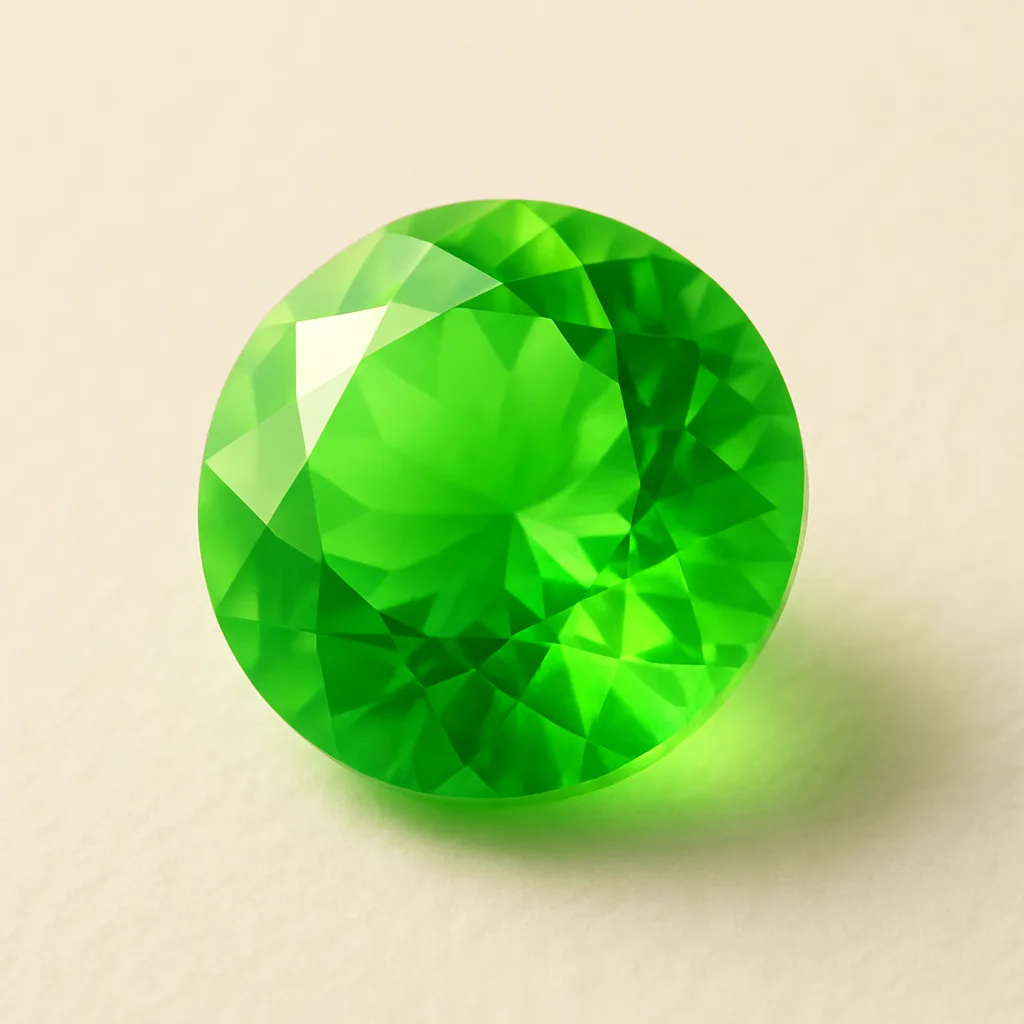
Apple-green to emerald-green, with the most prized 'prime green' showing strong saturation and slight translucency. Color is uniform — banding is uncharacteristic.
- Microscopic nickel-silicate granules (willemseite or pimelite) responsible for the green color
- Uniform color distribution — pooling or vein-bound color suggests dye
- Occasional fine fracturing along the host-rock contact
- Microcrystalline aggregate (chalcedony) — single refractometer reading near 1.54
- Semi-translucent to translucent
- Specific gravity 2.58–2.64
- 6.5–7
- 01Uniform apple- to leek-green color, slight translucency, no banding
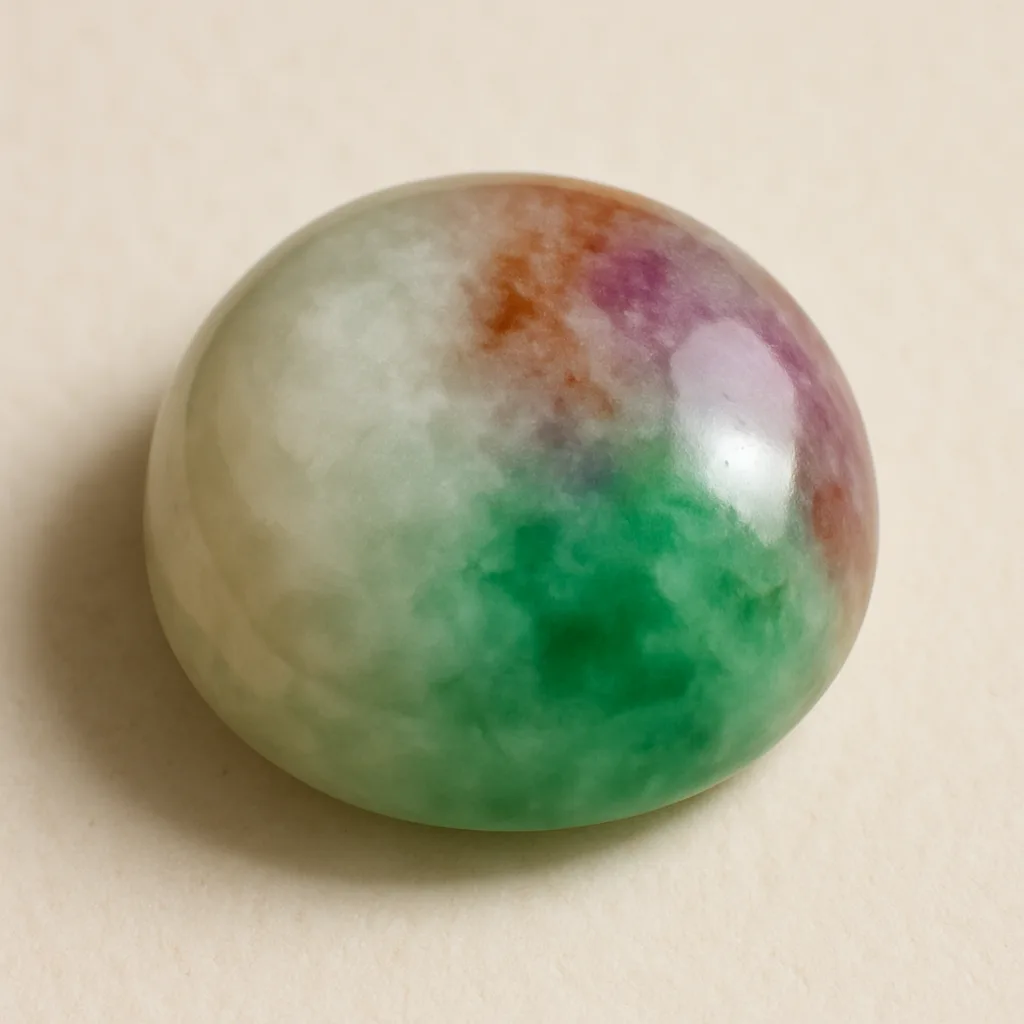
- 02Slightly granular surface texture compared with the smoother polish of jadeite
- 03No fibrous interlocking structure under 10× — distinguishes from both jadeite and nephrite
- 04Refractometer reading near 1.54 — well below jadeite (1.66) and nephrite (1.61)
- Mohs 6.5–7 — durable enough for everyday wear
- Prolonged direct sunlight can cause slight color fade in some material
- Stable to ordinary jewelry cleaning
A few thousand yen for small cabochons of commercial material up to several tens of thousands of yen per carat for top-grade Australian prime-green stones.
Note: Top Australian 'prime green' chrysoprase is the benchmark and commands jadeite-comparable prices for matched suites. Dyed green chalcedony — a common imitation — fades unevenly under sunlight and shows pooled color in fractures under 10×. The stone is sometimes marketed misleadingly as 'Australian jade.'
Chrysoprase is a microcrystalline quartz (chalcedony) colored by trace nickel — typically as the silicate willemseite or finely divided pimelite within the silica matrix. The result is a uniform, slightly translucent apple-green to emerald-green stone with none of the banding or fiber structure of true jade. The Greek name combines chrysos (gold) and prason (leek) — 'golden leek-green.' Frederick the Great of Prussia so loved chrysoprase from Szklary in Silesia (then Lower Silesia, now Poland) that he had it installed in the chapel and salon of Sanssouci Palace in Potsdam.
Origins
The Marlborough deposit in Queensland and the Yerilla and Wingellina deposits in Western Australia together supply most of the world's gem-grade chrysoprase. The historic source — used by Frederick the Great and worked since Roman times — is Szklary (German Gläsendorf) in Lower Silesia, Poland, where deposits have been mined since at least the 14th century. Other sources include Goiás in Brazil, the Visokoye-Yegorovskoye deposit in the Polar Urals of Russia, California's Tulare County, Kazakhstan's Sarykul Boldy, and the Haneti deposit in Tanzania.
History
Chrysoprase was used as a seal stone and intaglio gem throughout the Hellenistic, Roman, and Byzantine worlds — there are over a hundred extant Greco-Roman intaglios in chrysoprase in the major museum collections. Medieval lapidaries identified it with one of the foundation stones of the New Jerusalem in Revelation 21. Frederick the Great (1712–1786) acquired so much Silesian chrysoprase that he decorated two rooms at Sanssouci Palace with it and presented major carved pieces as diplomatic gifts. Australian Queensland material, discovered in the 1960s near Marlborough, restored chrysoprase to commercial importance after the Silesian deposit declined.
Lore & symbolism
Recognized in some traditions as a secondary May birthstone, within the broader chalcedony family. Often called the 'stone of Venus' for its association with growth, fertility, and renewal — the freshness of new spring leaves. In modern crystal-healing traditions it is associated with the heart chakra and emotional balance.
Tools to confirm this stone
Tools that help confirm Chrysoprase. Tap any item to jump to the matching section on the gem tools page.
- 最終確認日
- 2026年4月28日
- 参 考 文 献
- Gem Encyclopedia/ GIA (Gemological Institute of America)
- 宝石鑑別基準/ 中央宝石研究所 (CGL)
- Mineral & Gem Database/ Mindat.org / Gemdat.org
- 宝石学入門/ 全国宝石学協会
本ページの物性値(屈折率・比重・硬度・結晶系等)は、上記の権威ある一次資料を相互参照して編集しています。最新の鑑別研究の進展により値が更新される場合があります。