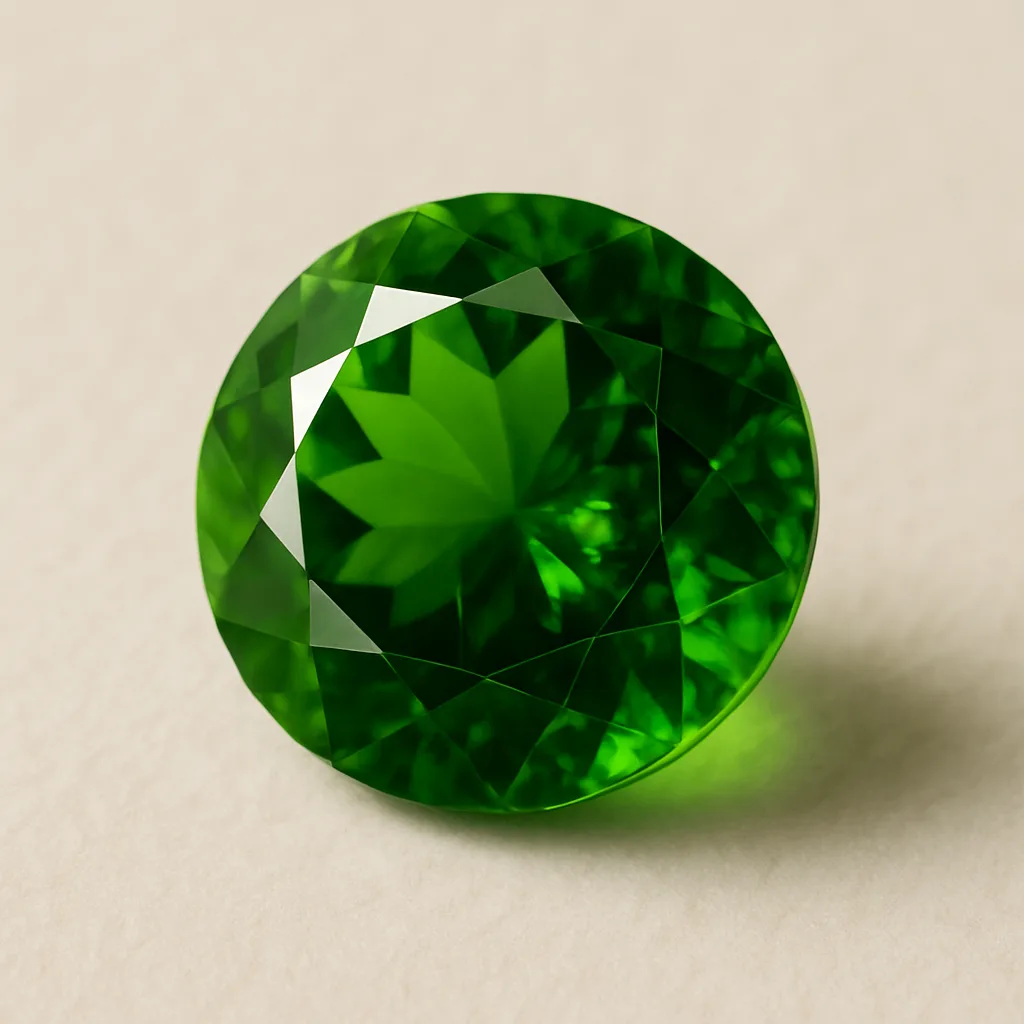
identified this stone yet
Chrome Diopside
| Hardness | 5.5-6 |
| Specific gravity | 3.22-3.38 |
| Refractive index | 1.667-1.701 |
| Crystal system | 単斜晶系 |
Bright grass-green through deep velvety green; the most saturated material approaches emerald in tone but with a slightly bluer cast.
- nclusions
- nclusions
- Parting along the prismatic planes
- Biaxial positive
- Moderate visible at 10× from edges
- 0.024–0.031
- Refractive index 1.664–1.730
- 01Emerald-quality saturated green color
- 02Moderate at 10× — distinguishes from tsavorite and emerald, both singly refractive (or very weakly so)
- 03Mohs 5.5–6 — distinctly softer than tsavorite (7.5) or emerald (7.5–8)
- 04Two directions of prismatic at ~87° — visible as straight glints in many cuts
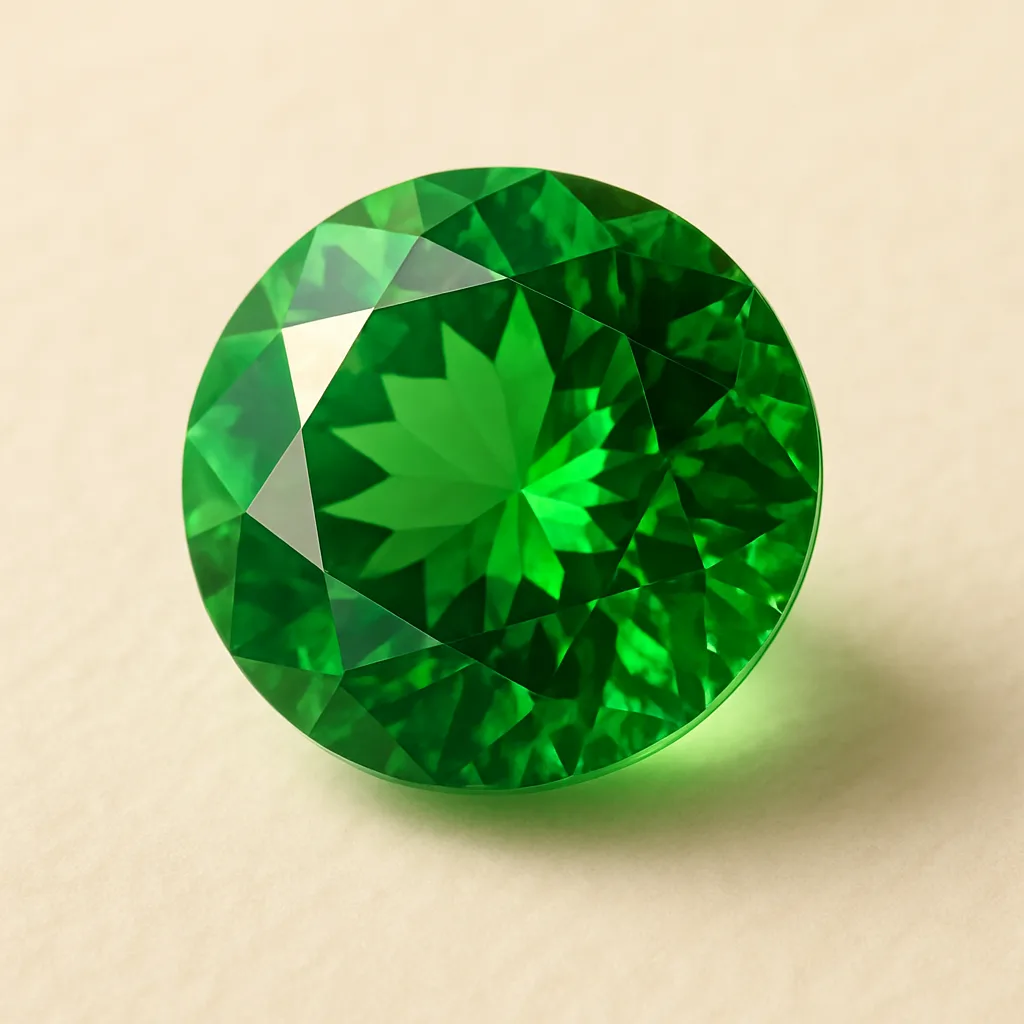
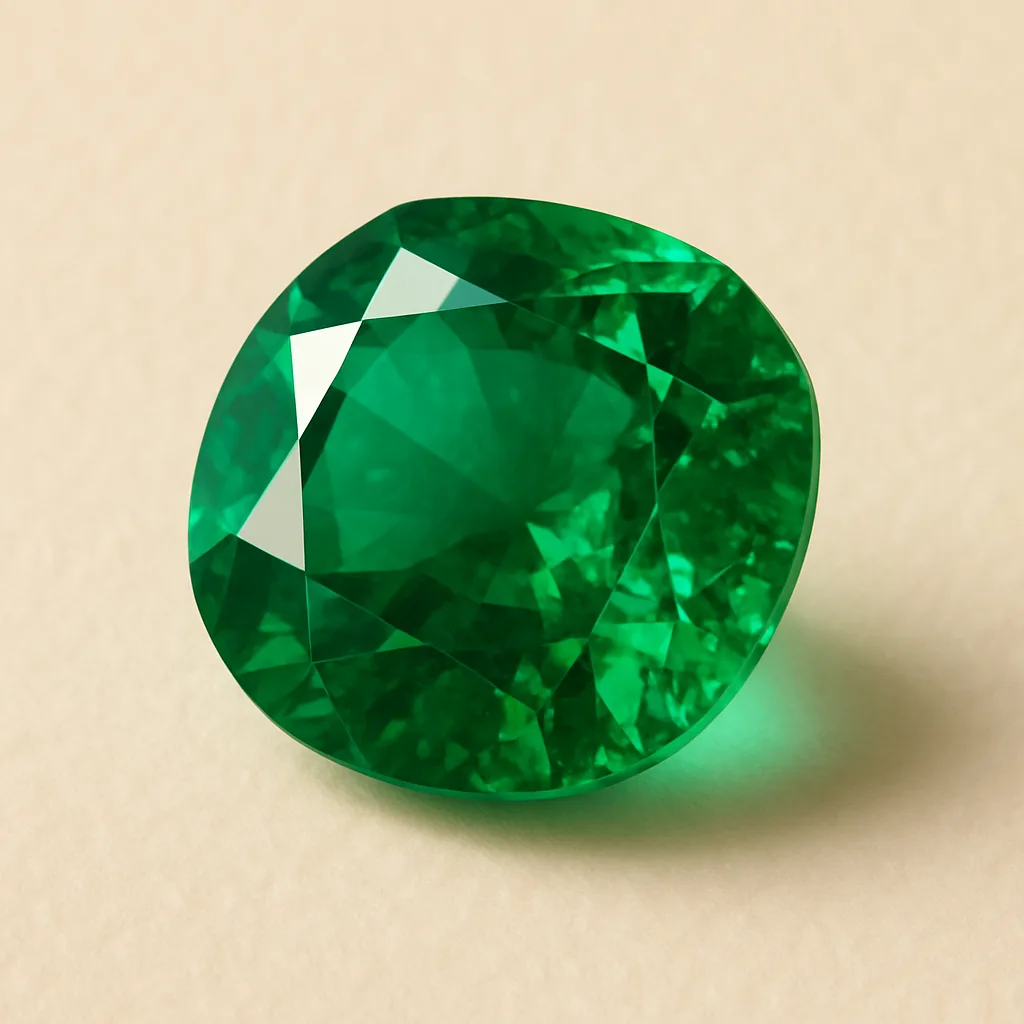
- Mohs 5.5–6 — softer than most green gems; reserve for earrings and pendants when possible
- Avoid ultrasonic and steam cleaning
- Sharp blows can cause parting — handle gently and store separately
A few thousand yen per carat for small stones up to several tens of thousands of yen per carat for clean, well-cut chromium-rich material over 2 ct.
Note: Russia's Inagli mine supplies essentially all commercial material. Stones above 2 ct are uncommon because the rough tends to fracture along the two cleavage planes. No treatments are routinely applied. The 'Siberian Emerald' trade name should be disclosed alongside the mineralogical name to avoid confusion with true emerald.
Chrome diopside is a calcium-magnesium-iron pyroxene, CaMgSi₂O₆, with chromium substituting for magnesium to produce a vivid green that rivals fine emerald. It is one of the four classic chromium-colored gems alongside emerald, tsavorite, and the green variety of alexandrite. The deposit at Inagli on the Aldan Shield in Russia's Sakha Republic dominates world supply — and because the Siberian permafrost is workable only in winter, production is restricted to a narrow extraction window. The 'Siberian Emerald' trade name is convenient but mineralogically inaccurate: chrome diopside is a pyroxene, not a beryl.
Origins
The Inagli alkaline-ultramafic massif on the Aldan Shield in Russia's Sakha (Yakutia) Republic accounts for over 99 percent of world supply. Discovered in 1988 and mined commercially from the 1990s, the deposit is workable only during the Siberian winter, when the permafrost allows access to the surface mineralization. Smaller occurrences exist in the Outokumpu region of Finland, Pakistan, Myanmar, Mogok Burma, the Adirondacks of New York, Tanzania, and Madagascar — none commercial.
History
Chrome diopside entered the international gem market only after the 1988 Inagli discovery and the post-1991 opening of Russian rough exports. By the early 2000s it had become established in Western jewelry as 'Siberian Emerald,' a December green stone marketed for the holiday season when alternatives to emerald at accessible prices were in demand. It remains, despite over thirty years of supply, a single-source gem of unusually narrow geographic and seasonal availability.
Lore & symbolism
No traditional birthstone designation. In modern lapidary culture chrome diopside is associated with growth, vitality, and renewal — the 'taiga green' of the Siberian forest. It is occasionally promoted as a December alternative to emerald or tsavorite for buyers seeking a green stone in the winter market.
Tools to confirm this stone
Tools that help confirm Chrome Diopside. Tap any item to jump to the matching section on the gem tools page.
- 最終確認日
- 2026年4月28日
- 参 考 文 献
- Gem Encyclopedia/ GIA (Gemological Institute of America)
- 宝石鑑別基準/ 中央宝石研究所 (CGL)
- Mineral & Gem Database/ Mindat.org / Gemdat.org
- 宝石学入門/ 全国宝石学協会
本ページの物性値(屈折率・比重・硬度・結晶系等)は、上記の権威ある一次資料を相互参照して編集しています。最新の鑑別研究の進展により値が更新される場合があります。