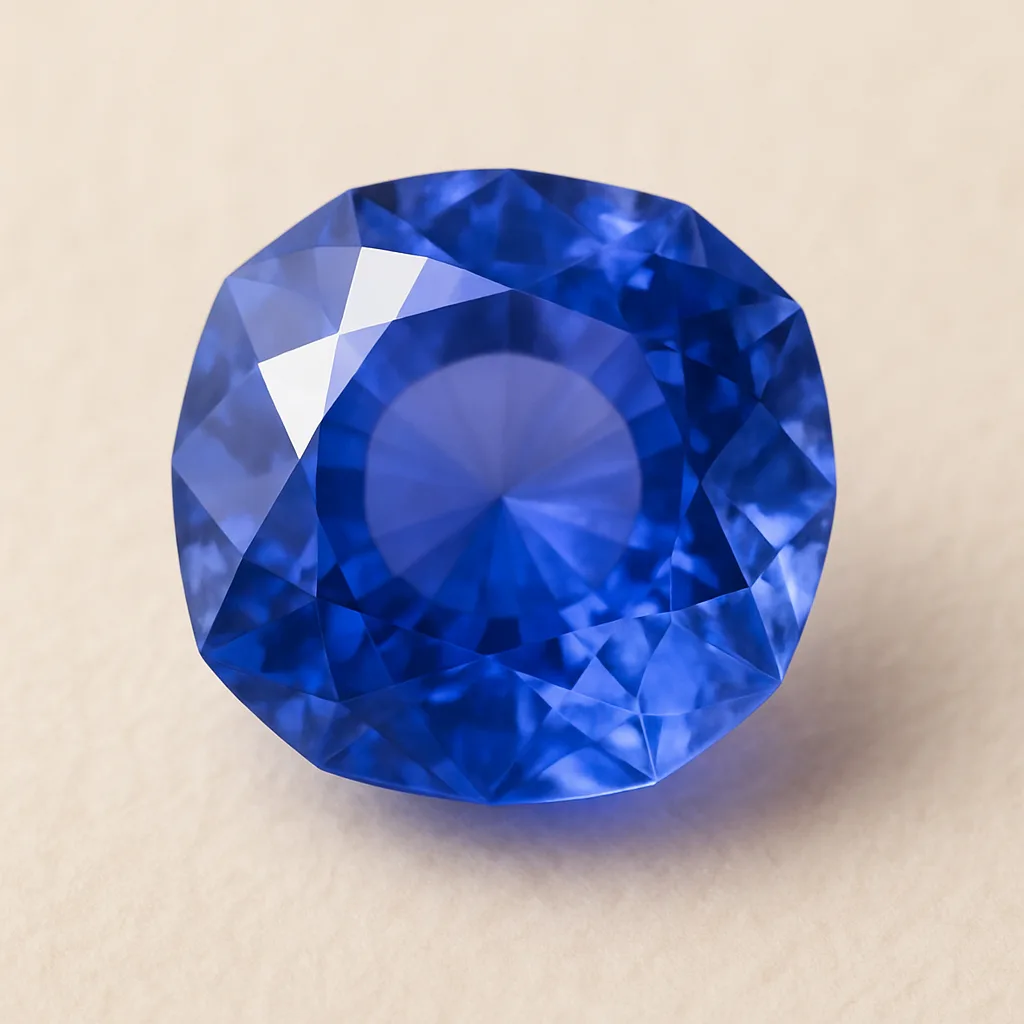
identified this stone yet
Natural Blue Sapphire
| Hardness | 9 |
| Specific gravity | 4.00 |
| Refractive index | 1.762-1.770 |
| Crystal system | 六方晶系(三方晶系) |
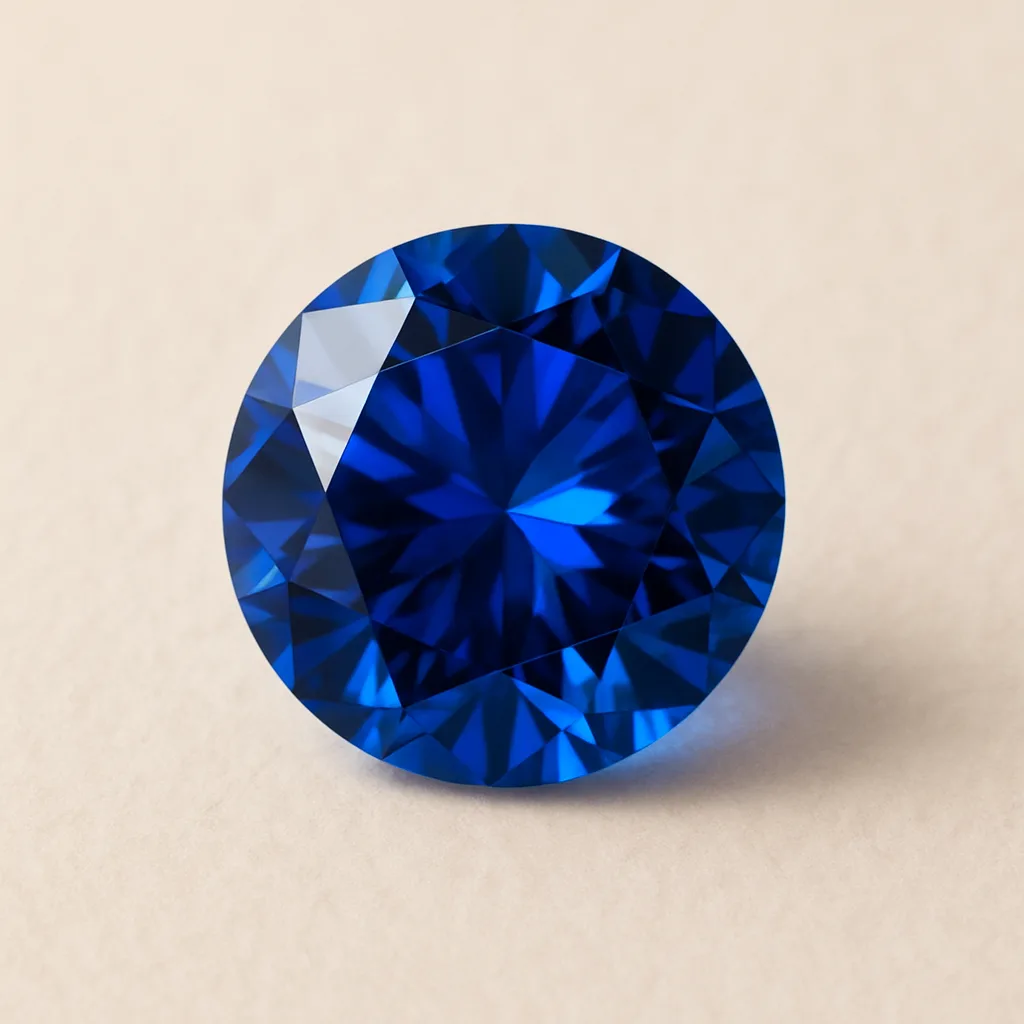
Pale cornflower blue, vivid royal blue, deep ink-blue, and the soft, slightly milky 'velvety' blue that defines Kashmir. Strong color zoning is common.
- Silk: fine rutile needles, sometimes hexagonally arranged
- nclusions (zircon halos, mineral grains)
- Color banding in straight or hexagonal lines
- nclusions
- Doubly refractive, uniaxial negative
- Strong dichroism: blue and greenish blue or yellowish blue
- 01Straight color zoning visible in immersion is a strong natural indicator
- 02Curved bands indicate Verneuil synthetic
- 03Strong dichroism visible through a dichroscope rules out singly refractive blue stones (spinel, tanzanite seen along one axis)
- 04Beryllium-diffused stones can show color concentration on edges
- Durable for daily wear
- Avoid harsh heat that could affect filled or fracture-healed material
- Safe to ultrasonic and steam unless treated; check certificate first
From under $100/ct for commercial Madagascar material up to $250,000+/ct for fine unheated Kashmir. Treatment status, origin, and color saturation drive the spread.
Note: Heat treatment is standard and disclosed. Beryllium-diffusion treatment for color enhancement is a major issue and dramatically affects value — always require a lab report for high-end stones. Unheated Kashmir and Burma sapphires set auction records.
Blue sapphire is corundum (Al₂O₃) where Fe²⁺-Ti⁴⁺ charge transfer produces blue. Although 'sapphire' technically covers every non-red corundum color, the unqualified word almost always means blue. Kashmir, Burma, Sri Lanka, Madagascar, Australia, and Montana are the classic sources; today most production comes from Madagascar and Sri Lanka.
Origins
Kashmir sapphires from the Padar region (1881–1887) set the benchmark for velvety, slightly hazy blue and remain the most valuable origin. Burmese (Myanmar) sapphires tend toward rich royal blue. Sri Lankan stones are lighter and brighter, often Padparadscha-adjacent in lower saturation. Madagascar's Ilakaka deposit, discovered in 1998, now supplies most of the global market. Montana yields steely teal-blue stones popular in modern jewelry.
History
Sapphire has been treasured since antiquity — Persian kings believed the sky itself was reflected in giant sapphires beneath the earth. The British Crown Jewels include the 104-carat Stuart Sapphire and the Star of India. Princess Diana's engagement ring, now worn by the Princess of Wales, popularized the Ceylon sapphire halo design in the 1980s.
Lore & symbolism
September's birthstone, associated with wisdom, truth, and royalty. Used historically as an ecclesiastical stone in cardinals' and bishops' rings. Also the traditional 45th wedding anniversary gift.
Tools to confirm this stone
Tools that help confirm Natural Blue Sapphire. Tap any item to jump to the matching section on the gem tools page.
- 最終確認日
- 2026年4月28日
- 参 考 文 献
- Gem Encyclopedia/ GIA (Gemological Institute of America)
- 宝石鑑別基準/ 中央宝石研究所 (CGL)
- Mineral & Gem Database/ Mindat.org / Gemdat.org
- 宝石学入門/ 全国宝石学協会
本ページの物性値(屈折率・比重・硬度・結晶系等)は、上記の権威ある一次資料を相互参照して編集しています。最新の鑑別研究の進展により値が更新される場合があります。