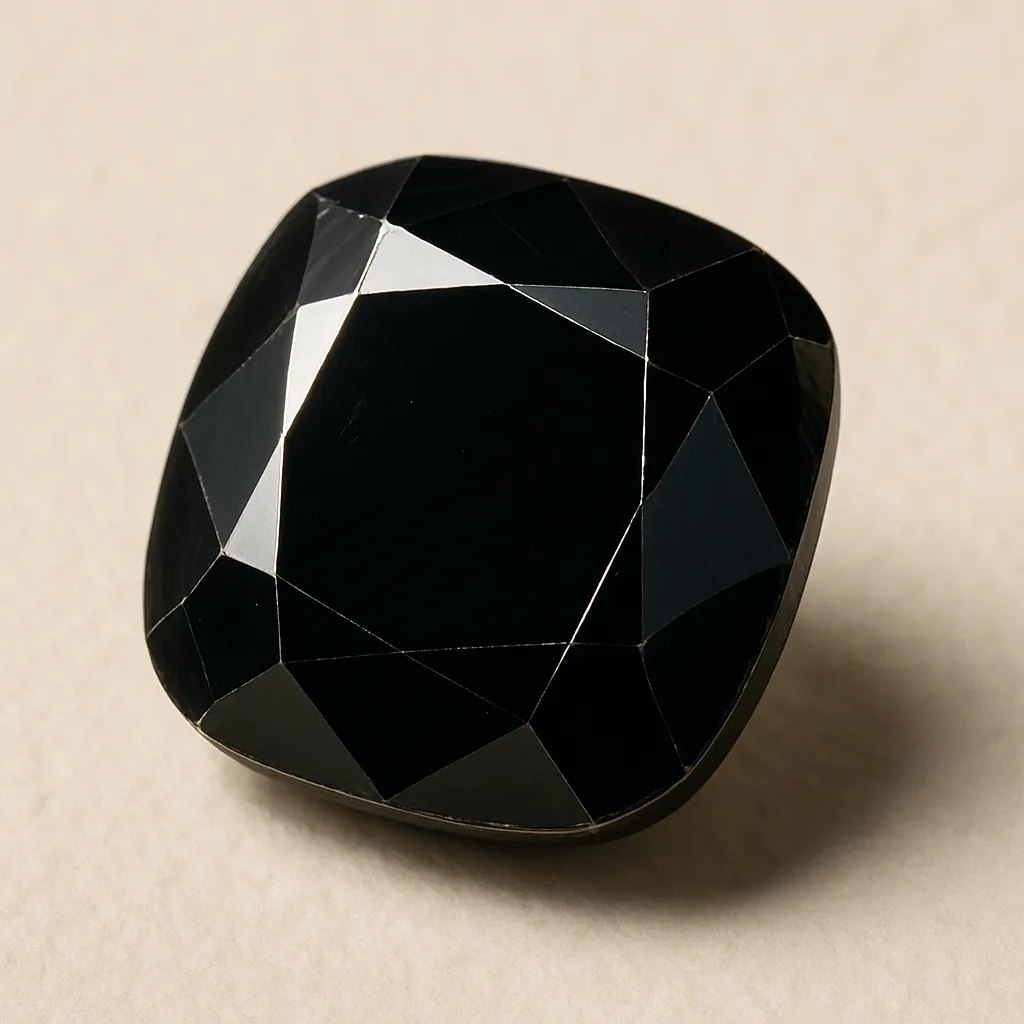
identified this stone yet
Black Tourmaline (Schorl)
| Hardness | 7-7.5 |
| Specific gravity | 3.18-3.22 |
| Refractive index | 1.625-1.655 |
| Crystal system | 六方晶系(三方晶系) |
Jet black to very dark blue-black or brown-black, colored by iron.
- Sharply defined longitudinal striations parallel to the c-axis — the diagnostic feature
- nclusions in clearer columnar crystals
- Albite or mica matrix intergrowths in Namibian and Pakistani specimens
- Uniaxial negative
- Strong piezoelectric and pyroelectric behavior
- Refractive index 1.624–1.644
- Specific gravity 3.10–3.25
- 01Deep longitudinal striations on the prism faces — diagnostic and impossible to mistake once seen
- 02Crystal cross-section is a rounded triangle ('spherical triangle')
- 03Develops static charge when rubbed or warmed — picks up paper fragments
- 04Mohs 7–7.5
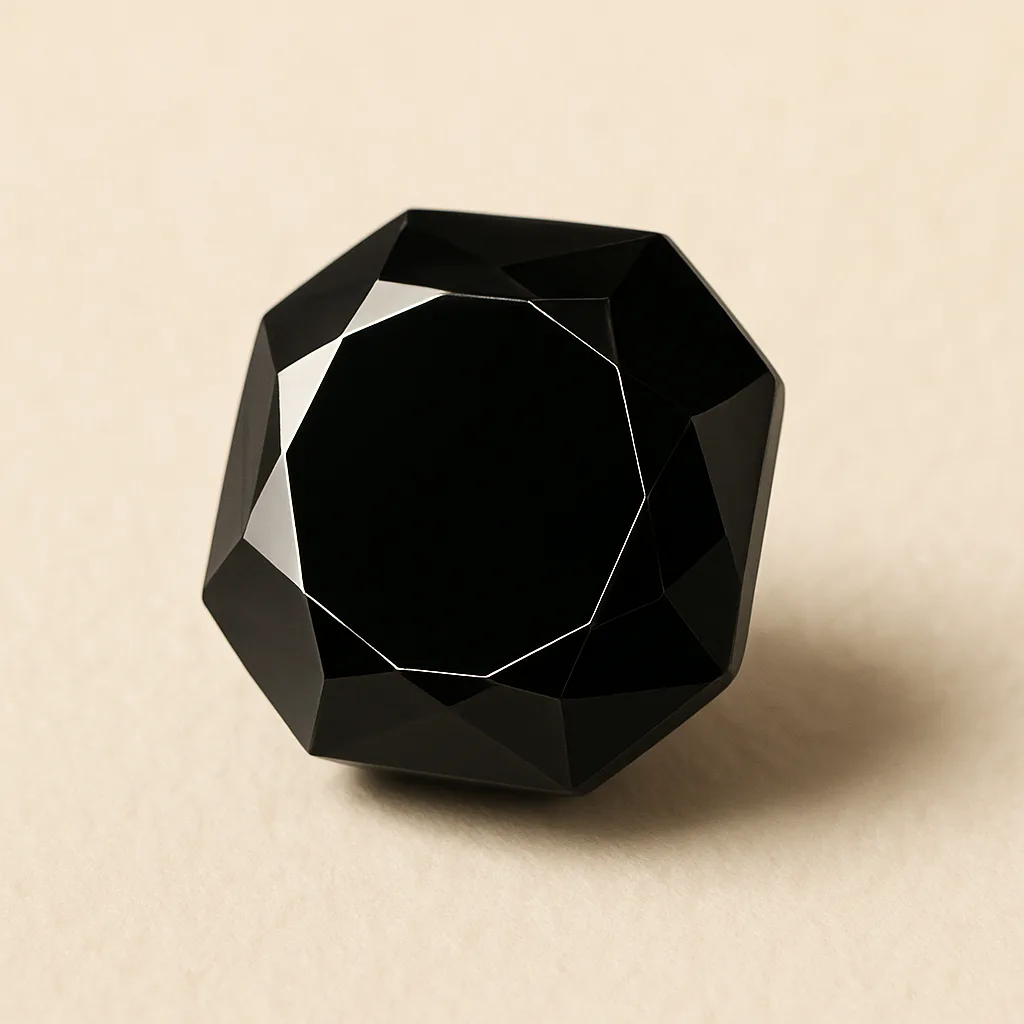
- Mohs 7–7.5 — suitable for everyday wear
- Avoid sudden temperature changes — pyroelectric stress can in extreme cases cause fracturing
- Stable to acids and normal jewelry cleaning
A few hundred yen for small commercial rough up to several tens of thousands of yen for well-terminated specimen-grade crystals from named localities such as Erongo or Stak Nala.
Note: Brazil, Pakistan, and the United States supply most jewelry-grade material. The vast bulk of black tourmaline reaching consumers passes through the metaphysical and crystal-healing market rather than fine jewelry — schorl is the dominant 'rough crystal' on the global wellness market.
Schorl, NaFe₃Al₆(BO₃)₃Si₆O₁₈(OH)₄, is the iron-dominant species of the tourmaline supergroup and by a wide margin the most common tourmaline in nature. The deep black color comes from divalent iron, and the prismatic crystals are usually deeply striated parallel to the c-axis — the defining diagnostic feature in hand specimens. Schorl is both pyroelectric (developing a charge when temperature changes) and piezoelectric (developing a charge under pressure), which is why warmed or rubbed crystals attract dust and small paper fragments — an observation made by Dutch traders in the early 18th century and famously studied by the young Pierre Curie in the 1880s.
Origins
Schorl is so widespread that it is mined commercially almost everywhere granite pegmatites occur. The main commercial sources for crystal specimens and jewelry-grade carving are Minas Gerais in Brazil, the Skardu and Stak Nala valleys of Pakistan, Erongo in Namibia, Maine and California in the United States, Madagascar, and the pegmatite belts of Afghanistan, Sri Lanka, and the Yunnan and Xinjiang regions of China. Erongo specimens from Namibia, with sharp termination faces and silver mica matrix, are especially prized by mineral collectors.
History
The name 'schorl' descends from the Saxon mining village of Schorl (today Zschorlau) in the Erzgebirge, where the black tourmaline was distinguished from cassiterite in the early 16th century. Tourmaline as a broader name entered European mineralogy through Dutch East India Company traders in 1703, who imported colored pebbles from Sri Lanka under the Sinhalese name turamali ('mixed gems'). Schorl's pyroelectric behavior — its ability to attract ash from a fire when warmed — was a famous demonstration of 18th-century natural philosophy. In the 19th century it served as a model for the systematic chemical study of the tourmaline group, and its piezoelectric properties helped Pierre and Jacques Curie establish the field of piezoelectricity in 1880.
Lore & symbolism
Tourmaline is the October birthstone, encompassing schorl alongside its colored relatives, and the 8th-anniversary gem. In contemporary metaphysical traditions, black tourmaline is the archetypal 'protection stone' — a barrier against negative energies and electromagnetic stress. It is one of the most heavily traded crystals in the modern wellness market, far outstripping its actual commercial demand in mainstream jewelry.
Tools to confirm this stone
Tools that help confirm Black Tourmaline (Schorl). Tap any item to jump to the matching section on the gem tools page.
- 最終確認日
- 2026年4月28日
- 参 考 文 献
- Gem Encyclopedia/ GIA (Gemological Institute of America)
- 宝石鑑別基準/ 中央宝石研究所 (CGL)
- Mineral & Gem Database/ Mindat.org / Gemdat.org
- 宝石学入門/ 全国宝石学協会
本ページの物性値(屈折率・比重・硬度・結晶系等)は、上記の権威ある一次資料を相互参照して編集しています。最新の鑑別研究の進展により値が更新される場合があります。