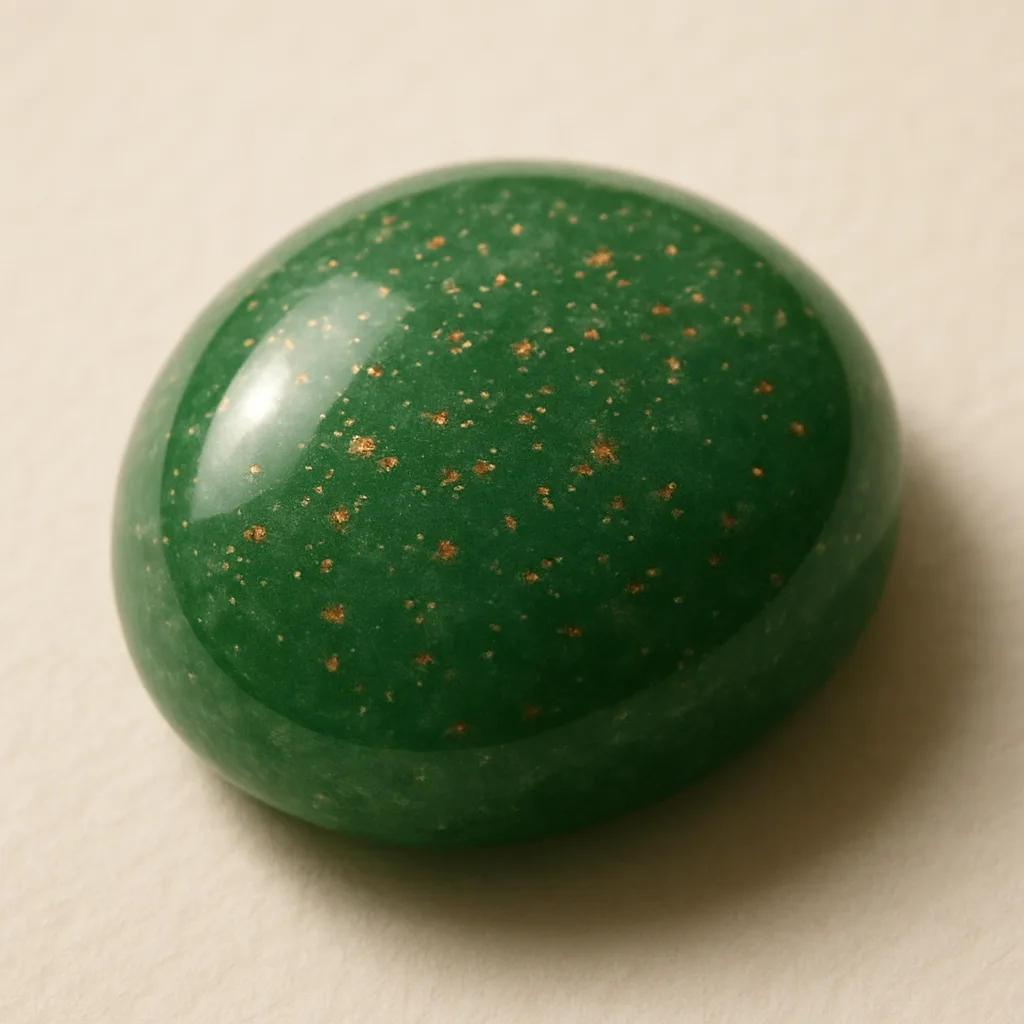
identified this stone yet
Aventurine
| Hardness | 7 |
| Specific gravity | 2.65 |
| Refractive index | 1.544-1.553 |
| Crystal system | 六方晶系(多結晶) |
Mint green through deep emerald green (fuchsite mica), peach and red (hematite), and rare blue tones (amphibole). Indian green aventurine is the commercial standard. Color is usually patchy or banded rather than uniform.
- Fuchsite mica platelets producing the green color and aventurescence
- Hematite platelets in peach/red varieties
- nclusions in blue varieties
- Quartz grain boundaries visible under magnification
- Aggregate of singly and doubly refractive grains; the polished behaves optically as a translucent mass
- Refractive index 1.54–1.55 (matching pure quartz)
- Specific gravity 2.65–2.85 (slightly elevated by the included platelets)
- Aventurescence — soft shimmering reflections from disseminated mica or hematite
- 01Glittering green platelets visible under 10× magnification — diagnostic for fuchsite-bearing aventurine
- 02Dyed quartzite imitations show dye concentration in fractures and respond to acetone swab tests
- 03Specific gravity 2.65–2.85 — lighter than jadeite (3.30–3.38) and nephrite (2.90–3.02)
- 04Refractive index 1.54–1.55 — separates aventurine from jadeite (1.66) and nephrite (1.60–1.63)
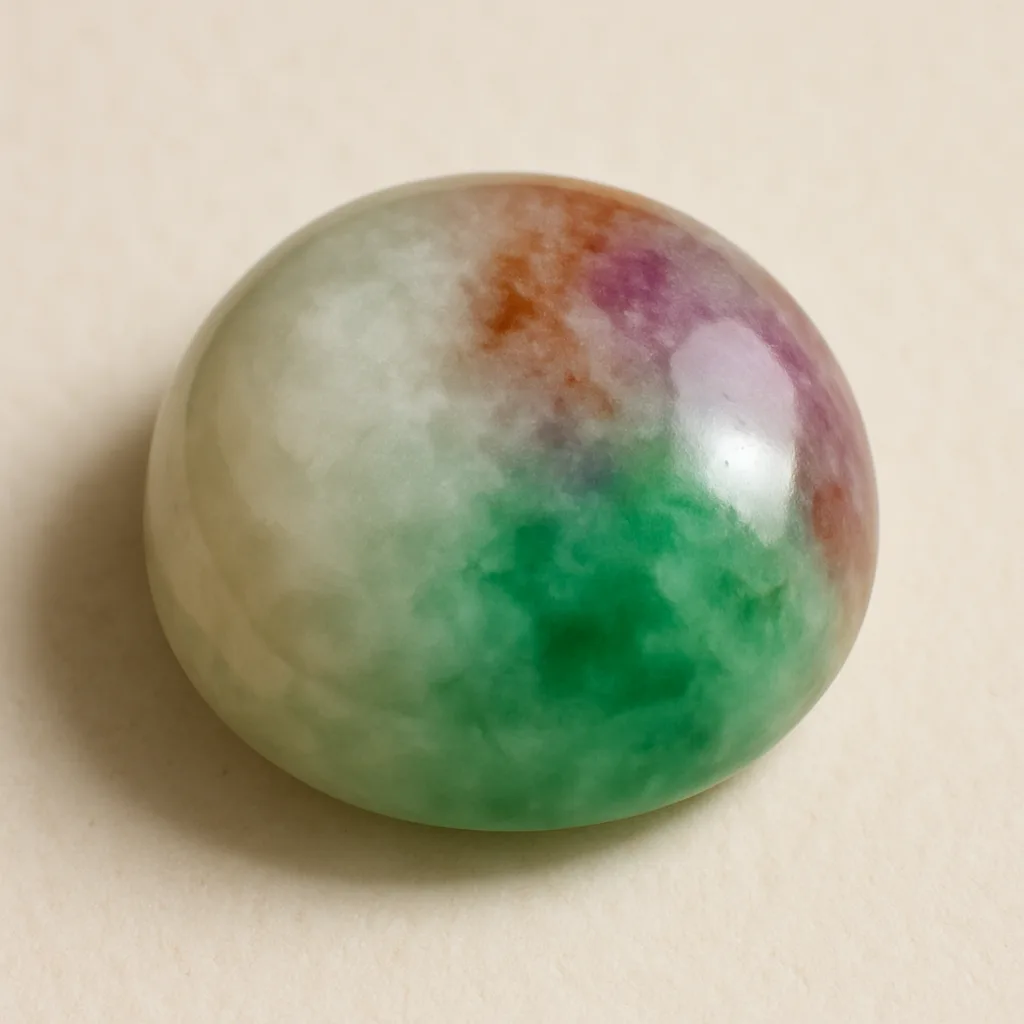
- Mohs 7 — durable for daily wear; safe in most settings
- Generally safe to ultrasonic and steam cleaning unless dyed
- Avoid prolonged exposure to acids and strong solvents that might affect dye in treated material
Hundreds of yen per kilogram for commercial Indian aventurine beads and cabochons; rarely sold by the carat. As a decorative carving and tumbled-stone material it competes on volume rather than per-piece pricing.
Note: Dyed quartzite — colorless quartz aggregate dyed green to imitate fine aventurine or jadeite — is widely sold and must be disclosed; the dye is concentrated in fractures and visible under magnification or with a cotton swab dipped in acetone. The chief market issue is the 'Indian Jade' substitution problem, particularly in tourist markets where dyed quartzite, aventurine, and jadeite are all sold as 'jade.'
Aventurine is microcrystalline quartz (cryptocrystalline SiO₂) with disseminated platelets of fuchsite (chromium-bearing muscovite mica) producing the green color, or hematite producing peach and red tones, or blue amphibole (typically actinolite or arfvedsonite) producing the rarer blue varieties. The shimmering optical effect of light reflecting off the platelets is called aventurescence — the same phenomenon that defines sunstone, but at smaller scale and within a quartz rather than feldspar host. Mohs 7, SG 2.65–2.85, RI 1.54–1.55.
Origins
abochons, and carvings.
History
The name 'aventurine' originates not with the natural mineral but with 16th-century Venetian glass — Murano glassmakers accidentally discovered that adding copper filings to molten glass produced a spangled, glittering material they called avventurina from a ventura ('by chance' or 'by adventure'). When the natural quartz aggregate was identified centuries later, its visual similarity to the famous Venetian glass led to the transfer of the name. From the early 19th century the Indian material was traded under the name 'Indian Jade' alongside genuine jadeite and nephrite — a substitution that persists today in less reputable retail.
Lore & symbolism
Aventurine's modern symbolic associations are largely 20th-century, with the stone marketed in the New Age literature as 'the stone of opportunity,' 'the stone of prosperity,' and 'the gambler's stone' — all marketing extensions of the literal Italian meaning of its name ('by chance'). It does not appear in classical or medieval lapidaries, since the natural mineral was identified later than the Venetian glass it was named after.
Tools to confirm this stone
Tools that help confirm Aventurine. Tap any item to jump to the matching section on the gem tools page.
- 最終確認日
- 2026年4月28日
- 参 考 文 献
- Gem Encyclopedia/ GIA (Gemological Institute of America)
- 宝石鑑別基準/ 中央宝石研究所 (CGL)
- Mineral & Gem Database/ Mindat.org / Gemdat.org
- 宝石学入門/ 全国宝石学協会
本ページの物性値(屈折率・比重・硬度・結晶系等)は、上記の権威ある一次資料を相互参照して編集しています。最新の鑑別研究の進展により値が更新される場合があります。