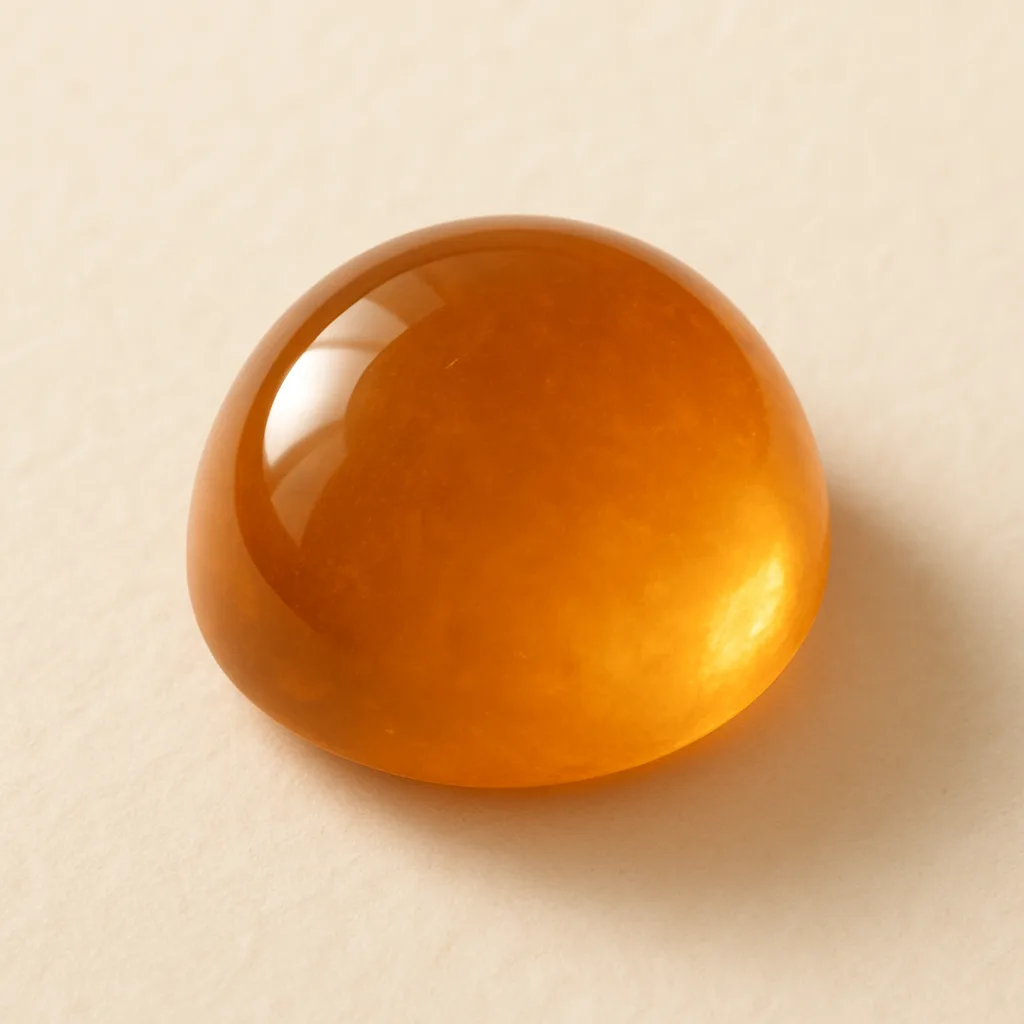
identified this stone yet
Amber
| Hardness | 2-2.5 |
| Specific gravity | 1.05-1.10 |
| Refractive index | 1.540 |
| Crystal system | 非晶質(有機物化石樹脂) |
Pale lemon, honey-gold, cognac, red-brown, rare green, and the famously fluorescent Dominican blue.
- nclusions
- Trapped air bubbles and flow lines from the original resin
- Disc-shaped internal stress fractures known as 'sun spangles' (typically a sign of heat-clarified Baltic amber)
- Pyrite or fungal staining in specimens that fossilized in anaerobic clay
- Amorphous (singly refractive)
- Specific gravity 1.05–1.09 — floats in saturated salt water
- Very low refractive index ~1.54
- Strong piezoelectric and triboelectric behavior — produces static charge when rubbed
- 01Floats in saturated salt water (about 1 tablespoon salt per 250 ml) — copal and plastic do too, but most imitations do not
- 02Warm to the touch and generates static electricity when rubbed against wool
- 03Bluish-white LW
- 04A hot needle pressed against an inconspicuous spot produces a 'pine resin' aroma — a destructive test, use sparingly
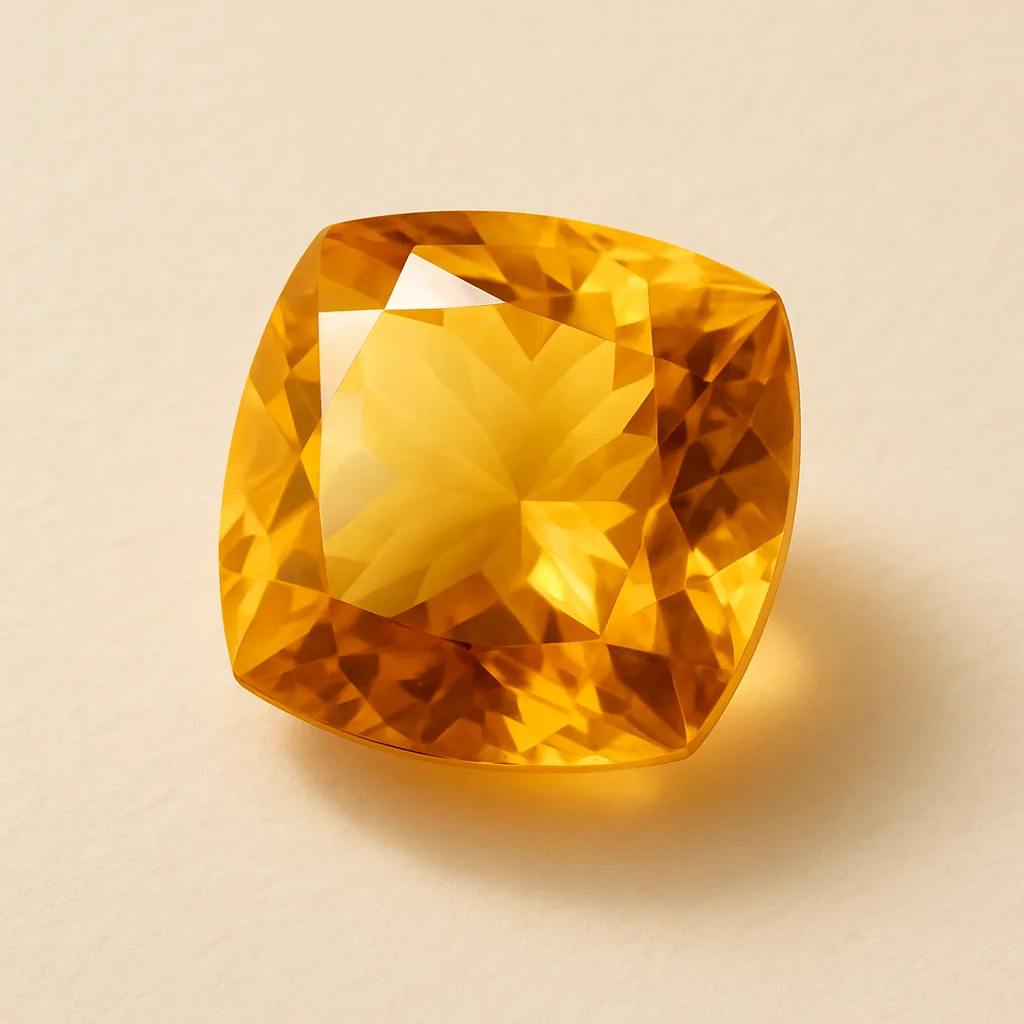
- Mohs 2–2.5 — very soft; protect from scratches and avoid storage with harder gems
- Sensitive to organic solvents, alcohol, perfume, and temperatures above ~150 °C
- Prolonged sunlight causes darkening and surface crazing
From a few US dollars per gram for clean Baltic cabochons to several thousand dollars per gram for Dominican blue amber and burmite specimens containing significant inclusions.
Note: Reconstituted amber (heated and pressure-fused chips, sometimes called 'ambroid') is widespread and must be disclosed. Plastic and copal (immature resin, usually less than a few million years old) are the main imitations; copal melts at a far lower temperature and dissolves in acetone, which true amber resists. Burmite is heavily regulated due to its origin in Myanmar's conflict zones.
Amber is fossilized tree resin, primarily from extinct conifers of the genera Sciadopitys, Hymenaea, and the Baltic 'amber forest' producers. The polymerization of terpenoid molecules over tens of millions of years yields succinic-acid-rich Baltic succinite (the gemological benchmark), as well as regional varieties: Dominican blue amber, Cretaceous-age Burmese burmite (~99 million years old), Mexican Chiapas amber, and Japan's Kuji amber from Iwate. The Greek word for amber, ēlektron, gave us the word 'electricity' — amber's ability to attract dust when rubbed was the first electrostatic phenomenon ever documented, observed by Thales of Miletus around 600 BCE.
Origins
The Baltic coast — Kaliningrad in Russia, Lithuania, Poland's Gdańsk Bay — produces about 90 percent of the world's commercial amber, all of it roughly 40 million years old. Dominican Republic amber from the Cordillera Septentrional is around 25 million years old and includes the prized blue-fluorescing variety. Burmese burmite from Kachin State's Hukawng Valley is around 99 million years old, mid-Cretaceous, and famously contains feathered dinosaur tails, baby snakes, and even a complete bird wing — discoveries that have reshaped Mesozoic paleontology since 2016. Mexican Chiapas amber is ~25 million years old; Japan's Kuji amber from Iwate Prefecture is ~85 million years old.
History
Worked into beads and amulets since the Neolithic, amber is one of humanity's oldest gem materials. The 'Amber Road' carried Baltic amber south to the Mediterranean throughout antiquity, and Pliny the Elder devoted long passages of his Natural History to it. The Amber Room, paneled entirely in carved Baltic amber, was presented to Tsar Peter the Great by Friedrich Wilhelm I of Prussia in 1716; it was looted from the Catherine Palace by German forces in 1941 and has been missing ever since — a full-scale reconstruction was completed at Tsarskoye Selo in 2003. Burmese burmite became a scientific sensation in 2016 when researcher Lida Xing identified a feathered dinosaur tail inside a polished bead bought at a Myitkyina market.
Lore & symbolism
Amber is the 34th-anniversary stone in some Western traditions. Long called 'the sunshine stone' or 'tears of the gods,' it has been a folk remedy for teething infants and joint pain across Europe for centuries. Baltic teething necklaces continue to be a controversial folk practice — gemologically, amber's succinic acid release into the skin is minimal at body temperature.
Tools to confirm this stone
Tools that help confirm Amber. Tap any item to jump to the matching section on the gem tools page.
- Last reviewed
- April 28, 2026
- Bibliography
- Gem Encyclopedia / GIA (Gemological Institute of America)
- Gem Identification Standards / Central Gem Laboratory (CGL), Tokyo
- Mineral & Gem Database / Mindat.org / Gemdat.org
- Introduction to Gemology / Gemmological Association of All Japan (GAAJ)
The gemological data on this page (refractive index, specific gravity, hardness, crystal system, etc.) is cross-checked against the authoritative primary sources listed above. Values may be revised as gemological research advances.