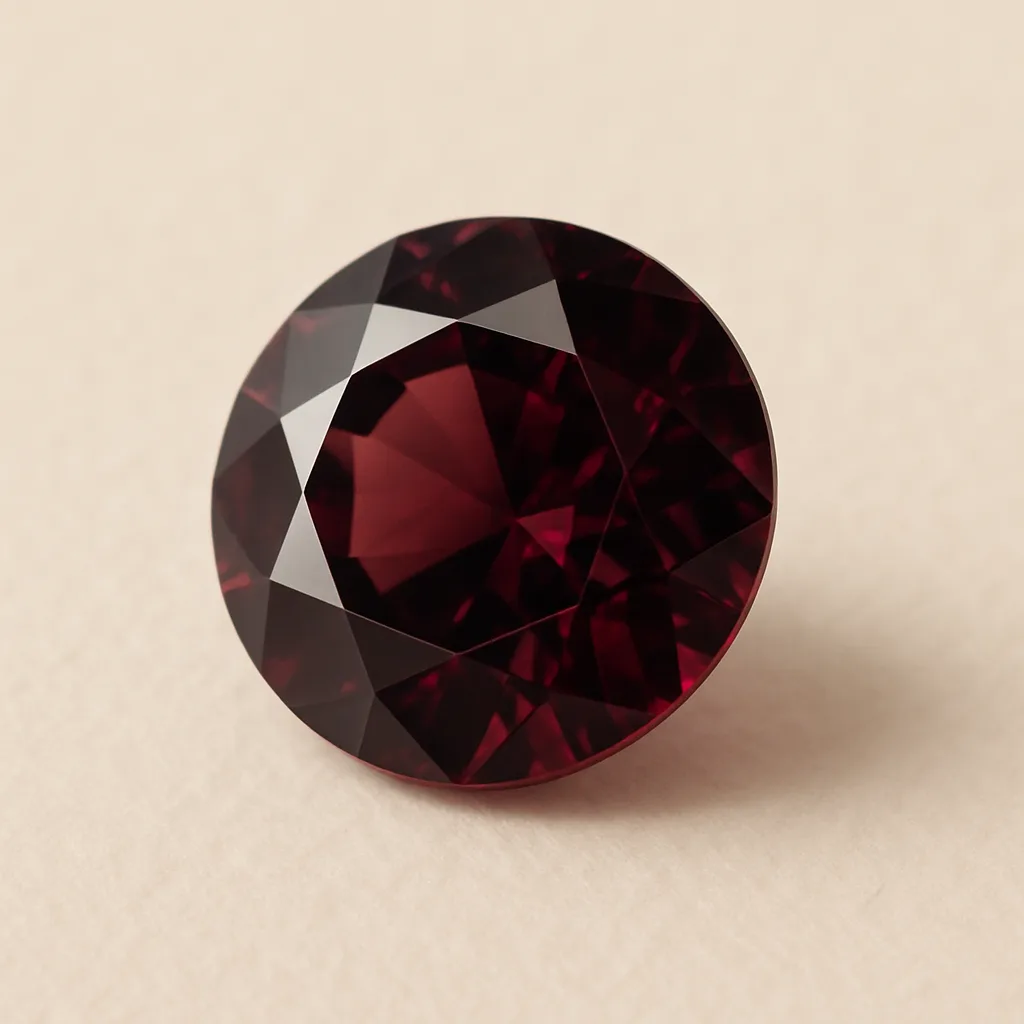
identified this stone yet
Almandine Garnet
| Hardness | 7-7.5 |
| Specific gravity | 4.05 |
| Refractive index | 1.770-1.820 |
| Crystal system | 等軸晶系 |
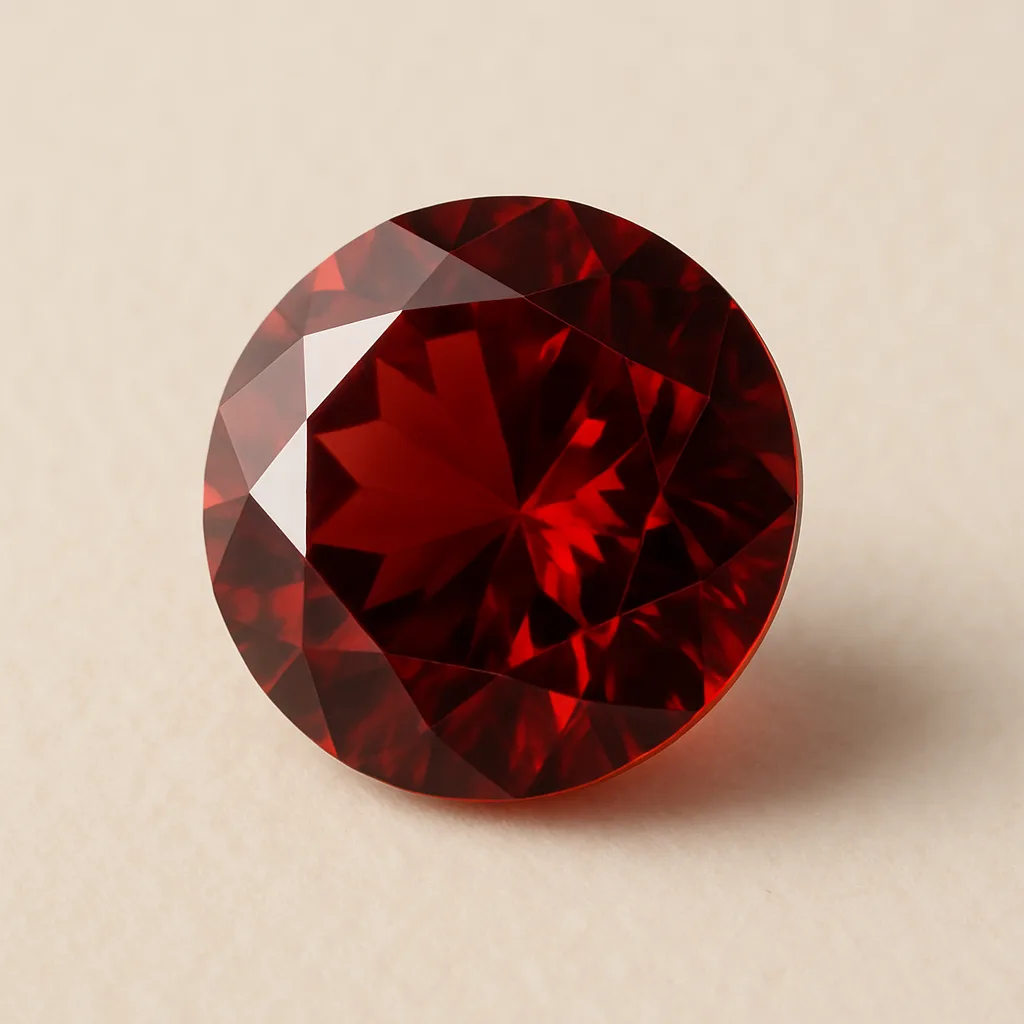
Deep reddish brown through purplish red. Larger stones often appear nearly black until backlit.
- nclusions — responsible for star almandine asterism
- nclusions
- nclusions of ilmenite or magnetite
- Healed fractures
- Singly refractive (cubic system) — no
- Specific gravity ~4.0 — exceptionally high for a non-metallic gem
- No
- Refractive index 1.770–1.830
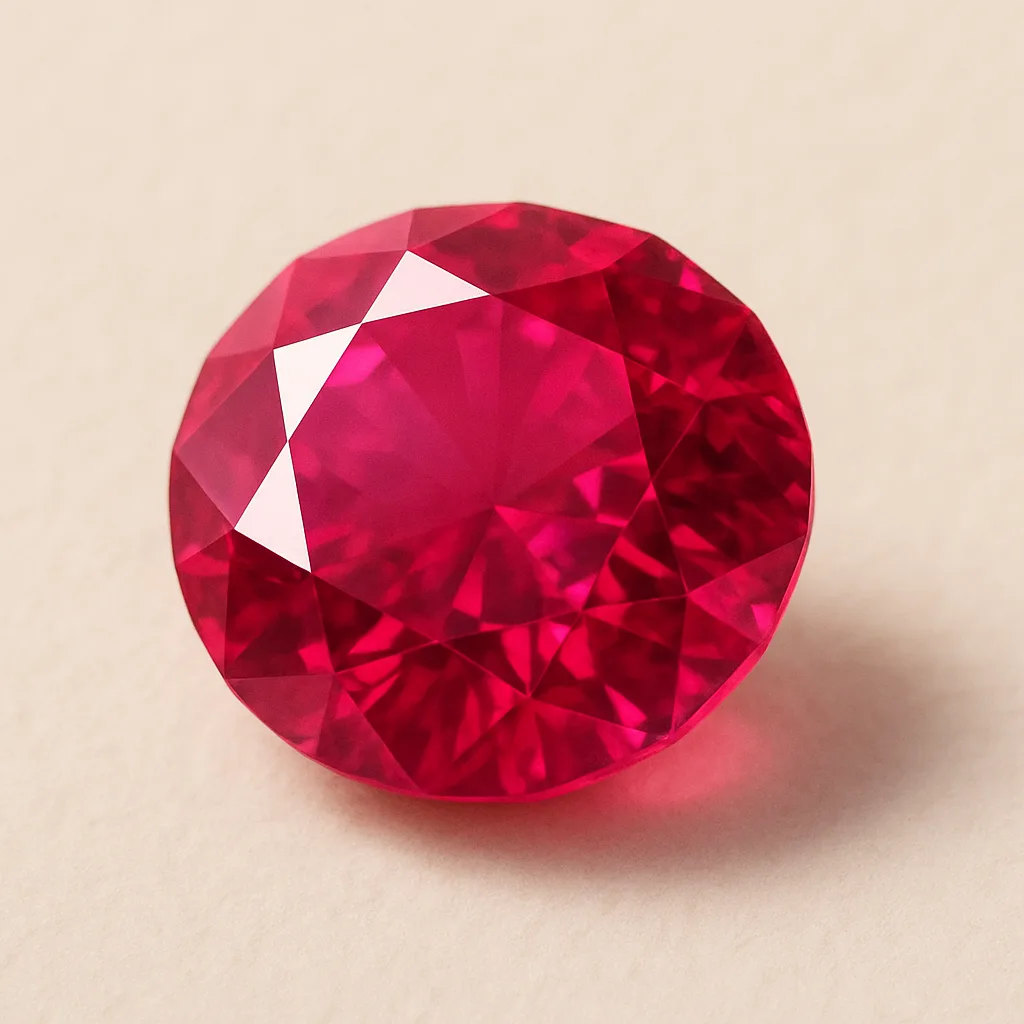
- 01Inert under UV — distinguishes almandine from ruby (strong red LW )
- 02Specific gravity 4.0 — unusually heavy in hand for the apparent size
- 03Color tends purplish or brownish, distinguishing from the pure red of pyrope
- 04Singly refractive — no at 10×
- Mohs 7–7.5 — suitable for daily wear
- nclusion-heavy material
- Heat-sensitive in the presence of significant fracturing
A few hundred yen per carat for commercial faceting rough up to several tens of thousands of yen per carat for clean Idaho star almandine cabochons with a sharp six-rayed star.
Note: Idaho star almandine is the connoisseur's specialty; Indian and Madagascar material supplies the bulk commercial trade. Bohemian garnet jewelry — rose-cut clusters of small almandine-pyrope stones — remains an important antique-market category.
Almandine is iron-aluminum garnet, Fe₃Al₂(SiO₄)₃, the most abundant garnet in nature. The color is so deep that larger stones can appear nearly black in ordinary light, revealing their true purplish-red only against a strong backlight. When fine parallel rutile needles are present, light scattering can produce a four-rayed or six-rayed asterism — the 'star garnets' for which Idaho and Madagascar are famous. Almandine's specific gravity of around 4.0 is exceptionally high for a non-metallic gem, and the unmistakable heft of a large almandine in hand is one of the easiest field-identification clues in mineralogy.
Origins
Idaho's Emerald Creek district is the world's premier source of star almandine — the United States official state gem of Idaho since 1967. Other commercial sources include the Orissa and Rajasthan regions of India, Sri Lanka, the Minas Gerais state of Brazil, Madagascar's Antsiranana Province, Zambia's Eastern Province, and the Garnet Ridge district of Arizona. The historic Bohemian deposit at Třebenice (Trebnitz) supplied the rose-cut almandines of Czech 'Bohemian garnet' jewelry that dominated 19th-century European costume jewelry, though those stones are technically pyrope-almandine intermediate.
History
The Latin name carbunculus — 'little burning coal' — referred specifically to almandine garnet in Roman times, when the stone was imported overland from India via the Red Sea ports. Pliny the Elder devoted a chapter to it. Medieval Christian symbolism associated the carbunculus with the blood of Christ, and crusaders carried polished almandines as protective amulets against wounds and poison. The Bohemian garnet boom of the 19th century — driven by the Třebenice mines and the Turnov cutting industry — flooded European markets with rose-cut almandine-pyrope intermediate stones, especially in Victorian mourning and sentimental jewelry.
Lore & symbolism
January birthstone, alongside the other garnet varieties, and the 2nd-anniversary stone. The 'soldier's stone' of medieval European tradition — believed to ward off wounds in battle. In Hindu lapidary it is associated with Mars and the root chakra.
Tools to confirm this stone
Tools that help confirm Almandine Garnet. Tap any item to jump to the matching section on the gem tools page.
- Last reviewed
- April 28, 2026
- Bibliography
- Gem Encyclopedia / GIA (Gemological Institute of America)
- Gem Identification Standards / Central Gem Laboratory (CGL), Tokyo
- Mineral & Gem Database / Mindat.org / Gemdat.org
- Introduction to Gemology / Gemmological Association of All Japan (GAAJ)
The gemological data on this page (refractive index, specific gravity, hardness, crystal system, etc.) is cross-checked against the authoritative primary sources listed above. Values may be revised as gemological research advances.