identified this stone yet
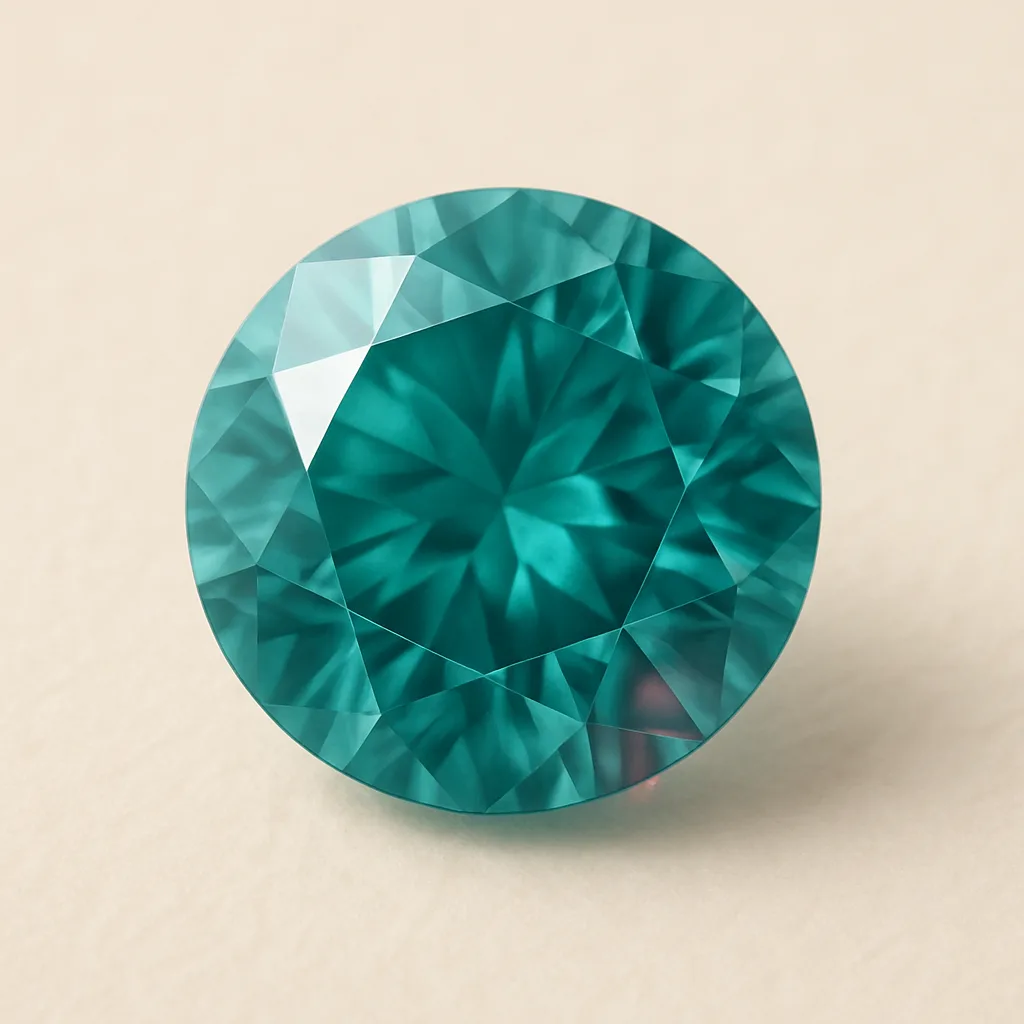
Synthetic Alexandrite (Pulled / Verneuil)
| Hardness | 8.5 |
| Specific gravity | 3.68-3.78 |
| Refractive index | 1.741-1.760 |
| Crystal system | 斜方晶系(クリソベリル/ただし市場品の多くはコランダム) |
Bluish-green to teal in daylight or fluorescent lighting, shifting to purplish-red or burgundy under incandescent lighting. True synthetic chrysoberyl alexandrite shows a color change closely matching natural Russian Ural material; V-doped corundum substitutes show a weaker, more obvious shift from grayish-blue to amethyst-pink with characteristic 'wrong' undertones.
- V-doped corundum substitutes: from Verneuil flame-fusion
- V-doped corundum: round gas bubbles, often in trails
- nclusions
- Czochralski material: characteristic columnar growth banding visible in some orientations
- Genuine synthetic chrysoberyl: doubly refractive (biaxial positive), SG 3.71–3.75, RI 1.745–1.755 — matches natural alexandrite
- V-doped corundum substitute: doubly refractive (uniaxial negative), SG 4.0, RI 1.762–1.770 — matches sapphire, not alexandrite
- Both show strong color change under daylight vs. incandescent lighting
- 01SG measurement is decisive: chrysoberyl ~3.73, corundum ~4.0 — a hydrostatic balance or heavy liquid separates them instantly
- 02RI measurement: chrysoberyl 1.745–1.755, corundum 1.762–1.770
- 03 or round gas bubbles indicate corundum substitute (Verneuil-grown)
- 04GIA lab reports explicitly identify the species (chrysoberyl vs. corundum) — essential for purchases above commercial prices
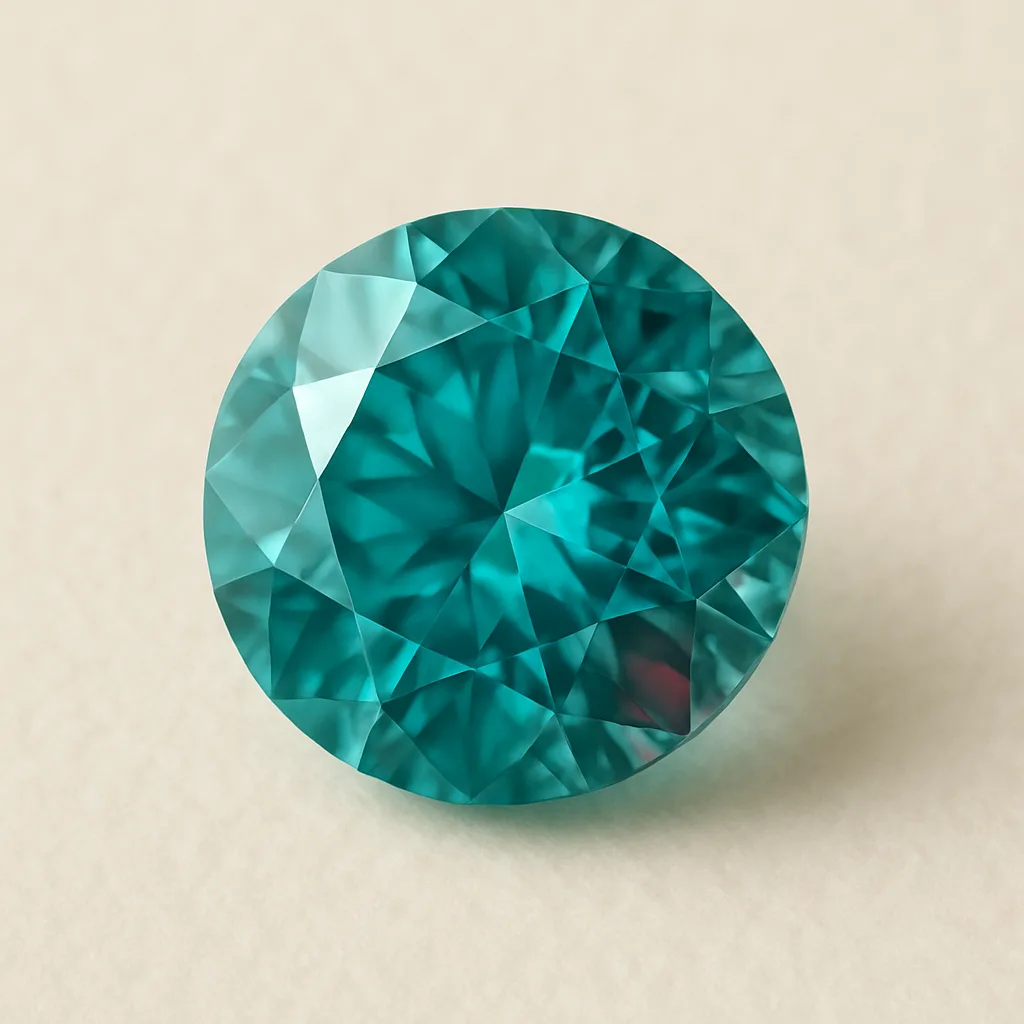
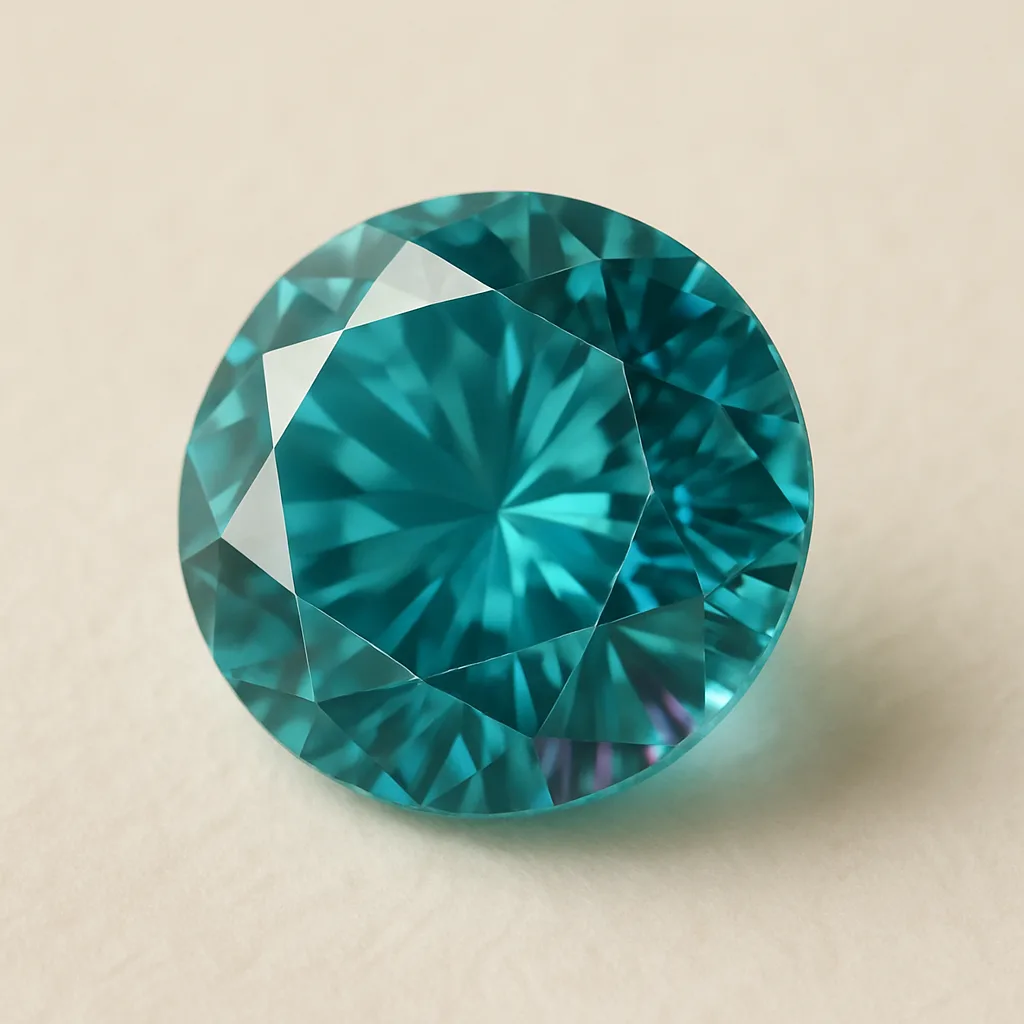
- Mohs 8.5 (chrysoberyl) or 9 (corundum substitute) — both extremely durable for everyday wear
- Ultrasonic and steam cleaning are generally safe
- Stable to light and normal cleaning chemicals
Roughly $10–$80/ct for V-doped synthetic corundum 'alexandrite' substitutes (the bulk of trade-named material), $150–$500/ct for entry-level genuine Czochralski synthetic chrysoberyl alexandrite, and $600–$2,500/ct for high-quality flux-grown or pulled synthetic chrysoberyl with strong color change matching natural Russian Ural saturation.
Note: Disclosure quality is the central market issue. A 'synthetic alexandrite' offered without a lab report is more likely to be V-doped corundum than genuine synthetic chrysoberyl. The price difference is significant: genuine Kyocera or Russian Czochralski chrysoberyl alexandrite trades at $200–$1,500/ct, while V-doped corundum 'alexandrite' substitutes trade at $10–$80/ct. GIA reports explicitly identify the species (chrysoberyl vs. corundum) and growth method, making them indispensable for any purchase above commercial prices.
The trade situation reflects a 100-year history of naming inconsistency. Genuine synthetic chrysoberyl alexandrite, BeAl₂O₄ : Cr, requires careful flux or pulled-Czochralski growth — flame-fusion (Verneuil) of chrysoberyl is essentially commercially impractical. From the early 1900s through 1973, the 'synthetic alexandrites' on the market were almost exclusively V-doped synthetic corundum (Al₂O₃ : V) — a color-change material with Mohs 9, SG 4.0, and RI 1.762, which is dramatically different from real chrysoberyl (Mohs 8.5, SG 3.71–3.75, RI 1.745–1.755). The 1973 commercial release of Czochralski-pulled synthetic chrysoberyl alexandrite from Russia (Novosibirsk Institute of Geology) and 1975 from Kyocera (Inamori) finally provided genuine BeAl₂O₄ : Cr material, but by then the trade name 'synthetic alexandrite' had been polluted with the corundum substitutes.
Origins
Genuine Czochralski-pulled synthetic chrysoberyl alexandrite is produced by Kyocera (Inamori, Japan, commercialized 1975 under the Crescent Vert brand), J.O. Crystal in Russia, and a handful of specialized industrial labs. V-doped synthetic corundum 'alexandrite' substitutes are produced by every major Verneuil corundum producer (Djeva Switzerland, Russian state plants, Thai operations, Chinese facilities) and are sold under varying trade names including 'synthetic alexandrite,' 'simulant alexandrite,' and even 'color-change sapphire.' Disclosure quality varies dramatically by source.
History
The 'synthetic alexandrite' confusion began almost immediately after Verneuil's 1902 corundum flame-fusion process was extended to vanadium-doped material. V-doped corundum showed a credible color change that fooled the trade for decades, and was sold both honestly as 'synthetic alexandrite simulant' and dishonestly as 'synthetic alexandrite' (without the simulant qualifier). The breakthrough toward genuine synthetic chrysoberyl came from Soviet research: the Novosibirsk Institute of Geology and Mineralogy commercialized flux-grown chrysoberyl alexandrite in 1973, and Kyocera in Japan brought Czochralski-pulled material to market in 1975 under the Crescent Vert brand. GIA established identification protocols in the early 1980s using spectroscopy and SG measurement to separate genuine synthetic chrysoberyl from V-doped corundum, and current GIA lab reports explicitly identify the structure type.
Lore & symbolism
June's birthstone (synthetic versions accepted as substitutes). Synthetic alexandrite — both genuine chrysoberyl and corundum substitutes — has no pre-modern folklore. Modern crystal writing extrapolates from natural alexandrite's lore (renewal, balance, transformation through dual nature) but the 'synthetic vs. natural energy' debate is particularly heated for alexandrite, where the natural stone's rarity and historic discovery story (1834 Russian Tsar Alexander II's birthday) carry strong symbolic weight.
Tools to confirm this stone
Tools that help confirm Synthetic Alexandrite (Pulled / Verneuil). Tap any item to jump to the matching section on the gem tools page.
- 最終確認日
- 2026年4月28日
- 参 考 文 献
- Gem Encyclopedia/ GIA (Gemological Institute of America)
- 宝石鑑別基準/ 中央宝石研究所 (CGL)
- Mineral & Gem Database/ Mindat.org / Gemdat.org
- 宝石学入門/ 全国宝石学協会
本ページの物性値(屈折率・比重・硬度・結晶系等)は、上記の権威ある一次資料を相互参照して編集しています。最新の鑑別研究の進展により値が更新される場合があります。