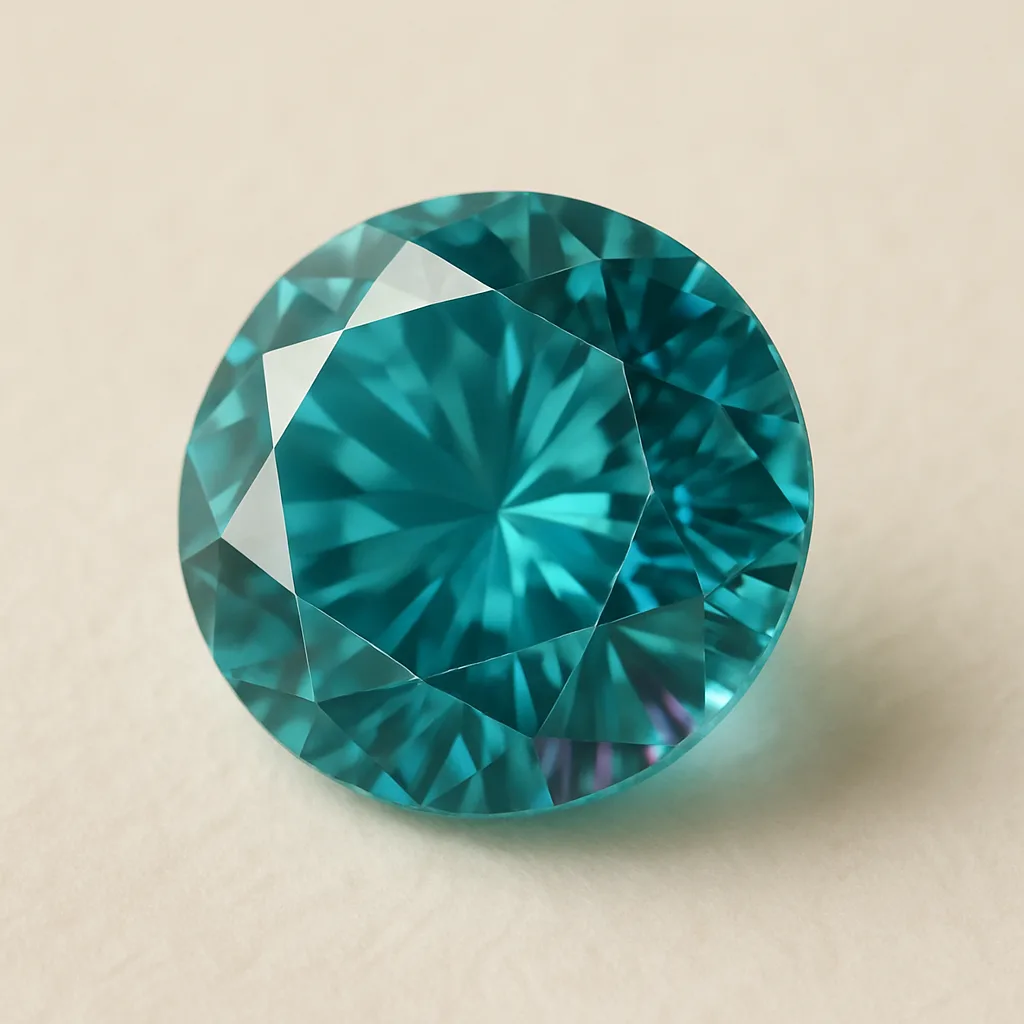
identified this stone yet
Synthetic Alexandrite (Flux / Hydrothermal)
| Hardness | 8.5 |
| Specific gravity | 3.68-3.78 |
| Refractive index | 1.741-1.760 |
| Crystal system | 斜方晶系(クリソベリル) |
Daylight or fluorescent green to bluish-green; incandescent or candlelight purplish-red to raspberry-red — the classic Russian Ural-style color change driven by chromium d-d transitions. Flux-grown crystals show particularly strong, saturated color change comparable to fine Tokovaya River natural material; hydrothermal stones tend to slightly weaker but commercially robust shift. Color saturation is consistently more uniform than natural alexandrite of equivalent grade.
- nclusions ('flux fingerprints') with sharp edges, sometimes hexagonal or triangular outlines
- Flux-grown: residual platinum-crucible flakes — metallic, opaque, irregular
- nclusions following crystallographic planes
- Hydrothermal: chevron (V-shaped) growth banding seen at 30× immersion
- nclusions and seed-crystal residue
- nclusions
- Doubly refractive (biaxial positive) — identical to natural alexandrite
- Strong trichroism (green, purplish-red, yellow-orange) — identical to natural
- Refractive index 1.745–1.755, ~0.009
- Vitreous luster
- Chromium-driven color change from green or bluish-green (daylight) to purplish-red (incandescent)
- 01Flux fingerprints and platinum-crucible flakes are diagnostic of flux-grown synthetic at 30× immersion — natural alexandrite never shows these features
- 02Chevron growth patterns indicate hydrothermal synthetic at 30× immersion
- 03nclusions is a synthetic warning sign
- 04FTIR and UV-Vis spectroscopy at a major lab (GIA, SSEF, Gübelin, AGL) provide definitive natural/synthetic discrimination
- 05Distinguish from vanadium-doped synthetic corundum sold under the 'alexandrite' trade name: the corundum substitute has RI 1.762–1.770, SG 4.00, Mohs 9, and a blue-purple color shift rather than green-red — the wrong species entirely
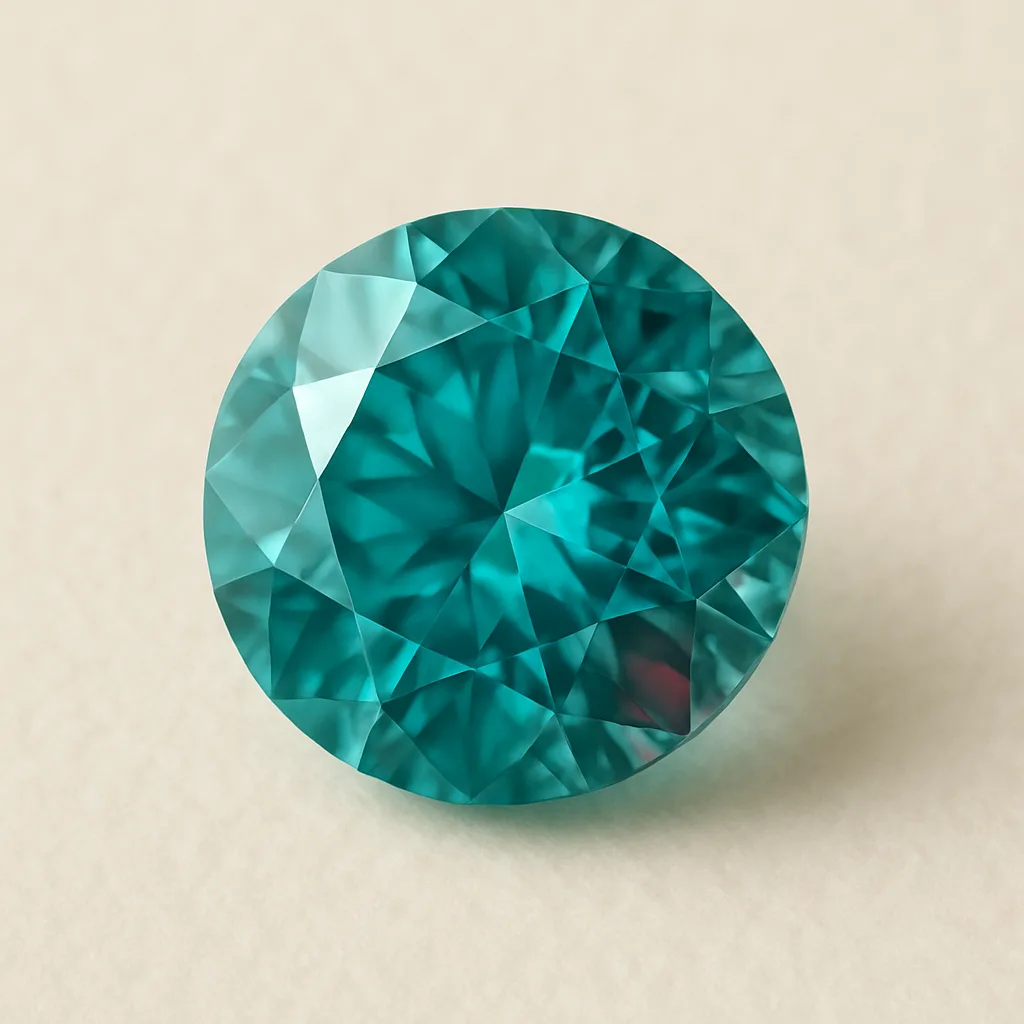
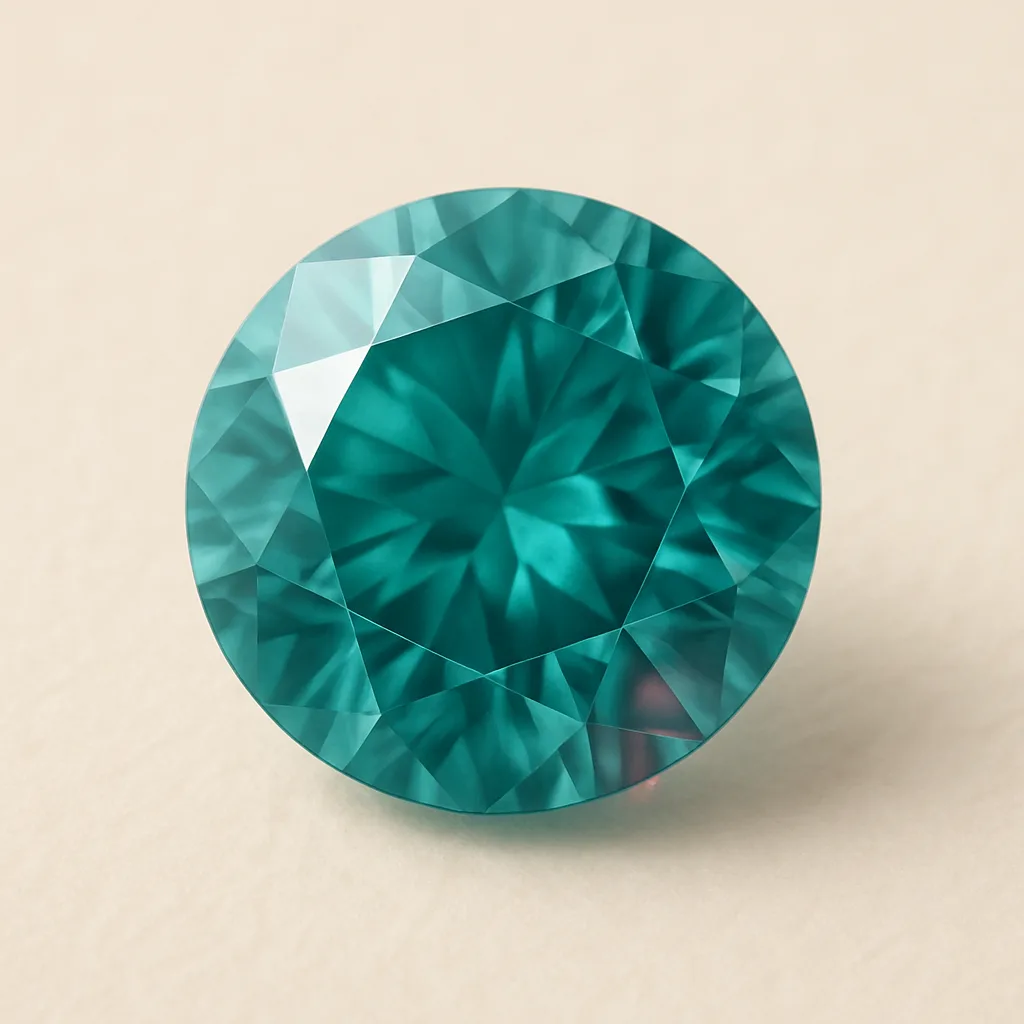
- Mohs 8.5, no perfect — durable for everyday wear
- nclusions
- Stable to light and standard cleaning chemicals
- No heat or radiation treatment is applied — the synthesis produces the desired color directly
Flux-grown synthetic alexandrite trades at roughly $300–$2,000/ct depending on size, color-change quality, and producer reputation — Chatham and Kyocera material commands a premium. Hydrothermal Tairus material runs $150–$800/ct. The much cheaper vanadium-doped synthetic corundum sold under the misleading 'alexandrite' trade name runs $5–$50/ct and is not the same species at all; fine natural Russian Ural alexandrite above 3 ct in clean stones with strong color change trades at $10,000–$60,000+/ct.
Note: Disclosure as 'synthetic,' 'lab-grown,' or 'created' alexandrite is mandatory under CIBJO Blue Book, FTC Jewelry Guides (1996 revision), and JIS Z 9529. 'Created' and 'lab-grown' have largely displaced 'synthetic' in retail because of the negative consumer connotations of the latter, though 'synthetic' remains the technically precise term used by all major gem labs. Flux- and hydrothermal-grown synthetic alexandrite must be carefully distinguished from the much cheaper 'synthetic alexandrite' sold by the gross from Asian producers — most of which is actually vanadium-doped color-change corundum (Al₂O₃ : V), not chrysoberyl at all. Lab reports from a major laboratory are essential for any stone trading above a few thousand dollars per carat, and the inclusion morphology check at 30× immersion gives an experienced gemologist initial guidance.
Synthetic alexandrite by flux or hydrothermal growth is BeAl₂O₄ : Cr — orthorhombic chrysoberyl with chromium substitutional in octahedral aluminum sites, producing the chromium-driven daylight-to-incandescent color shift that is the diagnostic optical behavior of the species. Mohs 8.5, SG 3.71–3.75, RI 1.745–1.755, nclusions ('flux fingerprints') and occasionally rounded platinum-crucible flakes at 30× immersion; hydrothermal material shows chevron (V-shaped) growth banding and seed-crystal residue. The 1973 Soviet flux breakthrough at the Novosibirsk Institute of Geology and Geophysics (NIGG) and the 1975 Kyocera Inamori flux process in Kagoshima established the modern synthetic alexandrite trade — and clearly differentiated it from the misnamed vanadium-doped corundum that had occupied the 'synthetic alexandrite' shelf since 1909.
Origins
The 1973 Soviet flux alexandrite breakthrough at the Novosibirsk Institute of Geology and Geophysics (NIGG) — under Vladimir Tsinober's group at Akademgorodok — scaled to commercial production in the late 1970s under the somewhat imprecise 'Czochralski Alexandrite' trade name (the growth was actually flux, not Czochralski-pulled). Kyocera Corporation in Kagoshima, Japan, launched its 'Inamori Created Alexandrite' (later marketed under the Crescent Vert / Cresanvale brand) in 1975 using a proprietary flux process developed under founder Kazuo Inamori's gemstone division. Chatham Created Gems in San Francisco produced its first commercial flux alexandrite in 1972 under Carroll Chatham, building on the flux-growth tradition that established the company's ruby (1938) and emerald (1947) lines. Tairus in Novosibirsk has produced hydrothermal alexandrite since the mid-1990s — significantly more natural-looking morphology than flux material. Cresco Gemstones in the United States and various Thai and Chinese producers have entered the market since the 2000s.
History
The synthesis history of alexandrite mirrors the history of the species itself — a long delay between mineralogical recognition and commercial replication. Natural alexandrite was identified at the Tokovaya River emerald mines in the Russian Urals in 1830 by Nils Gustaf Nordenskiöld and named for the future Tsar Alexander II on his sixteenth birthday in 1834 (the green-red colors matched Imperial Russian military livery). Early Verneuil flame-fusion attempts at alexandrite in the early 20th century produced material with weak or no color change — chromium concentration suitable for true alexandrite effect proved difficult to achieve in flame-fusion melts, and the resulting 'synthetic alexandrites' marketed from 1909 onward were typically vanadium-doped corundum with blue-purple shift, not the true green-red of chrysoberyl. The breakthrough came in 1973 at Novosibirsk, where flux-growth experiments at temperatures and time scales appropriate to chrysoberyl finally produced gem-quality material with the full Ural-style color change. Kazuo Inamori at Kyocera entered the field in 1975, branding his proprietary flux alexandrite as a high-technology Japanese product positioned alongside the Kyocera 'Cresanvale' emerald and ruby lines. Carroll Chatham's San Francisco facility added commercial flux alexandrite production in 1972, completing the early triad of legitimate synthetic alexandrite producers. By the 1990s, hydrothermal methods at Tairus added a third commercial growth route with morphology much closer to natural material — a development that GIA, SSEF, Gübelin, and Gem-A still rely on cutting-edge FTIR and UV-Vis spectroscopy to discriminate from fine natural origin.
Lore & symbolism
June's birthstone (synthetic versions accepted as substitutes in modern lay practice). The 45th and 55th wedding anniversary gem in some lists. Modern crystal writing positions synthetic alexandrite as a 'stone of transformation' — appropriate to the color shift, though without traditional folkloric backing for the lab-grown species specifically. Some Vedic jyotish practitioners accept synthetic alexandrite as a substitute for Mercury (Budha) when natural material is unaffordable; strict traditional schools insist on natural material only. The original 1834 Tsar Alexander II naming and the Imperial Russian military green-red livery association apply to all alexandrite of the species, including the lab-grown product.
Tools to confirm this stone
Tools that help confirm Synthetic Alexandrite (Flux / Hydrothermal). Tap any item to jump to the matching section on the gem tools page.
- 最終確認日
- 2026年4月28日
- 参 考 文 献
- Gem Encyclopedia/ GIA (Gemological Institute of America)
- 宝石鑑別基準/ 中央宝石研究所 (CGL)
- Mineral & Gem Database/ Mindat.org / Gemdat.org
- 宝石学入門/ 全国宝石学協会
本ページの物性値(屈折率・比重・硬度・結晶系等)は、上記の権威ある一次資料を相互参照して編集しています。最新の鑑別研究の進展により値が更新される場合があります。