COMPARE GUIDE
Natural RubyVSSynthetic Ruby
Side-by-side comparison of physical properties, fluorescence, and crystal system — to identify by observation.
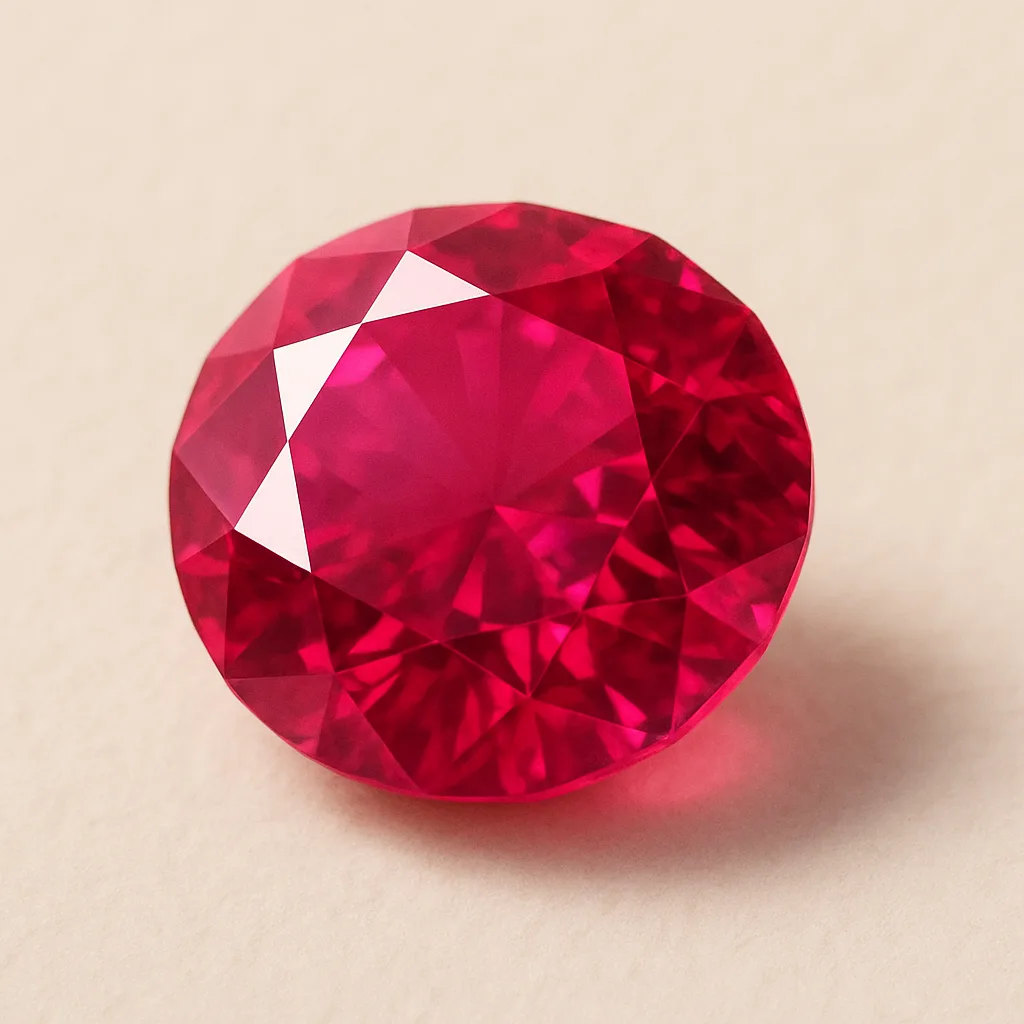
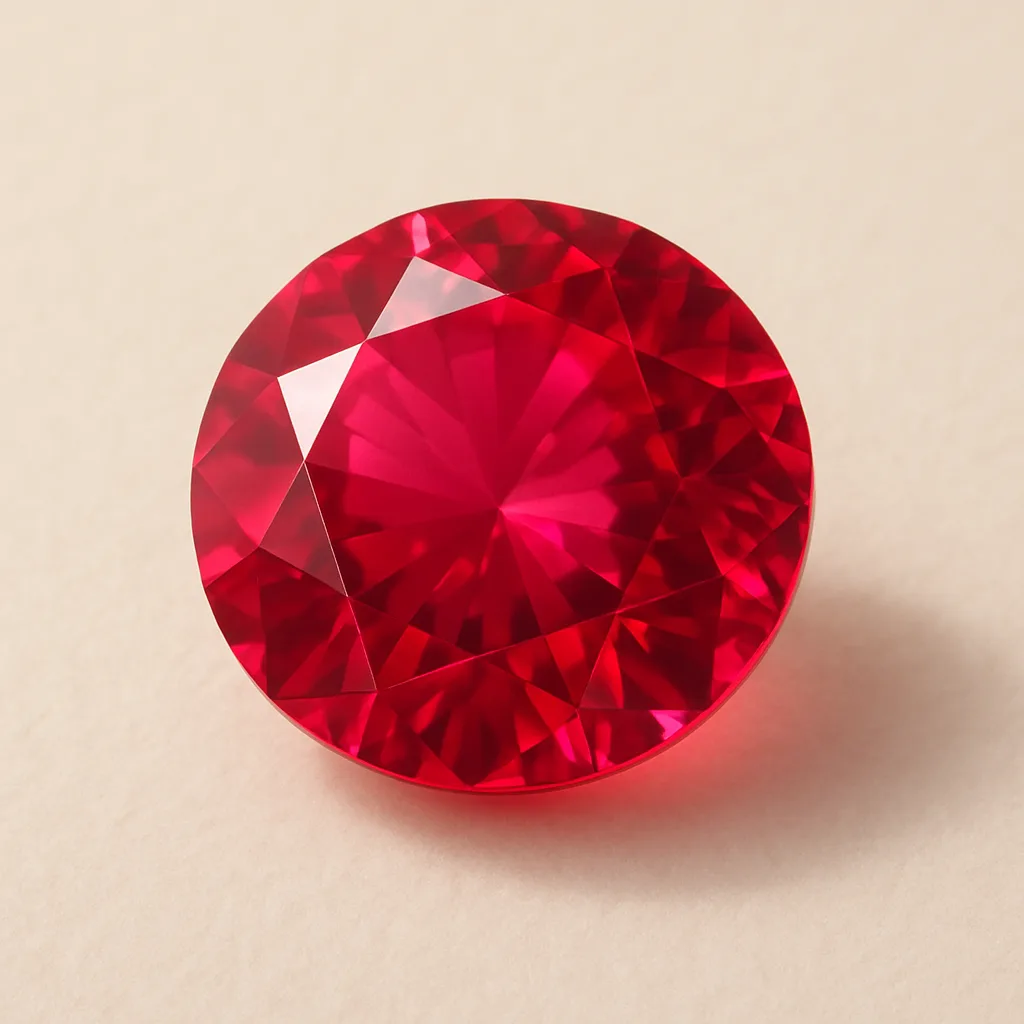
Physical propertiesPROPERTIES
| Property | A: Natural Ruby | B: Synthetic Ruby | Verdict |
|---|---|---|---|
| Refractive index (RI) | 1.762–1.770 | 1.762–1.770 | Nearly equal |
| Specific gravity (SG) | 3.97–4.05 | 3.98–4.05 | Overlap |
| Mohs hardness | 9.0 | 9.0 | Nearly equal |
| Birefringence | 0.008 | 0.008 | Nearly equal |
| Dispersion | — | — | — |
Optics & fluorescenceOPTICS & UV
| Property | A: Natural Ruby | B: Synthetic Ruby |
|---|---|---|
| Crystal system | 六方晶系(三方晶系) | 六方晶系(三方晶系) |
| Pleochroism | 強(紫赤・黄赤) | 強(紫赤・黄赤) |
| Chelsea filter | red | red |
| UV (long-wave) | strong (red) | strong (red) |
| UV (short-wave) | weak (red) | strong (red) |
ObservationOBSERVATION
◆Look for curved growth bands, round gas bubbles, and unusually clean material with overly strong .
Color categoriesCATEGORIES
A: Natural Ruby
Red / pink
B: Synthetic Ruby
Red / pink
DISTINGUISHING TOOLS · 3 ITEMS
Distinguishing tools
Tools that decide between Natural Ruby and Synthetic Ruby in practice.
- Handheld spectroscopeDETAILS →
Absorption-line pattern identifies the chromophore (Cr, Fe, or Co)
- UV lamp (short-wave 254 nm)DETAILS →
Short-wave UV reveals red fluorescence (strong) — a decisive synthetic-vs-natural cue
- 10× loupeDETAILS →
Essential 10× tool to read inclusions, polish marks, and color zoning
Note: this page is auto-generated from published GIA / CGL reference values. Individual stones, treatments, and synthetics may fall outside these ranges. For a definitive identification, consult an accredited gem laboratory.