COMPARE GUIDE
Red GlassVSNatural Ruby
Side-by-side comparison of physical properties, fluorescence, and crystal system — to identify by observation.
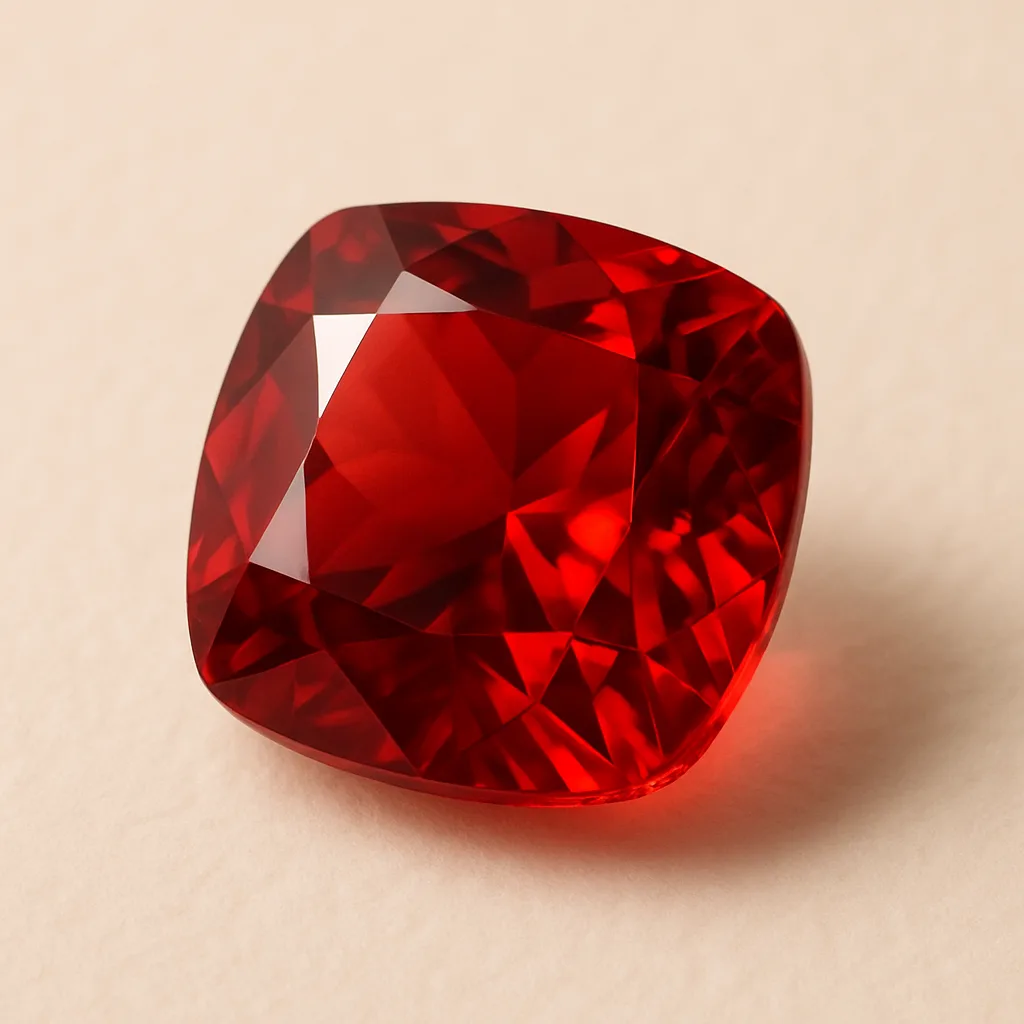
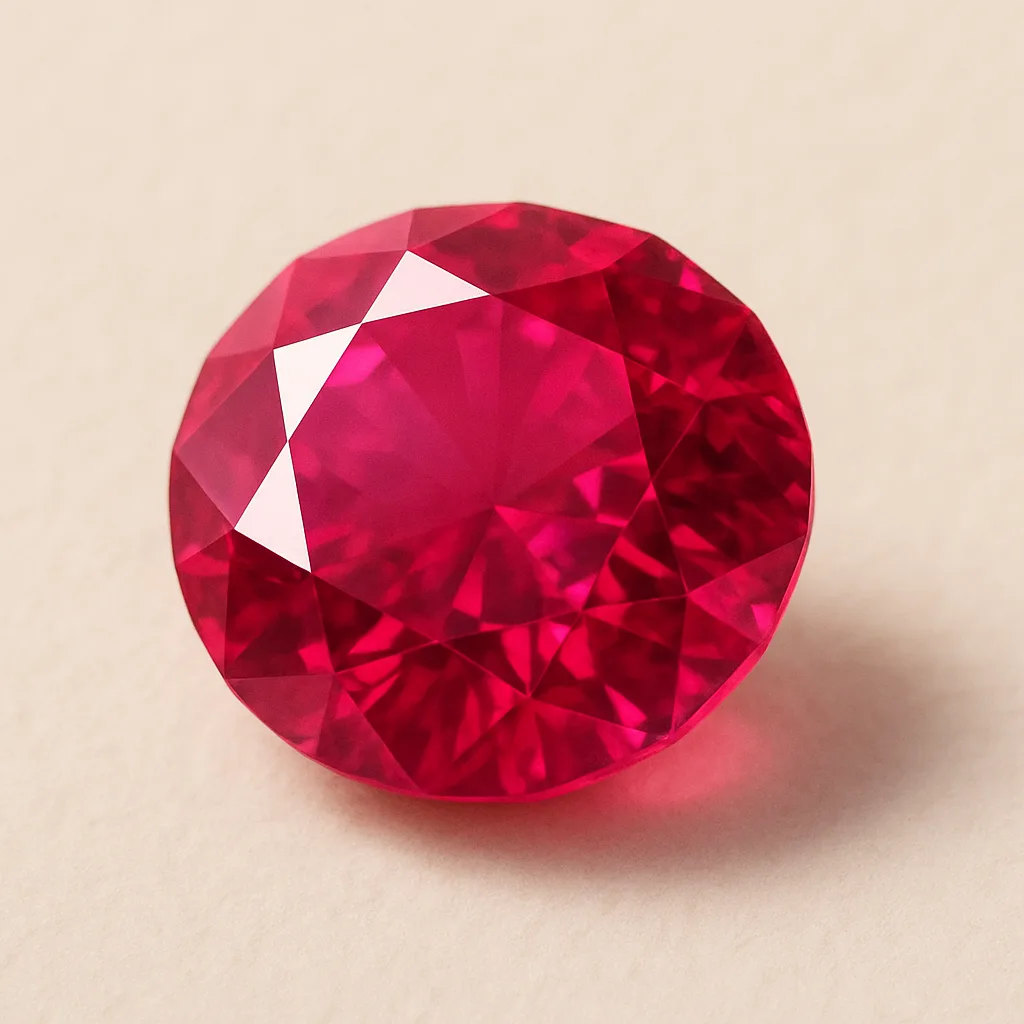
- ◎ is higher in Natural Ruby, giving a numerical distinguishing point.
- ◎ is higher in Natural Ruby, giving a numerical distinguishing point.
Note: properties whose numeric ranges do not overlap are auto-extracted. Both are measurable with a refractometer or heavy-liquid bath.
| Property | A: Red Glass | B: Natural Ruby | Verdict |
|---|---|---|---|
| Refractive index (RI) | 1.480–1.700 | 1.762–1.770 | B higher |
| Specific gravity (SG) | 2.30–4.50 | 3.97–4.05 | Overlap |
| Mohs hardness | 5.0–6.0 | 9.0 | B higher |
| Birefringence | — | 0.008 | — |
| Dispersion | — | — | — |
| Property | A: Red Glass | B: Natural Ruby |
|---|---|---|
| Crystal system | 非晶質 | 六方晶系(三方晶系) |
| Pleochroism | — | 強(紫赤・黄赤) |
| Chelsea filter | inert | red |
| UV (long-wave) | inert | strong (red) |
| UV (short-wave) | inert | weak (red) |
◆Natural ruby (Al₂O₃ corundum colored by trace chromium, Mohs 9, SG 3.99–4.01, RI 1.762–1.770, doubly refractive, 0.018) differs from red glass by a wide margin on every measurable parameter. Refractometer reads 1.762–1.770 for ruby versus 1.50–1.70 for glass — clean diagnostic separation. Polariscope: ruby doubly refractive, glass singly refractive. Mohs 9 ruby is unaffected by a steel-knife scratch test that easily marks Mohs 5–6 glass. Specific gravity 3.99–4.01 (ruby) versus 2.4–4.5 (glass) gives noticeable hand-heft difference at 1 ct and above. Ruby shows characteristic natural silk (short rutile needles in three crystallographic directions) and hexagonal color zoning at 10× plus strong under LW-UV (especially Burmese Mogok and chromium-rich material) — glass shows regular round gas bubbles and pressing-die seams. The Burmese Mogok and Mozambican Montepuez deposits supply the bulk of natural ruby that red glass imitates. Disclosure as 'glass' or 'imitation ruby' is required under FTC Jewelry Guides §23.25; lead-glass-filled composite ruby (Mong Hsu material) requires separate 'lead-glass-filled' disclosure.
Distinguishing tools
Tools that decide between Red Glass and Natural Ruby in practice.
Note: this page is auto-generated from published GIA / CGL reference values. Individual stones, treatments, and synthetics may fall outside these ranges. For a definitive identification, consult an accredited gem laboratory.