COMPARE GUIDE
CitrineVSScapolite
Side-by-side comparison of physical properties, fluorescence, and crystal system — to identify by observation.
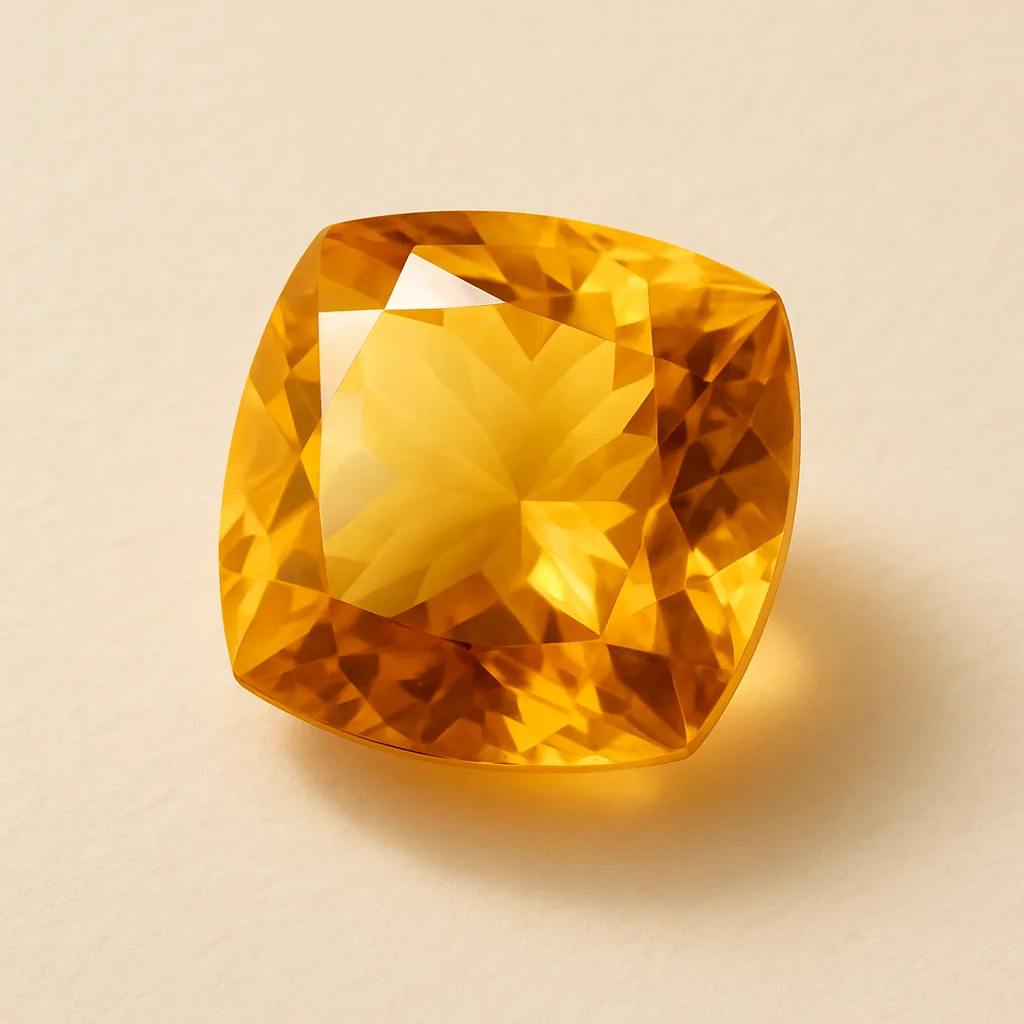
- ◎ is higher in Citrine, giving a numerical distinguishing point.
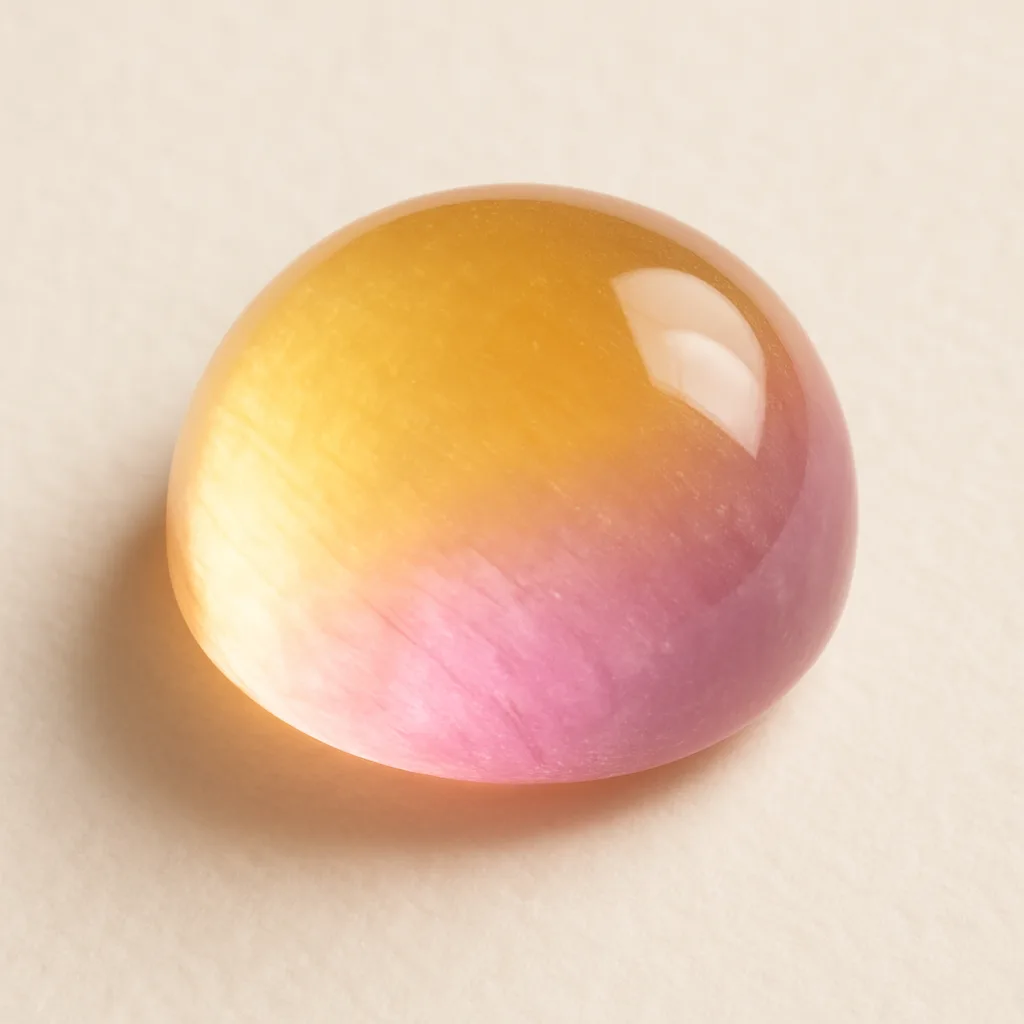
- ◎ is higher in Scapolite, giving a numerical distinguishing point.
Note: properties whose numeric ranges do not overlap are auto-extracted. Both are measurable with a refractometer or heavy-liquid bath.
| Property | A: Citrine | B: Scapolite | Verdict |
|---|---|---|---|
| Refractive index (RI) | 1.544–1.553 | 1.540–1.580 | Overlap |
| Specific gravity (SG) | 2.64–2.66 | 2.55–2.74 | Overlap |
| Mohs hardness | 7.0 | 5.5–6.0 | A higher |
| Birefringence | 0.009 | 0.020 | B higher |
| Dispersion | — | — | — |
| Property | A: Citrine | B: Scapolite |
|---|---|---|
| Crystal system | 三方晶系 | 正方晶系 |
| Pleochroism | 弱 | 中 |
| Chelsea filter | inert | inert |
| UV (long-wave) | inert | weak (yellow / orange) |
| UV (short-wave) | inert | medium (yellow) |
◆Citrine is quartz (SiO₂) with Mohs 7, SG 2.65, and singly refractive in the aggregate sense — though a polariscope shows the characteristic doubly-refractive quartz response. Scapolite is a tectosilicate with Mohs 5.5–6, SG 2.55–2.74, and clear doubly refractive visible at 10× in higher-Ca material. The hardness check (citrine is harder than steel, scapolite scratches with a hardened steel file) and the refractometer reading (citrine 1.54–1.55, scapolite 1.54–1.58 with measurable ) give the most reliable separations. Strong dichroism in colored scapolite is also diagnostic — citrine shows weak dichroism.
Distinguishing tools
Tools that decide between Citrine and Scapolite in practice.
Note: this page is auto-generated from published GIA / CGL reference values. Individual stones, treatments, and synthetics may fall outside these ranges. For a definitive identification, consult an accredited gem laboratory.