COMPARE GUIDE
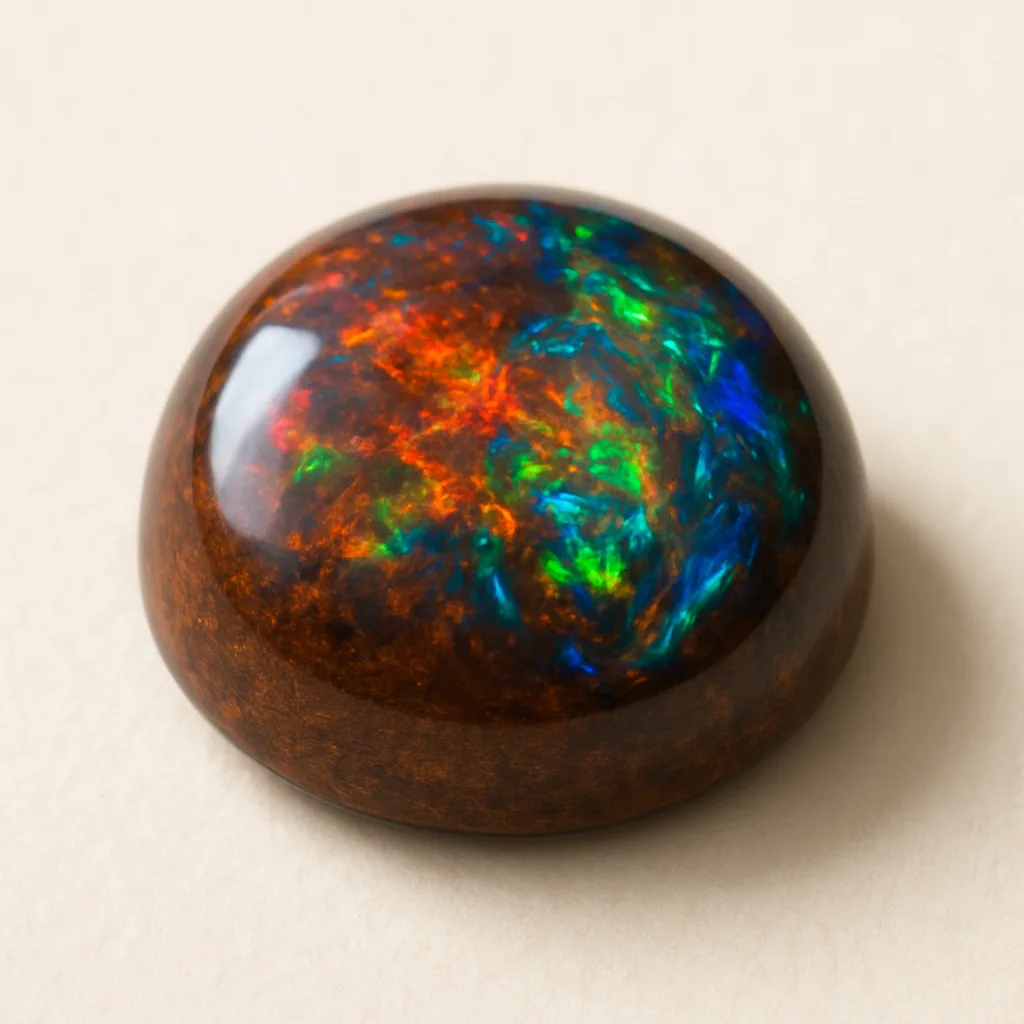
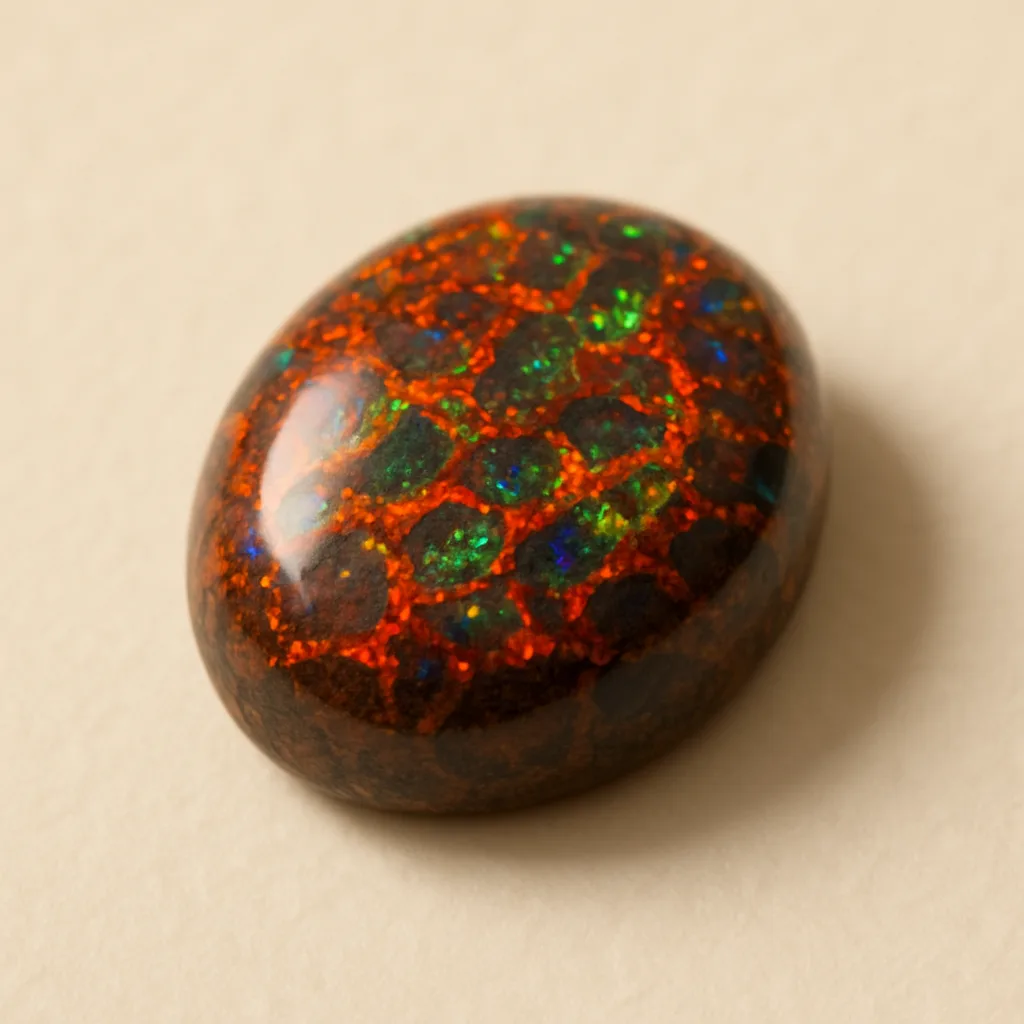
Boulder OpalVSMatrix Opal
Side-by-side comparison of physical properties, fluorescence, and crystal system — to identify by observation.
| Property | A: Boulder Opal | B: Matrix Opal | Verdict |
|---|---|---|---|
| Refractive index (RI) | 1.430–1.470 | 1.430–1.470 | Nearly equal |
| Specific gravity (SG) | 2.10–2.50 | 2.00–2.50 | Overlap |
| Mohs hardness | 5.5–6.5 | 5.5–6.5 | Nearly equal |
| Birefringence | — | — | — |
| Dispersion | — | — | — |
| Property | A: Boulder Opal | B: Matrix Opal |
|---|---|---|
| Crystal system | 非晶質(含水シリカ) | 非晶質(含水シリカ) |
| Pleochroism | — | — |
| Chelsea filter | — | — |
| UV (long-wave) | — | — |
| UV (short-wave) | weak (white) | weak (white) |
◆Boulder opal is precious opal occurring as discrete veins, seams, and pockets within a host ironstone, where the cut stone shows a continuous solid layer or vein of opal backed by the host rather than pinpoint distribution through pore space. shows opal dispersed as fine fill throughout the host's intergranular pore structure. The two visually grade into each other in the Yowah-Koroit field, where the distinction is partly conventional, but the canonical examples are clearly separable: a boulder opal shows a continuous flash on an integrated host backing, while matrix shows discrete pinpoint flashes distributed across the host surface.
Distinguishing tools
Tools that decide between Boulder Opal and Matrix Opal in practice.
Note: this page is auto-generated from published GIA / CGL reference values. Individual stones, treatments, and synthetics may fall outside these ranges. For a definitive identification, consult an accredited gem laboratory.