COMPARE GUIDE
Blue CalciteVSBlue Fluorite
Side-by-side comparison of physical properties, fluorescence, and crystal system — to identify by observation.
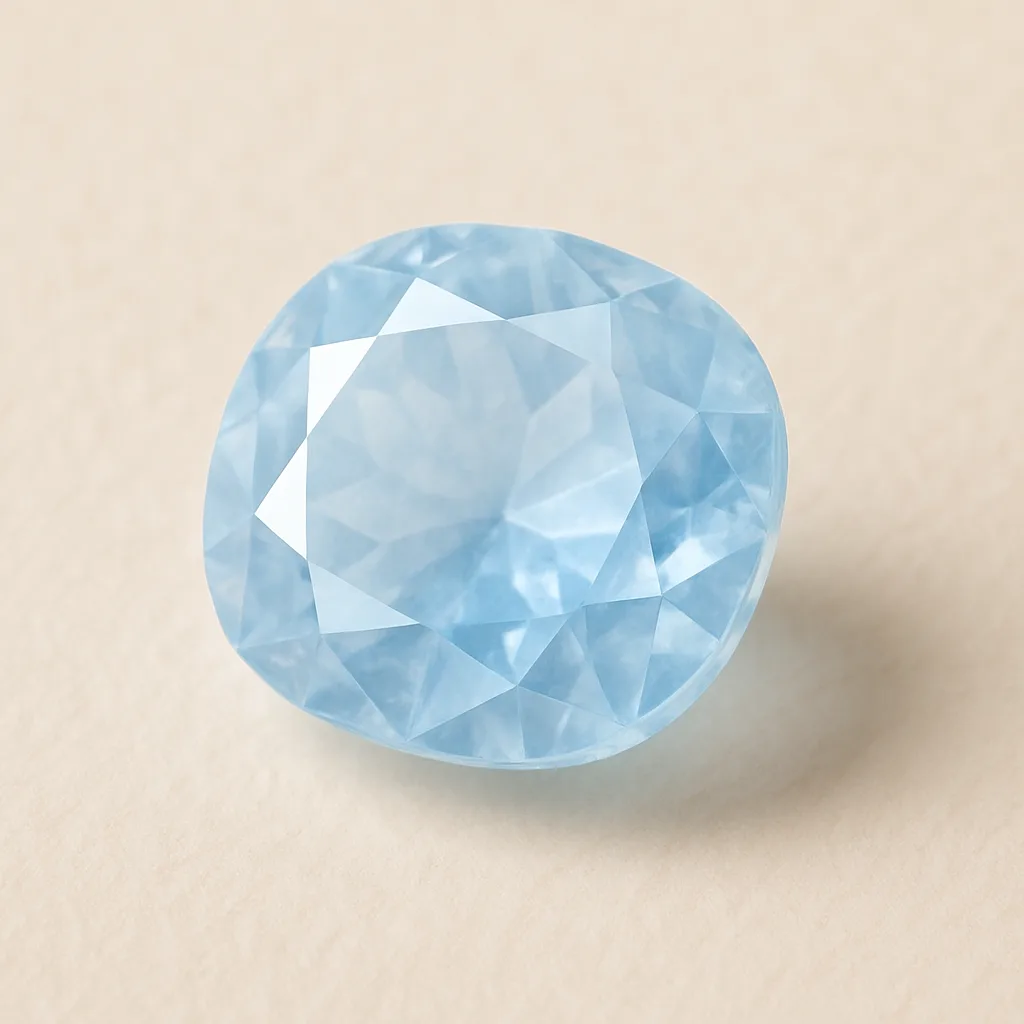
- ◎ is higher in Blue Calcite, giving a numerical distinguishing point.
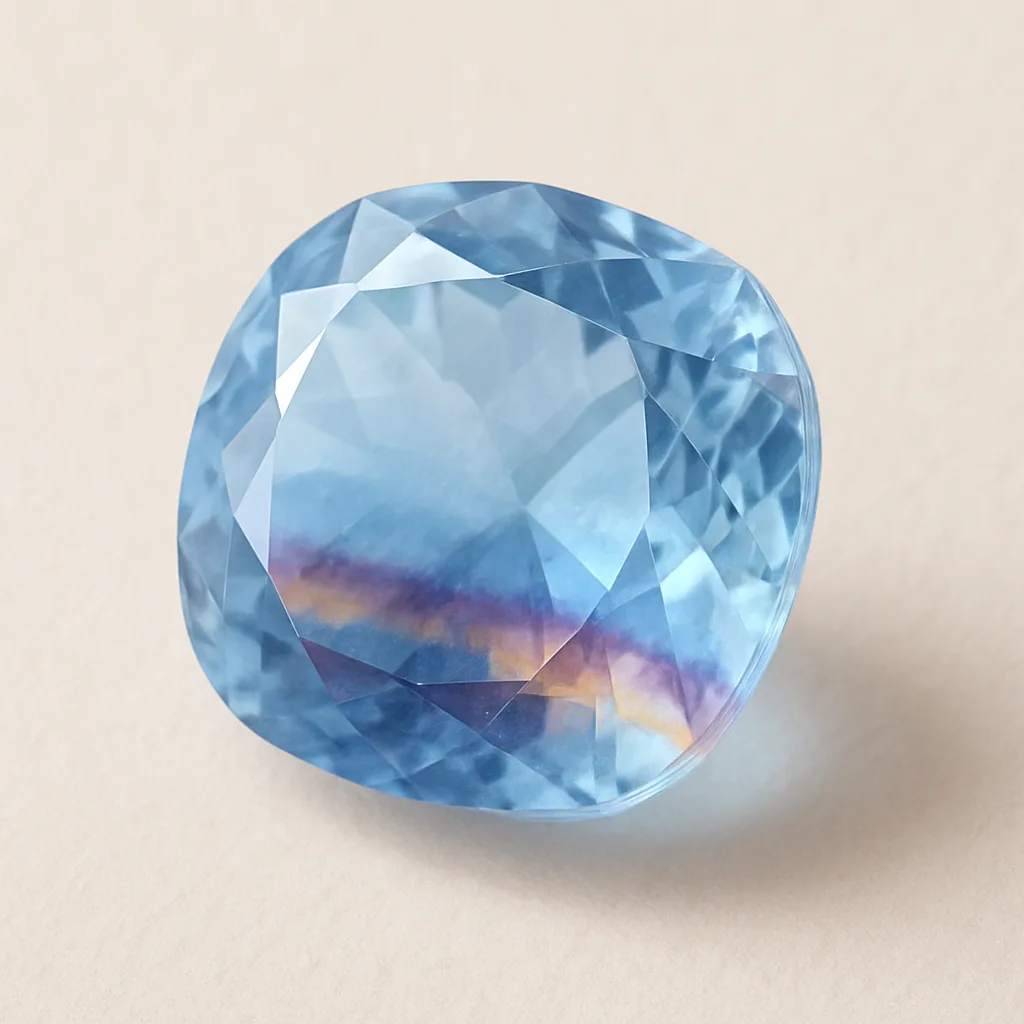
- ◎ is higher in Blue Fluorite, giving a numerical distinguishing point.
- ◎ is higher in Blue Fluorite, giving a numerical distinguishing point.
Note: properties whose numeric ranges do not overlap are auto-extracted. Both are measurable with a refractometer or heavy-liquid bath.
| Property | A: Blue Calcite | B: Blue Fluorite | Verdict |
|---|---|---|---|
| Refractive index (RI) | 1.486–1.658 | 1.433–1.435 | A higher |
| Specific gravity (SG) | 2.69–2.71 | 3.00–3.25 | B higher |
| Mohs hardness | 3.0 | 4.0 | B higher |
| Birefringence | 0.172 | — | — |
| Dispersion | — | 0.007 | — |
| Property | A: Blue Calcite | B: Blue Fluorite |
|---|---|---|
| Crystal system | 三方晶系 | 等軸晶系 |
| Pleochroism | — | — |
| Chelsea filter | — | — |
| UV (long-wave) | — | — |
| UV (short-wave) | weak (red) | strong (blue) |
◆Blue fluorite (CaF₂, Mohs 4, SG 3.18, RI 1.434, isotropic single refraction, perfect octahedral in four directions) versus blue calcite (CaCO₃, Mohs 3, SG 2.69–2.71, RI 1.486–1.658, uniaxial doubly refractive with 0.172 , perfect rhombohedral in three directions). The four-direction octahedral of fluorite versus the three-direction rhombohedral of calcite is decisive on inspection. Calcite shows brisk effervescence in dilute HCl while fluorite does not react. Fluorite is typically translucent-to-transparent with strong luorescence' from Stokes's 1852 Cambridge work on fluorspar) while blue calcite is translucent-to-opaque with weaker . The Mexican Chihuahua blue calcite (#A8C8DC powder-blue) and the Castleton Blue John fluorite (#7FB5D8) overlap in body colour but the , , and HCl reaction give immediate separation.
Distinguishing tools
Tools that decide between Blue Calcite and Blue Fluorite in practice.
Note: this page is auto-generated from published GIA / CGL reference values. Individual stones, treatments, and synthetics may fall outside these ranges. For a definitive identification, consult an accredited gem laboratory.